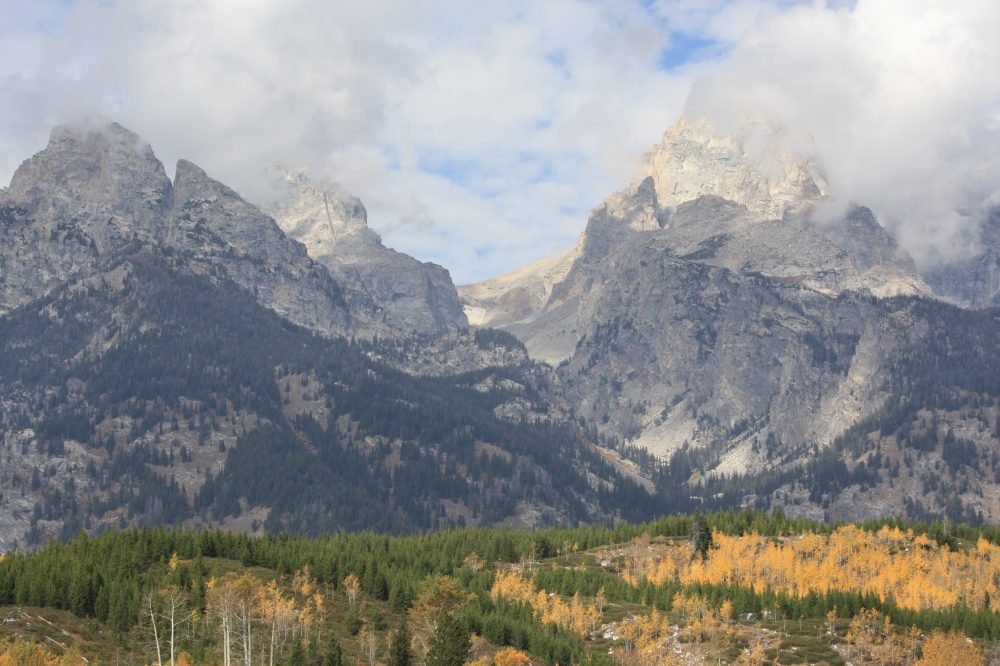
In the autumn of 2003 we spent a few days at our cabin at Red Feather Lakes west of Fort Collins, Colorado. Our routine is to walk in the morning and evening around a choice of five different lakes that surround our cabin. The lakes are quiet in October as the ducks and Canada geese have begun to migrate and we speculate that most of the water fowl only migrate as far as Fort Collins where golf courses and city parks provide a temperate climate, lots of company and ample food on the nearby grain fields that are harvested in the fall.
On one particular day, we noticed a lone goose close to the shoreline of Lake Shagwa. As we drew close to her, we noticed her left wing was pointed skyward in an awkward position and we made a couple of assumptions: 1) Her mate was not with her (Canada geese mate for life) and may have perished in an attack that injured her or 2) her mate left her behind because her broken wing prevented her from flying.
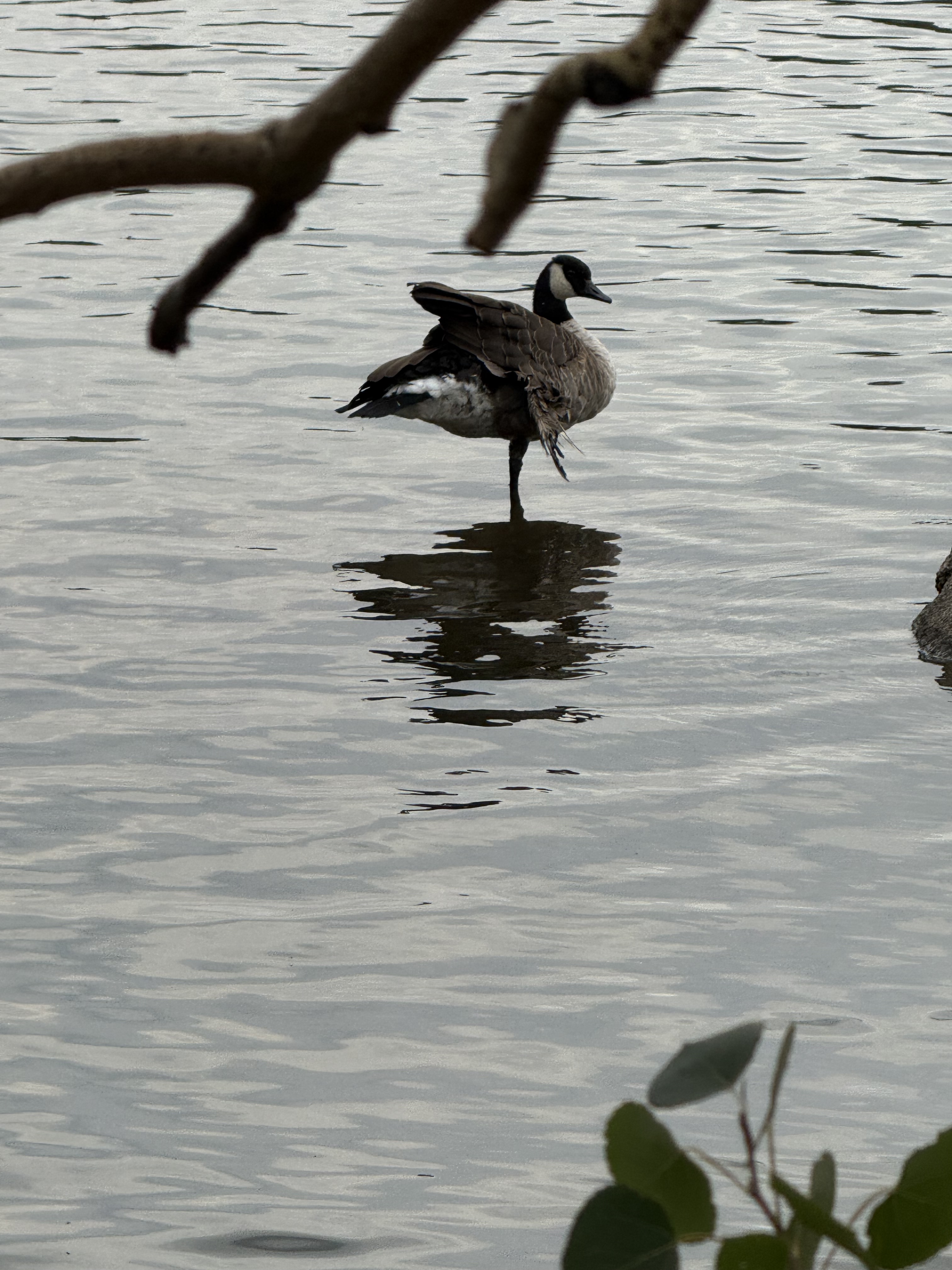
We watched her for a few minutes, and I took a photograph of her on my cell phone. We were saddened by her obvious dilemma, but had no idea how to help her. She could swim well enough and trying to catch her out in the water would be a fool’s errand. We moved on, silent in our thoughts as we tried to imagine what would become of her with winter coming.
In the spring of 2024 we made our routine visit to the cabin to open up for the summer season and began our ritual of walking each day around the lakes, which were still frozen over. Out in the center of Shagwa an aerator pumped, creating a circle of open water about eight feet in diameter. Shagwa is a shallow lake and oxygen is pumped from shore to create an opening to maintain an oxygen-rich environment for fish. Much to our surprise we could see a lone Canada goose with a distinctive handicap–her left wing pointed skyward–standing at the edge of the water. We marveled that she had survived the winter and it was clear the opening in the water, which would allow her to escape predators traveling over the ice, was her saving grace.

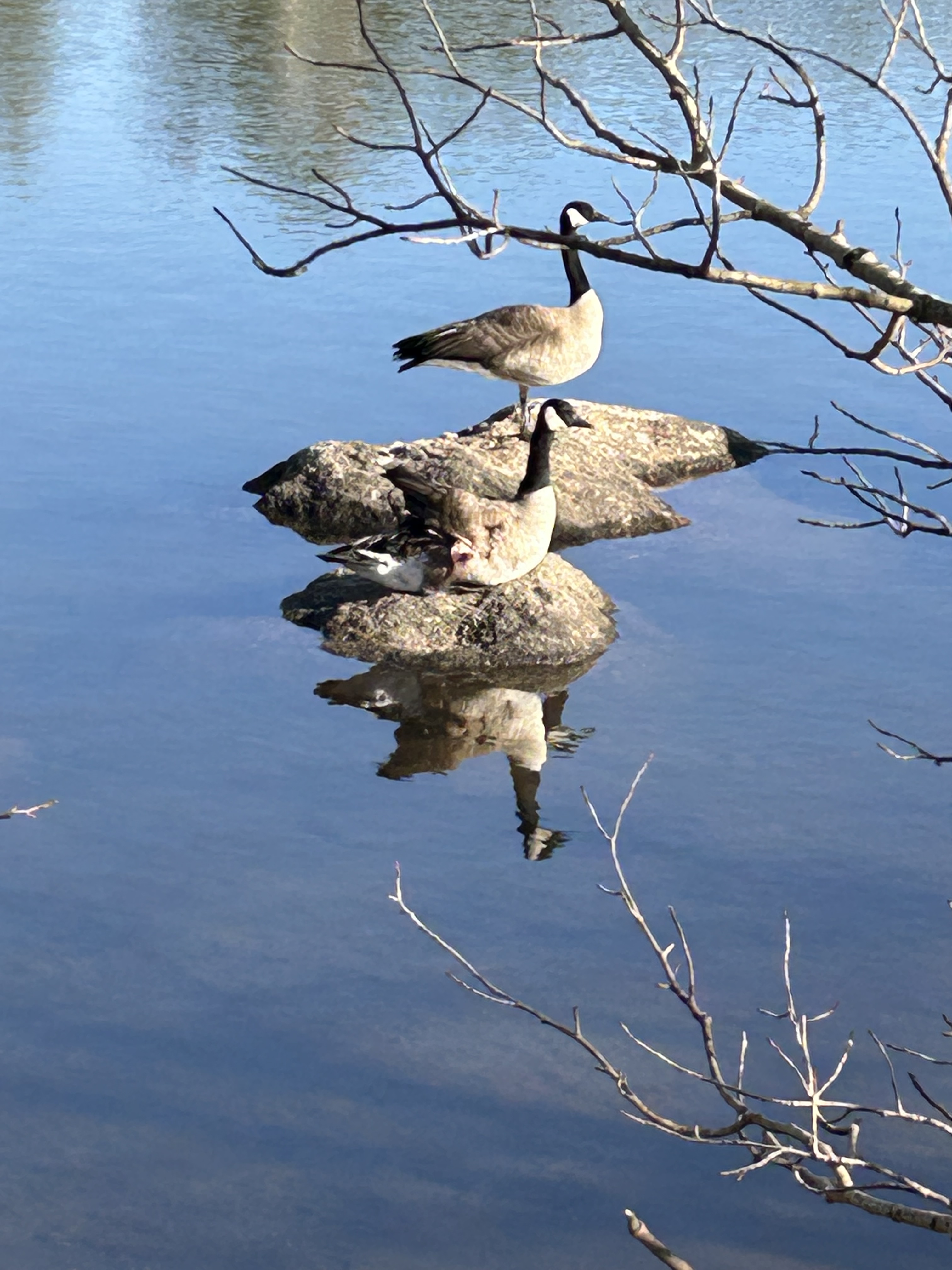
I photographed her several times throughout the summer and she seemed to be doing well in spite of being unable to fly. She was usually with a group of geese or ducks and spent time close to shore where it appeared they were being fed by passersby or some of the year-round residents in the cabins along the shore. We saw her paired with another goose and hoped she would find a mate for companionship.
In January of 2025 we made an off-season trip to Red Feather Lakes to check up on things and have a post-holiday break. Roads were dry as there had been little snow and we took walks around the lakes as usual. When we came to Shagwa we were amazed to see a little hut erected out on the ice near the opening where the aerator created open water. I focused my camera’s distance lens on it and it appeared to be a large canvas dog carrier with a clear plastic window on two sides. And standing alongside it was Grace. She had protection from the bitter cold wind that Red Feather is famous for and it was close enough to water’s edge for her to escape any intrusion of coyotes, fox and other predators.
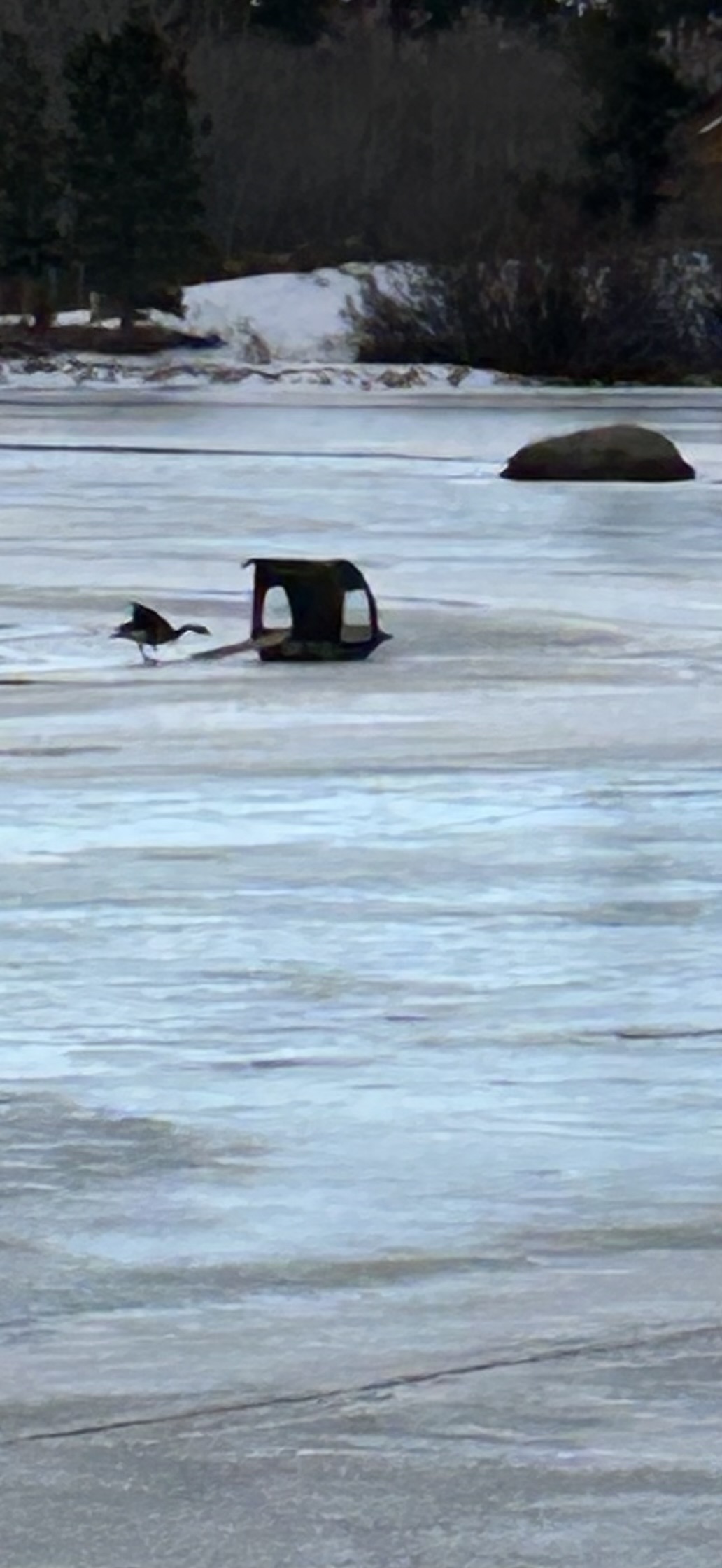
We were excited and grateful that someone cared enough for this stranded goose to offer her protection from the elements and food enough to stay alive. Later in the spring we happened upon an elderly woman feeding the ducks and geese along the shore. We spotted Grace and I remarked to the woman (who I will refer to as Grace’s caretaker} how amazed we were that she still survived and wondered who had braved the ice to plant the little hut. It was no mean feat, as whoever did it made certain the wind would not blow it away and got it secured by crawling over the ice to stake it firmly in place. By then it had been removed and ice on the lake had begun to break up. Where did it go?

The ensuing conversation revealed the man who installed the hut had removed it when the ice melted and she heard he was moving away. She did not know how to contact him and speculated as we did whether he had passed the hut on to somebody else in case it was needed for another winter. My research has revealed that Canada geese can live to 30 years of age and it seemed like a long road ahead for Grace.
We are now approaching another autumn, Grace’s third as a captive of Shagwa, and it seems to us she has endured a great deal of uncertainty and risk. We ponder over her fate and wonder if her winter hut will miraculously reappear, if she will get enough to eat, if she will be strong enough to overcome the great odds she will face in another winter? Would it be possible to capture her, mend her broken wing and set her free once again? Some would say it would be best to euthanize her, but my heart breaks at the prospect of destroying a creature who has struggled to live her life as God intended.
 Wild Wyoming Woman