Deer Here!

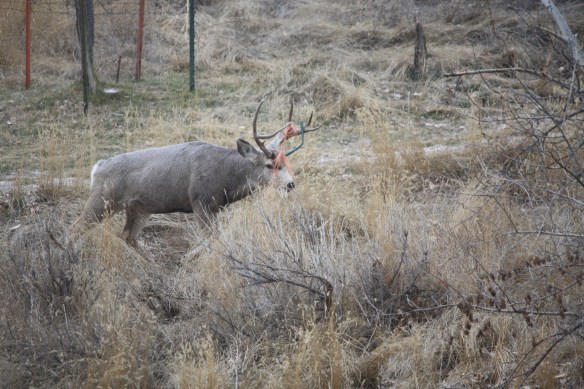
a unihorn deer . . . .

a unihorn deer . . . .

The snow and cold over Thanksgiving seemed to bring the deer out of the hills.  Everywhere we look lately, there are mule deer does, fawns and bucks browsing on piles of fallen leaves, branches and a little leftover bird seed under the feeders.  This handsome young fellow with a single horn and a stump of  another has been hanging around most of the autumn.

Mom and the twins . . . .

Mom and the twins . . . .

This photo taken from the bay window in our living room makes them seem almost close enough to touch.  They look pretty healthy in their warm winter coats and have had a fairly warm autumn up until the past week.  The Wyoming Game & Fish have recently announced declining numbers of mule deer throughout the state due to a number of reasons: competition with other ungulates (elk); loss of foraging plants (sagebrush and mountain mahogany); as well as chronic wasting disease reported on the western edge of the state.

Decorated for Christmas . . . .

Decorated for Christmas . . . .

This big boy has been trailing some green and red strings on his horns but he won’t let us get close enough to determine what exactly he is adorned with.  It doesn’t appear to be causing him any harm, so his decorations will likely get rubbed off or fall with his horns in the spring.  We think he is quite festive!

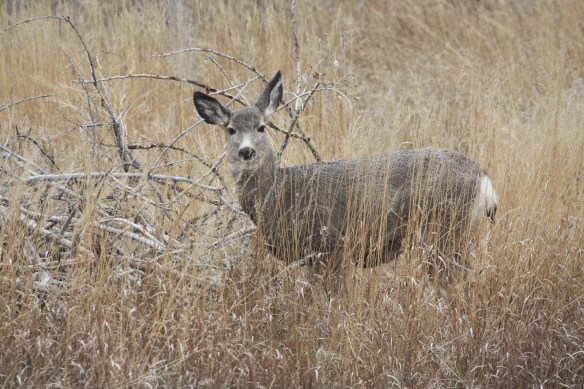
Doe alone . . . .

Doe alone . . . .

Standing along our walking path, this doe watches with mild curiosity as we pass.  The deer who hang around Dry Creek are used to us and rarely run unless we surprise them. Rosie, the ever-present family dog, has been cautioned to leave the deer alone unless they get inside the yard.  She ignores them on the trail.  Rosie has learned that deer are not to be reckoned with, but she only barks at them if she thinks they are not where they are supposed to be.  Smart dog!


More Fences

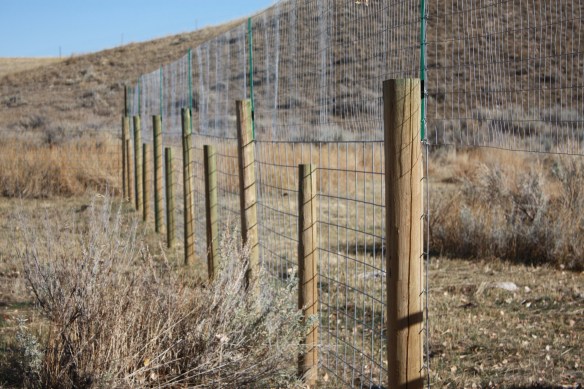
Deer proof . . . .

Deer proof . . . . 

It has taken ten years to arrive at this.  Ten years of planting fruit trees only to see them die from freeze and thaw, drought, bugs, hungry deer and finally, a voracious longhorn steer. We built fences around individual trees only to see the deer climb over and the steer climb through, breaking branches and stripping the leaves.  We decided on strong livestock panels below (to stop the steer) and welded wire strung above (to stop the deer).

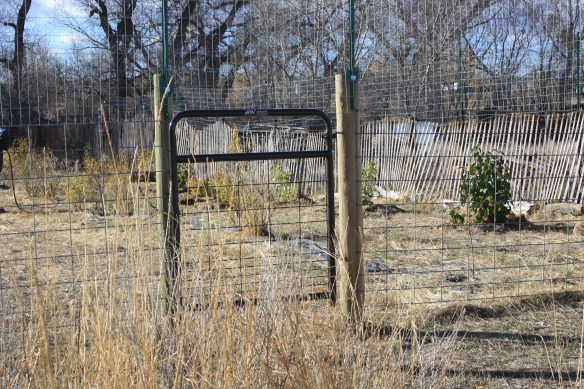
The east gate . . . .

The east gate . . . .

It took us two summers of digging post holes, installing panels and then rolls of wire.  A few weeks ago we finally finished the project.  Feeling quite triumphant that we had at last banished the deer and the steer forevermore, we took a break from the final installment and went to the house for coffee.  Thirty minutes later we returned to clean up tools and found a doe deer and her fawn inside our deer-proof fence!  We were both slack-jawed with disbelief. After many failed attempts to leap over the fence, the doe and fawn both escaped in a panic by crawling in between the pre-existing old woven wire boundary fence on the north side and the new fence strung above it.  The only thing left for us to do was unroll all the old snow fence we had used previously around a grove of caragana trees and wire it up to cover the 8″ gap between the old fence and the new along the north side of the orchard.  That seemed to do the trick.

Deer lunch? . . . .

Deer lunch? . . . .

I potted 20 lilac trees from bare root twigs and after two years of growth in the garden, they are now tucked into the ground in our orchard.  They will create a grove all along the north side (hopefully they’ll cover the old snow fence) and will provide lots of fragrant blooms for the bees.

Once more, with feeling . . . .

Once more, with feeling . . . .

Two new apple trees will provide cross pollination for our one lonely standard apple tree that has managed to survive through all the trials and tribulation.  In the spring, we will add more apple and plum trees, and then begin the long wait for our very own fruit.  I suppose the deer and the steer will be waiting too, but they’ll be outside the fence.  Now if only Mother Nature will cut us a break!

Good Fences Make Good Neighbors

horse social . . . .

horse social . . . .

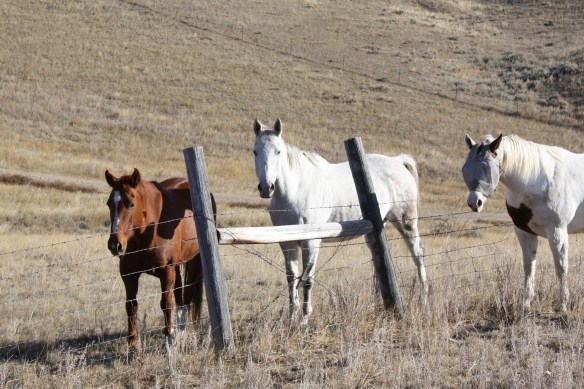
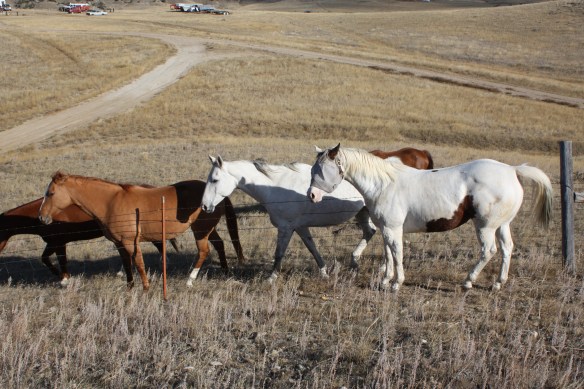
Tilly is quite enamored with the new silver appaloosa gelding who lives next door.  She raced him and the other three horses in the group to the top of the hill to share a friendly hello.  I tried to catch all five horses in my camera lens as they ran but they were too fast for me!

"hey, wait up!" . . . .

“hey, wait up!” . . . .

After a spirited run uphill, they are headed back down.  Who knows what goes on in a horse’s mind?

"what do I have to do to get some attention?" . . . .

“what do I have to do to get some attention?” . . . .

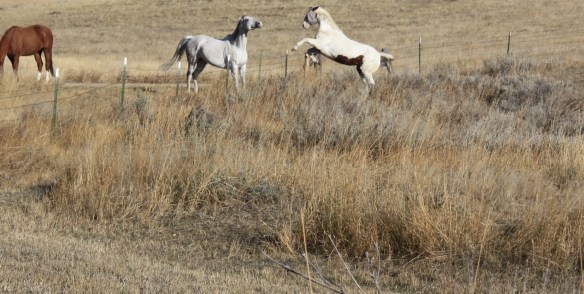
It appears the friendly gathering has turned into a rout.  Miss Tilly appears to be having a temper tantrum or a play for attention.

Back to business . . . .

Back to business . . . .

A little grazing takes the edge off the confrontation.  No vet bills from barbed wire cuts today, thank heavens!

A Homestead on a Grand Scale

Home on the range? . . . .

Home on the range? . . . .

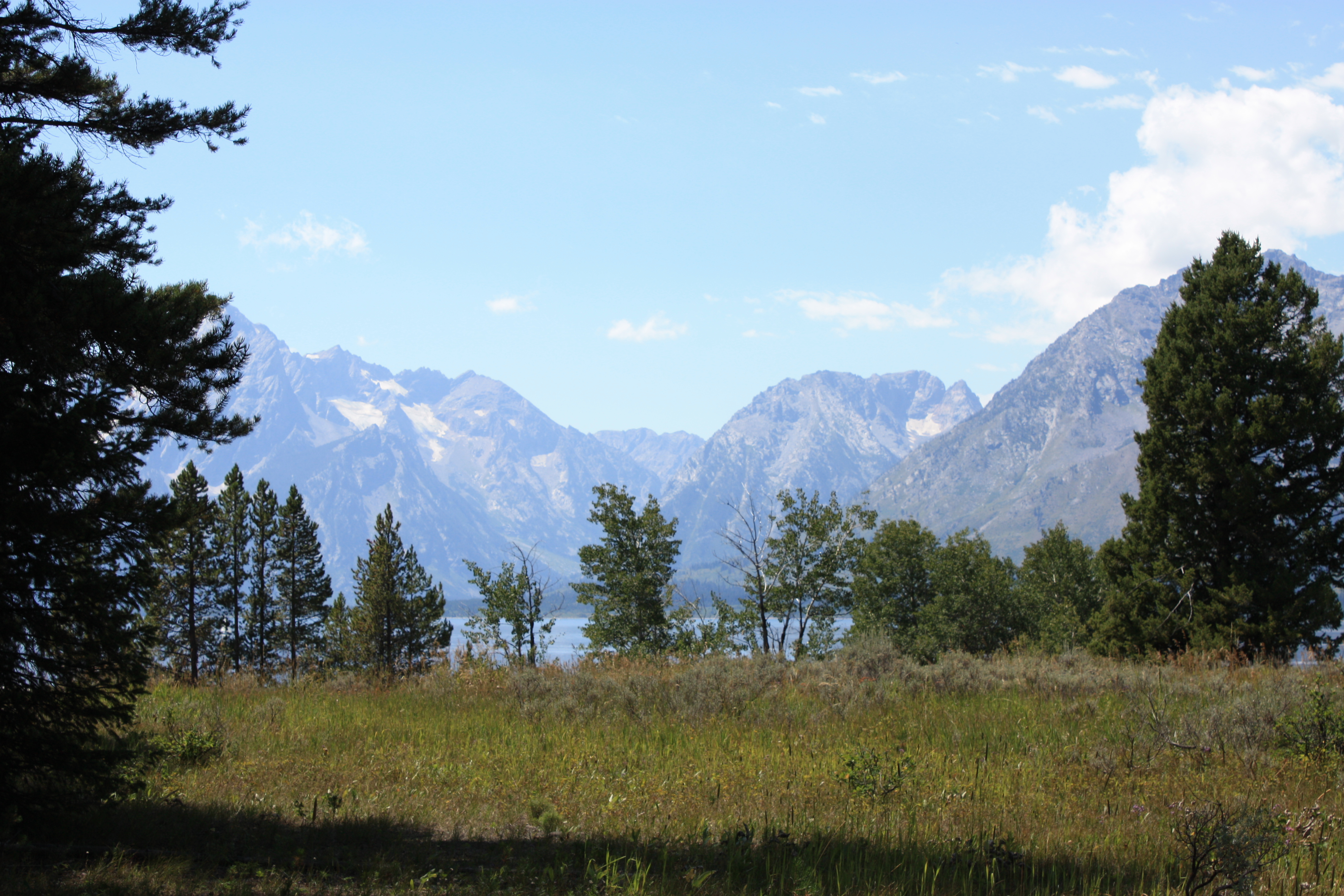
If you asked what homesteading was like in Wyoming around the turn of the century, you would get varying descriptions of hardship, deprivation, drought, grasshoppers, and a litany of failed attempts to farm in a high plains desert with less than 15 inches of annual rainfall.  Not so John Dudley Sargent, the man who claimed Jackson Hole’s northernmost homestead in 1890 and could view the Grand Teton range across the lake as he toiled to establish his claim on the land.  Sargent and his partner Robert Ray Hamilton built a rambling 10-room log structure they named the Merymere and provided lodging to travelers along a nearby military road leading to Yellowstone.  Sargent developed a garden and ran a few cattle which enabled him to “prove up” his homestead.  This fortuitous move resulted in exclusion from the Yellowstone Park Timber Reserve of 1891, allowing the property to remain in private ownership until its sale to Grand Teton National Park in 1976.

The timing of the homestead filing just months ahead of the establishment of a timber reserve might seem like quite a coincidence, but Sargent and Hamilton had connections to wealthy eastern families who apparently viewed them as “undesirable offspring” and financed their ventures in the west to be rid of them–a practice known as “remittance.” Local legend has it both men came to an untimely death–Hamilton in 1891 on a hunting trip and Sargent, who was rumored to have murdered Hamilton and his first wife, later taking his own life.

Heaven on earth . . . .

Heaven on earth . . . .

Sargent’s grave is all that remains of his homestead endeavor on the 268.84-acre peninsula that is defined by Jackson Lake to the west and Sargent’s Bay to the east. But a legendary pine tree where his second wife was reported playing the violin on many occasions has been preserved.
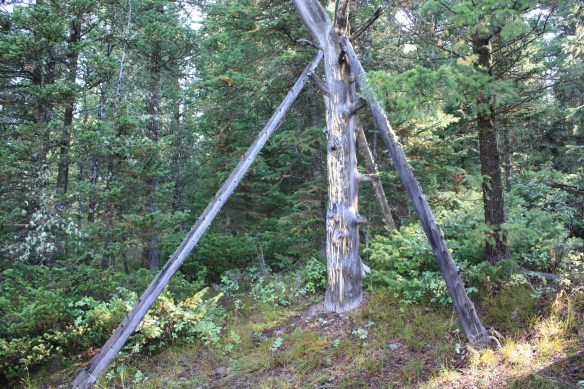
Still standing, after all these years . . . .

Still standing, after all these years . . . .

Life on a homestead was lonely for pioneer women, and Sargent’s second wife took solace in her violin, making her music as she gazed across the lake to the Grand Tetons.

Johnson Lodge . . . .

Johnson Lodge . . . .

After the demise of John Sargent, the property was sold and a handsome two-story lodge was built on the south end of the peninsula by W. Lewis Johnson, a Hoover Vacuum Company executive.

A porch, of course . . . .

A porch, of course . . . .

The lodge has a stunning view of the lake and the Grand Tetons.  The Johnson family used it as a vacation retreat, adding guest cabins, a barn and boat dock for entertainment and recreation.

Interior staircase . . . .

Interior staircase . . . .

The rear view of Johnson Lodge . . . .

The rear view of Johnson Lodge . . . .

A large dining facility and servants’ quarters sprawl behind the main lodge structure.
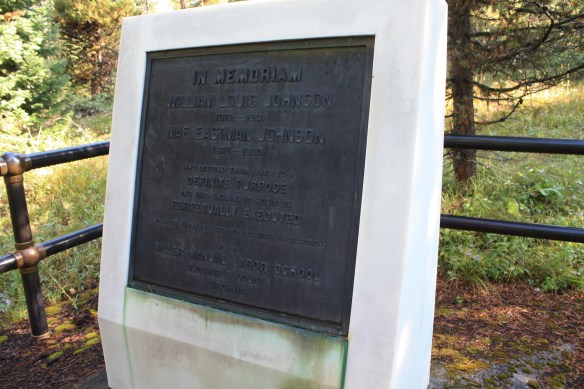
R. I. P. . . . . .

R. I. P. . . . . .

The Johnsons left a memorial on the crest of the peninsula to commemorate their time spent at this wonderful place.  In 1936 Alfred Berol purchased the property and built Berol Lodge.  He named the property AMK Ranch, the combined first initials of Alfred, his wife and their son.

The lodge looking up from the lake . . . .


Grand entrance . . . .

Grand entrance . . . .

The Berols built a rifle range, trap shooting range and second boat dock on the east side of the peninsula which allowed boating access to what is now known as Sargent’s Bay.
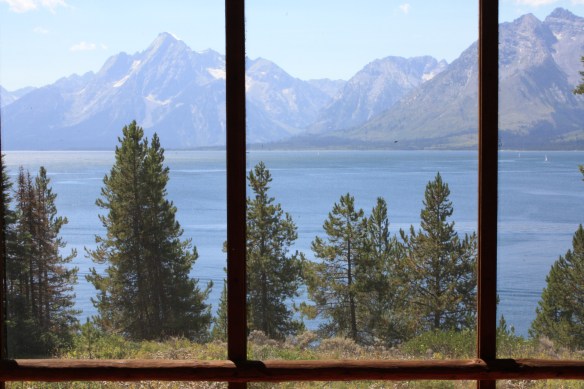
The lakeside porch . . .

The lakeside porch . . .

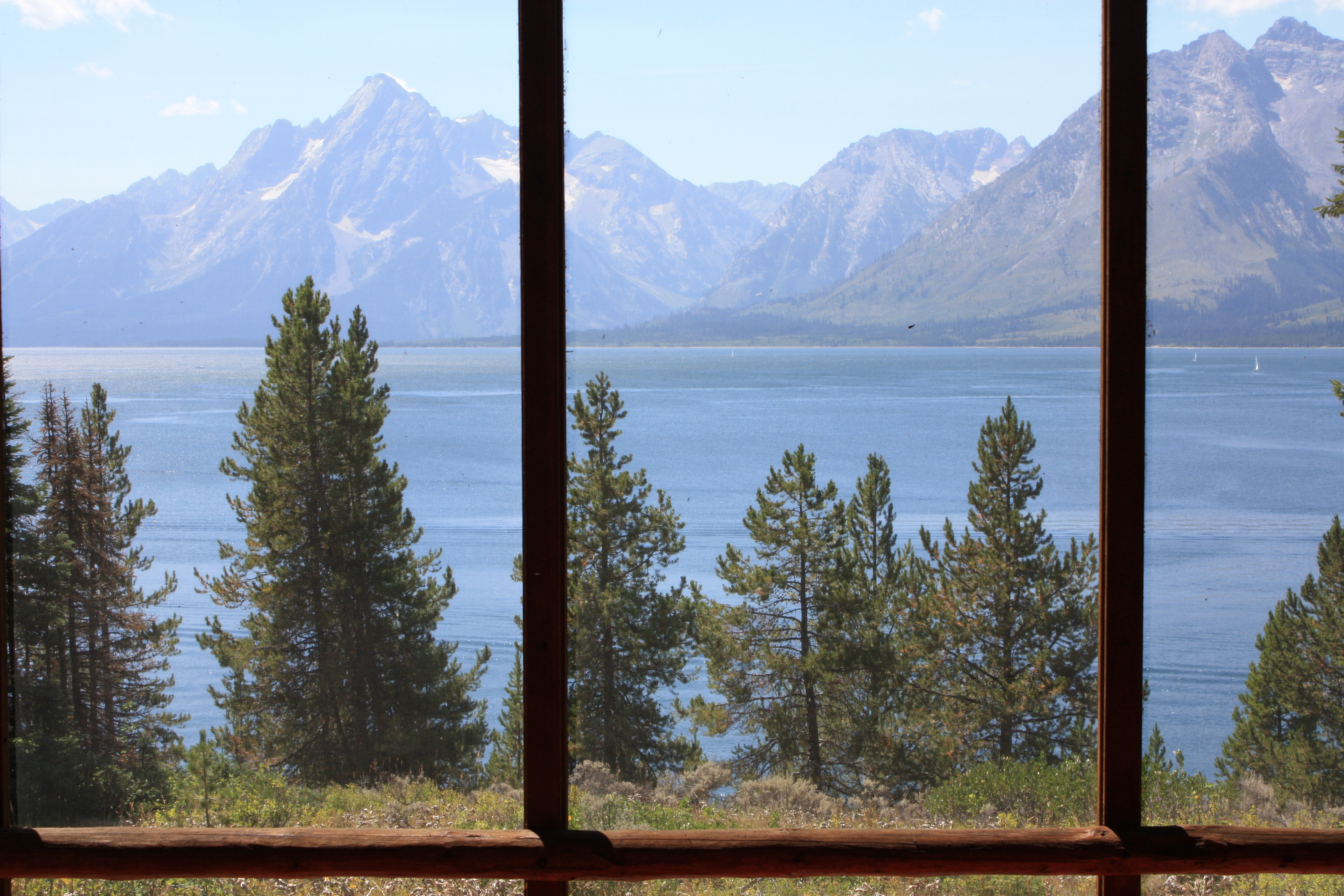
A screened porch looking out on this view is a little slice of heaven.  The trees that have grown up since the lodge was built need to be removed to preserve the view, but that is a small detail.
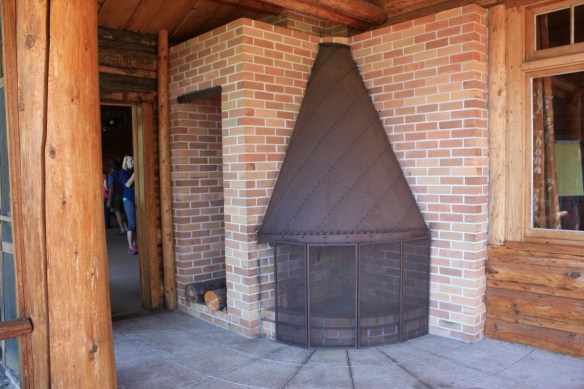
A warm fire for cool evenings . . . .

A warm fire for cool evenings . . . .

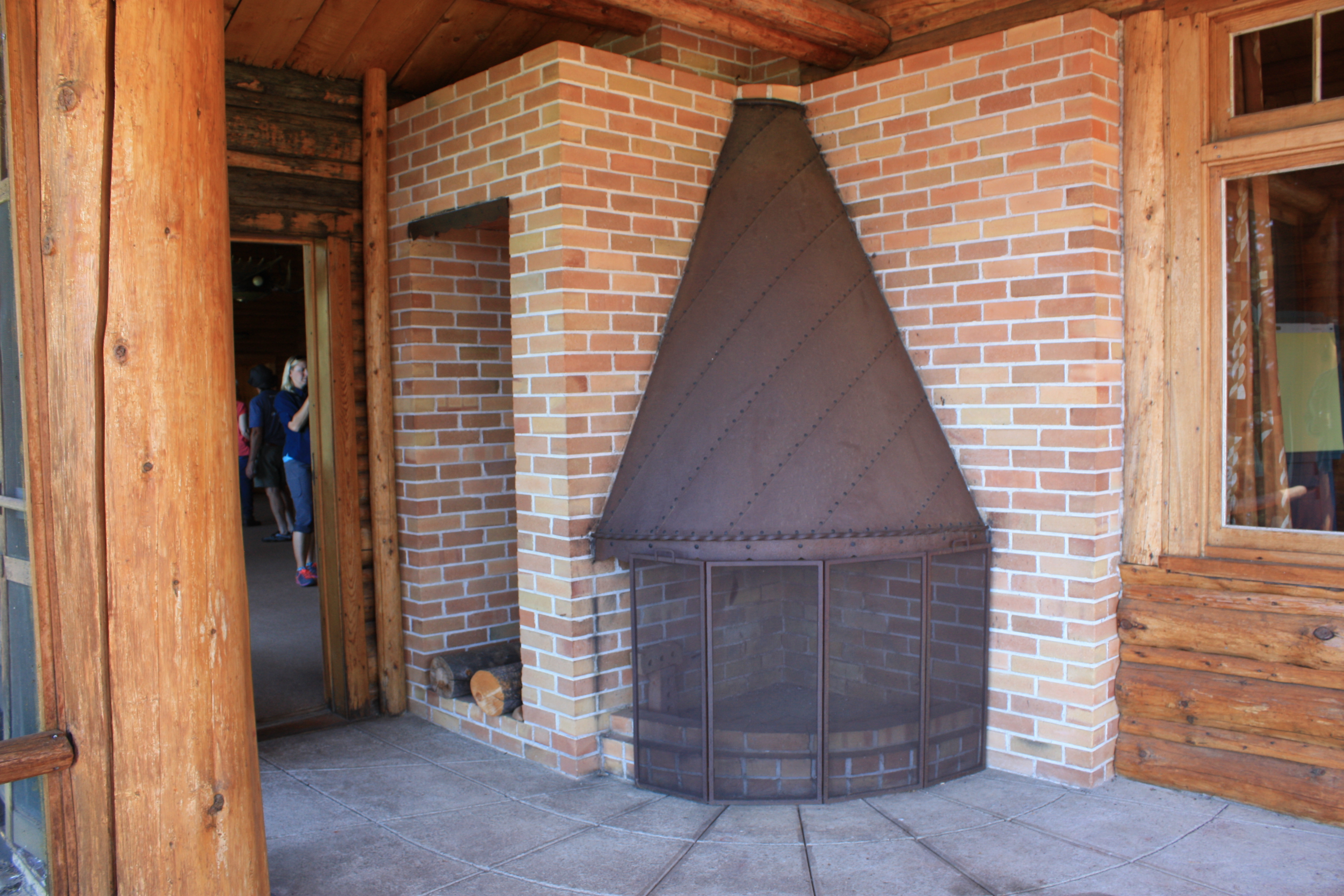
A fireplace on the screened porch wards off the chill of mountain air.

Dining with a view . . . .

Dining with a view . . . .

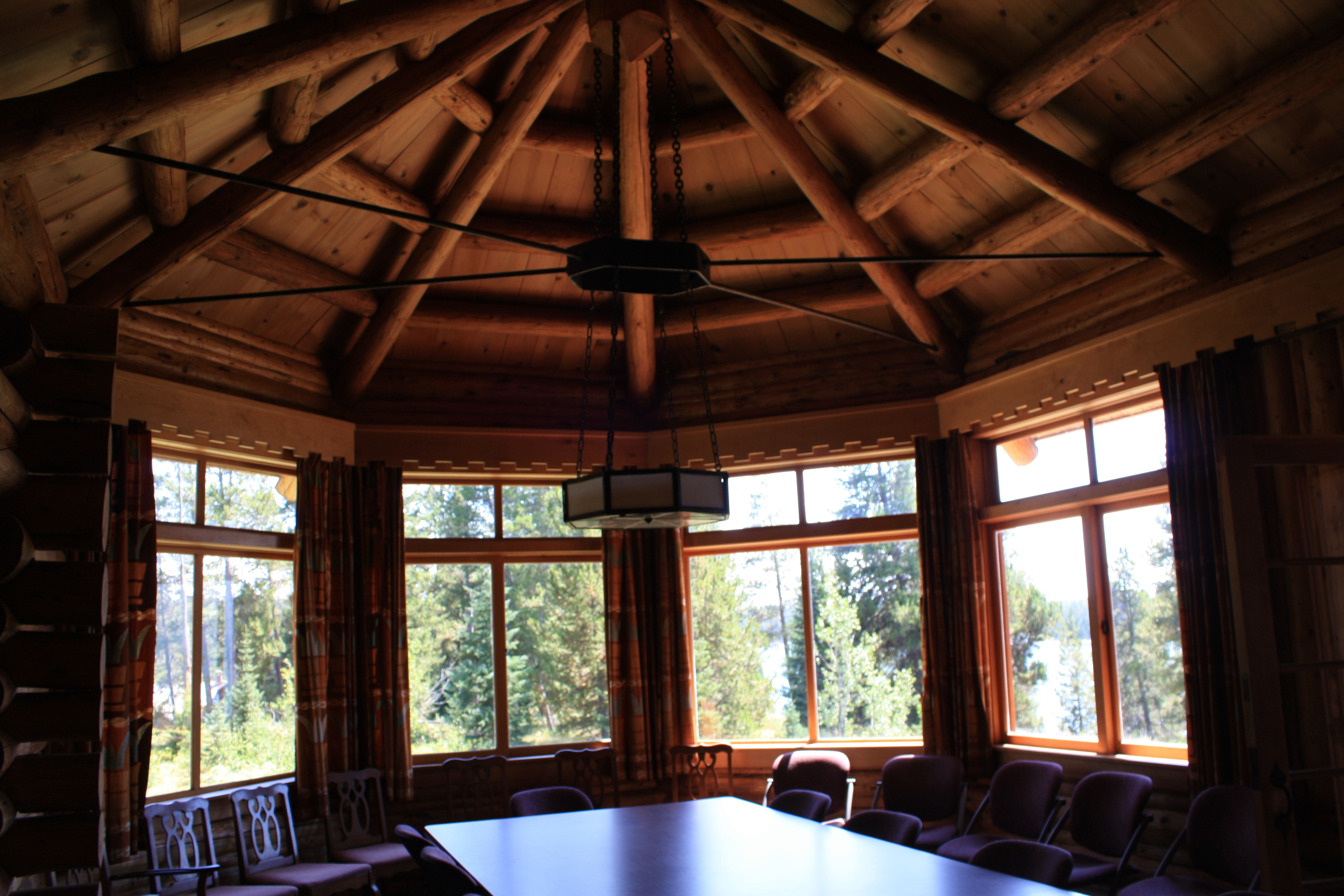
The Berol family chose to keep the custom dining table created for this room, but the interesting light fixture was left behind.

If this guy could talk . . . .

If this guy could talk . . . .

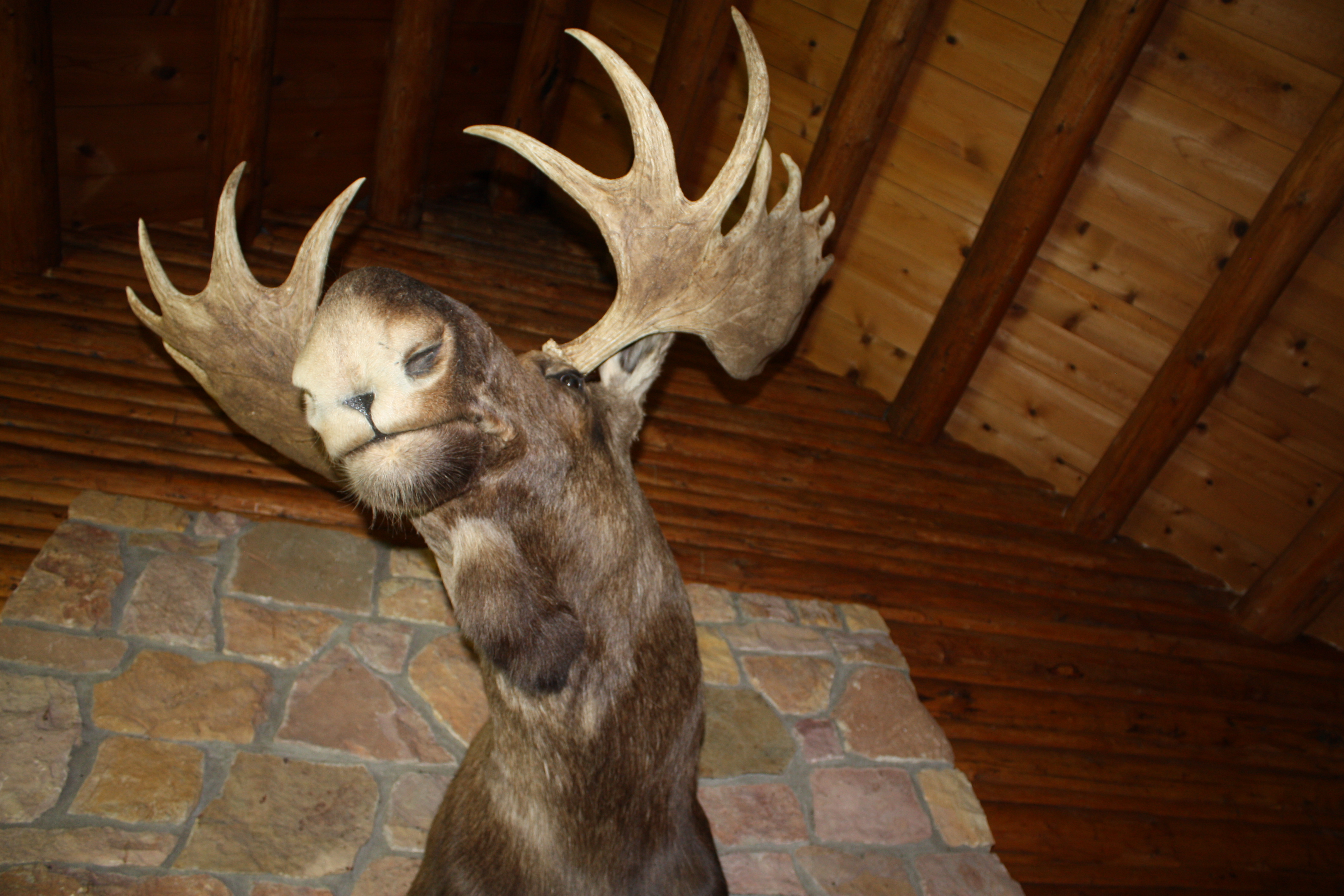
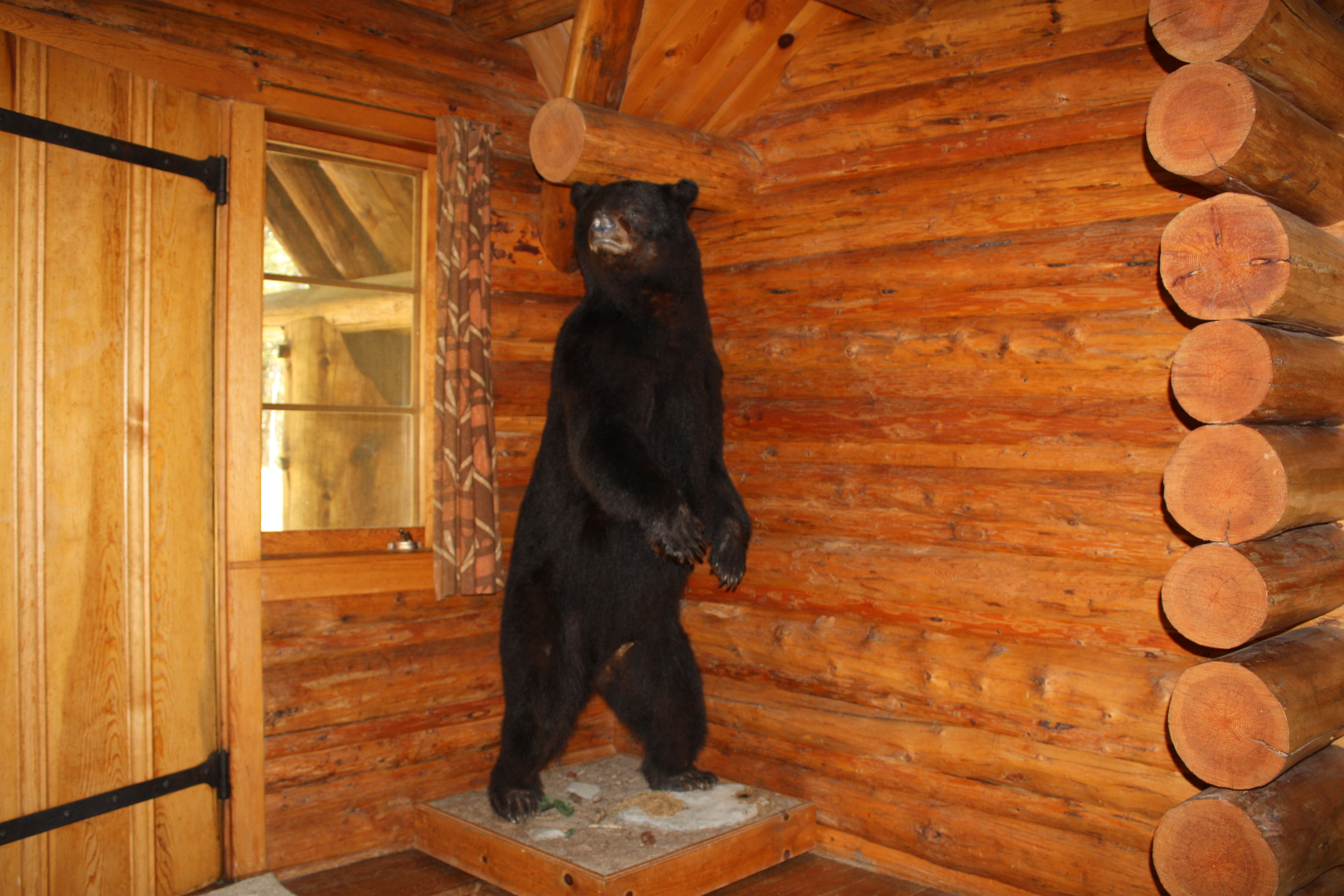
Cannot have a rustic lodge without a few interesting creatures here and there . . . .

Welcome . . . .

Welcome . . . .

This charmer greets guests at the entrance to Berol Lodge.
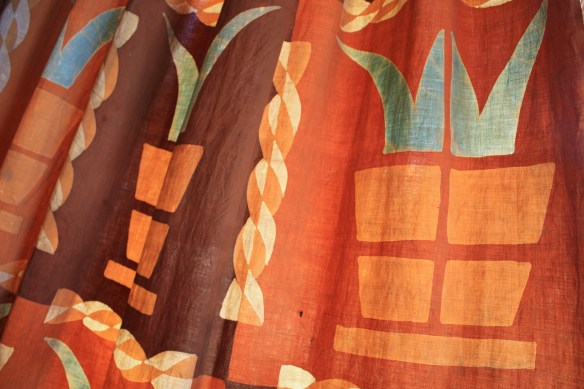
Designer draperies . . . .

Designer draperies . . . .

Window coverings were designed and manufactured in New York City especially for Berol Lodge.  They are extraordinary block print creations!

The art of linoleum . . . .

The art of linoleum . . . .

The linoleum in the kitchen and storage areas is unique.  Makes me want some linoleum once again.

Sit awhile . . . .

Sit awhile . . . .

In September 1989, a three-day meeting of U.S. Secretary of State James A. Baker, III and former U.S.S.R. Minister Eduard Shevardnadze was held in Berol Lodge.  This remote, very private location allowed them to discuss issues leading to ending the Cold War.

Today, the AMK Ranch is a National Park Service facility that was created in 1977 as an education center shared with the University of Wyoming to conduct research.  Johnson Lodge and guest cabins have been converted to dormitories for students and faculty from across Wyoming.  The peninsula has remained largely unchanged since Sargent settled there in 1890, and although use of the ranch has shifted from homesteading to vacation home to research station, the setting has remained constant.
The Art of Chinese Zodiac

Circle of Animals . . . .

Circle of Animals . . . .

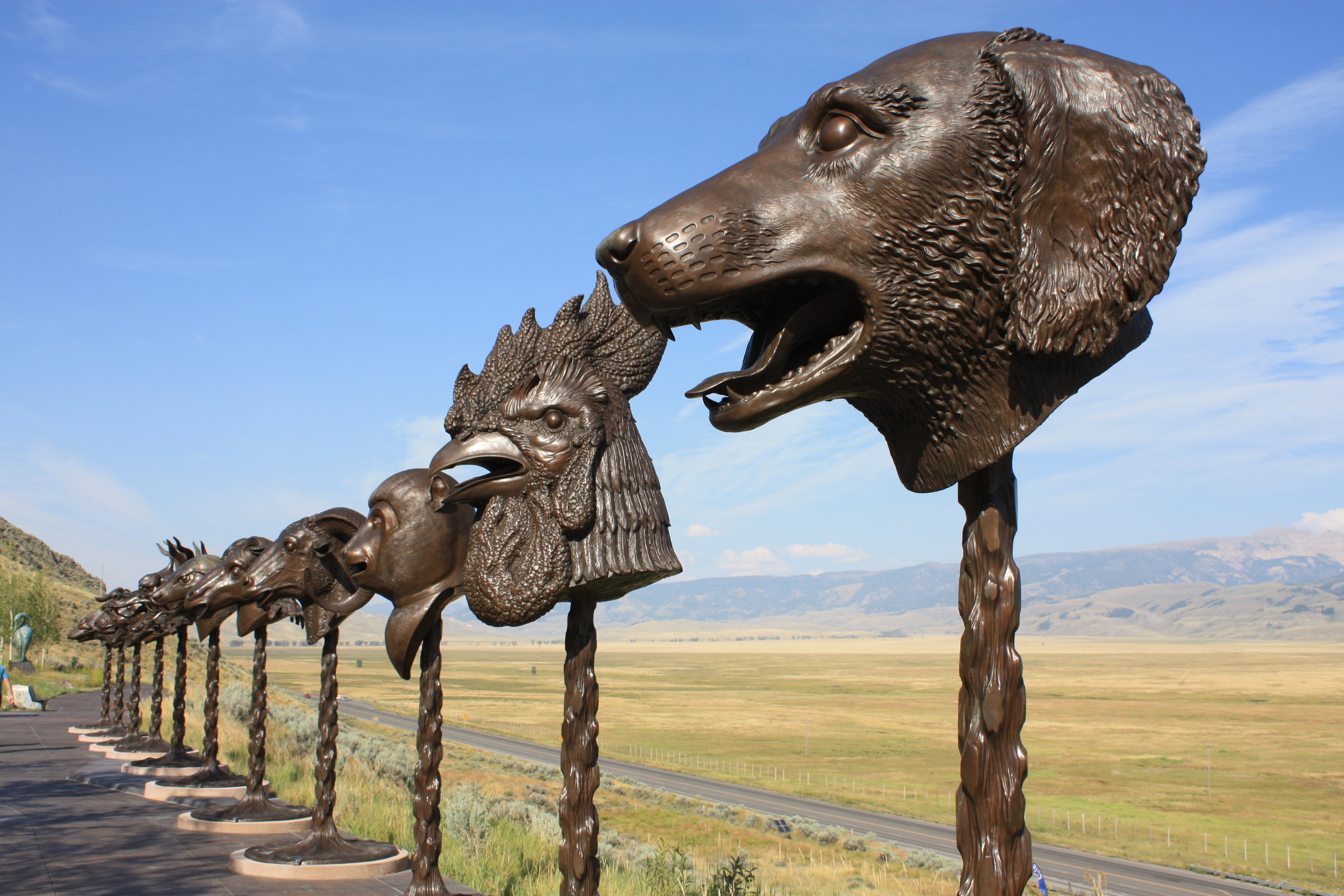
The National Museum of Wildlife Art just ended an exhibit (May 9 – October 11)  billed as “an exhibition of imperial proportions in an unparalleled mountain setting.”  These sculptures arrived in Jackson, Wyoming after being exhibited in Mexico City, London, New York and Chicago.  The zodiac heads is the first major public art sculpture by celebrated contemporary Chinese artist Ai Weiwei.  The bronze works were inspired by an 18th-century zodiak fountain in an imperial garden near Beijing, which was looted by French and British troops in 1860 during the Second Opium War.  Seven of the original heads have been recovered; five are still missing.

Ai Weiwei’s Zodiak Heads are designed to recreate the figures from the original fountain and to draw attention to the pillage of art by foreign governments.  He is an artist, architectural designer, curator and social activist, and the son of Ai Qing, one of  China’s finest modernist poets. His work has been exhibited in museums and galleries around the world.  This exhibit at the National Museum of Wildlife Art was exceptional in all respects and we were glad of the opportunity to see it.

A pioneering spirit . . . .

A pioneering spirit . . . .

Now this looks like something I can relate to–my Chinese zodiak symbol the rooster!  According to the literature, the rooster “seeks wisdom and truth, has a pioneering spirit.” These sculptures are massive and rise to approximately 12 feet from the ground.  They have incredible design detail and animal spirits.

Feel the dragon's breath? . . . .

Feel the dragon’s breath? . . . .

This one is spectacular and while the dragon is “robust, passionate, complex,” I would suggest that it is fierce and all-powerful!

King of the roost . . . .

King of the roost . . . .

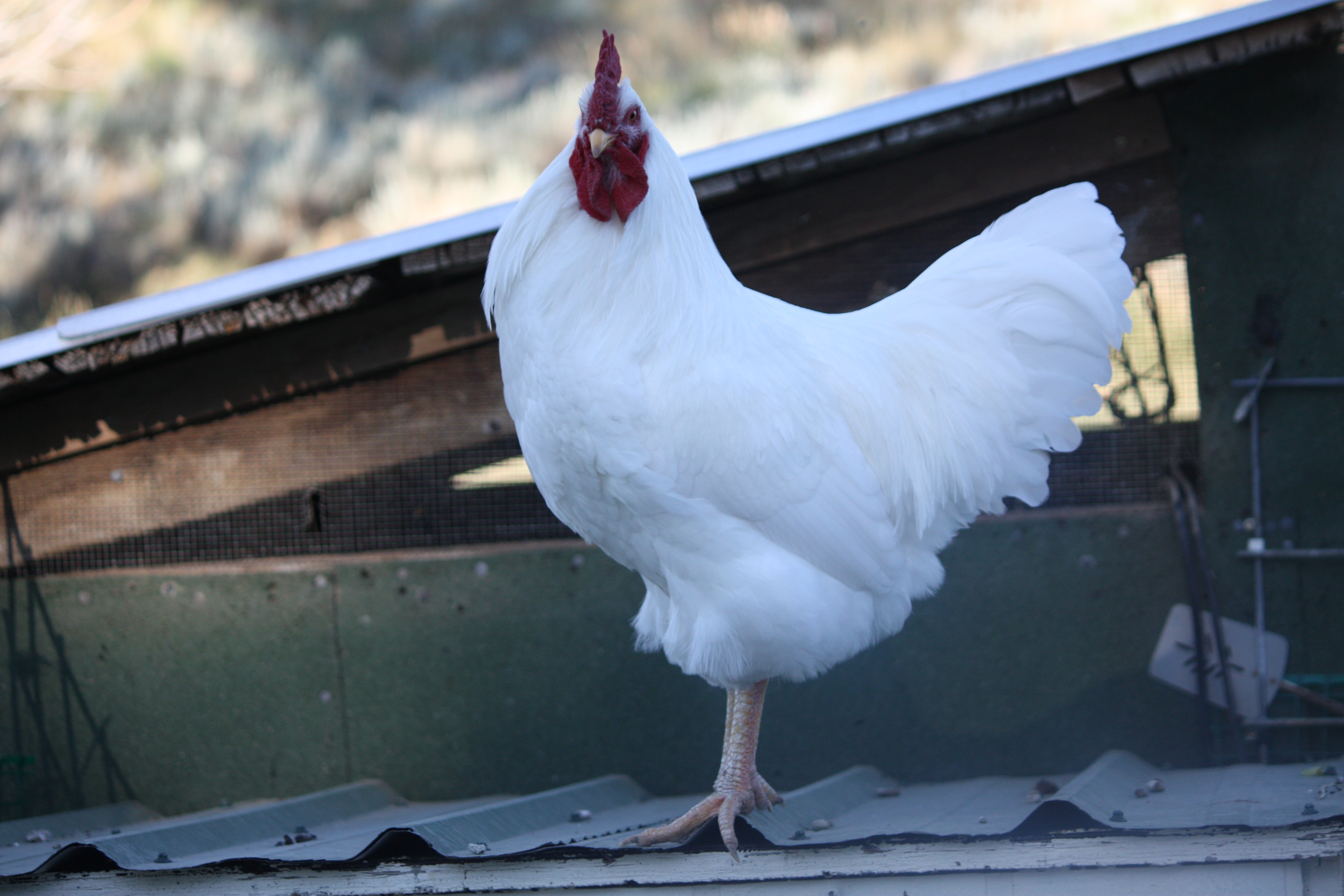
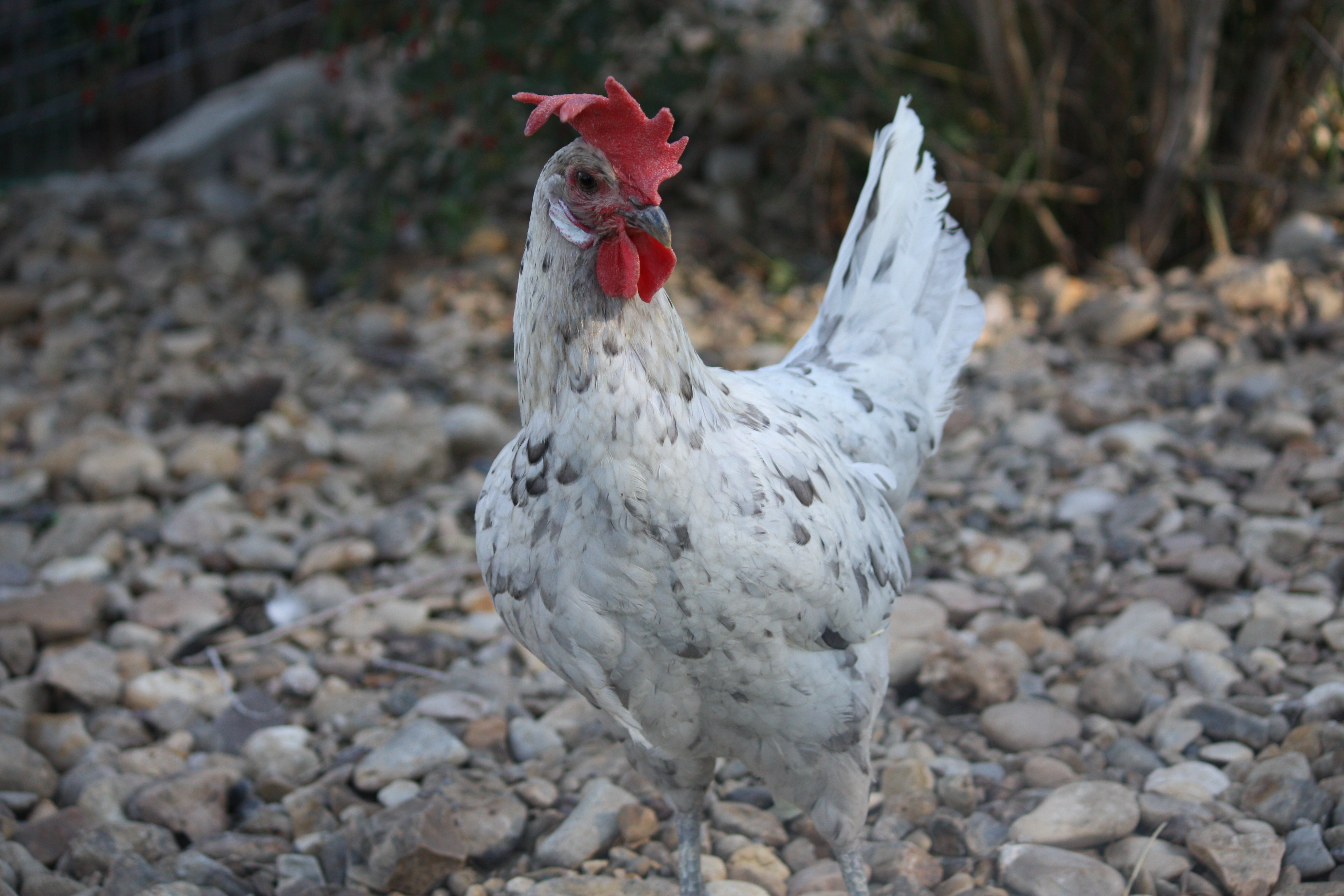
And then there is Cromwell, a little closer to home.  Hmmm, is the reason I cannot seem to part with this rooster is my affection for my zodiac animal symbol?


Golden Habanero Peach Jam, Oh My!

Peach goodness in a jar . . . .

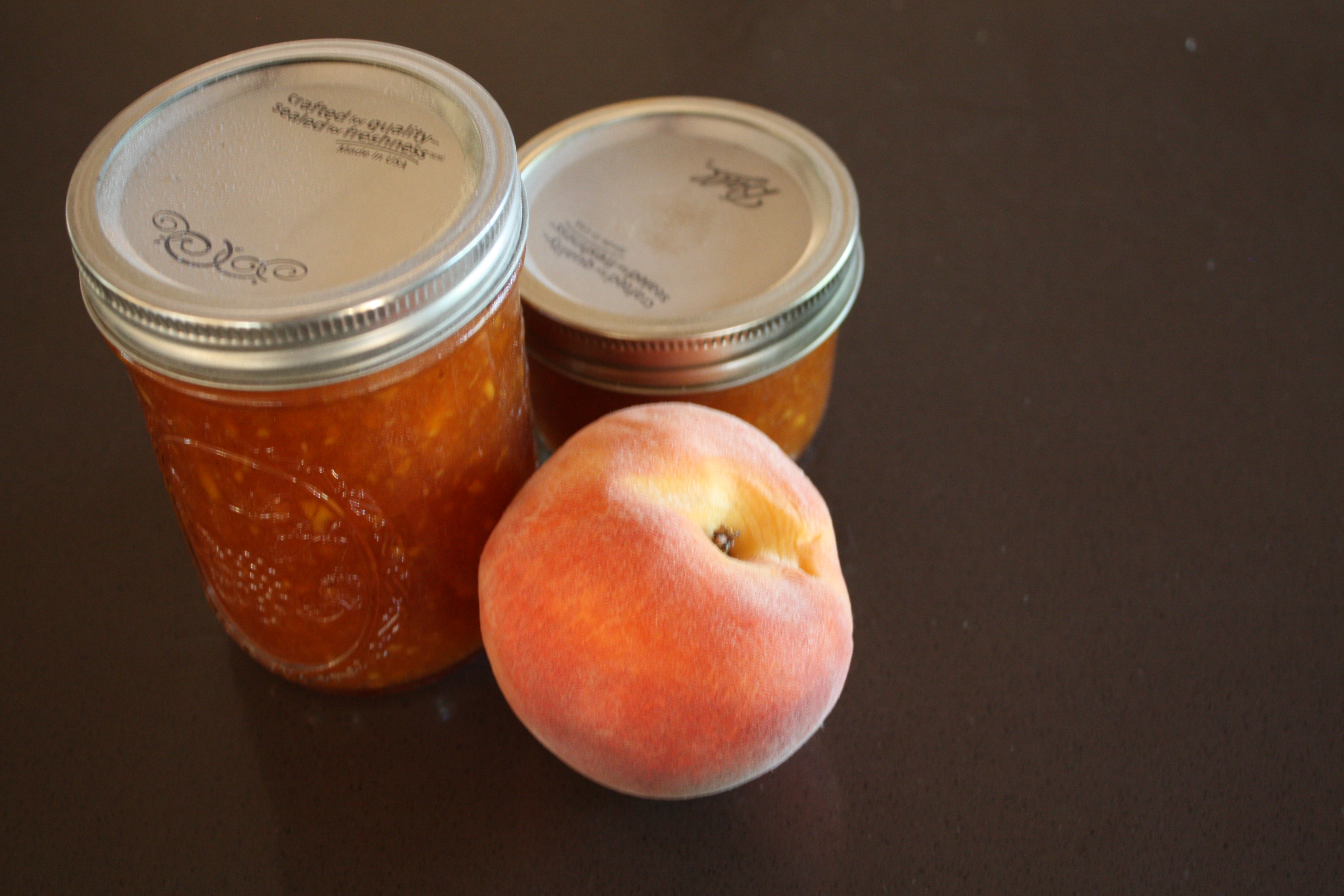
Peach goodness in a jar . . . .

We bought two cases of peaches from a truck that delivers to the local fire hall once a year, and have been enjoying the juiciest, most delicious Colorado peaches imaginable.  I have now used one case of “seconds” for peach jam and worked on a couple of recipes to arrive at a new combination.  My first batch from a recipe I found online is wonderful, however with the addition of brown sugar, cinnamon and allspice, the jam is a dark amber color, closer to apple butter than peaches.  I wanted to capture the beautiful golden color of the peaches and decided I needed to chop the fruit finer to have lots of little peach bits suspended in the jam.

I used a potato masher on the first batch, and had to flip the jars for 24 hours to keep the larger bits of peach from rising to the top, leaving only juice jam in the lower half of the jar. This second batch was chopped much finer in my food processor and I revised the recipe with different spices and all-white sugar to arrive at the golden peach color I was seeking. I am pleased with the small peach bits suspended throughout the jar of jam.

I reduce the sugar in jam recipes by 30-40% and have found the flavor is more “fruity” and less sugary, which is the way we like it.  The addition of habanero peppers gives the jam a subtle flavor that warms the tongue with pleasant heat.  Braise 1-inch pork chops on grill, place in glass baking dish and pour 1 cup peach jam over chops.  Bake in 325 degree oven for 30 minutes – yum!

Golden Habanero Peach Jam

7 lbs. peaches peeled, chopped fine (about 8 cups)

3/4 cup bottled lemon juice

9 cups white sugar

5 habanero peppers stemmed, seeded, minced fine

1 tsp nutmeg

2 tsp ground cardamom

2 tsp ground ginger

1/2 tsp tumeric

2 Tbs. vanilla

11 Tbs. low sugar/no sugar pectin powder

Put chopped peaches, lemon juice, sugar, peppers and spices in large non-reactive pot. Bring to rolling boil, spooning off foam.  Add pectin, stir vigorously and bring back to boil. Remove from heat, add vanilla and stir.  Spoon into sterilized jars, leaving 1/4 inch head space, wipe rims and place lids. Process 10 minutes in boiling water bath, remove and cool on a towel for 12 hours.  Enjoy!

The Chicken That Rules The Roost!

"Whatever!" . . . .

“Whatever!” . . . .

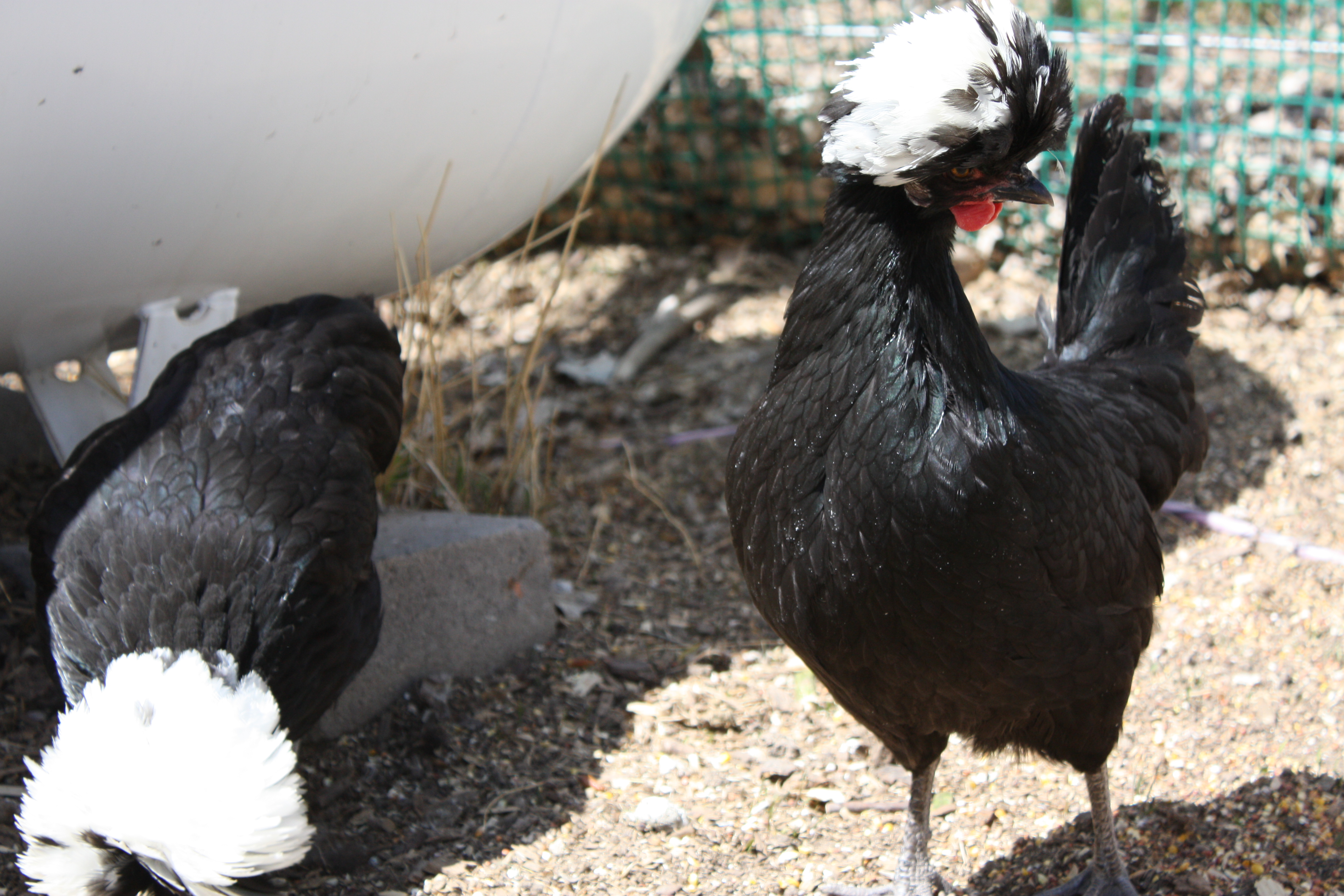
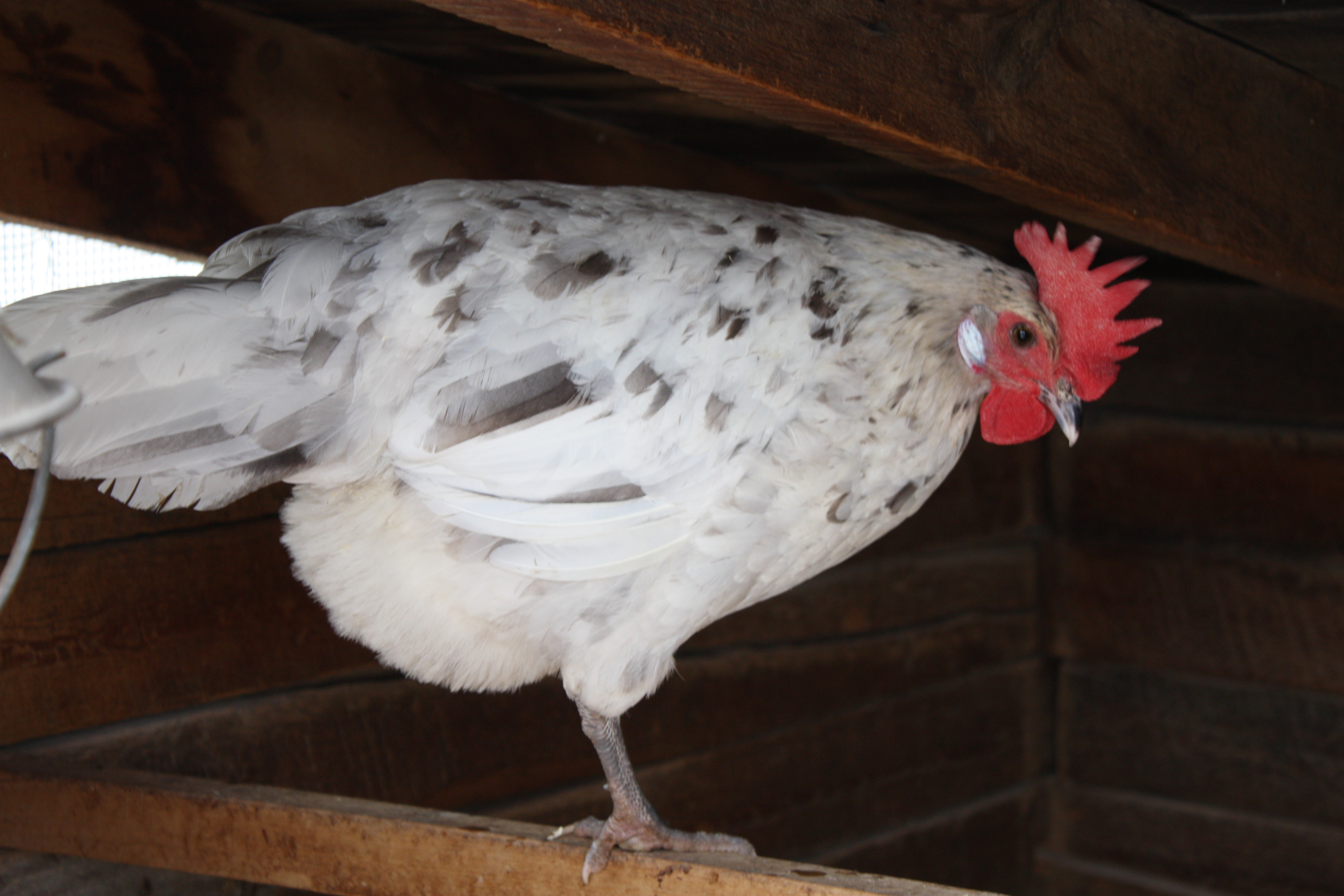
Meet Pearl, the hen who runs things around here.  How is it that one chick out of a box of 12 can be so different?  It is spring 2013 and after a couple months I had to separate two chicks from the rest due to “the pecking order.” The feathers in their beautiful crowns were being picked clean. Immediately after moving them next door into a hastily converted dog house, Pearl flew over the fence and joined the two chicks who were being picked on.  She refused to move back, even though the dog house was barely large enough for her and the two little white crested black Polish hens.

"We have to stick together!" . . . .

“We have to stick together!” . . . .

Pearl’s roommates seemed delighted to have her in their play yard and little house.  But then, Pearl only stayed overnight.  During the day she flew out of the pen and traveled far and wide, scratching in the flower beds and raking up wood chip mulch into mountains, leaving craters in the dirt where she dug for worms, bugs or whatever it is chickens dig in the dirt to find. I soon gave up trying to rake the mulch back into the beds she left in disarray and was constantly amazed at the sight of her wandering all over the place while all the rest of the chicks were content to stay home.

Renovation nearly complete . . . .

Renovation nearly complete . . . .

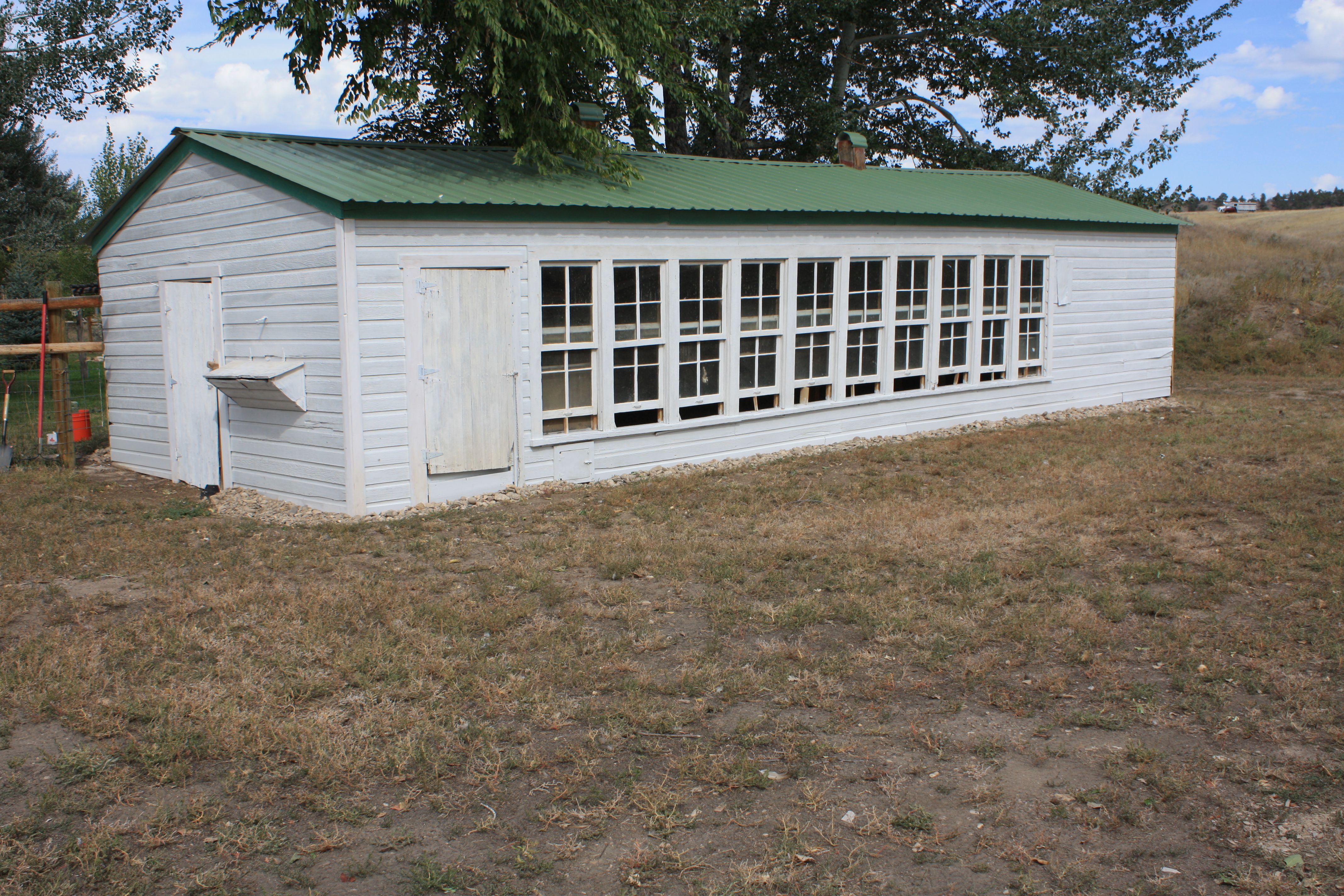
We were about 90% complete with renovation of the historic old chicken house and the weather was telling us it was time to make the move from the brooder house into “The Big House!”  Pearl and her two little roommates joined the other 9 hens in a fairly traumatic move. Things did not go well.  Little Marilyn and Phyllis, the white crested black Polish hens were being picked on again and had to be moved back into their former quarters in the converted dog house.  Before long, Pearl made her escape from “the big house,” traveling north up the road, around the garden fence and over the chicken yard fence to join the Polish hens where she was content to spend the winter.

"Now what?" . . . .

“Now what?” . . . .

The following spring 2014 a new batch of chicks arrived and we made plans to incorporate them with the Polish princesses.  Pearl, however, would have to move back into the big house to make room.  The brooder house and converted dog house were becoming pretty congested.  After much squawking and flurry of feathers, I captured her and carted her away.  After a week, I noticed she looked sickly.  Her comb was pale and floppy and she was lethargic, avoiding the other chickens and refusing to eat.  She looked to be at death’s door.  So, I gathered her up and took her back to the brooder house.  She sat by the water bowl drinking sips of water for over an hour.  Then she began to perk up.  By the next day she was eating again.  After a couple more days, Pearl was back to normal, leaping over the fence and commencing her travels.

A surprise awaits in the chicken yard . . . .

A surprise awaits in the chicken yard . . . .

This latest batch of pullets (2015) was maturing rapidly and beginning to lay. The one in the upper right corner of this photo was in a class all by himself, however.  It didn’t take too much longer to realize we had a rooster in our midst.  In fact, we had two roosters! The larger, more elegant of the two we named Cromwell, and the smaller one, Clarence who had no personality and picked on everyone.  He had to go.  When it came time for the pullets to move to the big house Cromwell had to stay behind.  Phyllis, one of the little Polish hens had died over the spring from who knows what, so only Miss Marilyn remained.  I was worried how she and Pearl would fit into the larger group, but it was ridiculous to maintain separate winter quarters with heating lamps, heated water bowls etc.for two hens, a rooster and then all the others. I felt confident Pearl would be happy to leave Cromwell behind, as he was becoming aggressive and she made it clear she did not like him.  Or so I thought.

Chicken idyll . . . .

Chicken idyll . . . .

The latest move was somewhat of a success.  Miss Marilyn is doing nicely in the big house with all the others and has not been picked on.  She chooses not to hop up onto the roost to sleep with the others, but perches on an ancient wooden box below the roost that was originally designed to hold oyster shell.  And Pearl?  Pearl went home once more into the clutches of Cromwell.  Two weeks have passed and I am still waiting for her to scratch the joint and head back to the big house.  Only Pearl knows what comes next.

County Fair

"Want to scratch my ears?" . . . .

“Want to scratch my ears?” . . . .

Walking the exhibit barns at a county fair can be more fun than . . . well, just a lot of fun.  This soulful-looking goat was poking her head through the fence for a scratch or a treat.

"Got milk?" . . . .

“Got milk?” . . . .

Well, probably not from this magnificent Red Angus steer.  I asked him for his autograph, but only received a blink of his big brown eyes.

Which twin has the tony? . . . .

Which twin has the tony? . . . .

A lotta beefsteak down for a nap.  These Black Angus beauties don’t seem to have a care in the world!

Herefords have more fun! . . . .

Herefords have more fun! . . . .

My worries that Herefords are an endangered species were laid to rest – quite a few were shown in the fair.  Dad raised Hereford cattle, as did most of the Wyoming ranchers in the past. Now the range is dotted with Black Angus or “baldies” with a white face.

"Like my face mask?" . . . .

“Like my face mask?” . . . .

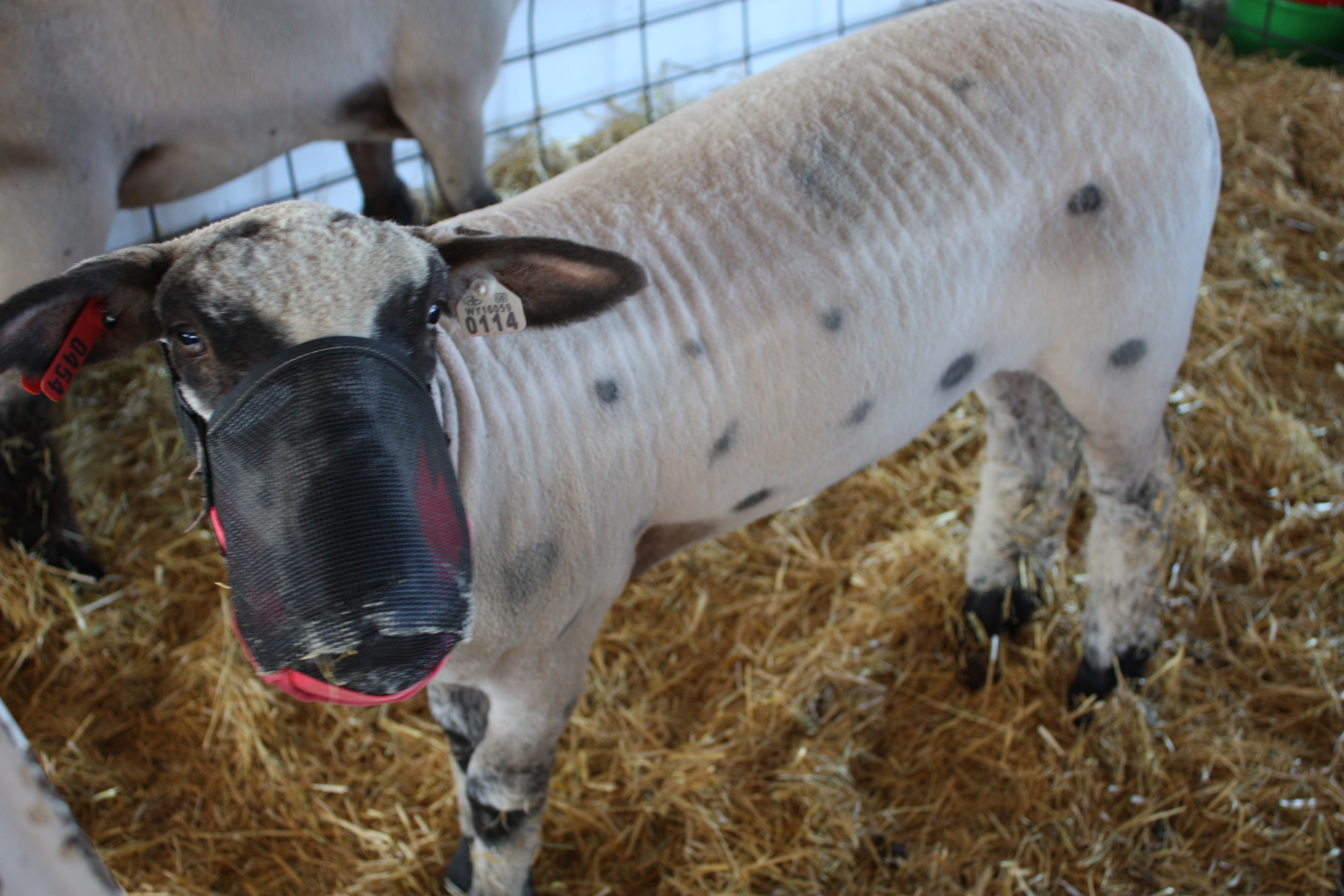
What, spots?!  This lamb had the barn all abuzz.  The mystery was solved when the photos of the ever-popular “sheep lead” came out in the newspaper featuring this lamb led by a delightful young lady dressed as “Cruella Deville”. They took first prize.

"So, I got stripes!" . . . .

“So, I got stripes!” . . . .

From spots to stripes–what is the sheep industry coming to?  Will we have variegated mutton chops?

"I wanted to be different" . . . .

“I wanted to be different” . . . .

This muckleteedun mix of white and reddish brown had us scratching our heads for the name of a breed.  No matter, she was mighty pretty.

"I feel naked!" . . . .

“I feel naked!” . . . .

Oh, now there is going to be trouble.  This lamb was bagged to keep it nice and clean for the show ring, and this rebellious little dickens has had enough of it.  Besides, it is darned hot in here, and the big fans are all over in the cow barn.  Is that any way to treat a woolie?

"Want to take me home?" . . . .

“Want to take me home?” . . . .

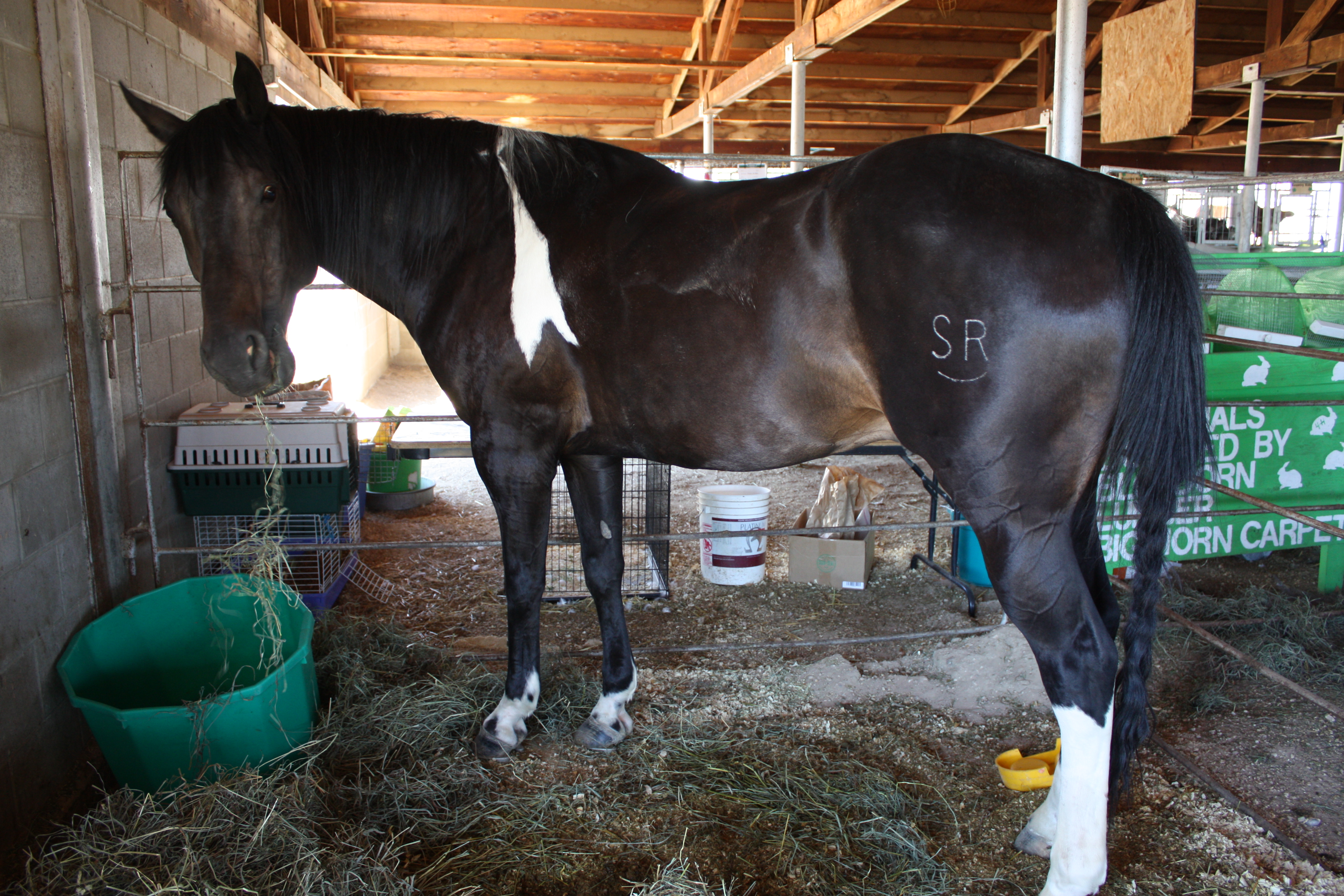
This handsome older horse is not here for the show ring, but the sale ring.  Another couple horses are nearby.

"A little down on my luck" . . . .

“A little down on my luck” . . . .

A young lady standing nearby said they were selling the horse because “he’s 23 years old.”  He must have been a beautiful animal in his prime.  I felt sorry for him.

"Im dreaming of better days" . . . .

“I’m dreaming of better days” . . . .

As a youngster, I could never make it to the auction with my 4-H animals.  Dad had to haul them home and turn them out to pasture so I would get over my attachment.  I could not have gone to the auction on this day without wanting to buy both these fine old horses and turn them out to pasture until the end.
Strutting our stuff in the parade . . . .

Strutting our stuff in the parade . . . .

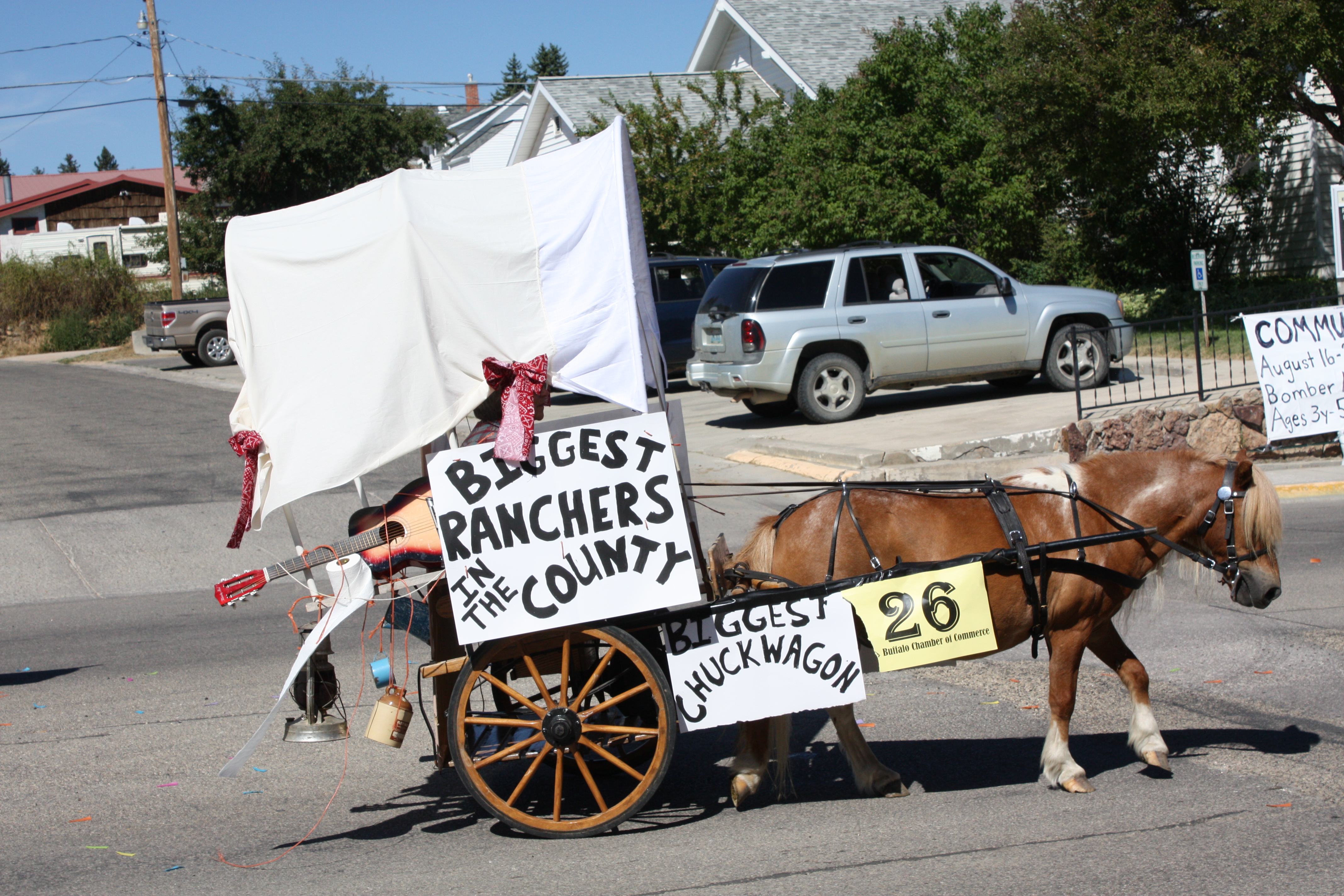
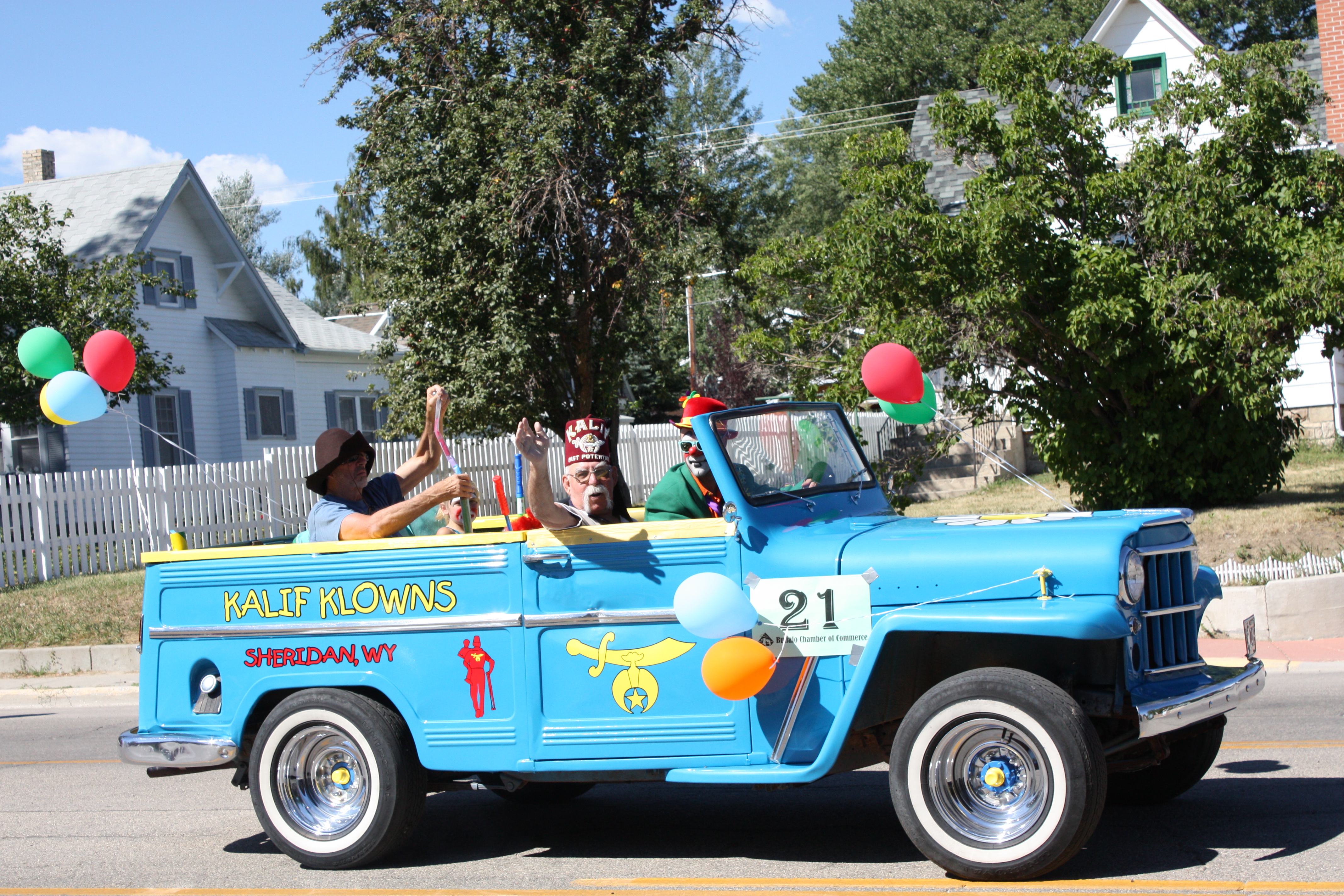
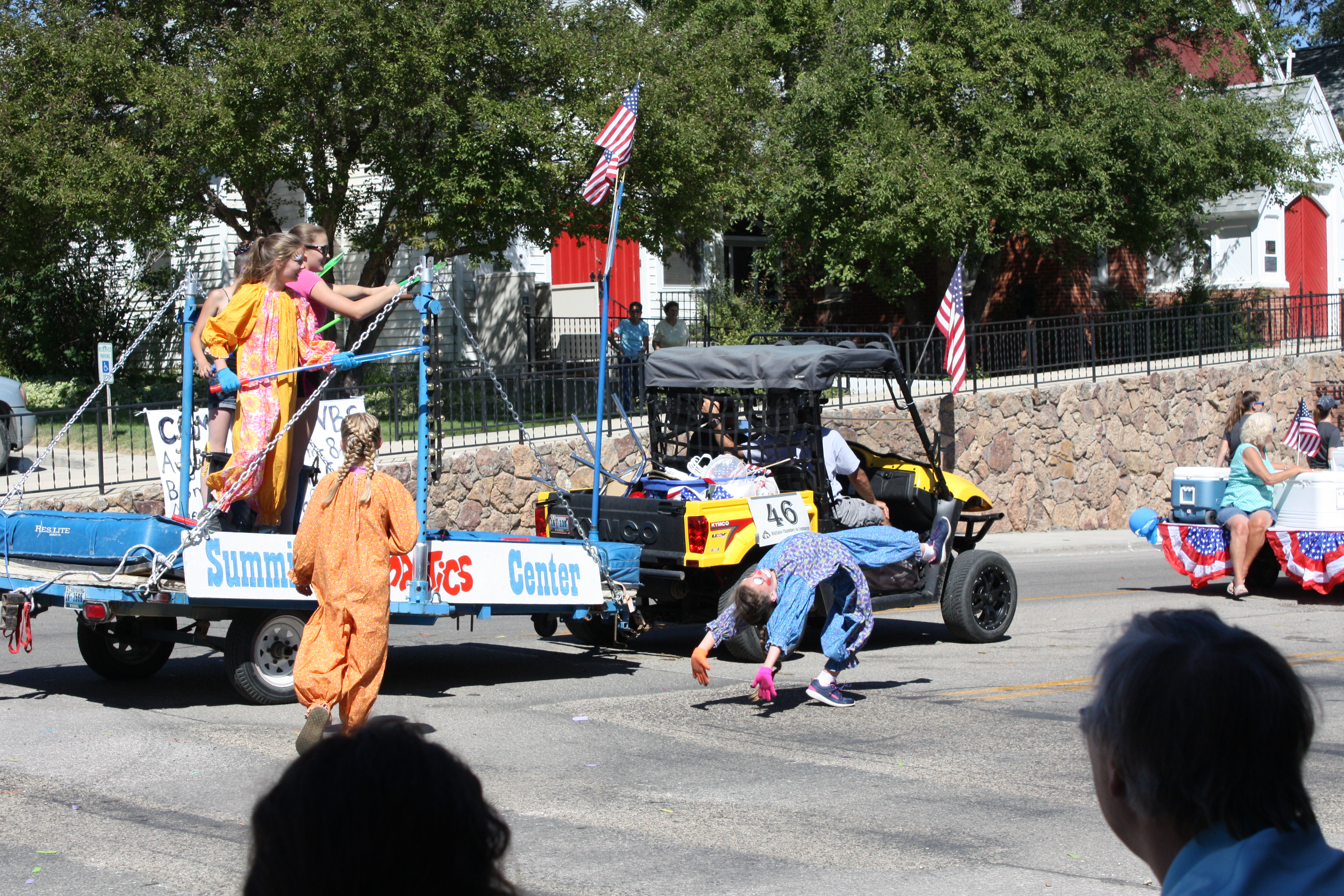
No self respecting county fair fails to produce a parade with old cars, horses, marching bands, fire trucks, tractors and young girls turning cart wheels.

Marching to the beat of the drums . . . .

Marching to the beat of the drums . . . .

Main street America on display.

Biggest little horse . . . .

Biggest little horse . . . .

This gang had the best float, in my opinion.

"Where's my kazoo?" . . . .

“Where’s my kazoo?” . . . .

Shriners have more fun.  These guys had clowns walking the street, mini cars racing around to dizzying effect and a tarted up truck making more noise than six marching bands!

Ice cream I scream . . . .

Ice cream, I scream . . . .

The height of fashion.

Walking pretzel! . . . .

Walking pretzel! . . . .

These little girls were full of amazing acrobatic tricks, but back flips on hot pavement are not my idea of fun.  For that matter, back flips anywhere are out of the question.

Pretty well sums it up . . . .

Pretty well sums it up . . . .

“Grab life by the horns” is a pretty good philosophy for this young bunch of ranch kids.  And have fun at the county fair!


Who Has Seen The Wind?

looks like a few twigs fell . . . .

looks like a few twigs fell . . . .

“Who has seen the wind? Neither I nor you, but when the leaves hang trembling, the wind is passing through.  Who has seen the wind?  Neither you nor I.  But when the trees bow down their heads, the wind is passing by.”  Poem by Christina Rosetti.

New addition? . . . .

New addition? . . . .

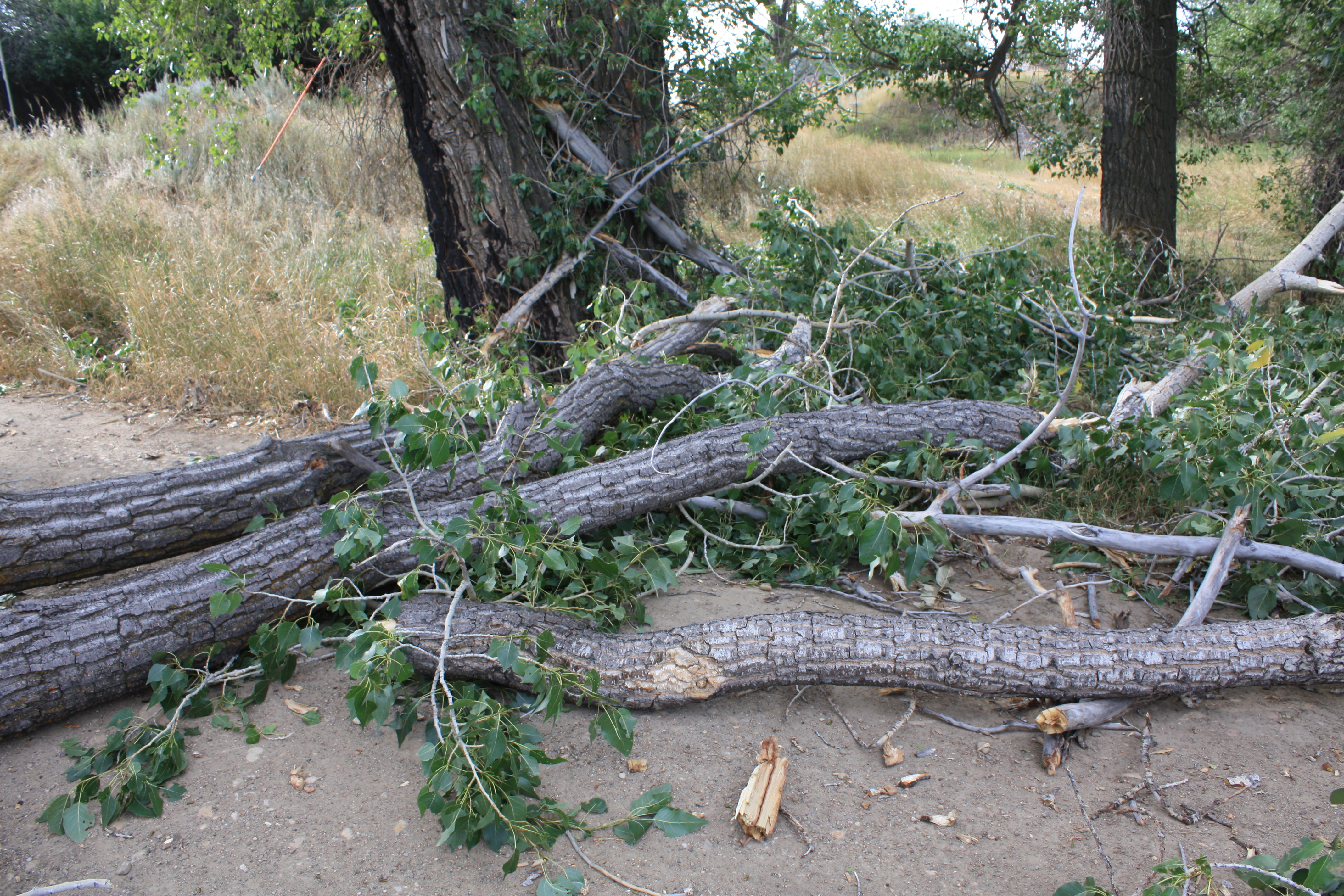
Not to belabor weather-related disasters of late, but we recently had wind gusts that lifted the tin roof off Neighbor Tom’s shed and blew down huge limbs from our cottonwoods. Our road was effectively blocked causing some minor disruption, and limbs were down and strewn across the ground in every direction.

looking like wind . . . .

looking like wind . . . .

It took two big burly guys most of a morning with chain saws to clear the road and we will be weeks cleaning up the rest of the mess.  Oh aching backs!  Wyoming is known for its wind and it was estimated gusts up to 80 mph blew across the area.

too big to rake, too small to drag . . . .

too big to rake, too small to drag . . . .

Wonder how many semi truck trailers were left along the Interstate?

Yellowstone Forest Fire of 1988 – Today

As far as the eye can see . . . .

As far as the eye can see . . . .

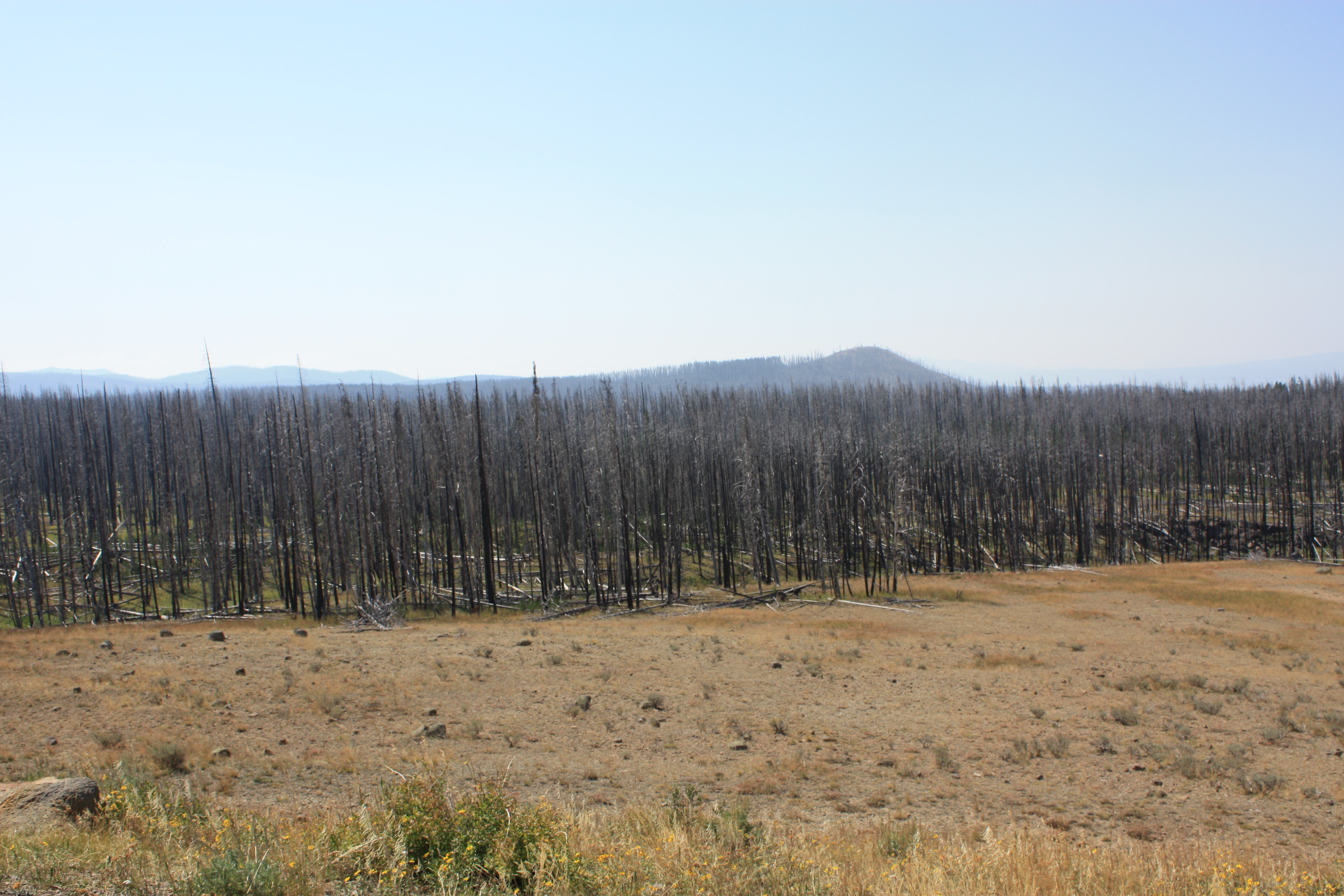
A series of small fires erupted into a catastrophic forest fire in 1988, nearly engulfing Old Faithful Inn and other historic structures.  Nearly 30% of the park was impacted by the fires which burned with such heat and intensity that much of the area remains a dead zone.

Can't see the forest through the trees . . . .

Can’t see the forest through the trees . . . .

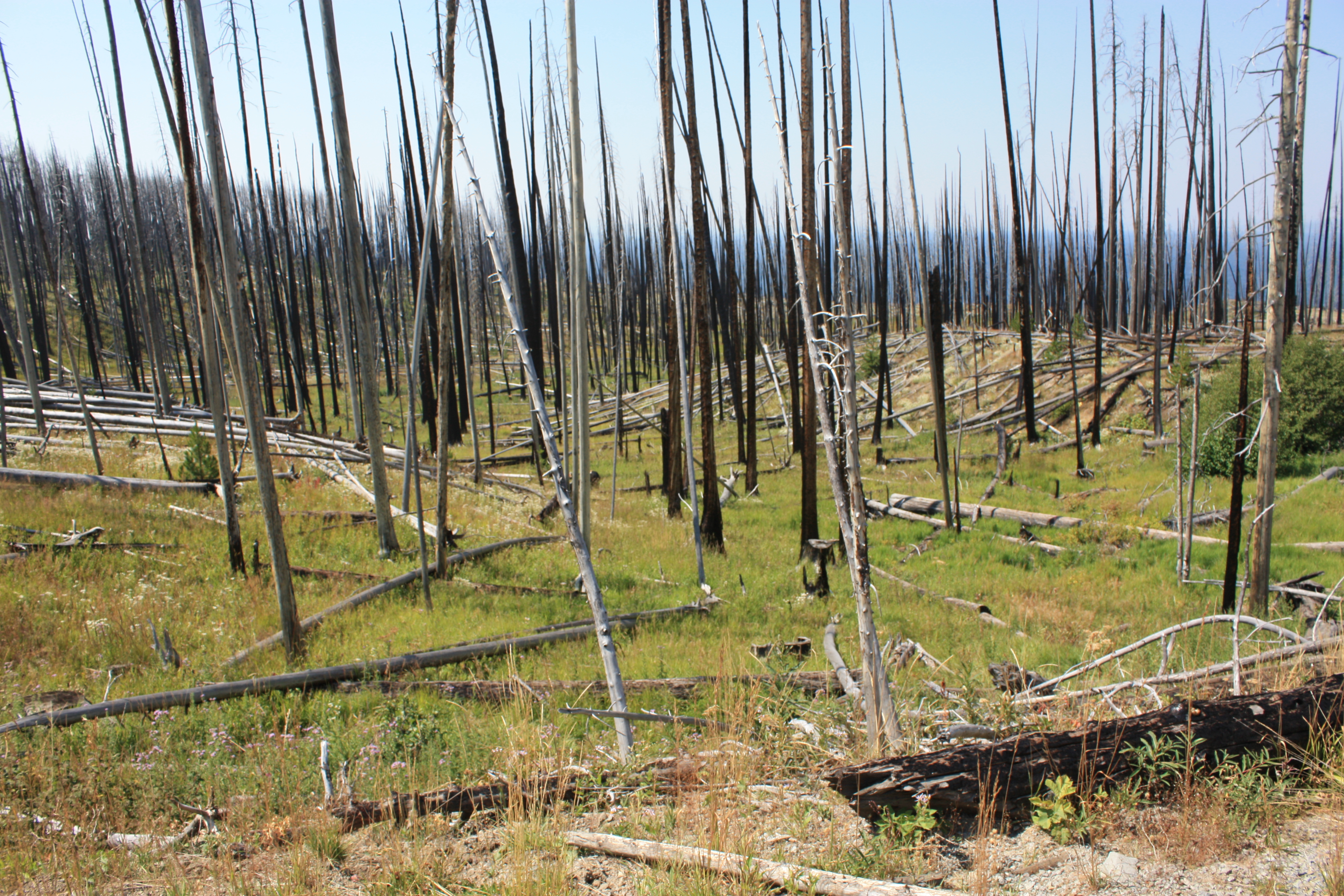
Twenty-seven years later, regrowth of the trees has not yet begun.  Volunteers and park personnel have planted thousands of replacement trees but the road leading from the north entrance at Cody, Wyoming to Yellowstone Lake is scarred by fire that burned so hot the seeds for regrowth were destroyed.

Bereft of wildlife . . . .

Bereft of wildlife . . . .

A public policy of suppressing forest fires for the past 100 years has left forests in the western United States thick with undergrowth and trees growing so densely that the fuel build-up is frightening.  Add to that the curtailment of logging and thinning of the forest and you have a prescription for what is happening today in forests in Washington, Oregon, California, Idaho, Utah, Colorado, New Mexico and Wyoming.

Miles of dead trees waiting . . . .

Miles of dead trees waiting . . . .

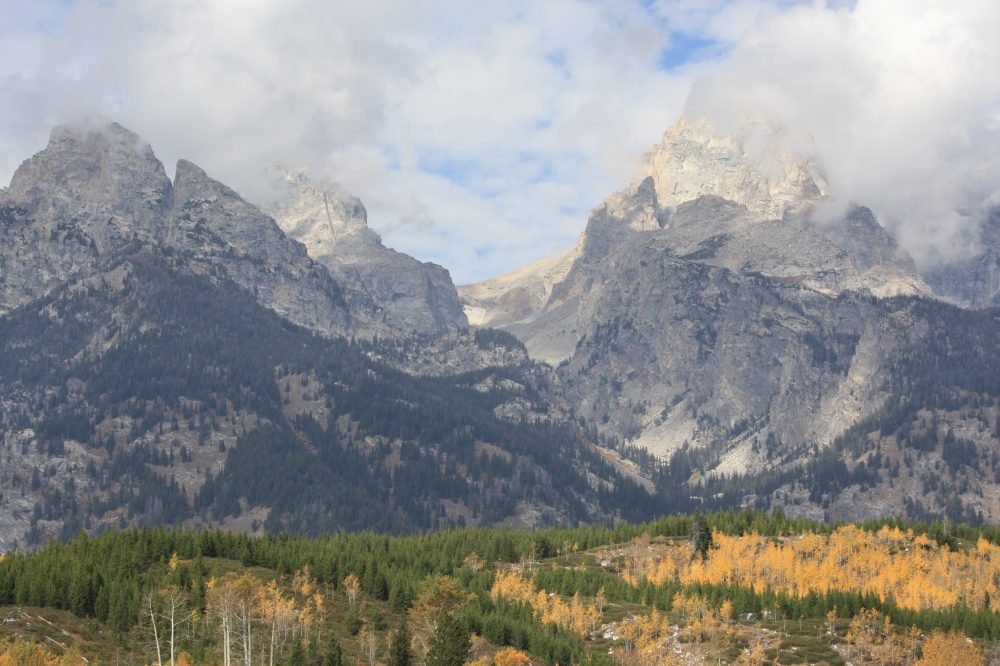
We entered Yellowstone from Jackson through Teton National Park.  The devastation from that entrance is not so evident, however the old growth pines and spruce trees are nowhere to be seen and have been replaced by a furry vista of young trees growing so densely that in a few short years it will become the same potential disaster that Yellowstone strives to recover from.  Is this the right way to preserve the forests in our national parks?