SAVING GRACE

In the autumn of 2003 we spent a few days at our cabin at Red Feather Lakes west of Fort Collins, Colorado. Our routine is to walk in the morning and evening around a choice of five different lakes that surround our cabin. The lakes are quiet in October as the ducks and Canada geese have begun to migrate and we speculate that most of the water fowl only migrate as far as Fort Collins where golf courses and city parks provide a temperate climate, lots of company and ample food on the nearby grain fields that are harvested in the fall.

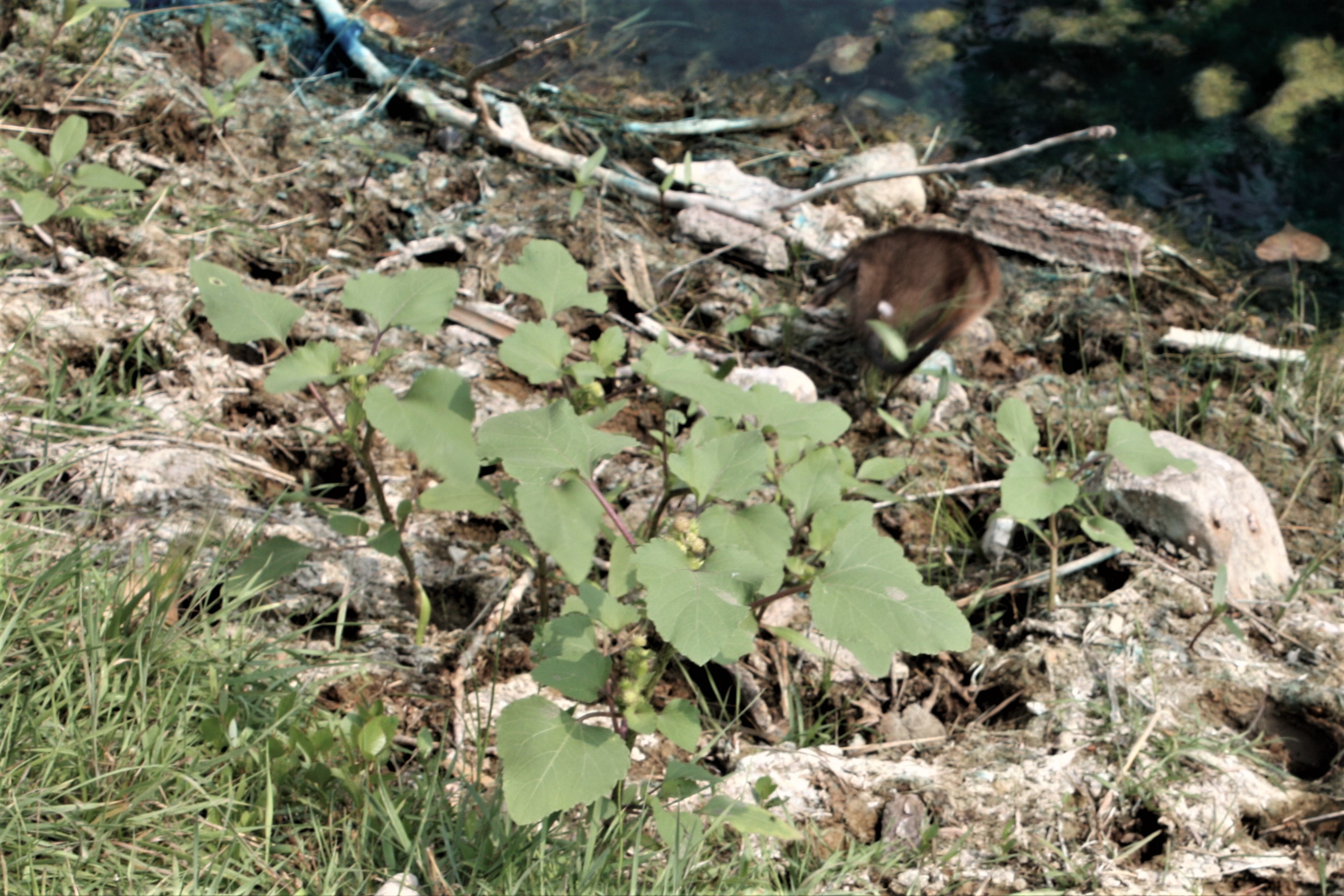
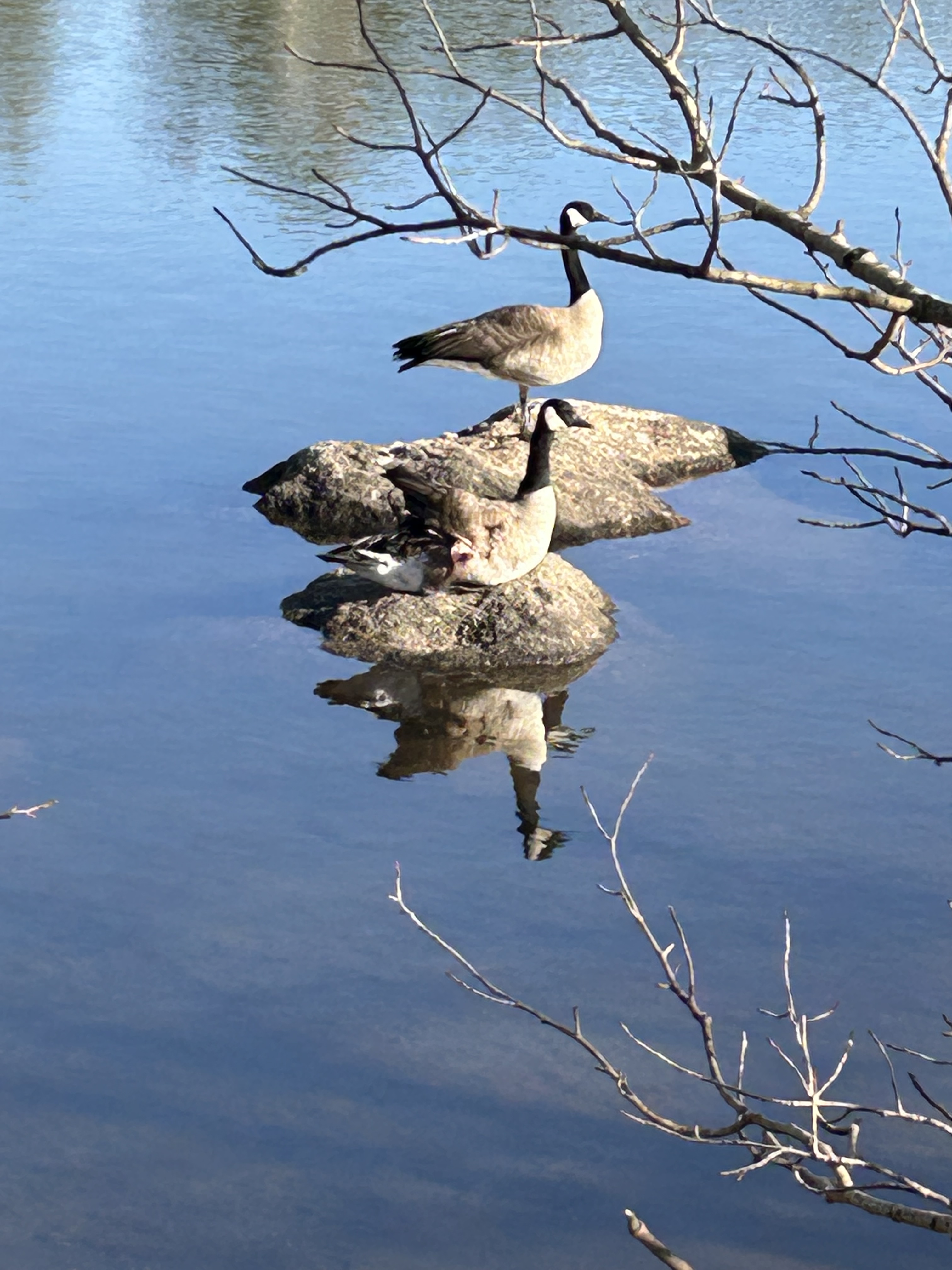
On one particular day, we noticed a lone goose close to the shoreline of Lake Shagwa. As we drew close to her, we noticed her left wing was pointed skyward in an awkward position and we made a couple of assumptions: 1) Her mate was not with her (Canada geese mate for life) and may have perished in an attack that injured her or 2) her mate left her behind because her broken wing prevented her from flying.
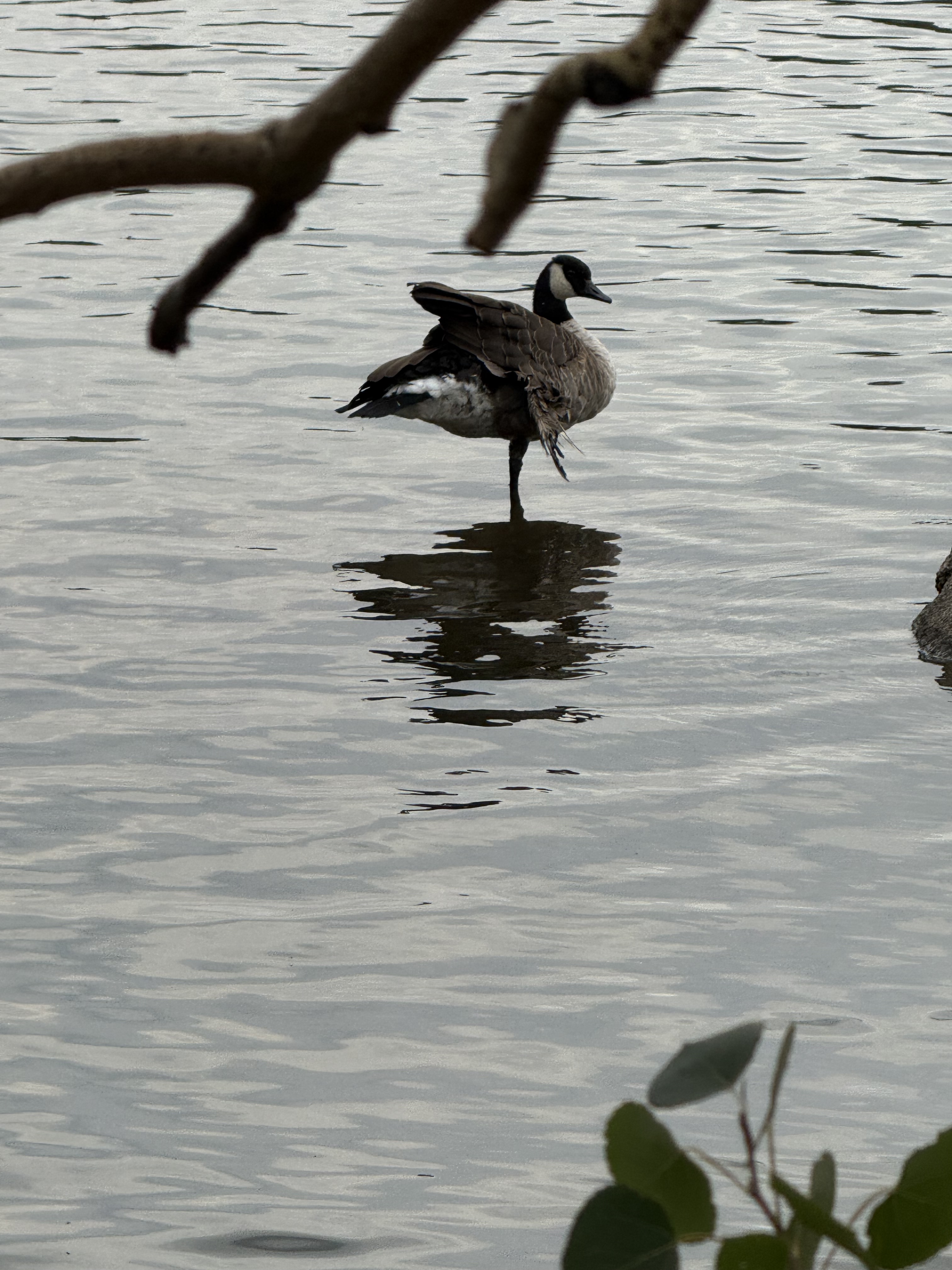
We watched her for a few minutes, and I took a photograph of her on my cell phone. We were saddened by her obvious dilemma, but had no idea how to help her. She could swim well enough and trying to catch her out in the water would be a fool’s errand. We moved on, silent in our thoughts as we tried to imagine what would become of her with winter coming.

In the spring of 2024 we made our routine visit to the cabin to open up for the summer season and began our ritual of walking each day around the lakes, which were still frozen over. Out in the center of Shagwa an aerator pumped, creating a circle of open water about eight feet in diameter. Shagwa is a shallow lake and oxygen is pumped from shore to create an opening to maintain an oxygen-rich environment for fish. Much to our surprise we could see a lone Canada goose with a distinctive handicap–her left wing pointed skyward–standing at the edge of the water. We marveled that she had survived the winter and it was clear the opening in the water, which would allow her to escape predators traveling over the ice, was her saving grace.

I photographed her several times throughout the summer and she seemed to be doing well in spite of being unable to fly. She was usually with a group of geese or ducks and spent time close to shore where it appeared they were being fed by passersby or some of the year-round residents in the cabins along the shore. We saw her paired with another goose and hoped she would find a mate for companionship.
In January of 2025 we made an off-season trip to Red Feather Lakes to check up on things and have a post-holiday break. Roads were dry as there had been little snow and we took walks around the lakes as usual. When we came to Shagwa we were amazed to see a little hut erected out on the ice near the opening where the aerator created open water. I focused my camera’s distance lens on it and it appeared to be a large canvas dog carrier with a clear plastic window on two sides. And standing alongside it was Grace. She had protection from the bitter cold wind that Red Feather is famous for and it was close enough to water’s edge for her to escape any intrusion of coyotes, fox and other predators.
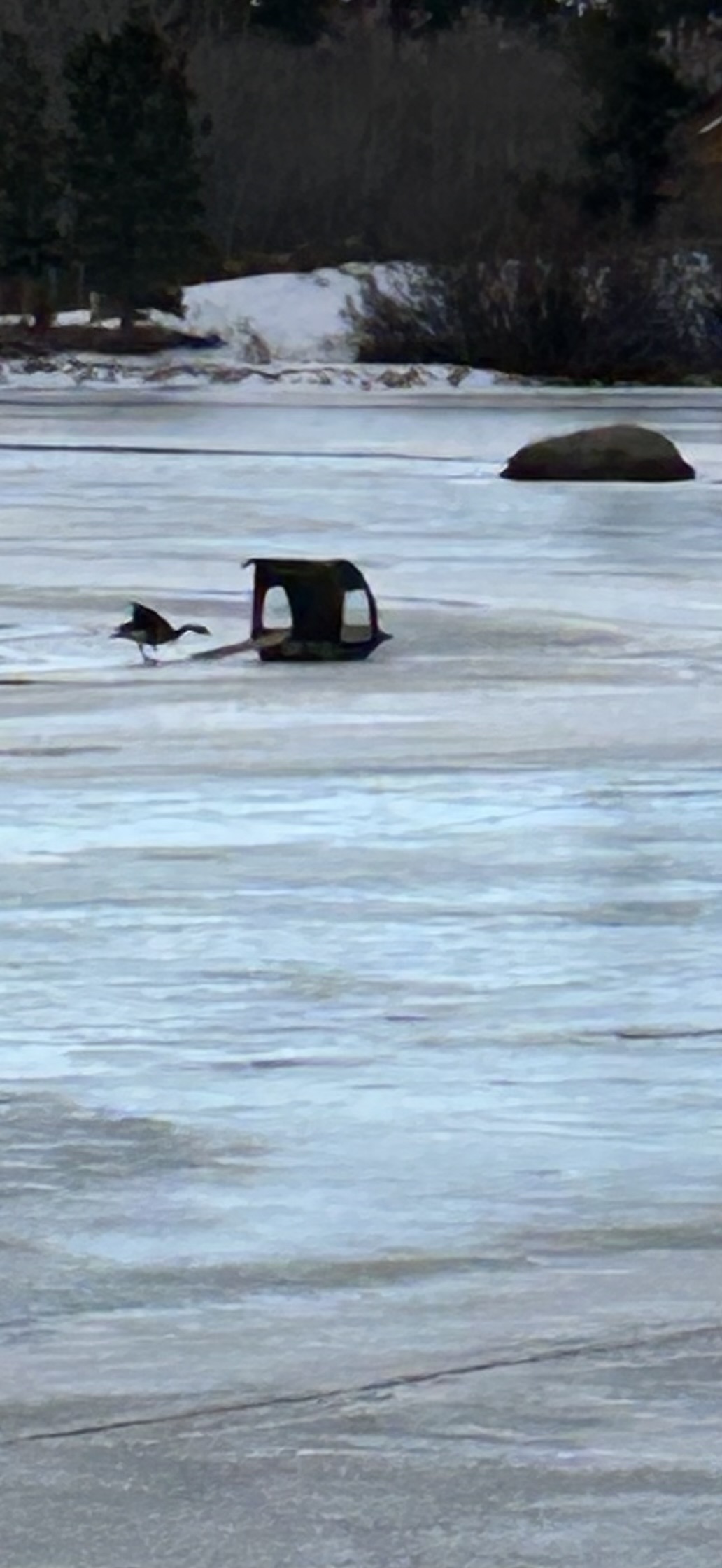
We were excited and grateful that someone cared enough for this stranded goose to offer her protection from the elements and food enough to stay alive. Later in the spring we happened upon an elderly woman feeding the ducks and geese along the shore. We spotted Grace and I remarked to the woman (who I will refer to as Grace’s caretaker} how amazed we were that she still survived and wondered who had braved the ice to plant the little hut. It was no mean feat, as whoever did it made certain the wind would not blow it away and got it secured by crawling over the ice to stake it firmly in place. By then it had been removed and ice on the lake had begun to break up. Where did it go?

The Caretaker

The ensuing conversation revealed the man who installed the hut had removed it when the ice melted and she heard he was moving away. She did not know how to contact him and speculated as we did whether he had passed the hut on to somebody else in case it was needed for another winter. My research has revealed that Canada geese can live to 30 years of age and it seemed like a long road ahead for Grace.

We are now approaching another autumn, Grace’s third as a captive of Shagwa, and it seems to us she has endured a great deal of uncertainty and risk. We ponder over her fate and wonder if her winter hut will miraculously reappear, if she will get enough to eat, if she will be strong enough to overcome the great odds she will face in another winter? Would it be possible to capture her, mend her broken wing and set her free once again? Some would say it would be best to euthanize her, but my heart breaks at the prospect of destroying a creature who has struggled to live her life as God intended.
OCTOBER IN THE LAND OF ENCHANTMENT

IMG_2381


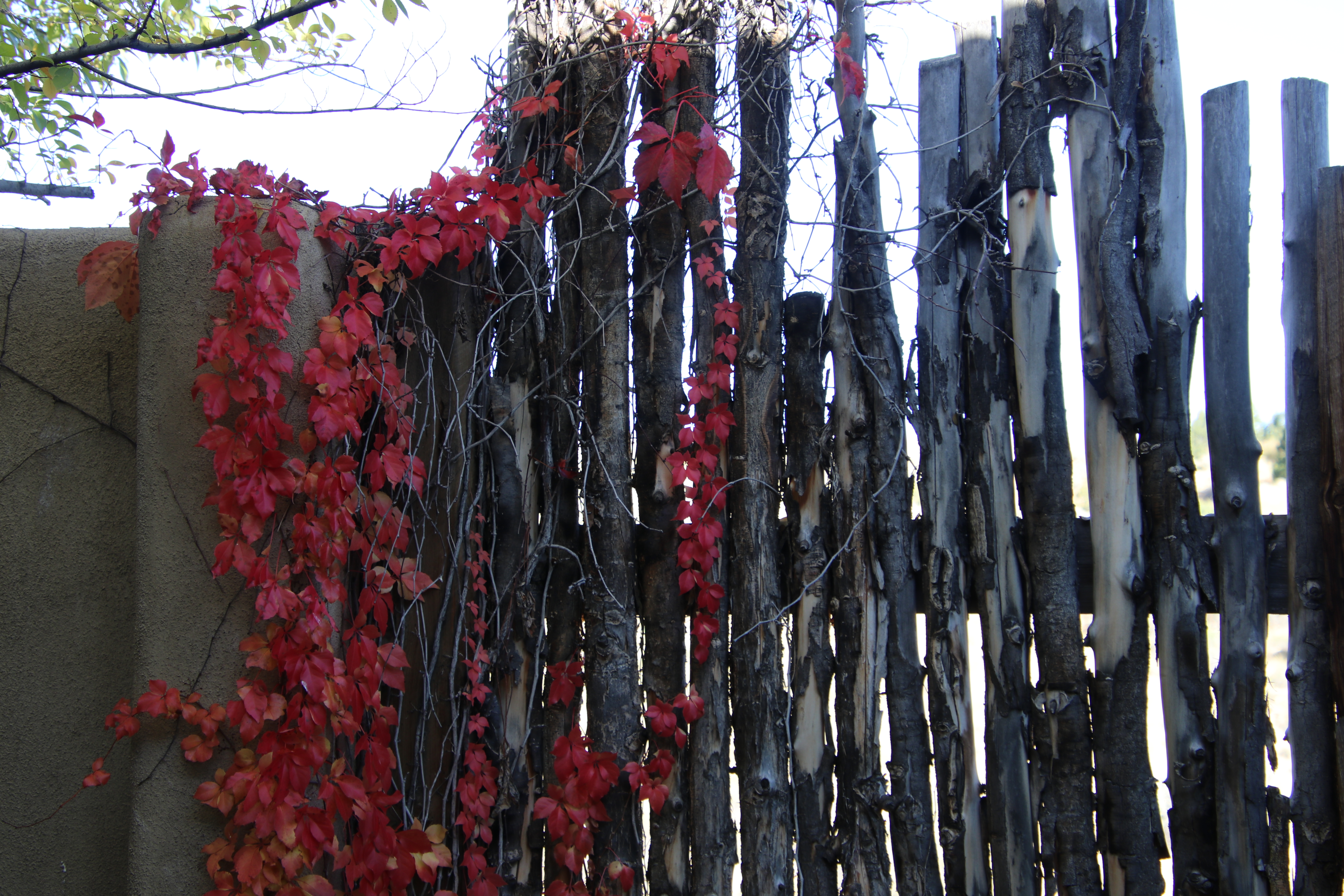
Taos, New Mexico has been a favored travel destination for a very long time. The magic has not faded over the span of many years, and our recent visit confirmed it. The “land of enchantment” is still enchanting.

img_2403

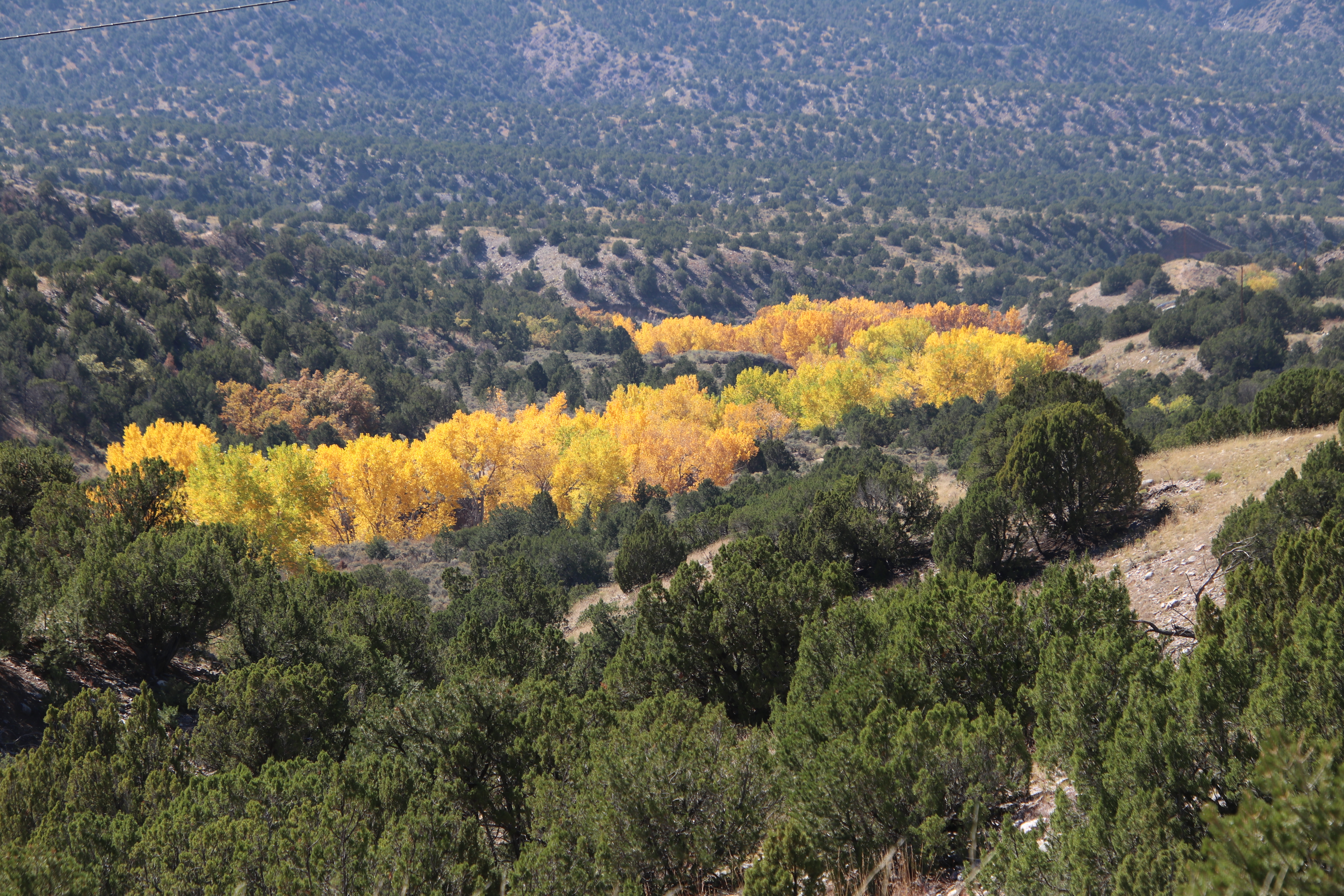
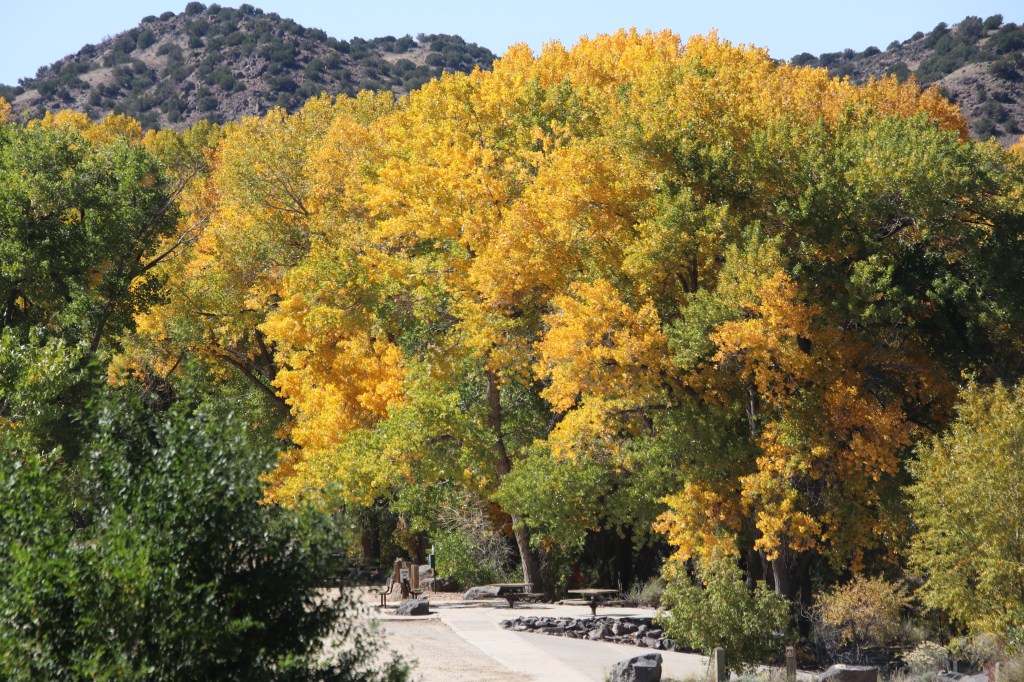
We have tried all seasons, but for me autumn is the best. The colors are vibrant, the weather clear and crisp and the air is fragrant with pinon pine. We took an afternoon drive along the Rio Grande River from Espanola to Chimayo and the river was lined with bright colors in the cotton woods and willows.

The aspen rimming the tall peaks of the Sangre de Cristo Mountains had dropped their leaves and bright color in most areas, but the river bottoms held on to their glory.

Mid-October

Winter seems like a distant reality when the sun is warm on your face and no coats required. Not certain Wyoming was quite so balmy on this day.

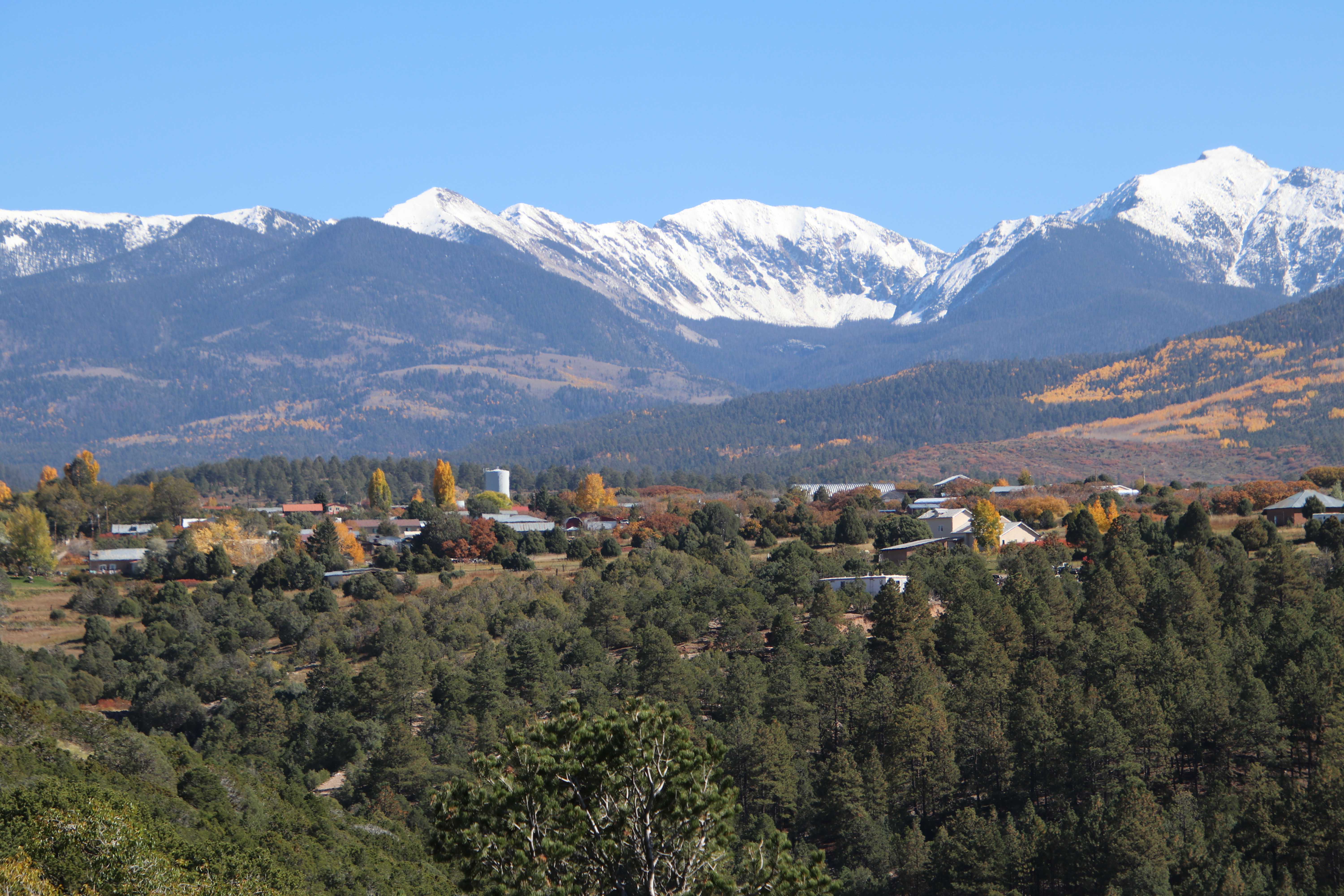
Sangre de Cristo Mountains

The village of Truchas seems to sleep in the foothills of these majestic mountains.

Blanket flowers blooming in Taos park

Many flowers were still putting on a show, which means Jack Frost has not yet arrived.

Holly Hocks

Leaf with morning dew

We sat on a bench in the square in Taos and the dew drops on this leaf were exquisite. So was the coffee.

The leaves above us were vivid against blue sky

Roses need no explanation

We rambled through the shops in Taos and couldn’t resist capturing a courtyard with many roses blooming.

The view of Taos Mountain

Our residence sits on a hilltop with unobstructed views through the windows of Taos Mountain and the valley below. It is a short drive into town and we enjoy the peace and quiet. We have been guests of the owners of the house and their Bed and Breakfast formerly known as the Hacienda del Sol on many occasions and feel fortunate that they allow us to have our companion Maud along for the experience.

Muskrat Love

IMG_9271.JPG

“I hear you knocking but you can’t come in!” . . . .

By coincidence, I was in the basement reorganizing jars of last year’s canned goods to make room for the current crop when I heard a “scritch-scratch” noise coming from the window well.  It was very difficult to see what was making such a commotion through 100-year-old window panes so stained you cannot see through the glass.   I could observe movement and a shadow running back and forth, but could not see what creature might be in such a frenzy.

I assumed we might have an eager pack rat trying to dig his way into the basement. We have had these pesky visitors before.  They make a terrific mess and their downright thievery of a variety of small objects which they tuck into their nests is a nuisance.  Dad had a solution and would go for his pistol.  Sometimes it took several loud, booming shots before he would emerge victorious with a dead packrat.  There are still bullet holes in the basement walls.

I went outside to get a closer look and there was a fat, furry little brown creature with a long tail scuttling around frantically trying to climb out of the window well.  It was too big to be a packrat, and I didn’t want to deal with it.   I called for help.

IMG_9276.JPG

“Out of the frying pan, into the fire!” . . . .

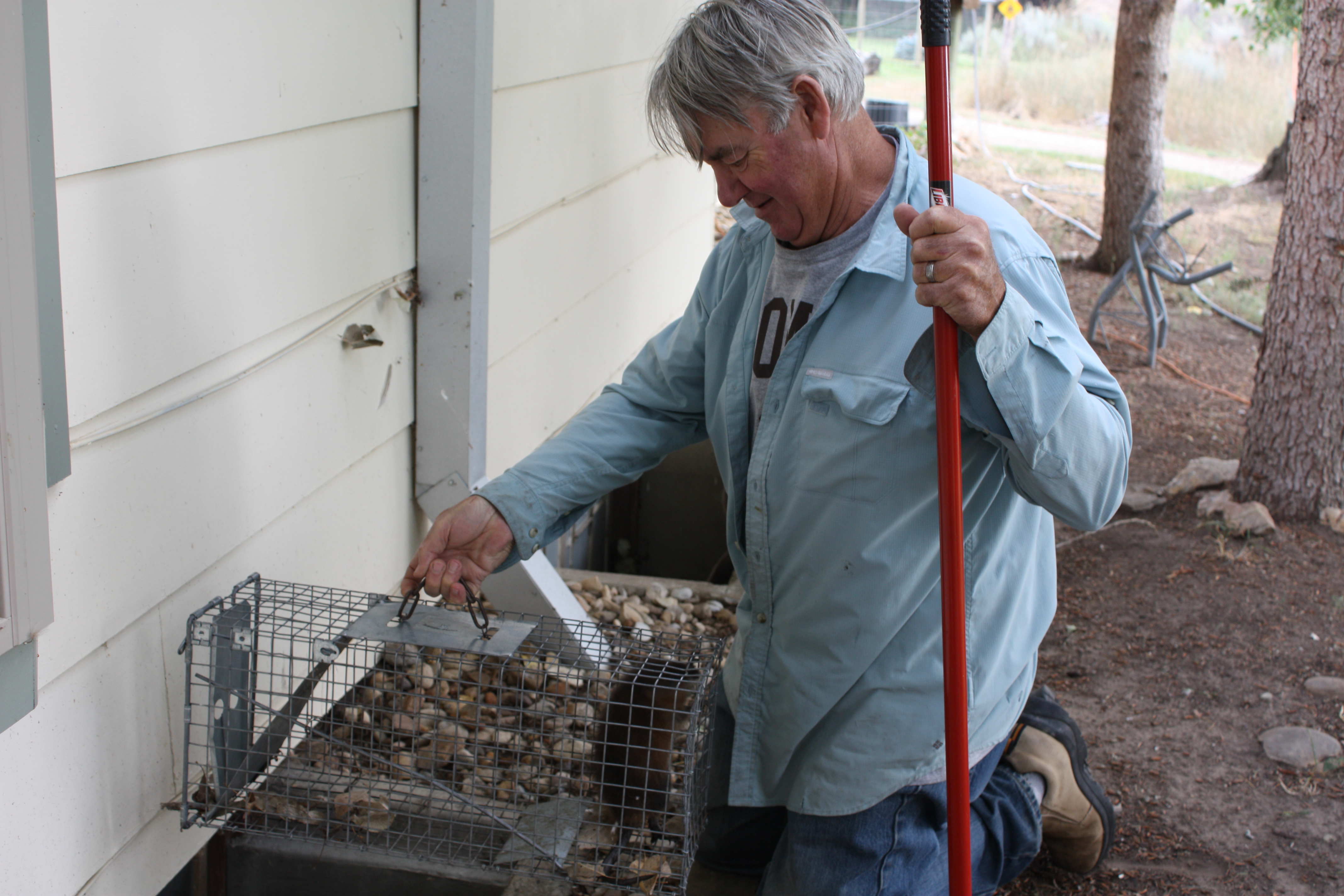
Michael brought the live trap and after some maneuvering, was able to capture what was clearly a muskrat.  But muskrats are water creatures.  What was it doing so far from the pond, half a mile away?

IMG_9278.JPG

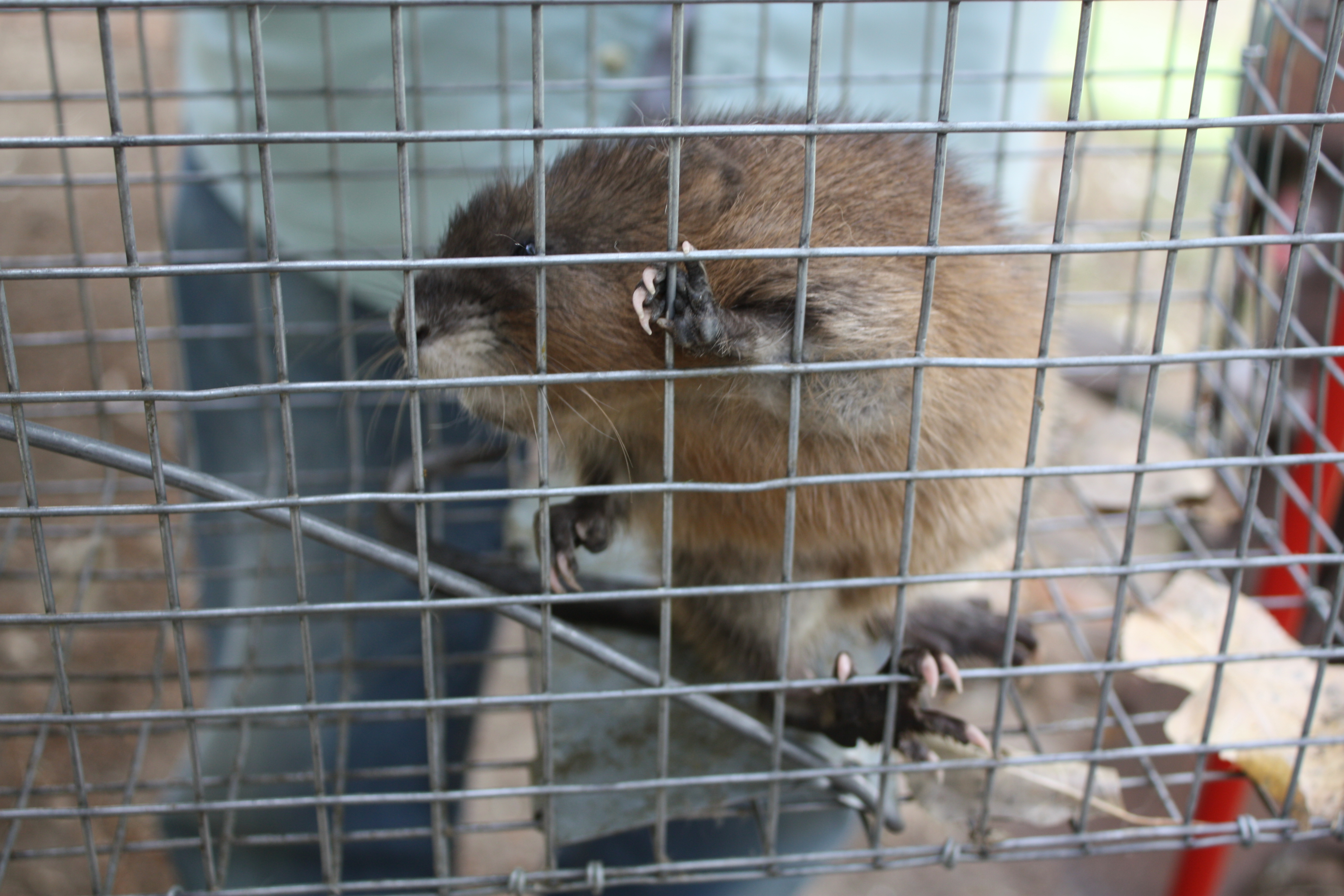
“There must be some mistake!” . . . .

There was only one solution.  Take it to the pond and hope that is where it lives.  If not, it will perhaps find a new home more appropriate than a concrete window well.

IMG_9281 (2).JPG

“There is no place like home . . . there is no place like home!” . . . .

The muskrat took off down the bank of the pond as fast as its little feet would carry it.  It seemed pretty familiar with the terrain and didn’t hesitate to jump in the water.  It swam right to the den on the bank of the pond and disappeared from our view.

IMG_9285 (2).JPG

A happy ending . . . .

Little Musky is home at last, and we hope he or she decides to stay put.  We can only wonder what led it to our window well.  Lover’s quarrel?  Doing lunch?  Checking out the real estate?  Only Musky knows.


Daycare for Deer

We’re hungry! When is mom going to return? . . . .

These fawns are busy grazing and don’t seem to mind that they have been left in a “nursery” of sorts while the female deer, or does, are searching for food or a drink at the pond.  They seem to be faring quite well, in spite of a hot, dry summer with little rain to keep the grasses growing. Soon they will be browsing on leaves and tender branches from the trees and bushes in the area.  We hope there will be enough forage for these fawns to thrive and survive their first Wyoming winter!

Garden Toil Brings Rewards

The wonders of spring, ahhhh . . . .

Flower and vegetable gardens take an amazing amount of work, but when we lift our eyes to see what grows when we pour in a little love (and lots of water), it becomes clear what we were striving for. I transplanted this bleeding heart from my garden in Colorado many years ago, and it has never failed to bloom in its new home.  Since the deer have been fenced from the yard the flowers and shrubs have been thriving.  A seriously dry spring and early summer could lead to attempts by the deer to “have dinner on us!”  We’ll hope for the best.  A few highlights follow.

Everybody smile now, for the photoshoot! . . . .

Pansies were blooming in April and kept up this glorious color into July.  What precious colors and sweet faces!

We bloomed first! . . . .

A new bed of daffodils was planted, along with some other bulbs, in celebration of the fact that a fence just might work and the deer would have to look longingly from outside.

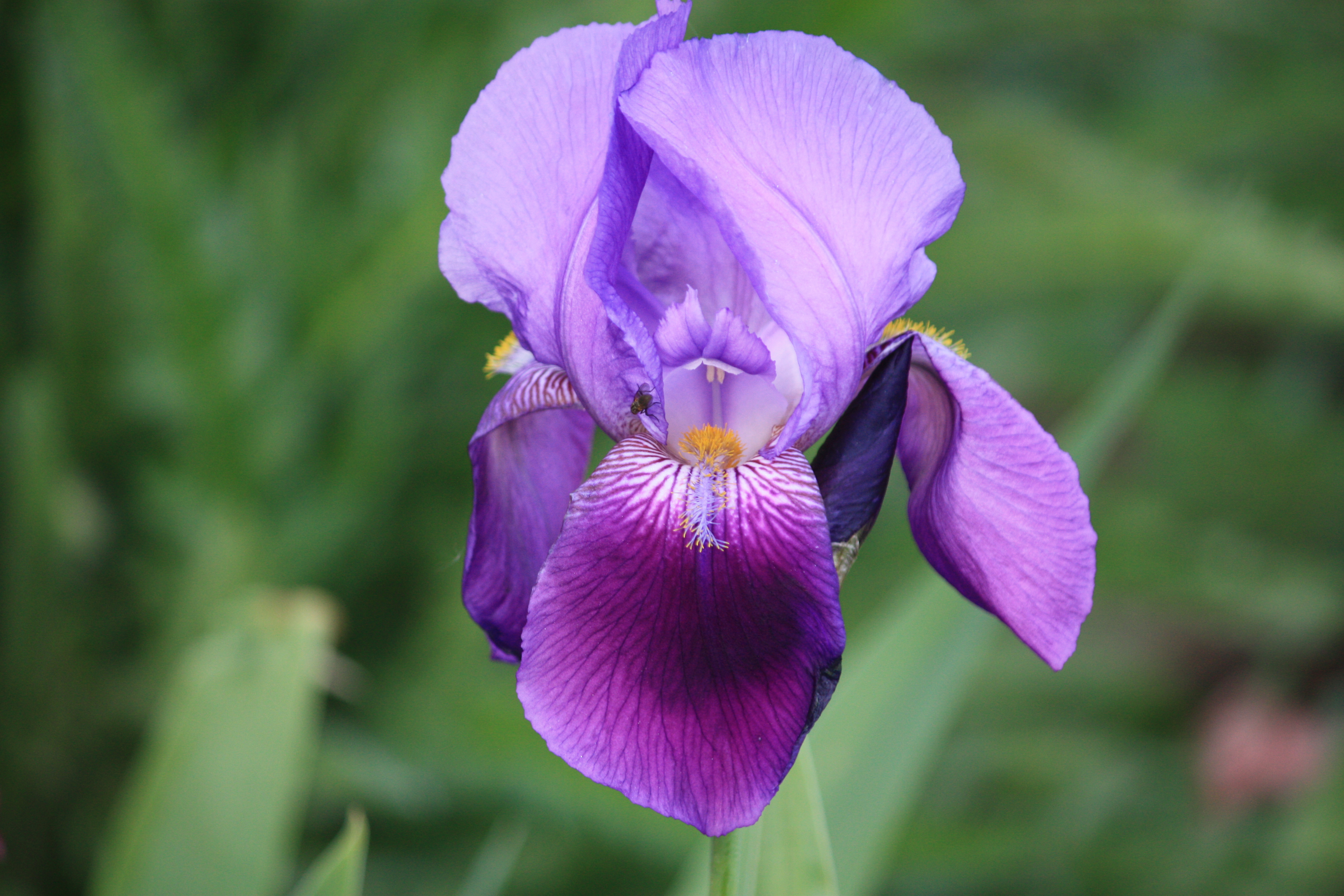
One of the “old faithfuls” that have grown here forever, this iris never fails to delight.

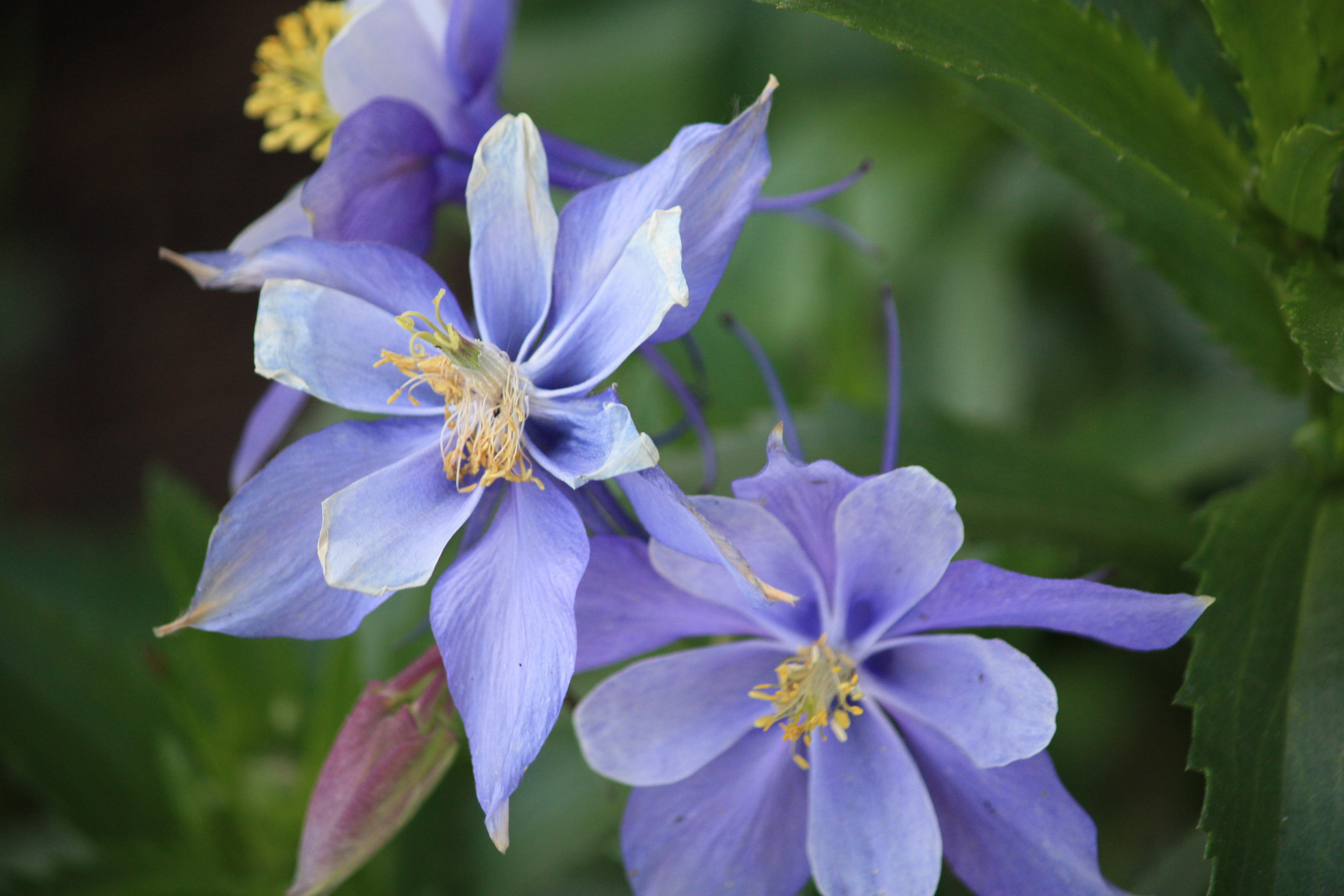
The Colorado state flower! . . . .

Columbines re-seed each year, and are so prolific they don’t make room for others in the garden if they aren’t carefully selected.  They are hardy, drought resistant and absolutely gorgeous.

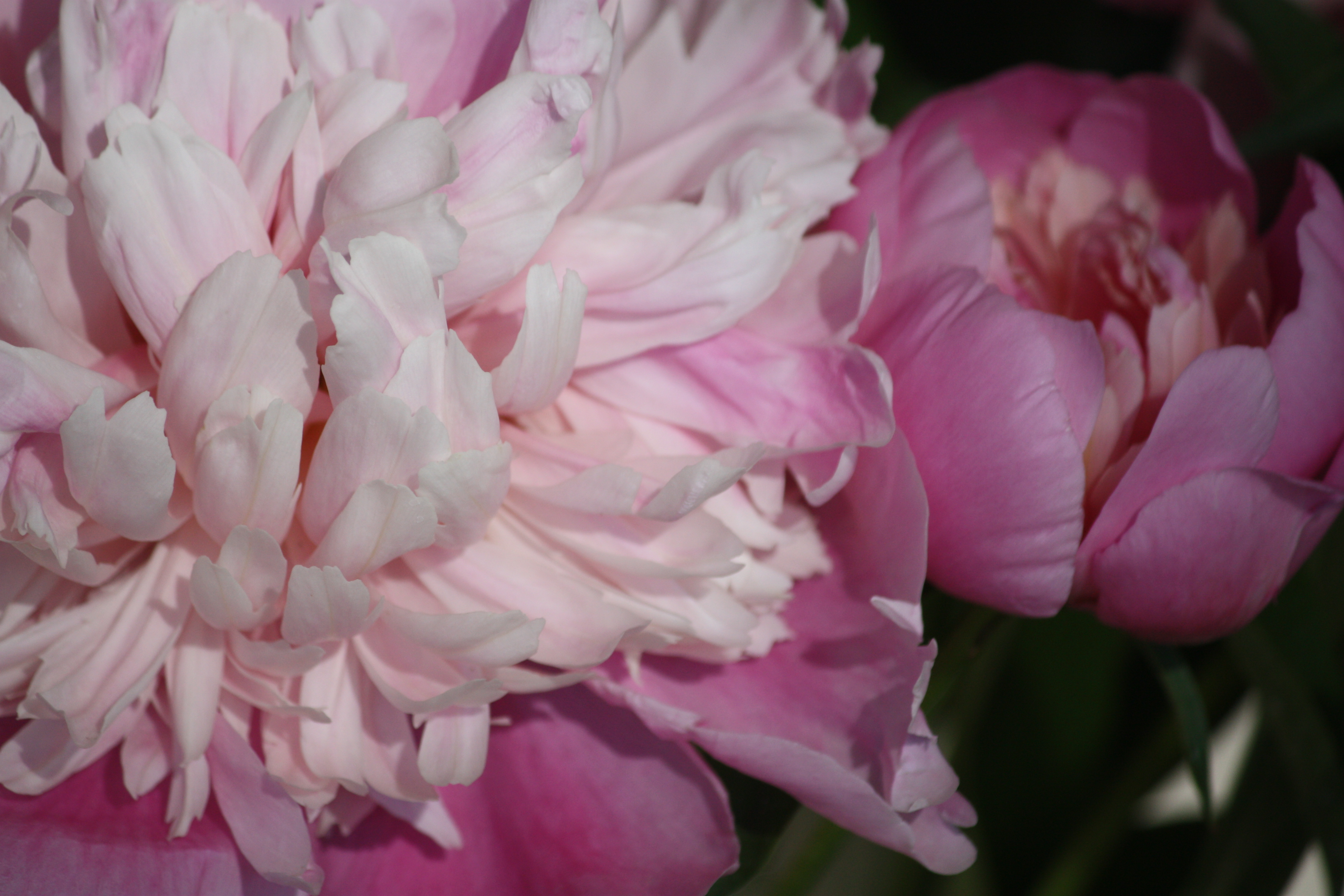
What are all these ants doing in my hair? . . . .

Peonies are favorites, and the fragrance of their fresh-cut blooms fill the house with their sweet scent.  They all seem to bloom at once, and a few ants arrive along with a bouquet, but it is worth the wait each year to enjoy them, if only for a short time.

My purple is better than your purple! . . . .

The tall spires of delphinium in the background vie with the lovely lavender blooms in the foreground.  This colorful bounty has been drawing bumblebees and butterflies to the garden, and makes it hard to consider cutting them for arrangements.  Time to get out the watering can, look for spent blossoms to deadhead, pull a few weeds, and do the work required to enjoy this bounty of flowers.

Bill the Prairie Dog

How nice to make your acquaintance . . . .

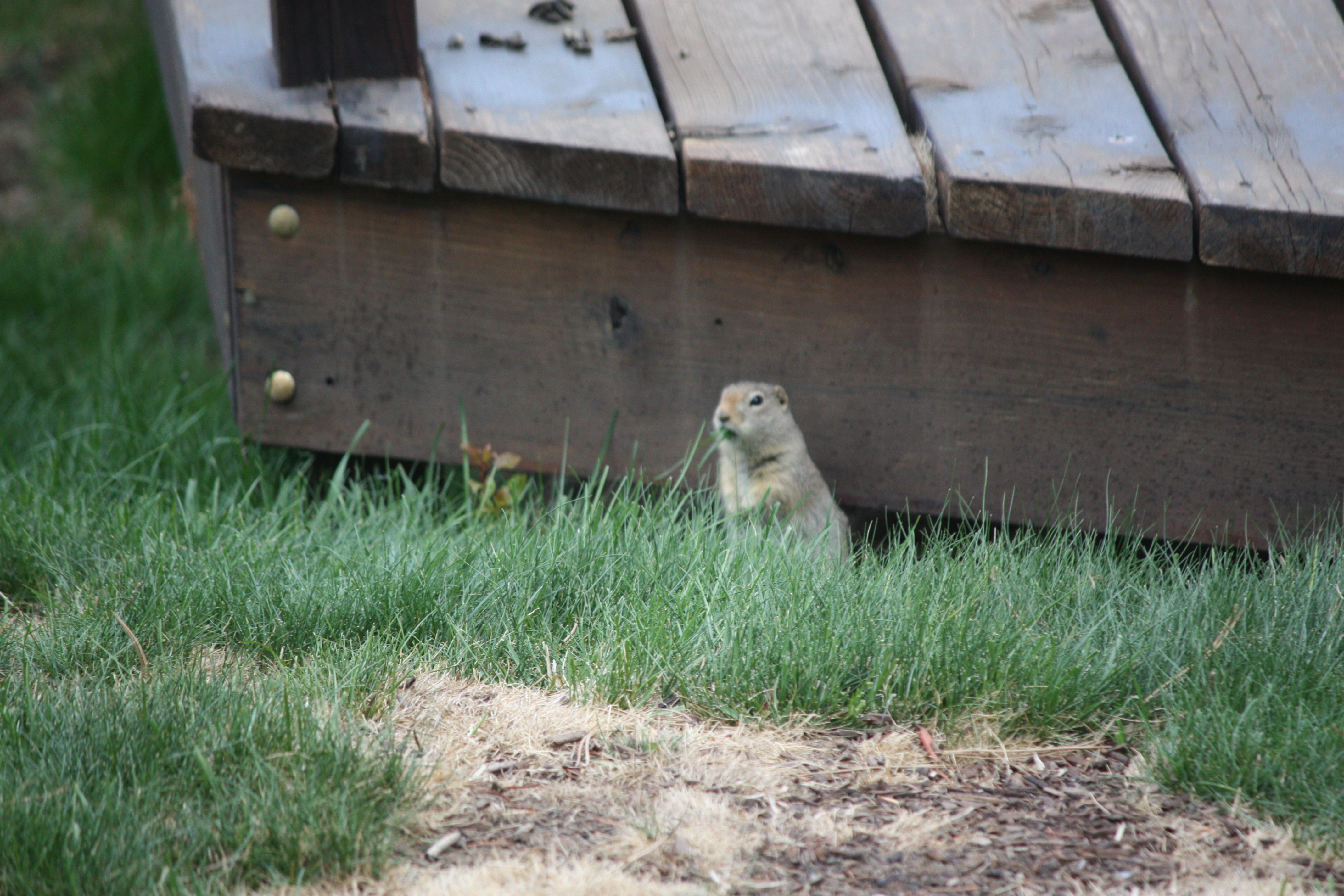
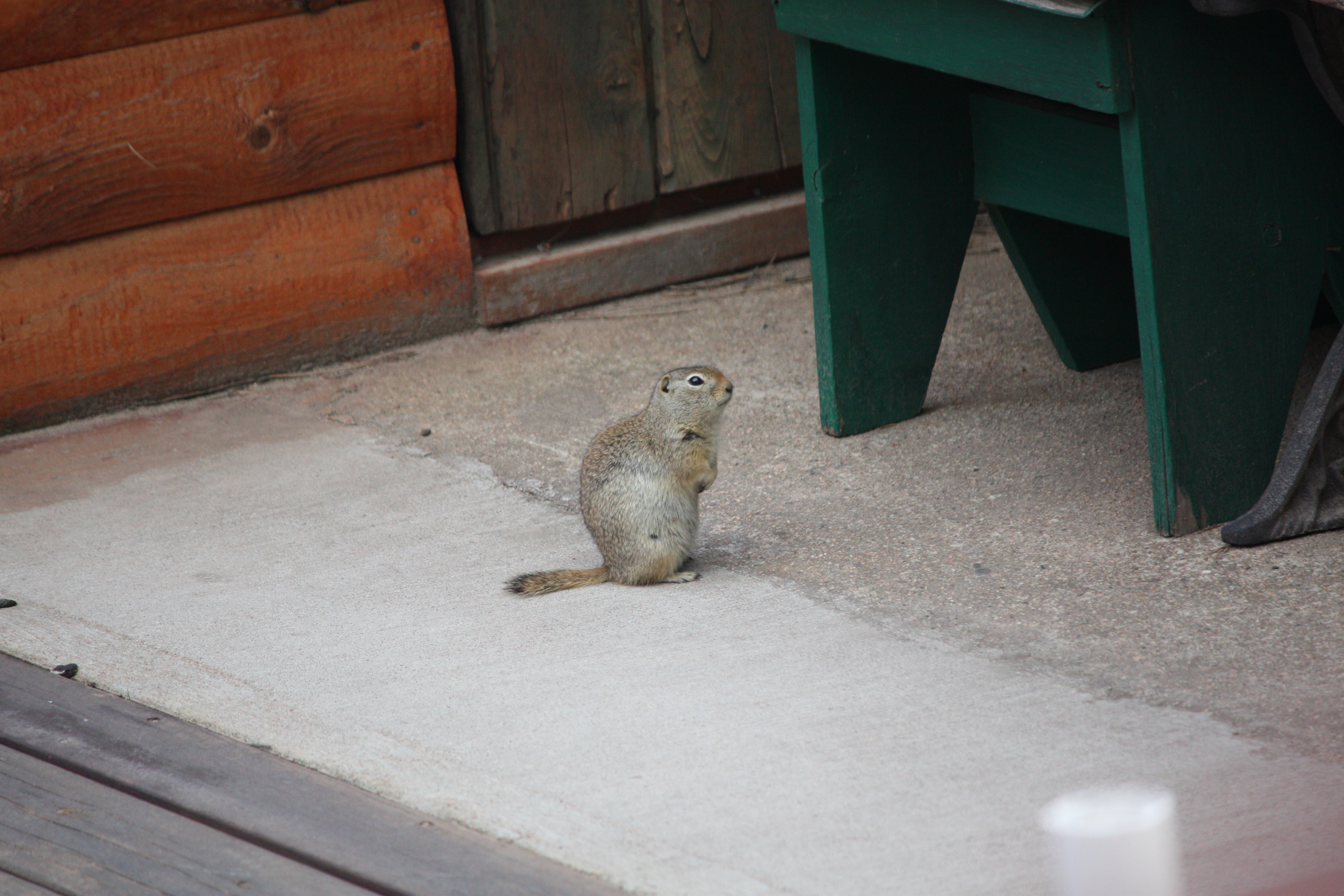
Bill the prairie dog is fat and sleek from all that lush grass.  He lives under the neighbor’s deck near our cabin in the mountains, and was quite`curious about our activities when we opened up for the season.  He seemed unafraid and a little shy, but the kind of guy you could grow to love (if he didn’t dig burrows in the lawn and bring all his friends and raise his  pups at a rapid pace and eat all that grass . . . . . . .).

Just Bill . . . .

Deerly Beloved

Anyone brave enough to try the garden fence? . . . .

Our deerly friends abound after a dry spring with little rain.  They gaze down on the green expanse of lawn, shrubs and garden with great interest, and we are thankful for the new fence that keeps them at bay.  We do welcome their presence–just not inside the yard!   They are shedding their winter coats and look thin and scruffy, but will be sleek and fat in no time.  Does, or female deer, will be giving birth in June and will keep their fawns hidden from view for most of the summer.  We try to walk carefully around the secluded areas they choose each summer to sequester their babies.

deer herding guinea fowl who won’t get “out of my way” . . . .

A loud squawking of guinea fowl erupted outside the office window and a hilarious encounter of a young buck deer and the guineas turned into a rout.  The young deer seemed curious and tried to approach the guineas by reaching his head down to examine them closer.  They did not appear to like this intrusion, but held their ground and clamored for him to leave.  He snorted, humped his back, jumped into the air, and shook his stubby little horns at them in a macho display that had little effect.  Then, apparently disgusted and with his pride in tatters, he attempted to depart but found his path blocked by two of the guineas who simply refused to be hurried along.  Guinea girls are not to be messed with!

lunch among the ruins . . . .

Snapping a shot of the deer grazing among the old relics was hard to resist.  They pass through the area on the way to the pond for a drink of water each day, usually stopping to nibble a few leaves from the lilac or chokecherry bushes.