Drifting Along With A Tumbling Tumbleweed

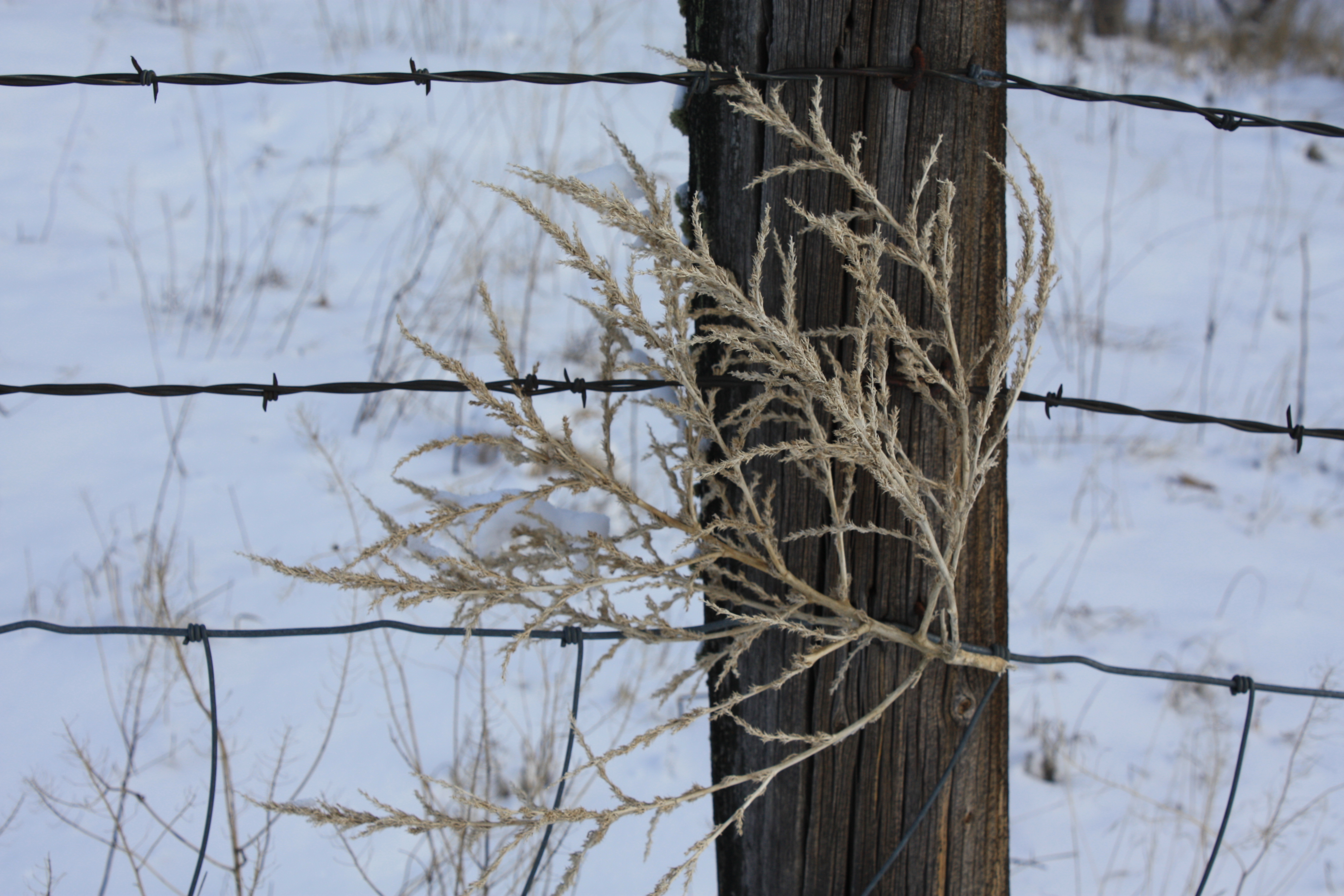
The ubiquitous tumbleweed . . . .

The ubiquitous tumbleweed . . . .

The ongoing drought during the summer and autumn of 2013 resulted in little grass, but a bumper crop of weeds–tumbleweeds to be sure!  The winter winds have stirred them and set them to tumbling along the roadways and fields, bumping up against fences and just about anything else that gets in their way.

Seems impossible, but the wind has its ways! . . . .

Seems impossible, but the wind has its ways! . . . .

Brief layover in the snow . . . .

Brief layover in the snow . . . .

Flying too close to the fan . . . .

Flying too close to the fan . . . .

Tucked under the tractor . . . .

Tucked under the tractor . . . .

A flurry along the fence . . . .

A flurry along the fence . . . .

Might as well put them to good use! . . . .

Might as well put them to good use! . . . .

Frosty the Tumbleweed Man arrived just in time for the holidays and greeted guests for the winter solstice open house.  What a guy!

Petroglyphs and Pictographs Aplenty

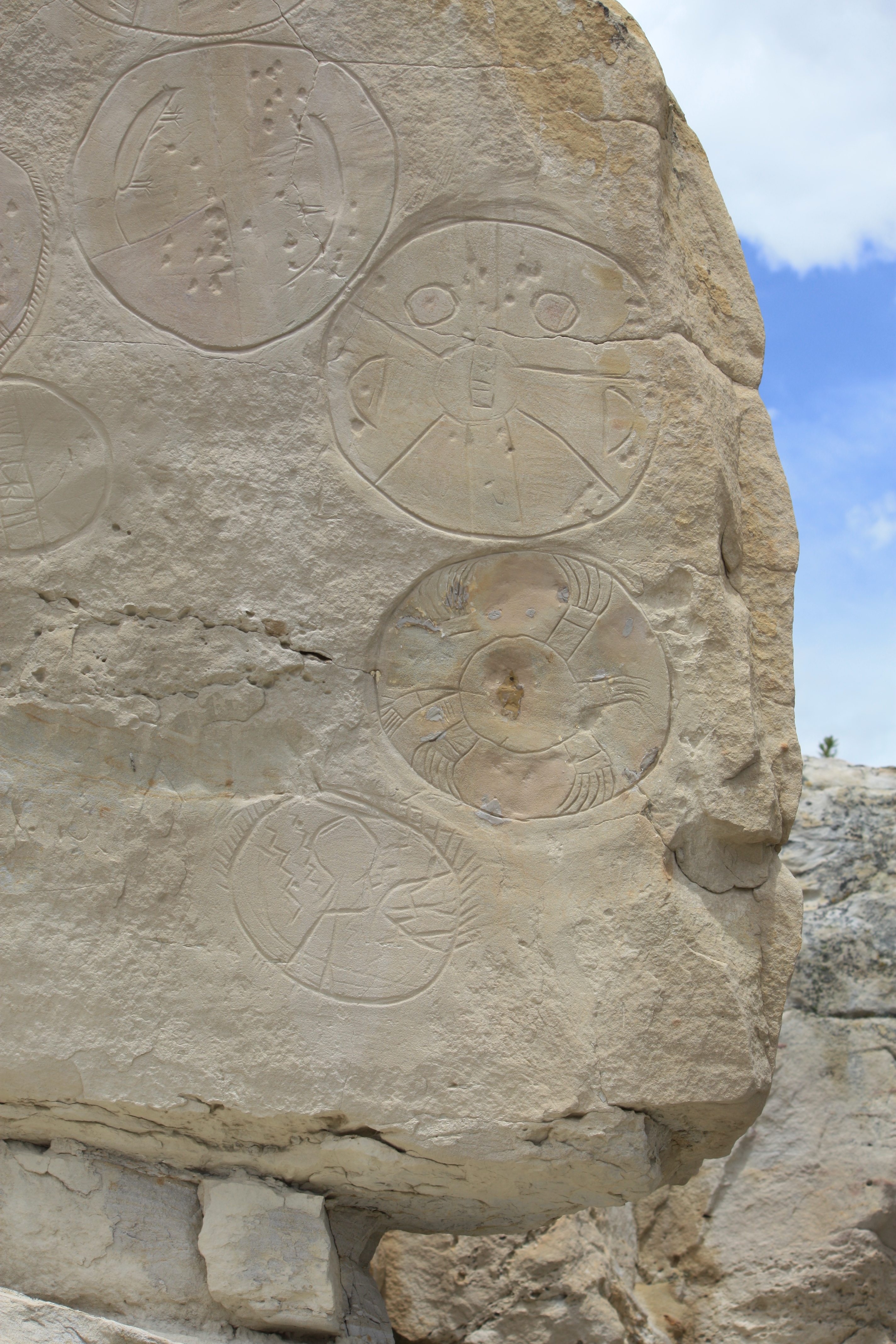
Art for the ages . . . .

Art for the ages . . . .

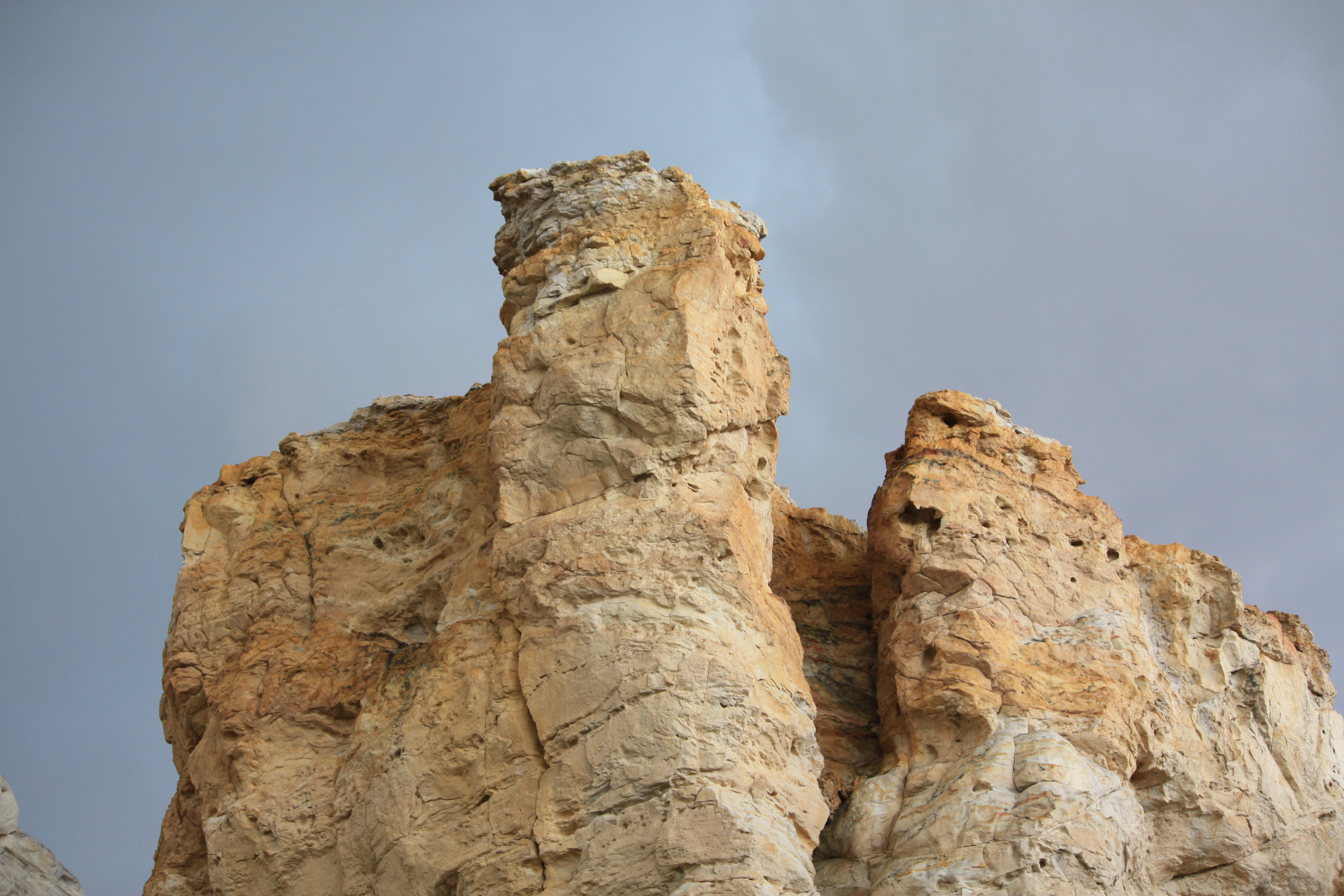
Castle Gardens is located in central Wyoming and is named for the outcropping of sandstone that wind and water have eroded into shapes resembling the turrets and towers of castles.  Many passersby have been drawn to the site for thousands of years, leaving their calling card in the form of rock art carved into the soft sandstone.  Above, the oldest recognizable example of the shield-bearing warrior combines several techniques unique in the Bighorn and Wind River Basins.

Castles carved in sand . . . .

Castles carved in sand . . . .

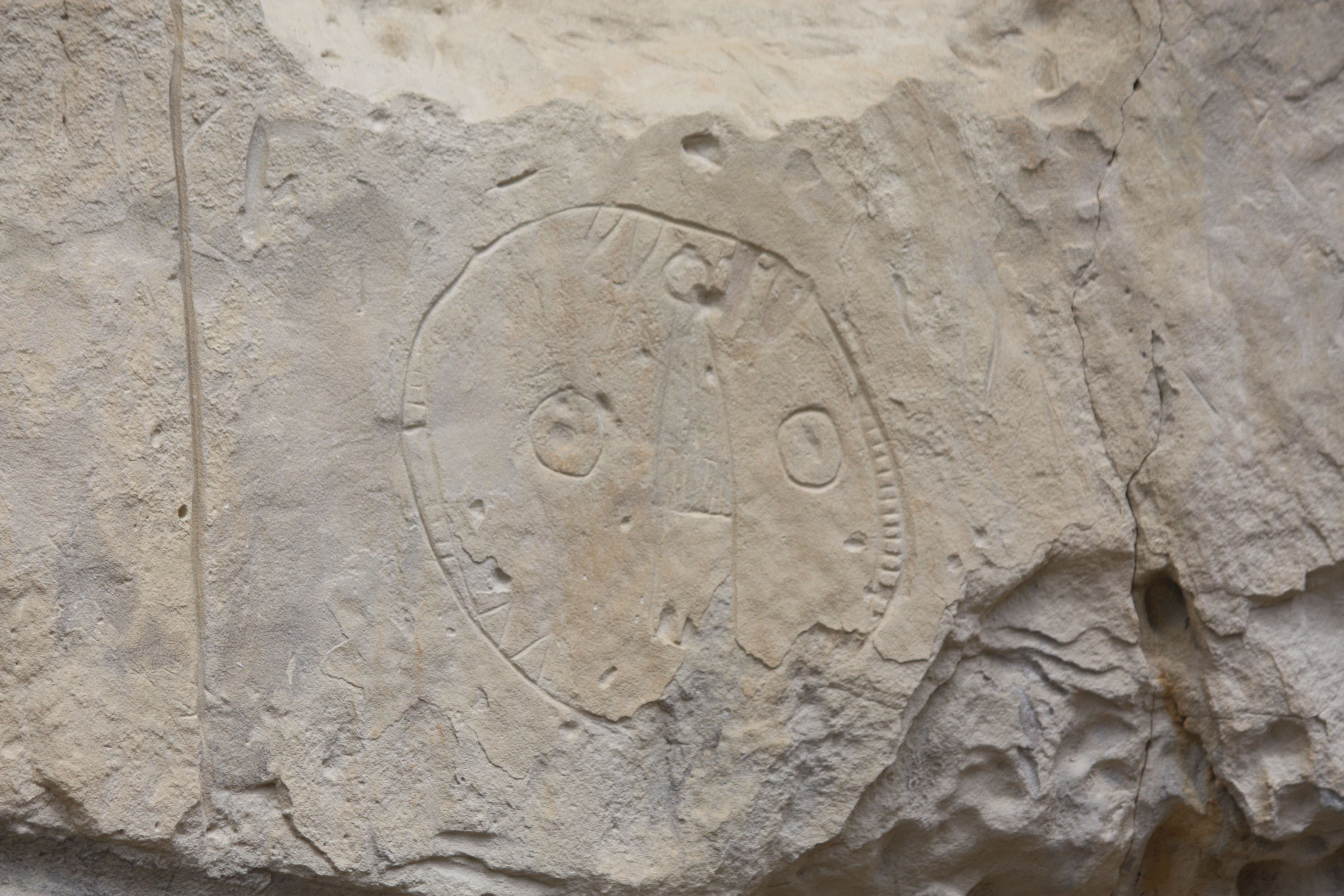
Sadly, Castle Garden has suffered from vandalism and  is now protected, although increased visitor traffic has impacted the site.  In 1940 vandals chiseled the Great Turtle shield out of the rock, but it was returned anonymously and donated to the Wyoming State Museum the following year.

A turtle's demise . . . .

A turtle’s demise . . . .

Once figures/shapes were incised, figures were filled in with several layers of paint, including red, orange, yellow, black, white and green.  Polychrome painting and the use of green pigment are very rare in Wyoming and serve as distinguishing characteristics of the Castle Gardens shield style.  The Great Turtle figure, housed at the Wyoming State Museum, exemplifies many of the hallmarks of this style.

Blog from the past . . . .

Blog from the past . . . .

Figures of human forms, calendars, and various animals (elk, bison, antelope) are inscribed on the walls of the canyon.
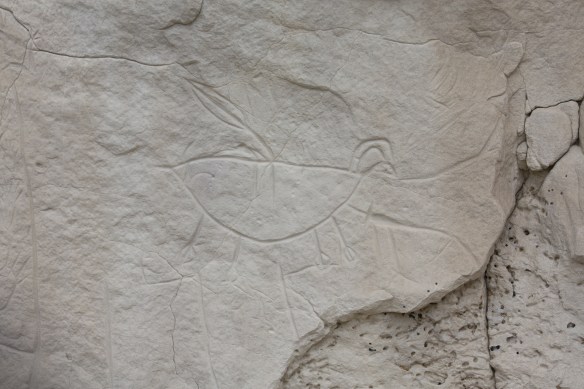
Horns, four legs, could be an antelope? . . . .

Horns, four legs, could be an antelope? . . . .

Spectacular beauty juts up from the prairie . . . .

Spectacular beauty juts up from the prairie . . . .

The dark sky in the background is a warning that was not heeded soon enough.  Rain in this high desert is rare and who would imagine what would unfold?

Thunderheads - the Gods must be stirring! . . . .

Thunderheads – the Gods must be stirring! . . . .

Nature's fury about to unfold . . . .

Nature’s fury about to unfold . . . .

The cloud formations were so arresting I found myself photographing them rather than the pictographs we were viewing.  Clearly, we were in for some weather and should have headed for shelter.

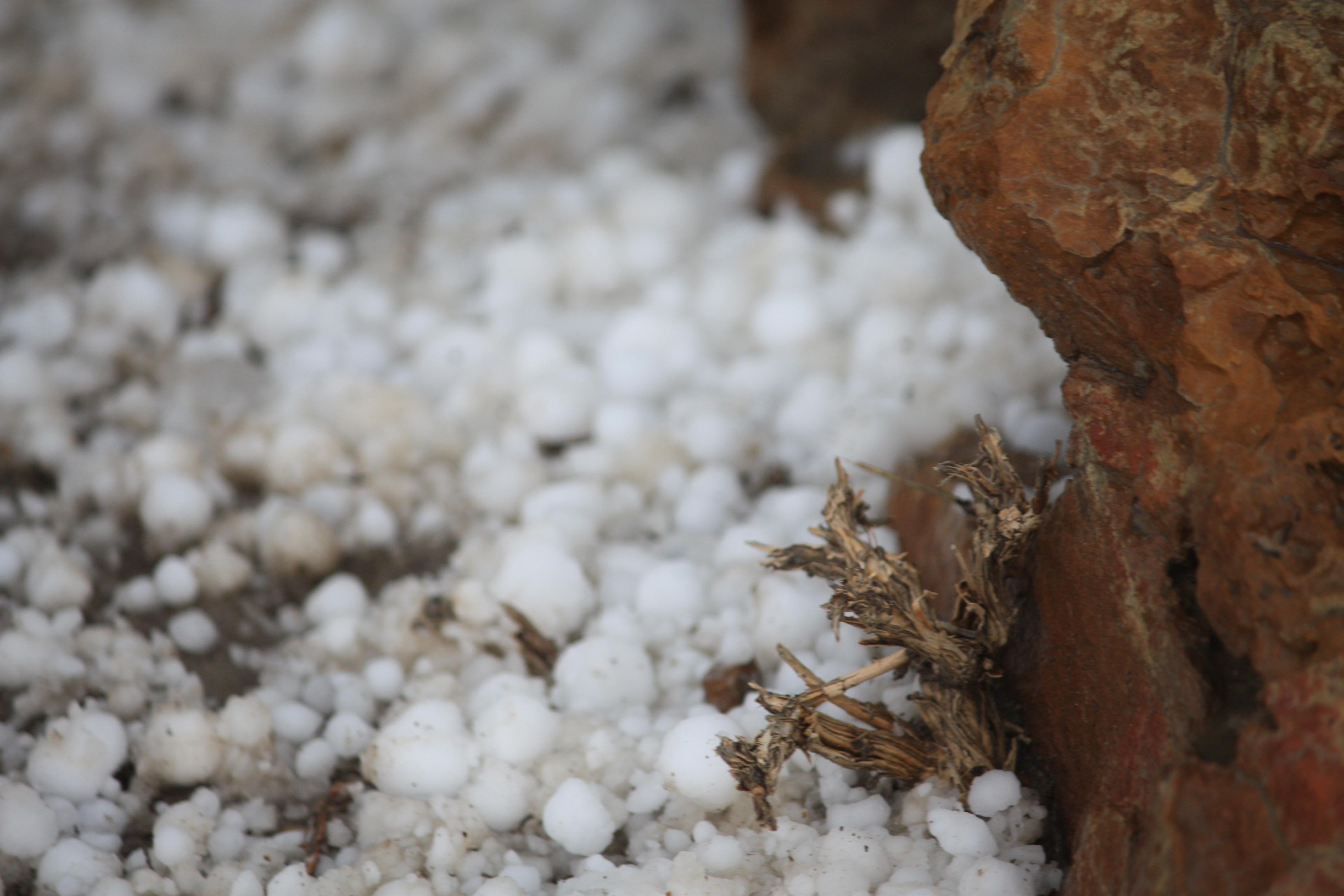
These are not raindrops . . . .

These are not raindrops . . . .

Fierce lightning, thunder, rain and hail caught us out on the trail.  Trying to find a rock ledge for protection was a scramble and not particularly successful.  The storm broke in two waves, with just enough reprise in between the downpour to lure us out on the trail to try to improve our position.  It was folly, and there was no choice left but to run like hell for the car.  Hail stones bounced from our heads and backs, leaving welts behind.  My camera and I were soaked.

191

The Gods were obviously angry at our intrusion into this strange and wonderful place.
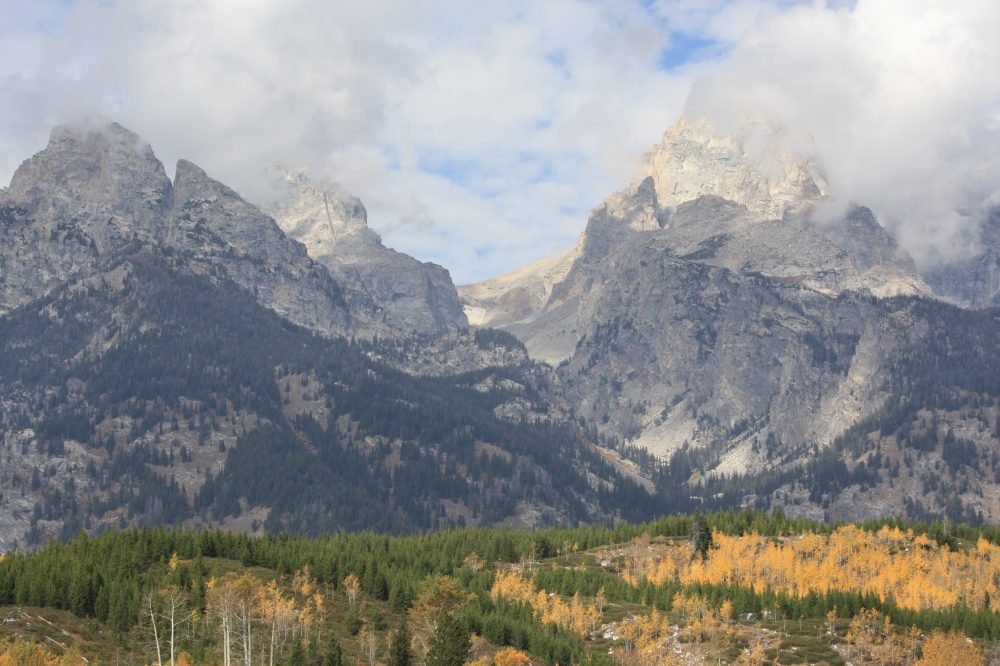
Sundown

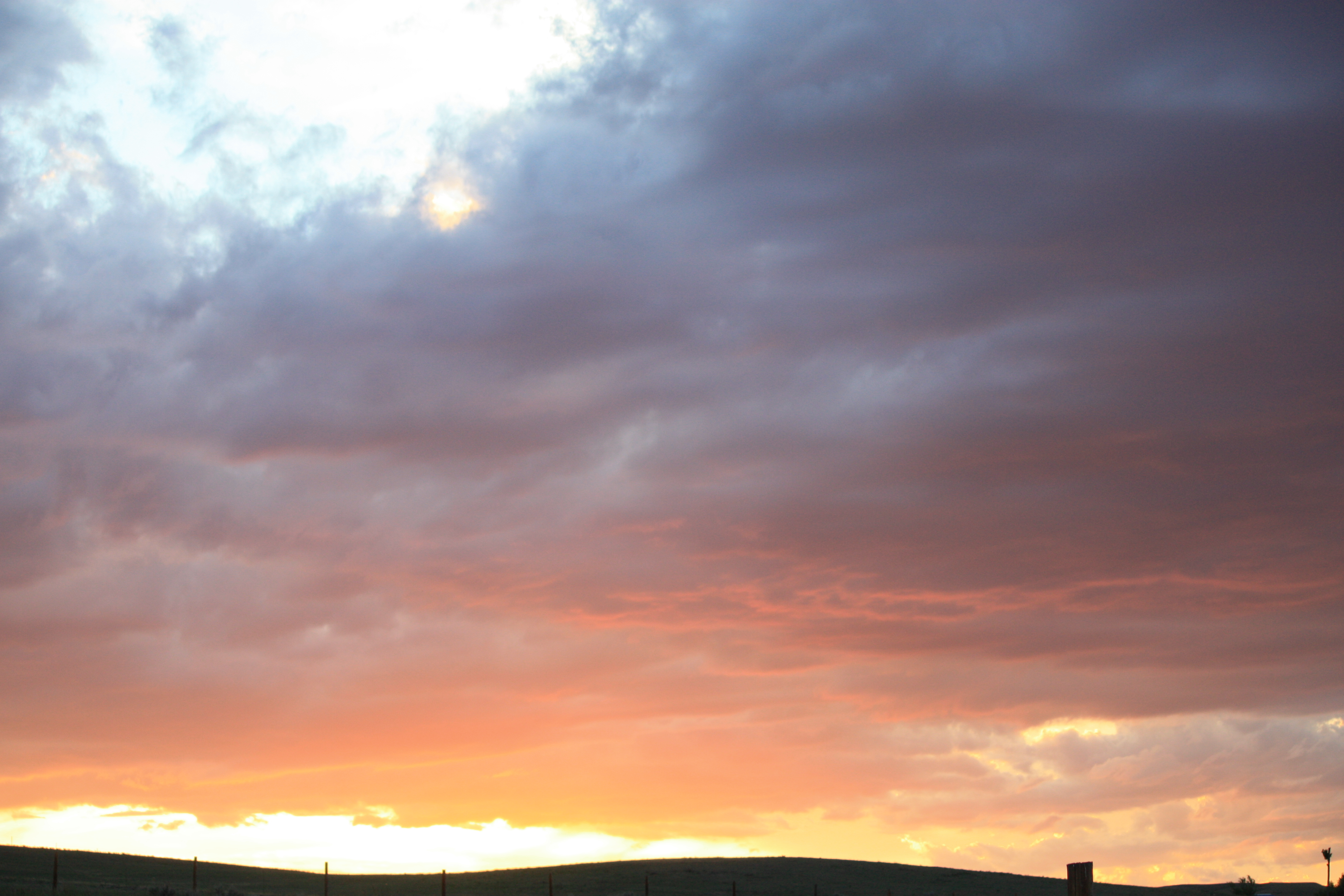
Just another sundown . . . .

Just another sundown . . . .

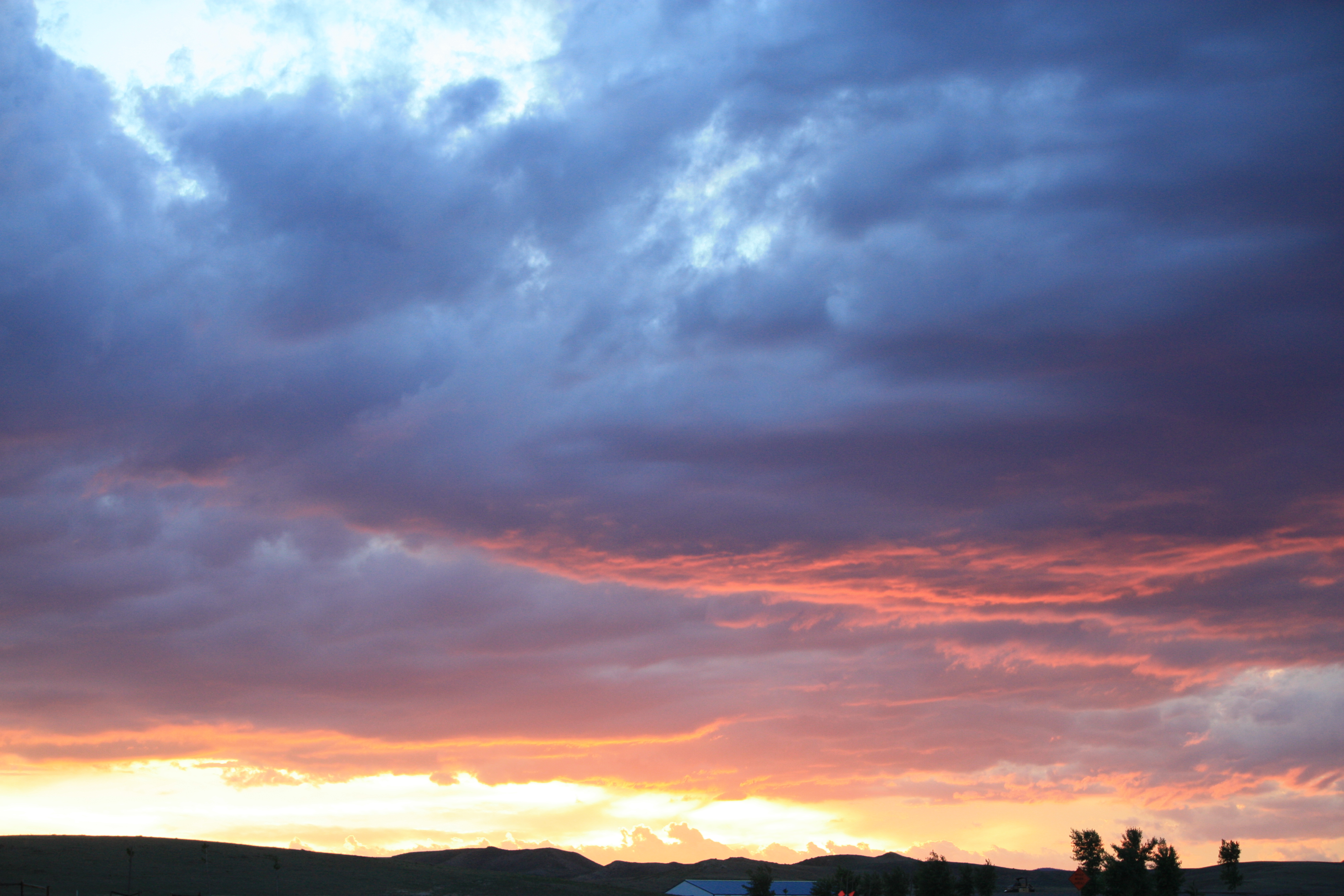
Words are inadequate to describe the beautiful Wyoming skies.  We frequently have breathtaking sunsets, sunrises and gorgeous cloud formations in between.  The backdrop of brilliant blue sky creates a startling contrast to fluffy white cloud formations.

A storm brewing . . . .

A storm brewing . . . .

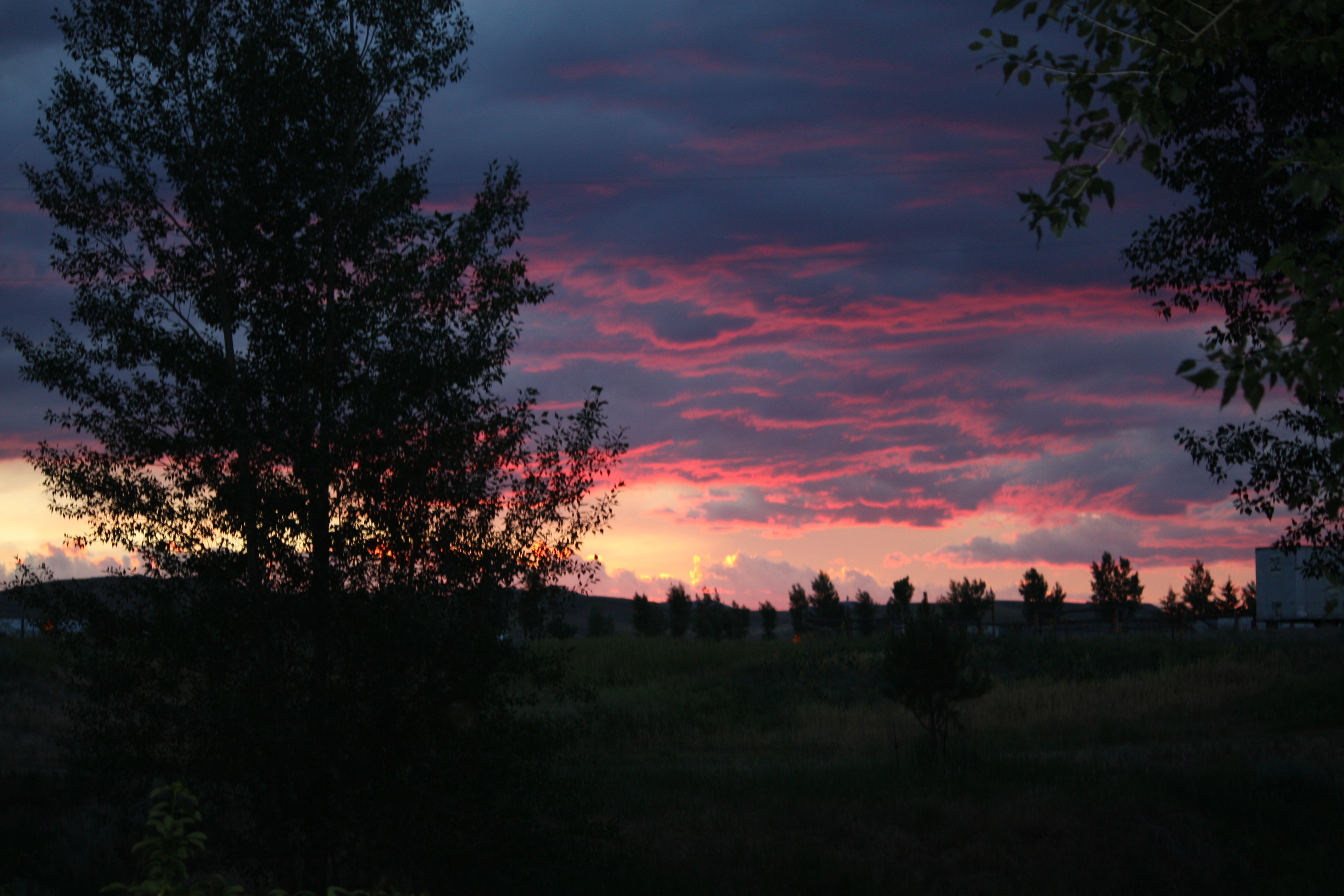
The evening light changes quickly, and often the most brilliant hues are lost before I can grab a camera.  When I am successful, I can capture some stunning beauty at sundown.

Yet another glimpse of heaven . . . .

Yet another glimpse of heaven . . . .

And just one more, before the sun drops below the horizon and darkness arrives.

Last light of day . . . .

Last light of day . . . .

Salsa Party

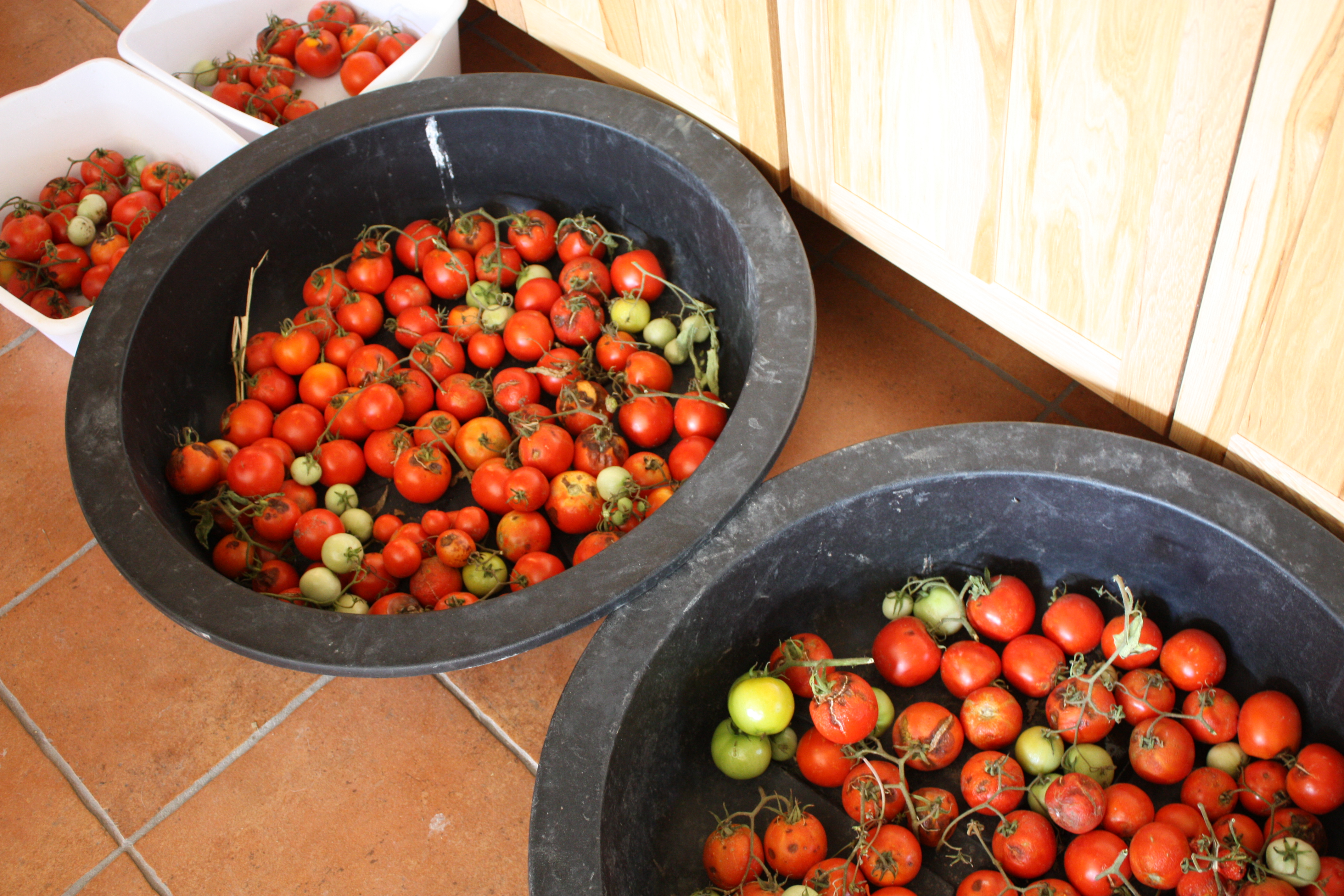
timeout for tomatoes . . . .

Timeout for tomatoes . . . .

Six puny little Early Girl bush tomato plants, purchased and planted in the garden mid June, produced sixty-plus pounds of tomatoes!  We gave them away to neighbors and family, fed them to the chickens, and were finally faced with picking the remaining ripe ones from the vines pending a cold snap. We stored them in the basement and for a couple weeks, the question of “what are we going to do with all these tomatoes?” made the rounds daily.  Finally there was no turning back.  We hauled them to the kitchen and declared they were not going to leave until SOMETHING had been done to them.

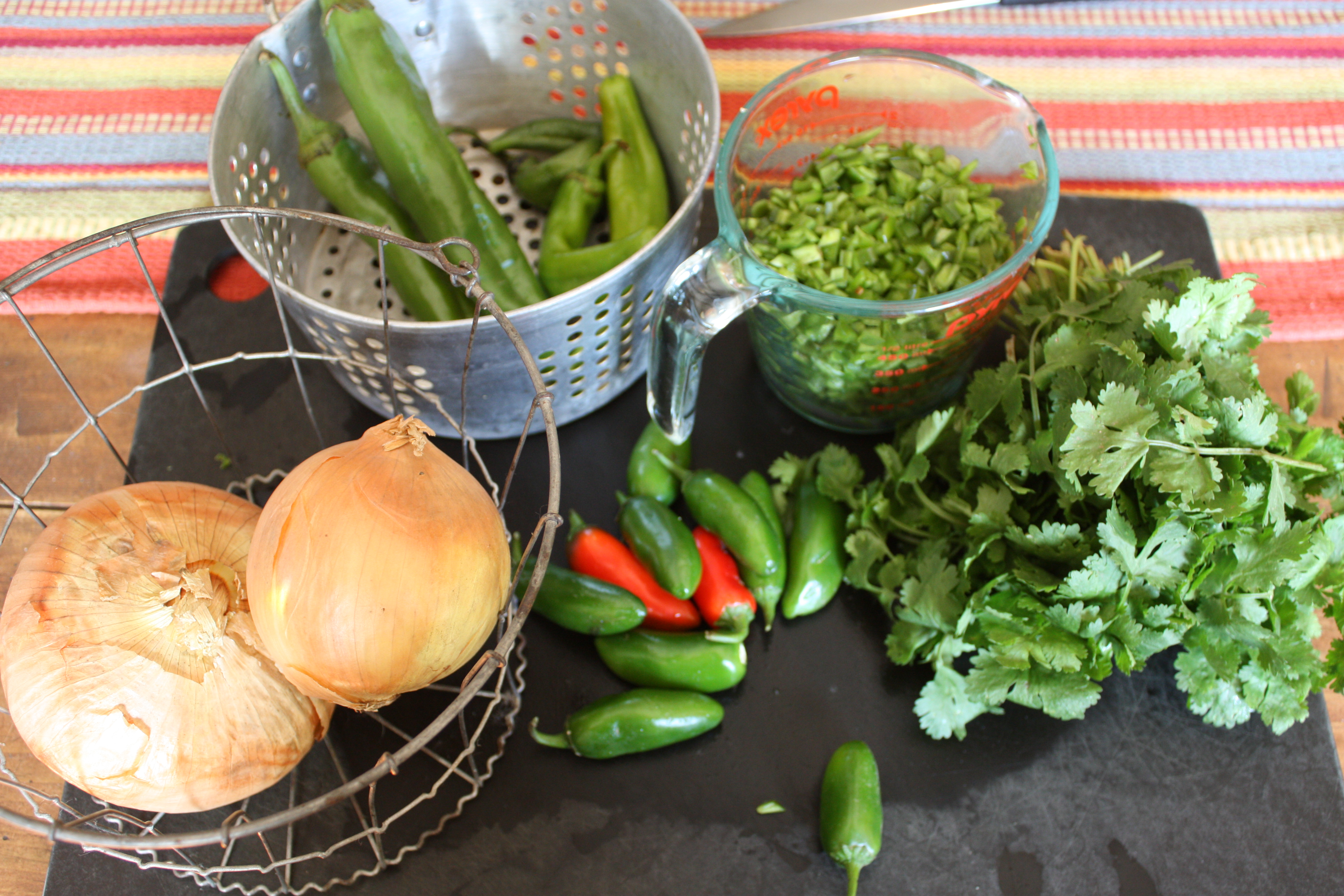
got peppers, got onions, got cilantro . . . .

got peppers, got onions, got cilantro . . . .

After chopping for what seemed like an eternity, I decided making salsa would be lots more fun if some unsuspecting victims could be convinced to join in the fun.  A salsa party would definitely be worth trying.  Four people could cut the chopping time considerably: one to peel and chop onions; one to seed and chop jalapeno peppers; one to seed and chop anaheim peppers; and one to snip the cilantro leaves.

Tomato prep . . . . how many more pounds?

Tomato prep . . . . how many more pounds?

Dipping the tomatoes into boiling water and then peeling the skins is truly tedious and should require another three prep cooks plus one additional to flush out the seeds and pulp.  Two more cooks can begin to assemble the remaining ingredients (one to read the recipe and one to locate the right size pan, et al). Throw it all together and begin simmering. Let’s see, we’re approaching a dozen guests if we assign two mixologists to brew up and begin serving the margaritas.  Everyone else can bring on the chips and ready their instruments for the mariachi band!

A few jars for the pantry . . . .

A few jars for the pantry . . . .

A hot water bath preserves the jars of chunky salsa which now sit on a shelf in the basement and will be opened for another salsa party!  Ole’

Trying or Tragic?

Tree surgery . . . .

Tree surgery . . . .

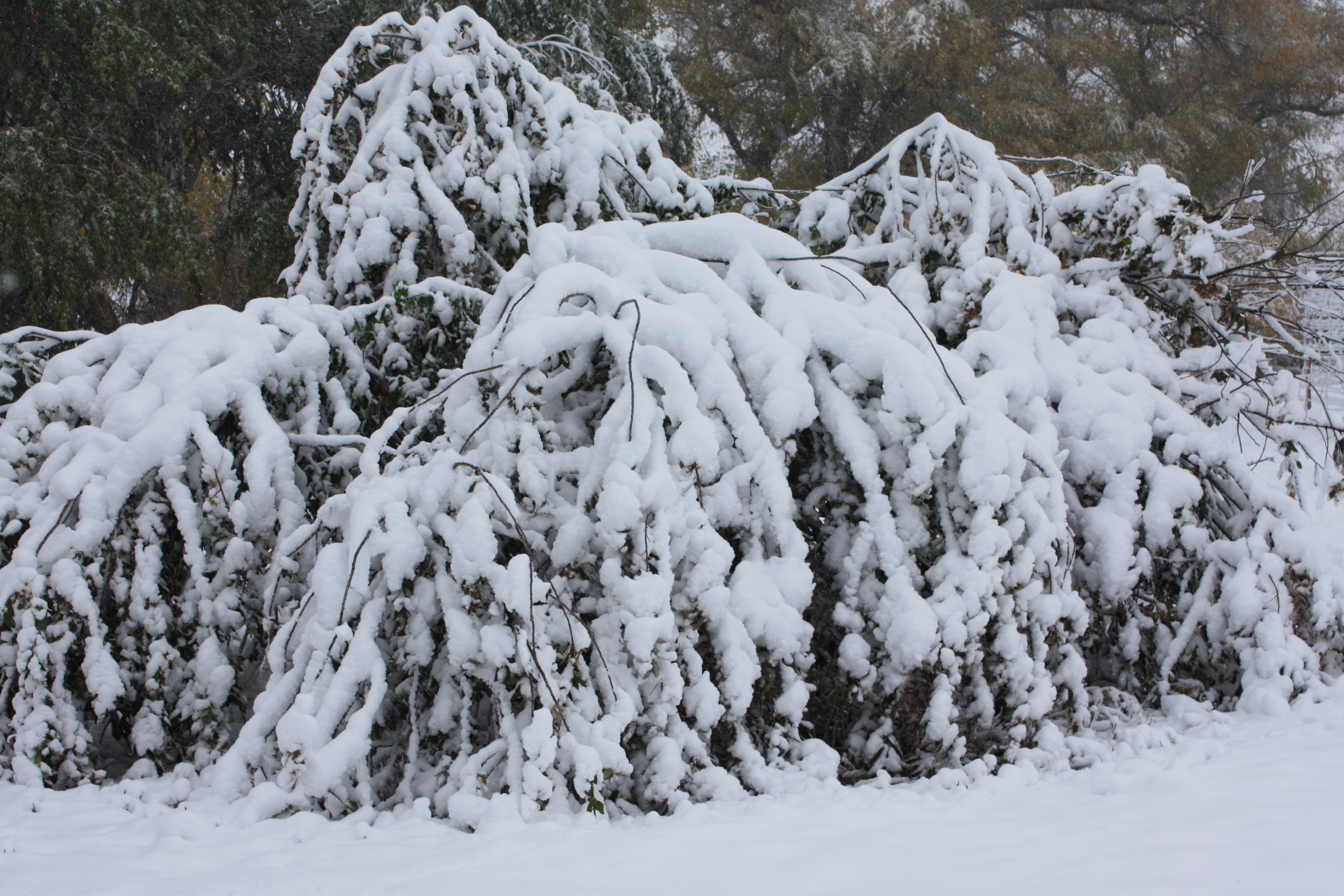
The old Dodge truck, lower left, escaped tree tragedy one more time!  We had not yet cleaned up all the downed silver leaf poplars surrounding it from a late September snow storm in 2009.  And October 3, 2013 has proven to be just as disastrous.  We received an inch of rain throughout the day which turned to snow at dusk, freezing the rain drops clinging to the leaves and encasing them in ice.  This is a deadly combination for the trees.

"Help, I'm down and I cannot get up!" . . . .

“Help, I’m down and I can’t get up!” . . . .

This mature chokecherry tree hangs heavy on the ground.  I attempted to shake some of the snow off, but found the branches laden with ice.  This is going to take some new approach.  Avalanche tactics will not work here.
We thought Feed Lot was bad news! . . . .

We thought Feed Lot was bad news! . . . .

Poor little fruit trees have gone from steer assaults to weather extremes.  What makes people think they can grow trees in Wyoming???  In autumn, buck deer scrape the bark from deciduous trees, as well as needles and branches from evergreen trees by rubbing their horns against the trunks to remove the velvet; cattle eat young saplings and strip the low hanging leaves; years of drought with inadequate rain and snow kills mature trees; freezing autumn blizzards breaks branches and limbs full of foliage; freak wind storms can rip trees from the ground; and porcupines can decimate a Ponderosa or Austrian pine in one meal.  And then there are the beetles and bugs, virus and blight, worms and borers to contend with.  Still want to plant a tree?

Autumn colors . . . .

Autumn colors . . . .

The mighty cottonwoods are no match for snow and ice.  Their leaves were just beginning to turn bright yellow when this storm hit–so much for autumn colors this year!

Trying Times for Trees

bruised and broken . . . .

bruised and broken . . . .

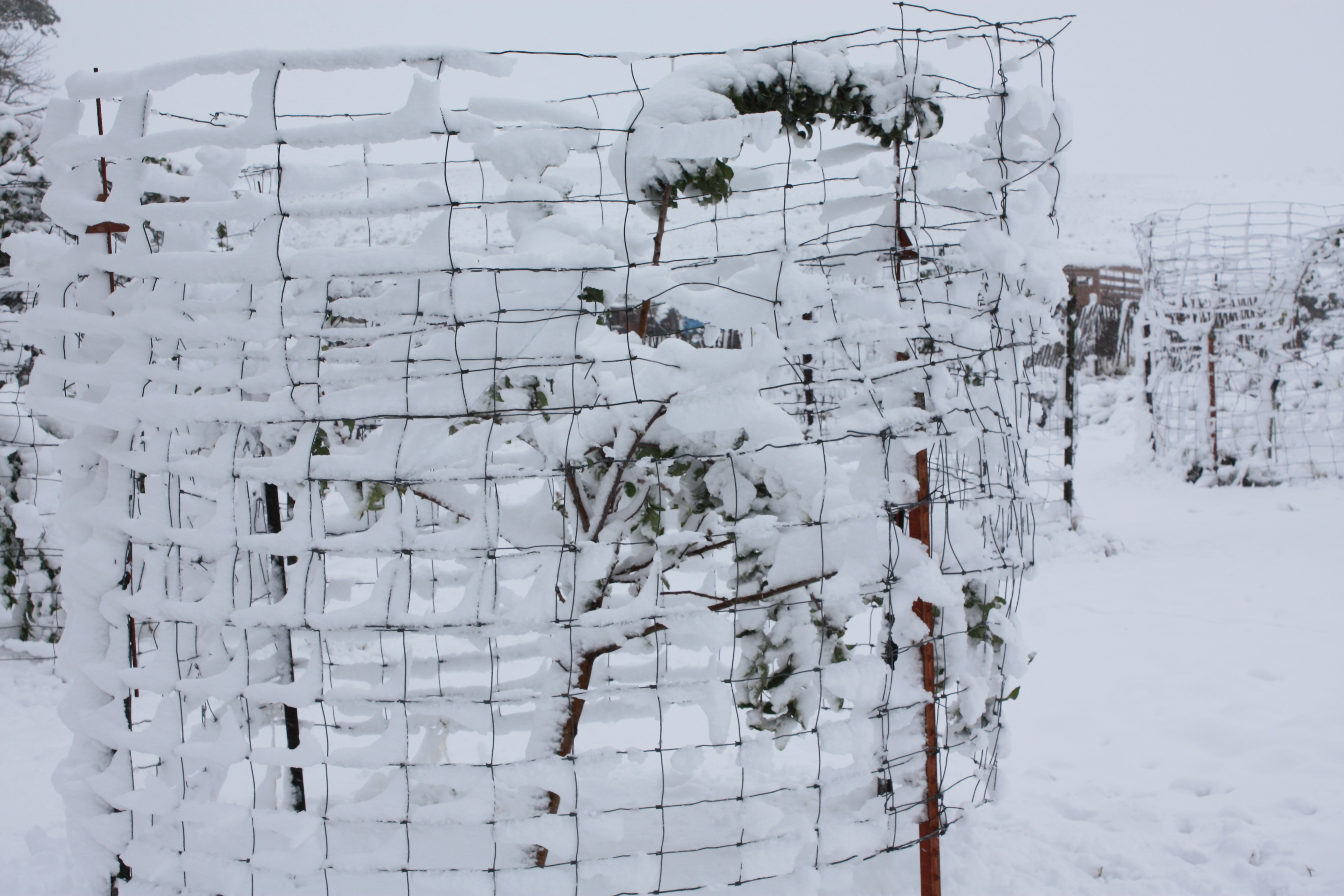
Our fruit trees took a hit from a feisty longhorn steer recently.  Even though we had wrapped a protective wire cage around them, it didn’t suffice.  As we surveyed the damage (and muttered dark threats of dire outcomes for Abe’s destructive behavior) we decided to patch up this little apple sapling with the only thing at hand–vet wrap.  If we could hold the broken tip together for awhile, it might regrow, which was a better option than cutting out the top of the tree.  Abe doesn’t seem to understand that a wire fence means “no!”  Major reinforcements of wire and steel posts were installed, and so far Abe has been unable to breach the fortifications.

the Abe strikes again! . . . .

the Abe strikes again! . . . .

Not long after the fruit tree calamity, we left the gate to the backyard open and Abe the Innocent could not resist coming in for a look (and a taste).  We found this burr oak sapling in tatters with most of the leaves removed and the top broken.  More vet wrap to the rescue, more mutterings and idle threats of turning Abe into hamburger.  Since we were guilty of leaving the gate open, we decided to give him one more chance.

First Tigers–Now Lions!

The Wrath of Khan! . . . .

The Wrath of Khan! . . . .


A creature from the underworld . . . .

A creature from the underworld . . . .

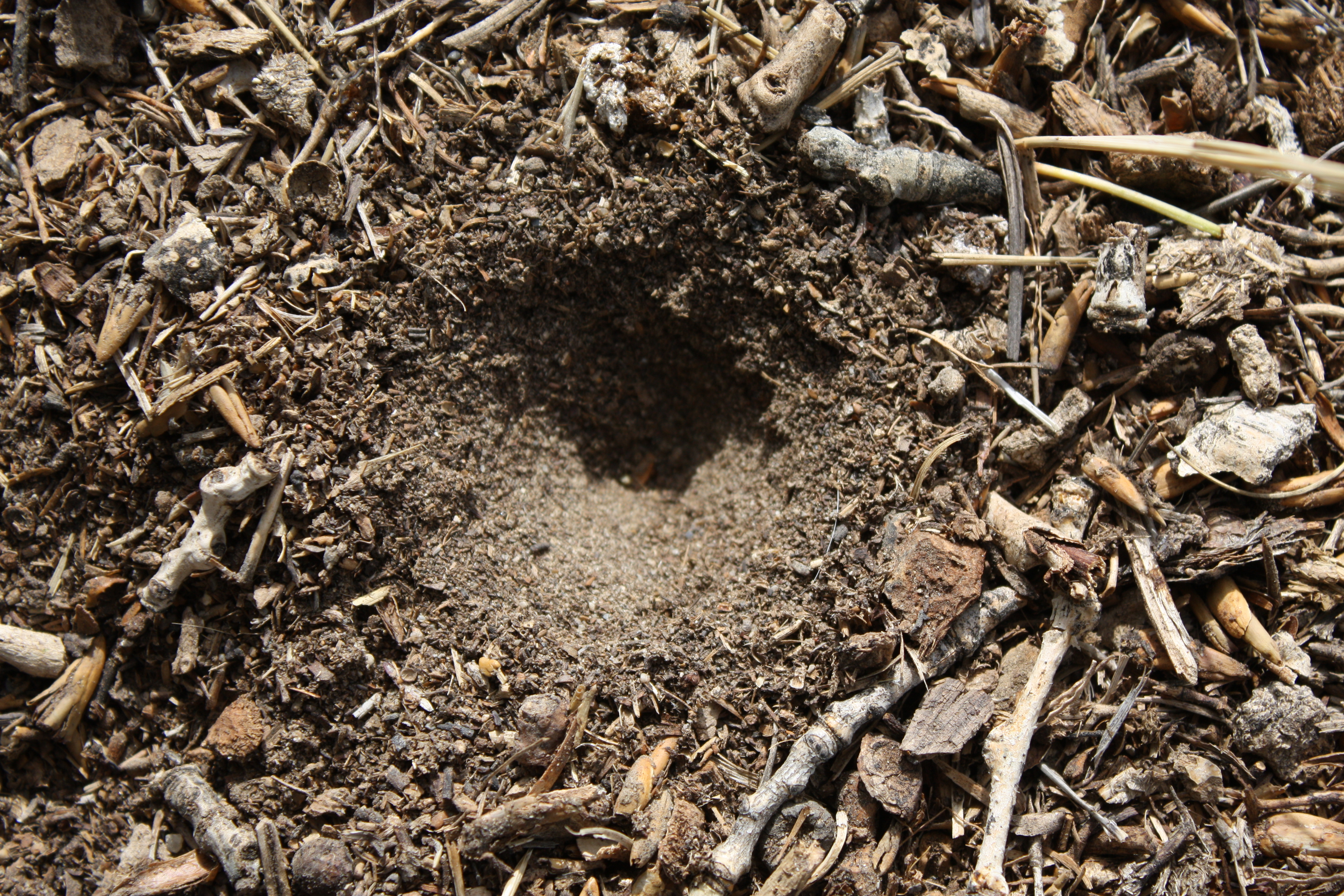
In the photos above, these small crater-like pits are made by the antlion larva in soft sand. Well who knew?  I photographed the little craters along our walking path, where they typically appear beneath a cottonwood or willow tree, and began researching until I found what I believe to be the correct identification.  In an article entitled “Denizens of The Sand,” by W. P. Armstrong, I learned that antlions “belong to the family Myrmeleontidae and include over 600 described species.”  It is a winged creature with a long, slender body (somewhat like a dragon fly) and in the larval stage makes funnel-shaped, crater-like pits in soft sand where it waits patiently at the bottom to have lunch on small insects like ants who happen to fall in.  It actually made its debut in the Star Trek II film, “The Wrath of Khan!”  A similar large-scale model of the antlion “looks like something out of a science fiction horror movie.”

Good grief, it is a bit much to unearth not only tigers (salamanders)  but (ant)lions living in the environs.  I think I’ll pass on seeing “The Wrath of Khan!”  It would only keep me up nights.

September Morn

Morning Glories at last . . . .

Morning Glories at last . . . .

Found myself humming an old Neal Diamond tune “September Morn” as I made the rounds of a morning walk.  The dog days of August are now behind us and the sunlight and temperature are more agreeable.  After watching and watering these vines all summer, they are now finally in bloom with the most amazing blue flowers.  Unfortunately they won’t last, as we typically have our first frost before the middle of the month.  Just maybe we will get to enjoy them a little bit longer this year.  But other wonders await on this walk.

Autumn asters just in time . . . .

Autumn asters just in time . . . .

This aster is blooming in the vegetable garden just in time for our wedding anniversary.  A direct descendant of our wedding flowers, it somehow grew from seed at the edge of a bed where I had tried to winter over dozens of pots of chrysanthemums and asters. I had hoped to transplant them into the flower beds the following spring and was terribly disappointed to discover everything had died, apparently due to the dry winter.  It seemed like such a waste of all the glorious flowers that we used to decorate our outdoor autumn wedding!  It wasn’t until the following spring that I noticed this little sprig of aster growing up through an opening in the weed barrier in the pathway between garden beds.  In spite of many obstacles, it has survived and bloomed for the past three years and serves as a reminder of a beautiful September day, 2009.

Th sage is in bloom . . . .

The sage is in bloom . . . .

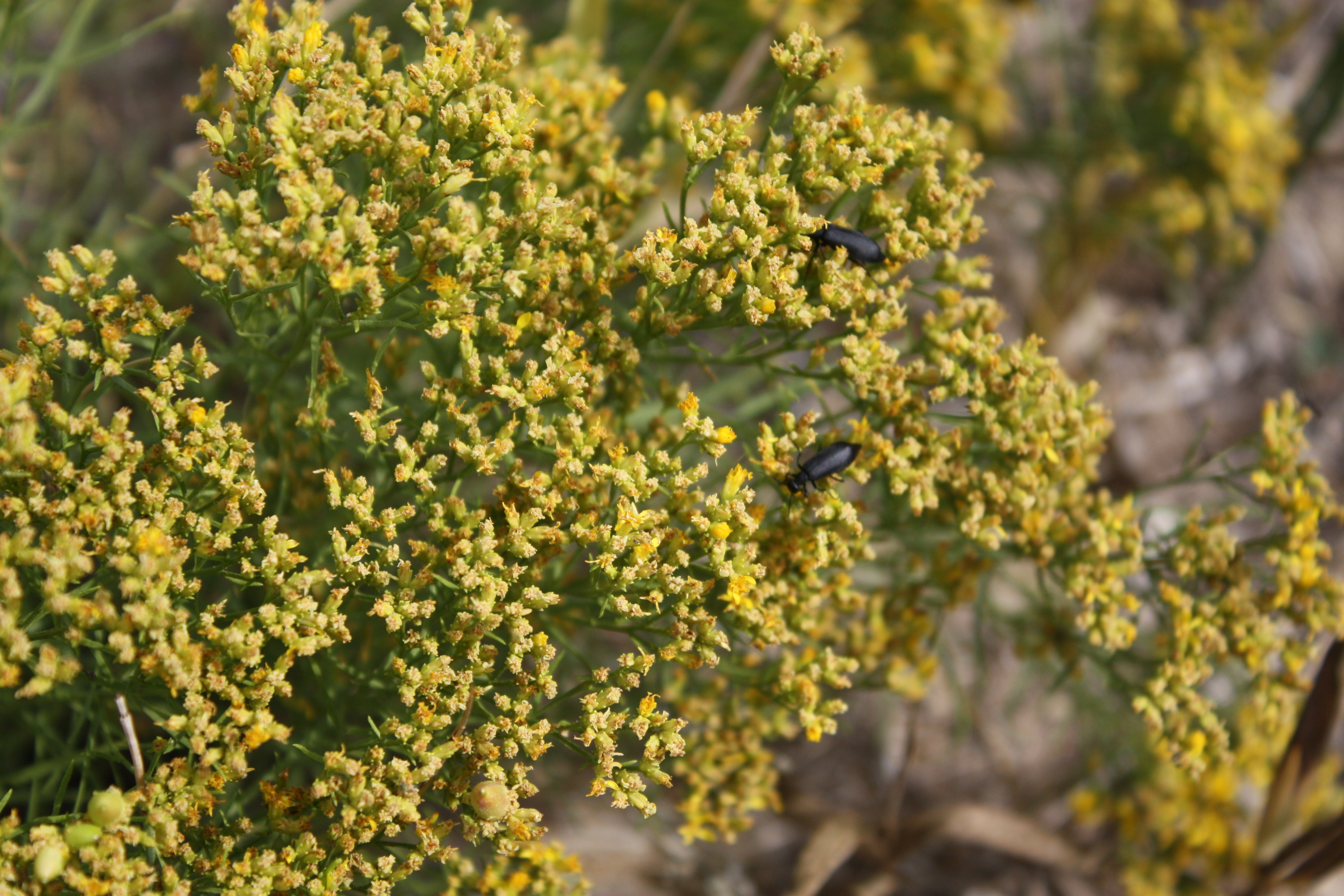
Sagebrush takes on a golden hue this time of year as it blooms and tries to compete with the Rabbit Brush, which is brilliant yellow.

Beetlejuice . . . .

Beetlejuice . . . .

And then there were tomatoes . . . .

And then there were tomatoes . . . .

With an abundance of tomatoes, jalapeno and anaheim peppers, it looks like time to make salsa.  Wish there was an easier way to peel, seed and chop all these tomatoes!

Fennel foliage . . . .

Fennel foliage . . . .

The prettiest greens in the garden . . . .

The prettiest greens in the garden . . . .

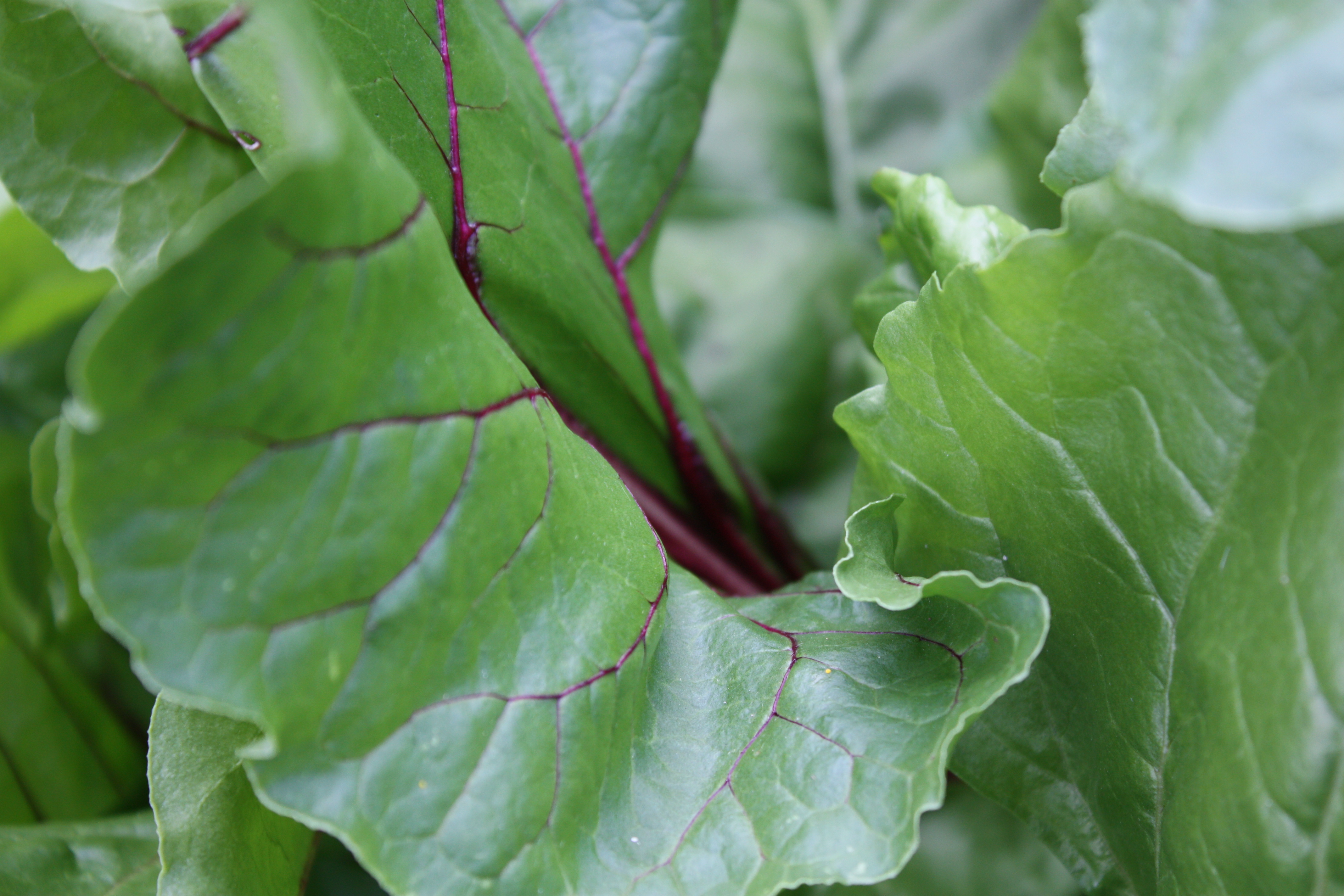
Swiss chard is ready to pick and there is enough for an entire town.  Why did I plant so much?

And more tomatoes . . . .

And more tomatoes . . . .

He loves me, he loves me not . . . .

He loves me, he loves me not . . . .

A fungus amongus . . . .

A fungus amungus . . . .

What an arresting sight!  Pale pink bubbles rising from the damp earth.  We could only guess at what type of plant they might be.

love in a barrel . . . .

love in a barrel . . . .

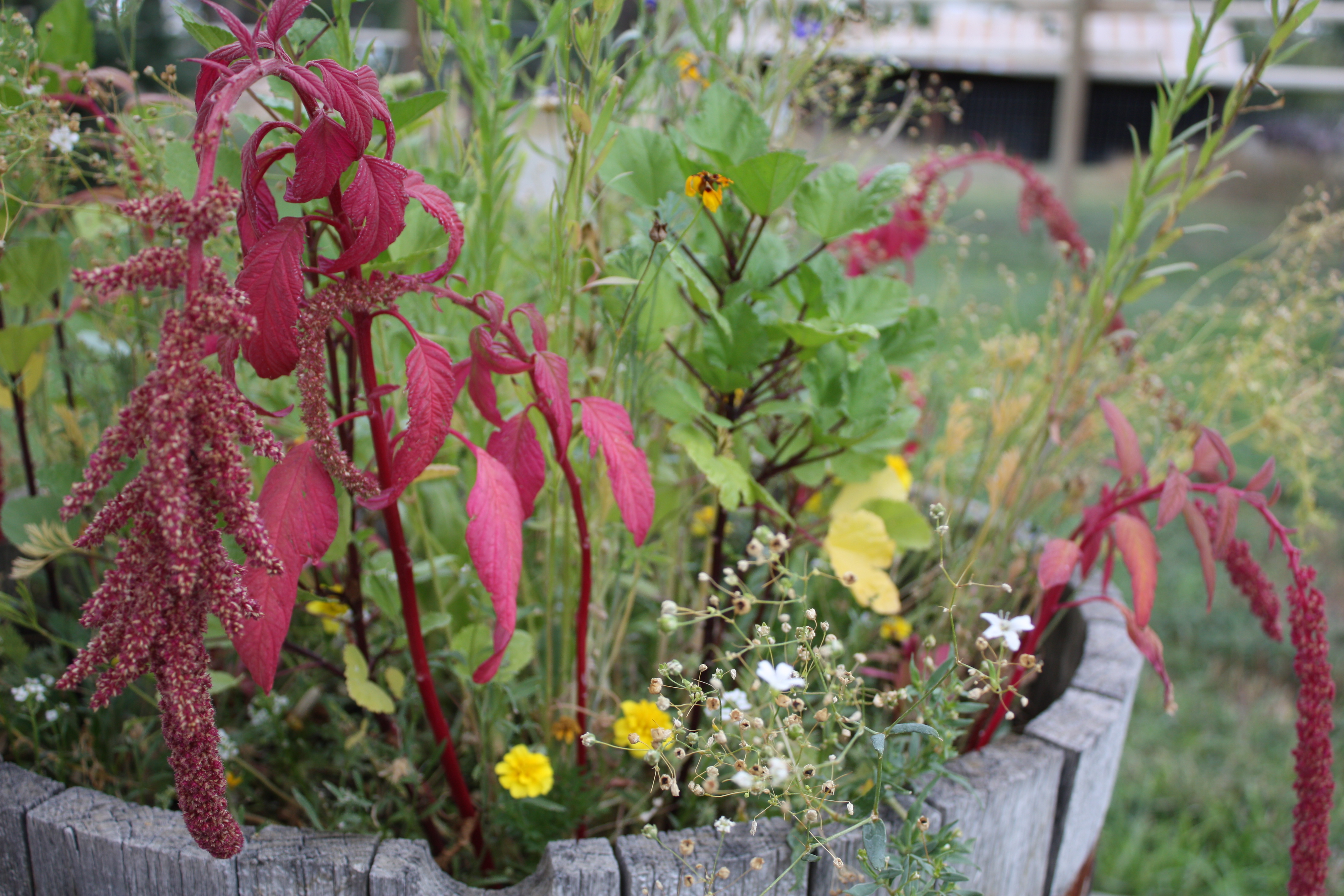
A mix of old fashioned flowers turned up some surprises.  Even more surprising was finding this interesting flower, loves-lies-bleeding, in the recent issue of Living magazine.  It was featured in a formal arrangement draped over tall ebonized pedestals in a stairway at Lily Pond, one of Martha Stewart’s many estates.  Hmpph!  Martha has nothing on my whiskey barrels.

A mysterious crater . . . .

A mysterious crater . . . .

These tiny craters are scattered in soft sand along the walking path.  They range in size from 1/4 inch to 1-1/2 inch in diameter and appear in groups of 20-30 within a few feet. What form of life can be drilling these perfectly shaped little holes in the ground?  This will require some research.

A Tiger In The Garden!!

A tiger by the tail . . . .

A tiger by the tail . . . .

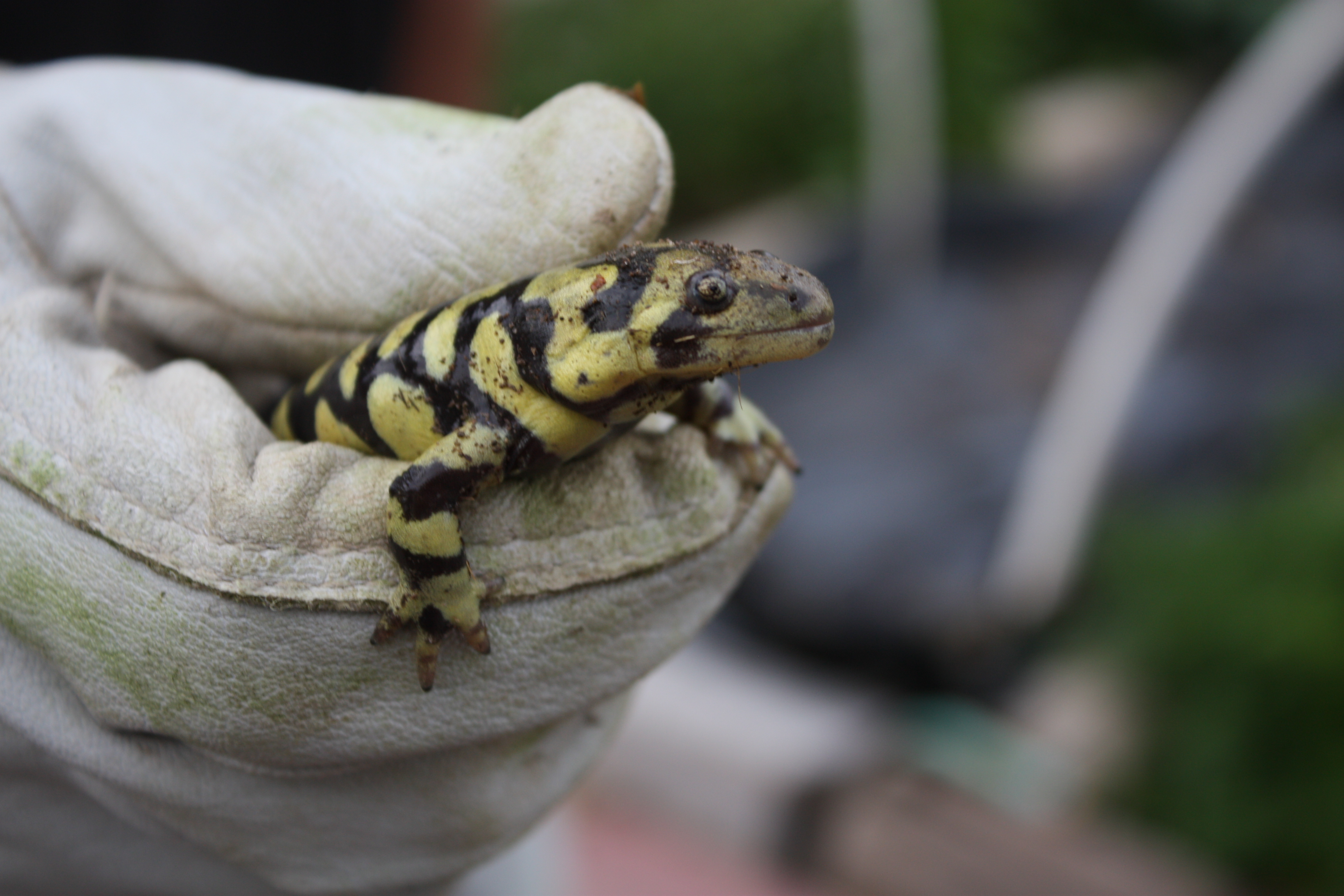
This creepy little guy was burrowed into some loose straw mulch when I uncovered him in the garden.  I was placing some potted trees in a bed where they will winter over with the help of straw, leaves and compost.  That is, if I have the courage to resume my work after abandoning the whole project to the salamander.  I suspect there are more salamanders than just this one.

My shreiks and screams summoned the family biologist who identified him as a Tiger salamander.  Even though he appeared perfectly harmless, and was beating a hasty retreat from the area where I found him, the incident left me shaking with fright.  Childhood memories of the salamanders who used to reside in our basement are still with me and I recoil at the thought of stepping on one or worse yet, touching one as I dig through my garden.

Our tiger was carried off to the pond a good distance from the garden and left to fend for himself in a new territory.  Maybe tomorrow I will get back to the pile of straw waiting in the garden, and with some luck, will not encounter any more tigers.

Chicken Fruit

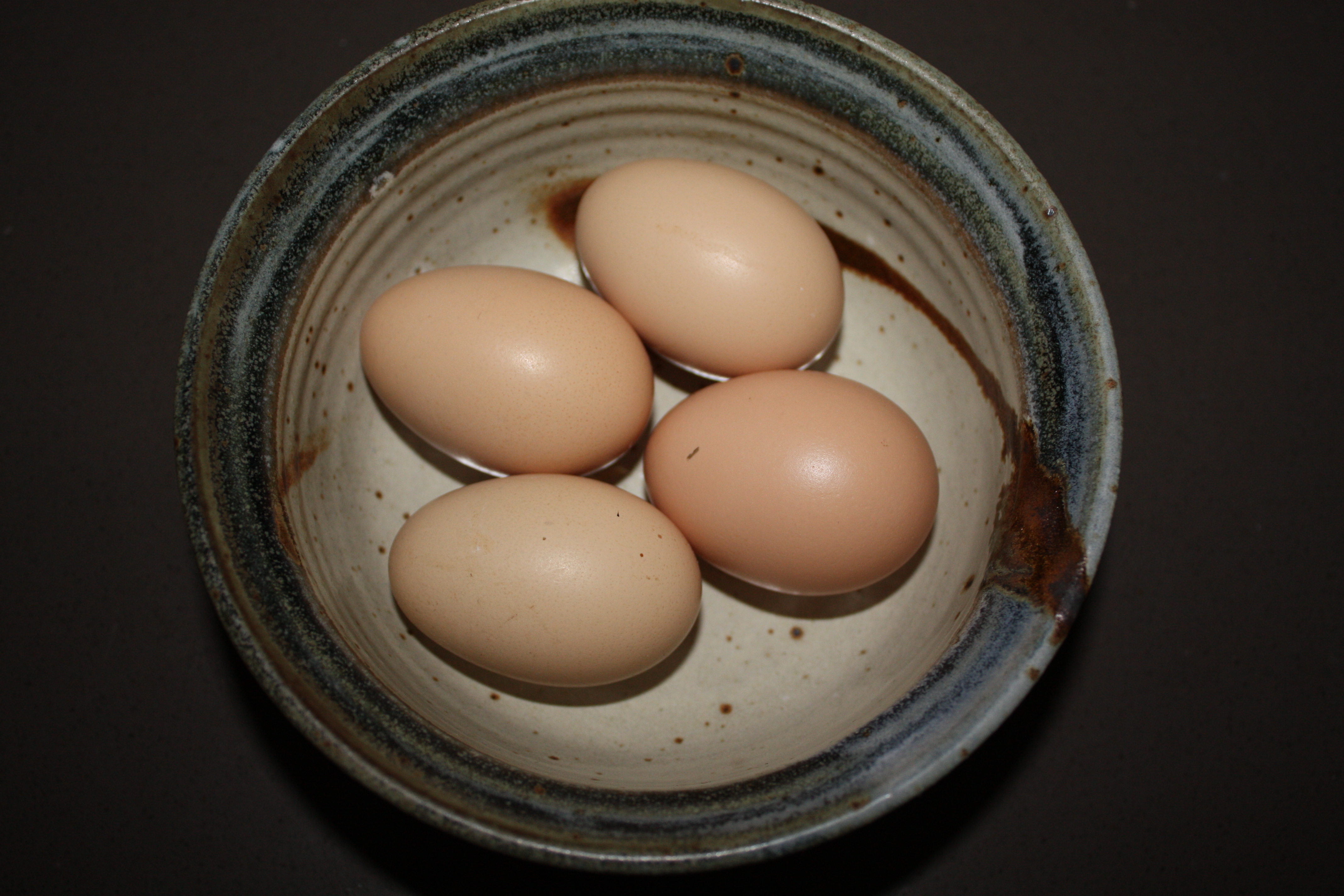
Egad, or eggs, to be exact . . .

Egad!  Or eggs, to be exact . . .

Our little girls have grown so, and look what happened!  They are producing about a dozen or so eggs each week and today we gave away a dozen to one of our neighbors as we cannot keep up.  They are still small, but so delicious!  Have been sharing garden produce with the girls and I think it makes for great tasting eggs.  Take a bow, girls!

Dee Dee is supreme in size . . . .

Dee Dee is supreme in size . . . .

Rhoda is reddest . . . .

Rhoda is reddest . . . .

Pearl the Adventurer flies the coop daily for greener pastures . . . .

Pearl the Adventurer flies the coop daily for greener pastures . . . .

Clara likes to be petted . . . .

Clara likes to be petted . . . .

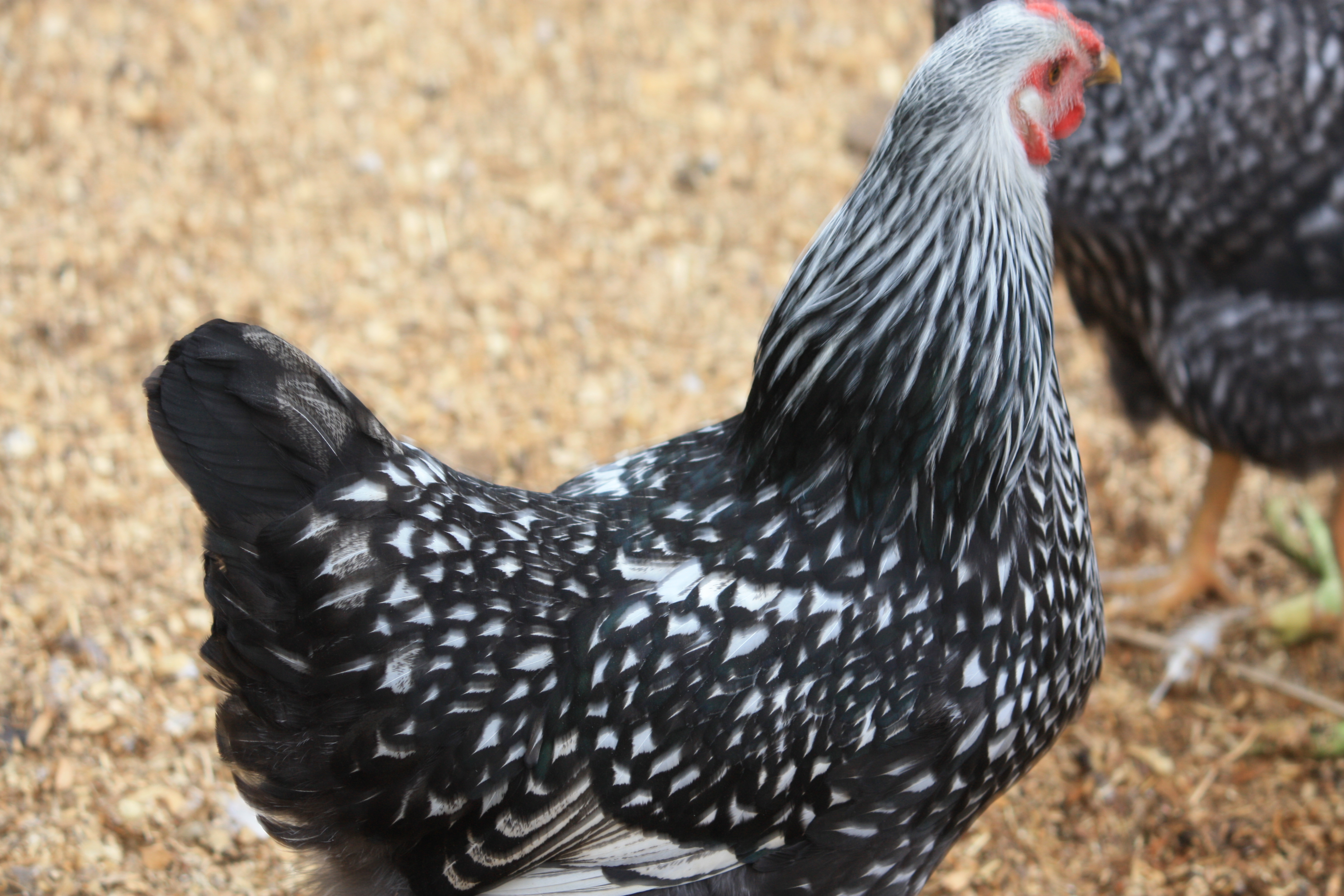
Hedda has deep blue luster to her black feathers --what a beauty!  . . . .

Hedda has deep blue luster to her black feathers –what a beauty!
. . . .

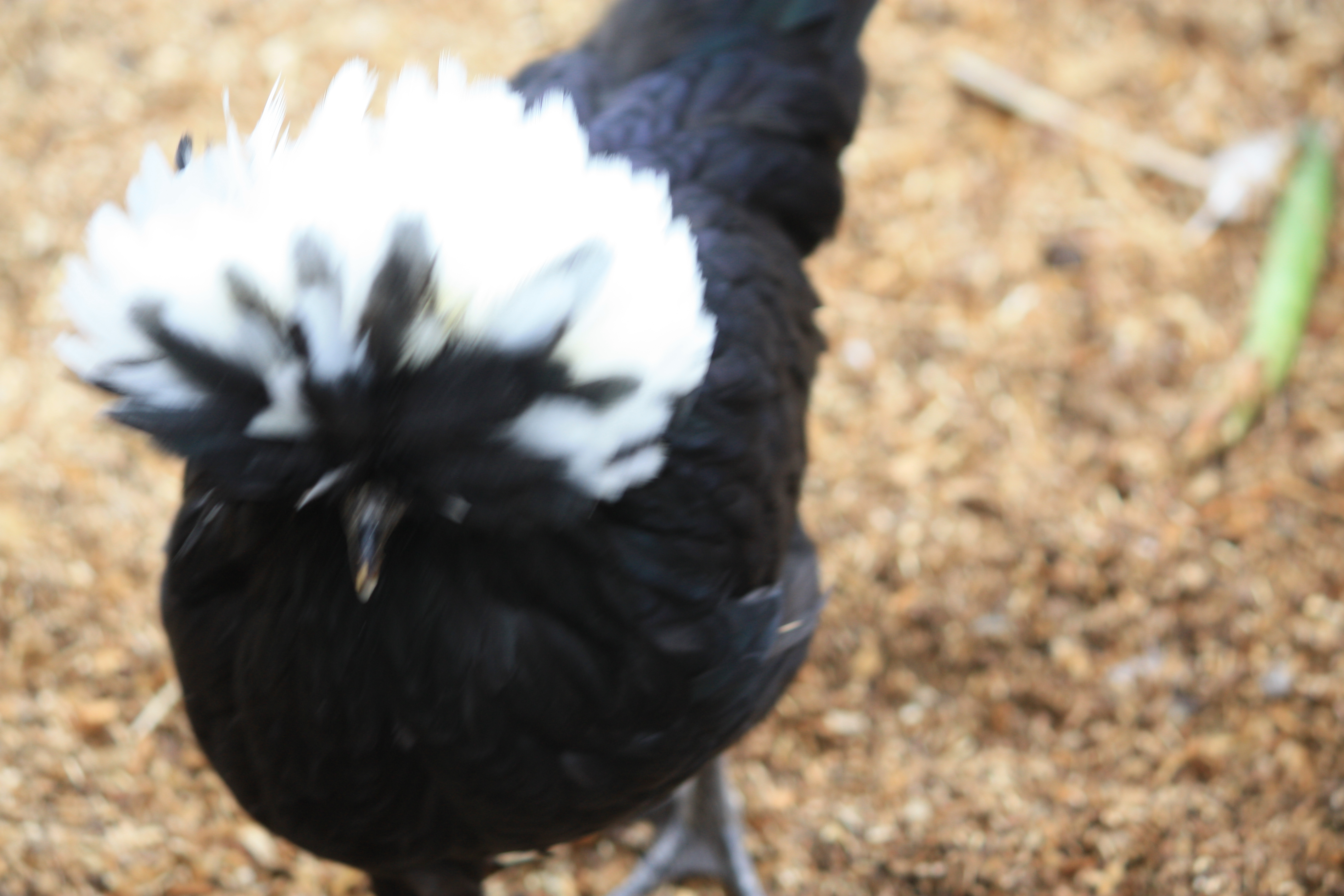
Phyllis and Marilyn, our little fluffy tops lay pretty ivory-colored eggs . . . .

Phyllis and Marilyn, our little fluffy tops lay pretty ivory-colored eggs . . . .

Trying to get Phyl and Marilyn to stand still for a photo is next to impossible–they shake their elegant plumes like a feather duster and dart around the pen, pecking at my shoes.  At times they present themselves directly at my feet and hop straight into the air to get my attention.  What characters, and so gentle.

Denice (or DeeNice, famous on YouTube) . . . .

Denice (or DeeNice, famous on YouTube) . . . .

Grandson Seamus was asked to name this girl as he picked her out last March as a baby chick.  He said I needed to watch a video to understand.  I did, and I did.  Not all eleven of the girls have been featured here, so they anxiously await their turn to preen for our blog followers.