Cromwell Has Something To Crow About

IMG_6102

The Rooster Crows! . . . .

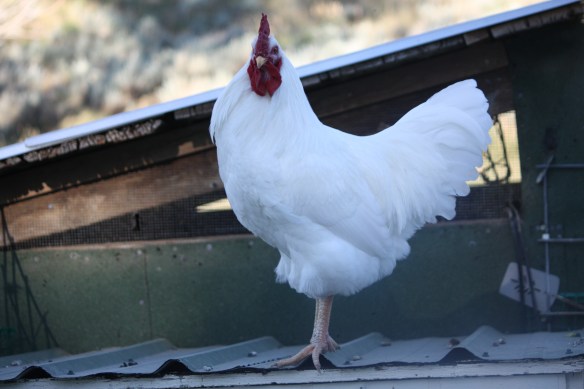
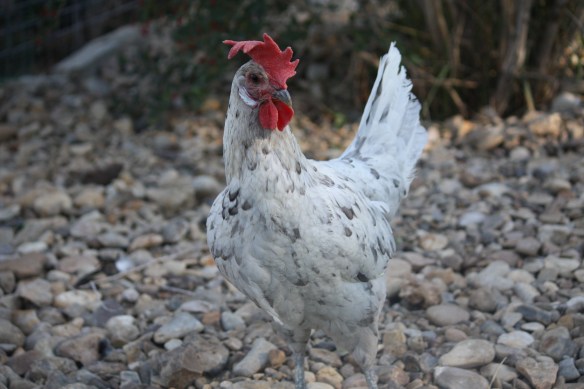
Cromwell, our resident rooster, had a Father’s Day gift that has the chicken yard all aflutter.  When his significant other, Miss Betty White, went broody and spent her days sitting in their little house we assumed she was just tired of his attentions and wanted some peace and quiet.  And who could blame her?

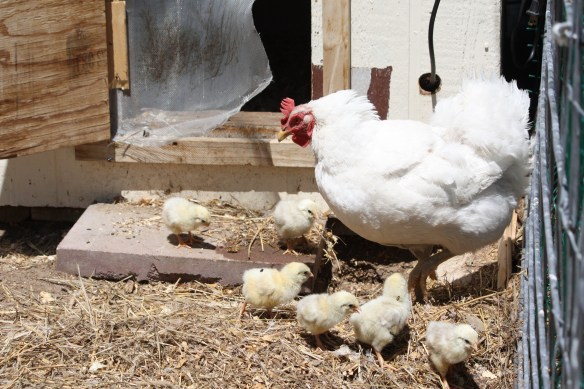
We returned from a trip to our cabin at Red Feather to discover Betty White had a surprise. Joyce, our caregiver, had to go to great lengths to prevent Cromwell from any rooster-like behavior and interference with the new brood that had arrived unexpectedly.  She nailed up a piece of screen to keep Betty White and her new babies out of harm’s way until we returned to figure out what to do next.

IMG_7195.JPG

Homegrown baby chicks . . . .

I had acquired 11 baby chicks of various breeds and colors in the spring from the feed store, and the addition of these six little cuties was going to be interesting, to say the least.  Betty White and her chicks would have to move to the brooder house where the older chicks were residing, which meant they too had to move . . . . . somewhere?  I had not planned to move them into the larger chicken house until autumn when they would begin to lay eggs. Cromwell of course would have to stay put and remain lord over his manor, without his consort Betty White and her progeny.

Moving day was fraught with peril.  I had to first catch the pullets one by one and hand them off to hubby and grandson Seamus to be hauled to “the big house.” The first one went pretty easy, and then chaos erupted.  Catching eleven very lively young chickens is not something I would recommend.  After the dust had settled and all eleven had been transported, I cleaned out the brooder house to prepare for the new occupants.

Cromwell came next.  I planned to lure him into the neighboring goose pen and lock him in their shed so that I could move Betty White and her chicks.  Cromwell by this time is very excited and defensive.  The squawking of the young chickens being torn from their lair next door was enough to get his adrenaline going. Before I knew it, he had me trapped between the propane tank and the fence. To describe the skirmish that went on would be believable only to those who have owned a rooster.  It astonished our grandson, who hasn’t been able to speak about it since.  I finally recovered my wits, and the big stick I carry when dealing with Cromwell, and got him under control and relocated.

It would seem that dealing with a rooster would be the most formidable of tasks in this whole operation, but have you ever dealt with a mother hen with a new batch of baby chicks?  I pulled off the slats and screen covering the doorway and tried to lure her out.  No way.  Her feathers were bristled and she was making a strange, growling noise as she darted about hiding her chicks.  She pecked at me when I tried to steer her out the door. Finally, there was nothing else to do but go in and grab her. Out came a bundle of shrieking, biting, clawing chicken and the feathers flew.  I had only one leg which allowed her to go into every contortion imaginable, twisting and flopping and flying at me.  I threw her into the brooder house and closed the door as she hurled herself against it.

I retrieved three chicks in the first swoop.  Fortunately, they were huddled in the corner completely traumatized.  They are lightning fast even at two days old, and if they escaped out into the pen I would never catch them!  The next three were still huddled and easy to catch.  Opening the door to the brooder house meant dealing with Betty White again, and I made fast work of tossing her babies in and shutting the door quickly as she raged against it.

Meanwhile, life in “the big house” was a question mark.  I had no idea whether the older hens would accept this invasion of eleven young pullets who were not yet old enough and big enough to defend themselves very well.  I was braced for the worst. Chickens have a pecking order which is physical as well as literal.

IMG_7211.JPG

Princesses of Dry Creek . . . .

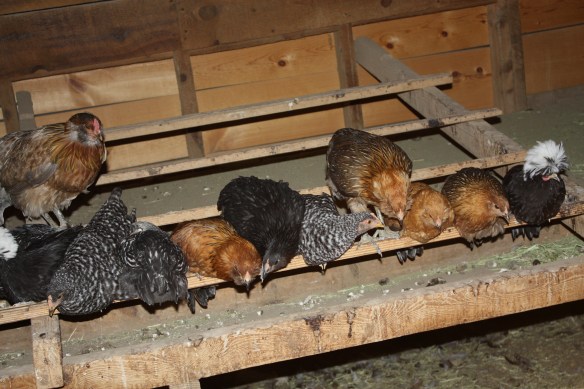
Later that evening I went to check on the pullets, and they were already up on the big roost.  No integration with the older hens had occurred, and likely wouldn’t, but they seemed to get into the stride of things right off.  They were settled in for the night.

IMG_7174.JPG

Queens of Dry Creek . . . .

Meanwhile, at the opposite end of the roost, the older hens were very unsettled.  Some were curious, some turned their backs on the newcomers, some were wandering around as if they couldn’t make up their minds to go to bed for the night.  Ah well, they too were young once and had to make their way with the older hens who reigned in “the big house.”


Springtime in the Rockies

IMG_7012.JPG

Ethel shares my attitude . . . .

The last week of April and this is the best we can do?  We have had days of rain, snow, rain, snow, rain, snow–equal to about three inches of precipitation (according to neighbor Tom) and I’ve had enough!  I know, I know, “we need the moisture.”  It is the mantra for high desert living but after a relatively warm March (until the final week) April has been a bust.

IMG_7008.JPG

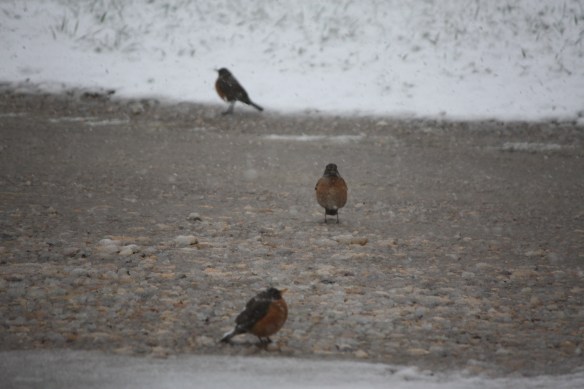
Robin runway . . . .

I think the Robins are contemplating a quick departure south until it warms up a bit.  The road was clear of snow for a time, and I counted about a dozen standing around like they were waiting for something to happen.  Actually, I think they are awaiting the arrival of earthworms, who have been drowned out of the underground and are headed for a sidewalk or hard surface to dry out.

IMG_7006.JPG

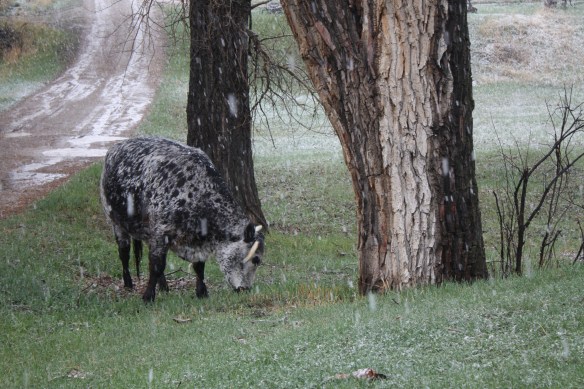
Feedlot stuffing his face . . . .

Feedlot doesn’t seem to mind the big flakes falling on his back–he has his nose buried in the tender green grass that is carpeting the creek bottom.  He likely won’t like what the end result is going to be.

IMG_7014.JPG

Familiar terrain . . . .

Looking across the driveway at the snow is more than a little depressing.  The lilac trees in the background are showing no signs of spring.

IMG_7017.JPG

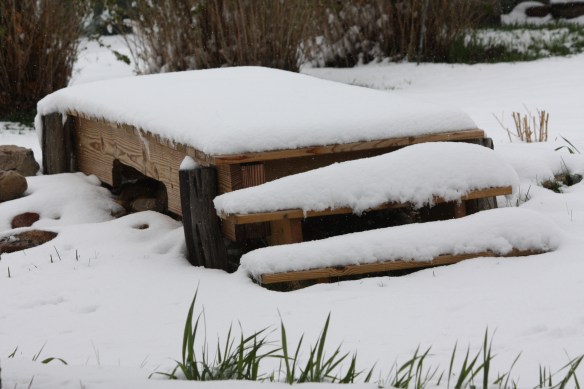
A bridge to the other side . . . .

The dry creek bed that runs under this bridge will certainly be a lively little stream as soon as all this melts.  The snow on the roof of  the house collects in downspouts and empties into the creek bed along with the accumulation on the ground.  My brother made fun of my attempt at creating “Dry Creek” in the backyard and scoffs at my little runoff remedy.  But we all share the memories of the real “Dry Creek” at flood stage cutting us off from the road to town.  I’m getting ready.

Georgia Coast

IMG_6833.JPG

Eliza Thompson House

April’s cruel gift of snow, cold and Wyoming wind was left behind for a spring getaway to Savannah, Georgia and various coastal destinations in the semi-tropical south. After a full day of changing planes and adjusting to a rental car for the drive in from the airport, we were welcomed in the parlor of this historic bed and breakfast and began to slip into southern hospitality as inviting as your favorite old robe and slippers.  Wine and hors d’oeuvres were awaiting us as we checked in and we enjoyed them in the garden.

IMG_6826.JPG

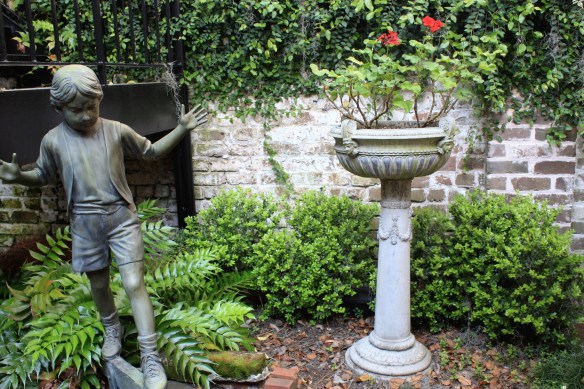
Youthful inspiration . . . .

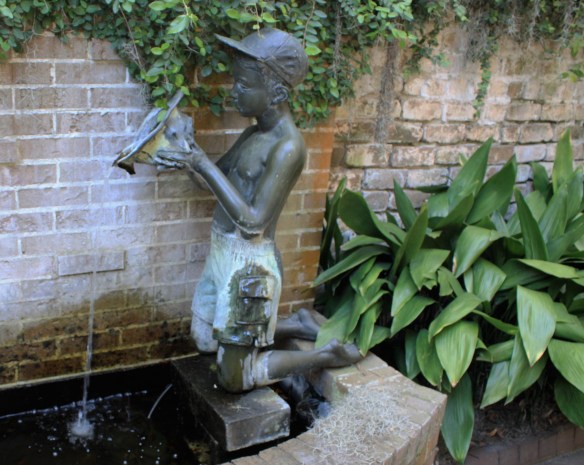
Sitting outdoors in a serene, restful sculpture garden is not what we encounter in our daily routine at home this time of year. We sighed and settled in.  Nothing to think about but where we would go for dinner.  As we sipped our wine, we studied a three-ring binder of restaurant choices and menus.  Ah, southern cooking!

IMG_6830.JPG

Scoop it up, little guy . . . .

Our car was parked on the street out front, and we had no intention of driving anywhere.  We never moved it until we departed Savannah for the outer islands.   One more glass of wine, please.  In the garden of good and evil (ahem!)
IMG_6828.JPG

Bare feet, ahhhhh . . . . .

Built in 1847 as a private home, the Eliza Thompson House is in Savannah’s historic district.  This was our first visit to Savannah, and we chose it for the history that is reflected in the beautiful buildings, parks and memorials.  The site of the 13th British colony, Savannah was established in 1733,  long before Wyoming was a glimmer in the eye of expansionist pioneers.

IMG_6832.JPG

Garden Girl . . .

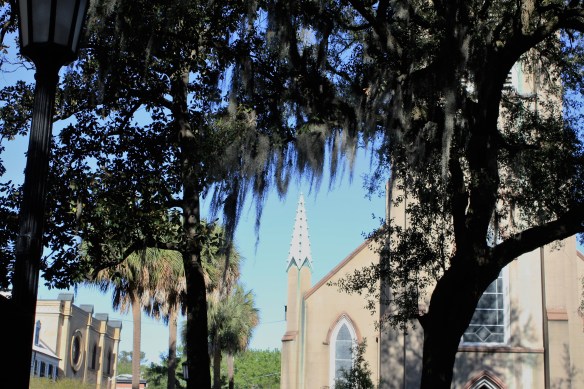
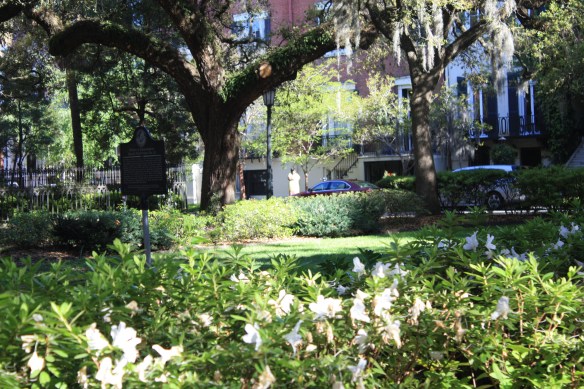
Streets are mostly of brick and cobblestone.  The flow of traffic is interrupted at regular intervals to circumnavigate 22 “squares” that encompass roughly the size of a city block. The stately squares are shaded by live oak trees draped with moss, palmettos, and magnolia trees.  Wide sidewalks flow through the middle  and are peopled with grand statues of historic figures — Lafayette, Oglethorpe– and countless others.  The azaleas had finished blooming but some of the trees were sporting pink or white blossoms.

IMG_6836.JPG

Heavenly church architecture . . . .

Walking down Bull Street to the river was a visual feast.  We had lots of options for transport: trolley car; horse drawn wagon; festive funeral hearse; segway; and tour bus.  We walked.  And walked.  And walked.

IMG_0024 (004)

The Pink House Restaurant . . . .

IMG_6835.JPG

Former Masonic Lodge

Buildings in the historic district are carefully preserved and adapted to modern use.  Savannah survived the British occupation during the American Revolutionary War, and was spared General William Sherman’s Civil War March to the Sea by negotiating a peaceful surrender which spared Savannah from destruction.

IMG_6837.JPG

Street Scene . . . .

Our march to the Savannah River continues along Bull Street.  Our goal is to tour River Street shops and the market place. We had dinner the night before at 17Hundred90, a restaurant that was established in that year.  Food was delicious and the piano music made the evening special.
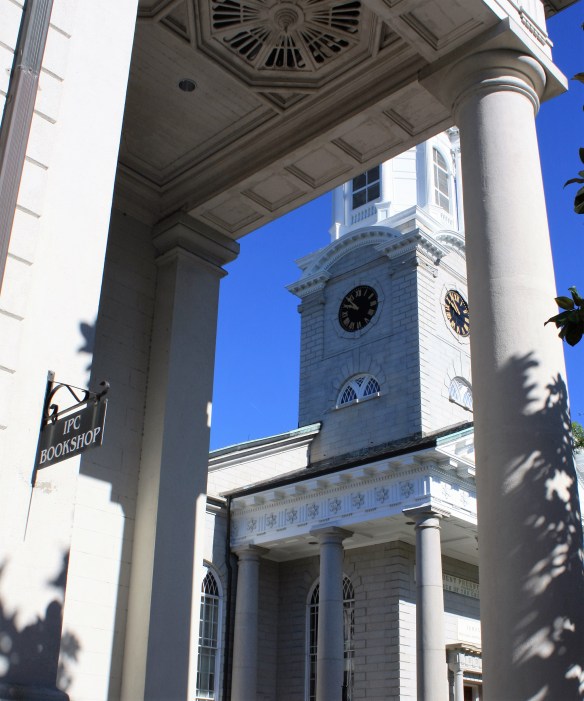
IMG_6840.JPG

Church Within Church . . . .

Savannah was named for the Savannah River, which may be a variant for Native American people known as the Shawnee who migrated to the river in the 1680’s.
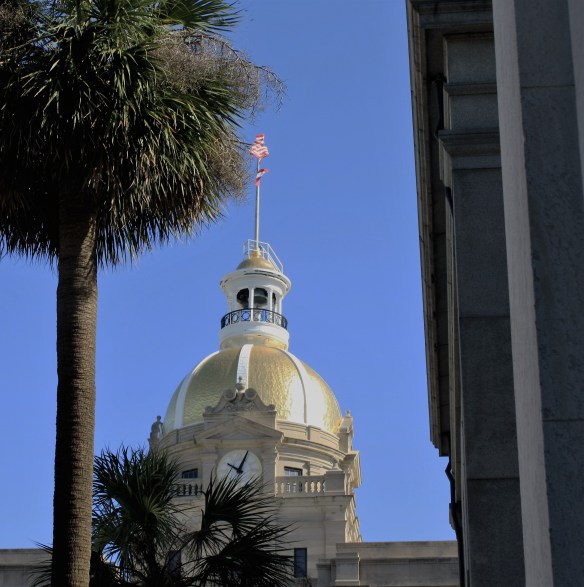
IMG_6842.JPG

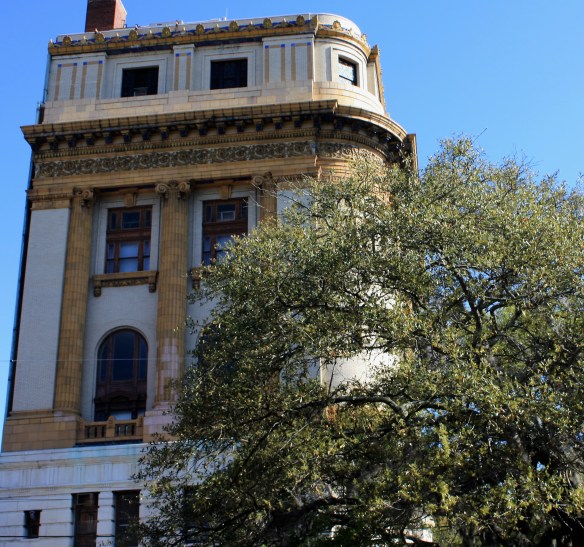
City Hall . . . .

Savannah’s City Hall (1906) was the first municipal government building.  It’s dome is gilded with 23-karat gold leaf.

IMG_6843.JPG

Sea Wall . . . .

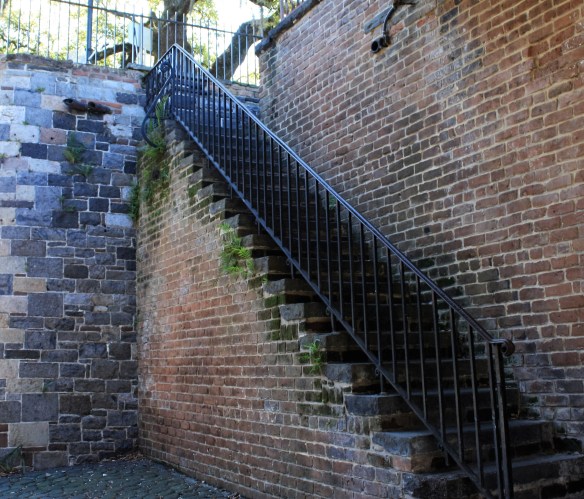
A kindly gentleman informed us we could use an elevator to descend down the sea wall to River Street, but we elected to take the stairs.  The stone stairs were worn where countless feet had gone before.

IMG_6847.JPG

Talmadge Bridge . . . .

This spectacular span is one of many connecting the Georgia coastline to outer islands.  Savannah is a strategic Atlantic seaport.

IMG_6846.JPG

River Street . . . .

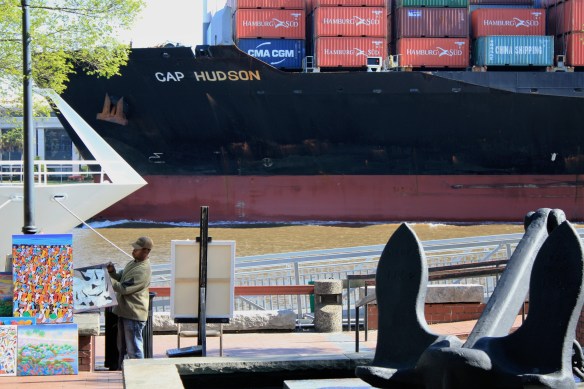
Ships in the background, artwork along the sidewalks, and historic naval artifacts interspersed throughout.  The riverfront is a bustling, lively district of restaurants, shops and hotels.

IMG_6849.JPG

Westin Savannah Harbor Resort . . . .

Savannah lies approximately 20 miles upriver from the Atlantic Ocean.  Nearby Hilton Head and many other golf destinations are in “high season.”  We tried to grab a peek on various television screens to follow the Augusta, GA tournament which was underway.

IMG_6848.JPG

Keeping us safe . . . .

Rivers in Georgia are wide and deep.  When compared to the streams that flow from the mountains in Wyoming, ours are a mere trickle and few and far between.  I could not help but wonder how Georgians manage to negotiate all the waterways that flow through the state to the sea.  This U. S. Coast Guard ship patrols the waters.

IMG_6850.JPG

East Riverfront Park . . . .

I longed for a reference book on Georgia trees to help identify the variety we encountered. This grove resembles human limbs with their smooth, creamy color and I am left wondering what they were.  That goes for the tree laden with blossoms.

IMG_6854.JPG

Resident Squirrel . . . .

No park would be complete without a squirrel or two.  This one raced alongside us for a distance and then finally gave up in disgust, retreating empty-handed back to a hollow in the tree where it likely keeps the daily “stash.”

IMG_6855.JPG

Flying Ant? . . . .

Returning uptown, we passed this art installation in the foyer of the Savannah Contemporary Museum of Art.  The ant, which I would call the grand-daddy of them all, is nearly as large as a human form attached to the ceiling.

IMG_6856.JPG

Autumn colors in spring . . . .

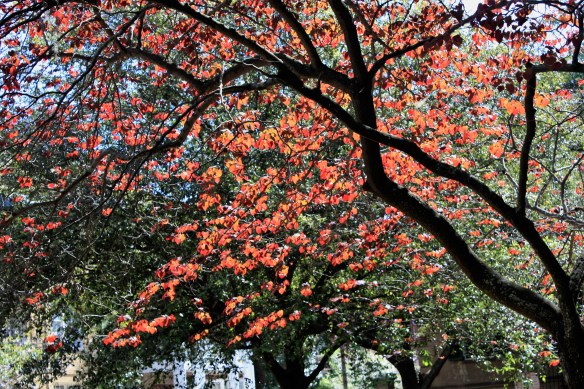
Strikingly pretty foliage on an unidentified tree.  The autumn colors are a contrast to the fluffy, pastel colors of other trees that were in bloom.

IMG_6861.JPG

Formal Garden . . . .

A highlight of our Savannah tour was the Owens-Thomas House.  This formal, English inspired garden was designed by Clermont H. Lee, one of Savannah’s foremost landscape designers.

IMG_7000

The Owens-Thomas House was designated a National Historic Landmark in 1976 and listed in the National Register of Historic Places in 1977.  Today it is one of three museum buildings that comprise the Telfair Museum of Art. The stunning Regency-style architecture, period furnishings and art offer a unique insight into early nineteenth century living.

IMG_6865.JPG

Getting goosed . . . .

This fierce looking goose is positioned on an apartment balcony  extending over the sidewalk for all passers-by to see.  He doesn’t look too friendly!

IMG_6866.JPG

Horsing Around Town . . . .

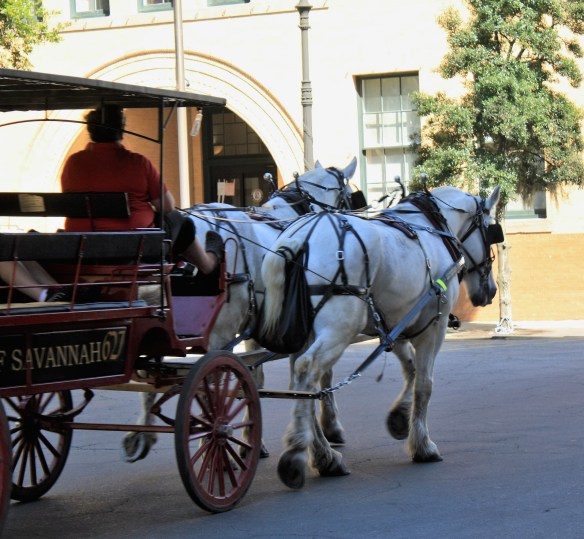
The street traffic allows for some of the slower modes of transport.  Downtown Savannah retains most of the original town plan prescribed by founder James Oglethorpe and includes the historic district, Victorian historic district and 22 park-like squares which make it one of the largest National Historic Landmark Districts in the U.S.

IMG_6867.JPG

Telfair Mansion and Museum . . . .

The former residence of Revolutionary War patriot and four-time Georgia governor Edward Telfair.  Built in 1819, it is the only historic art museum in Savannah and is home to the “Bird Girl” statue made famous in the book, Midnight In The Garden of Good and Evil.

IMG_6868.JPG

Classical Church . . . .

It is interesting to note that such magnificent buildings evolved before the modern construction technology we enjoy today.  Our modern-day structures typically lack the craftsmanship, quality materials and enduring design that make them worthy of preservation.  Consequently, many get the wrecking ball before they are 50 years old.

IMG_6870.JPG

New and nice . . . .

These two modern government office buildings built for the U.S. Coast Guard actually fit into the neighborhood.  Savannah has restrictive building codes for new construction, and these were obviously met with approval.

IMG_6871.JPG

General James Edward Oglethorpe . . . .

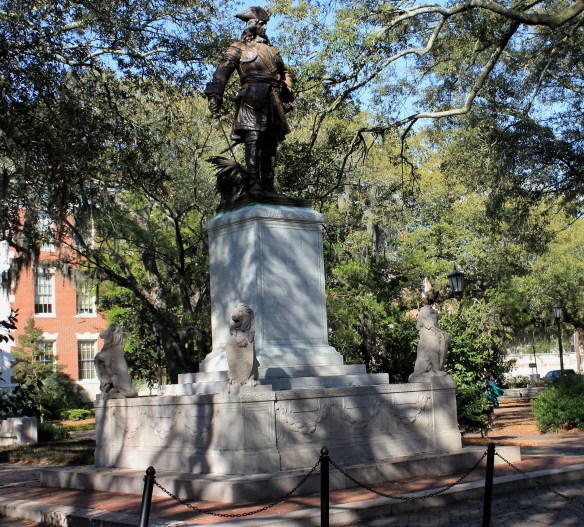
Philanthropist, representative of King George II to the American colonies, city planner, and founder of Savannah,  General Oglethorpe was sent to create a military buffer south of the Savannah River to protect the Carolinas from Spanish Florida and French Louisiana.

IMG_6883.JPG

Fountain fun . . . .

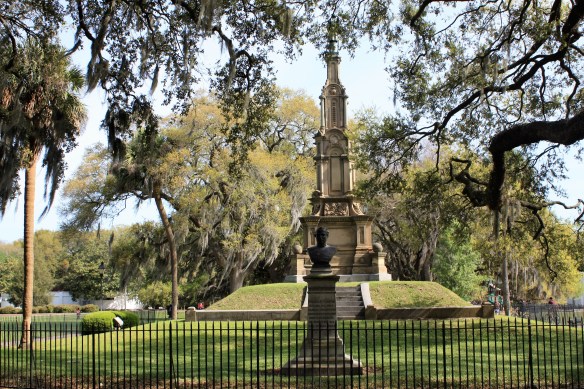
Forsyth Park was a short distance south of our lodging and made for a lovely walk.  The park is huge, encompassing approximately 14 city blocks and it is filled with statuary, gardens and recreational areas.

IMG_6873.JPG

Civil War Memorial . . . .

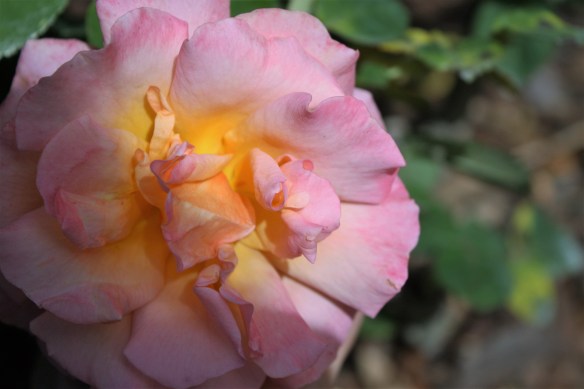
We missed the showy azalea blooms but a garden of other flowers were just beginning to unfold.

IMG_6889.JPG

A rose is a rose . . . .

IMG_6890.JPG

Not to be outdone . . . .

Wyoming state flower is the tumbleweed (just kidding), so when I enter a lovely garden with flowers in bloom, I cannot resist trying to capture the beauty.

IMG_6874.JPG

Pavilion and pool . . . .

A mother and baby yoga class was about to commence on the grounds.  Other park participants were napping, walking or sitting on benches reading or gossiping.  Nothing like a day in the park!

St. Simon

IMG_6898.JPG

St. Simon light house . . . .

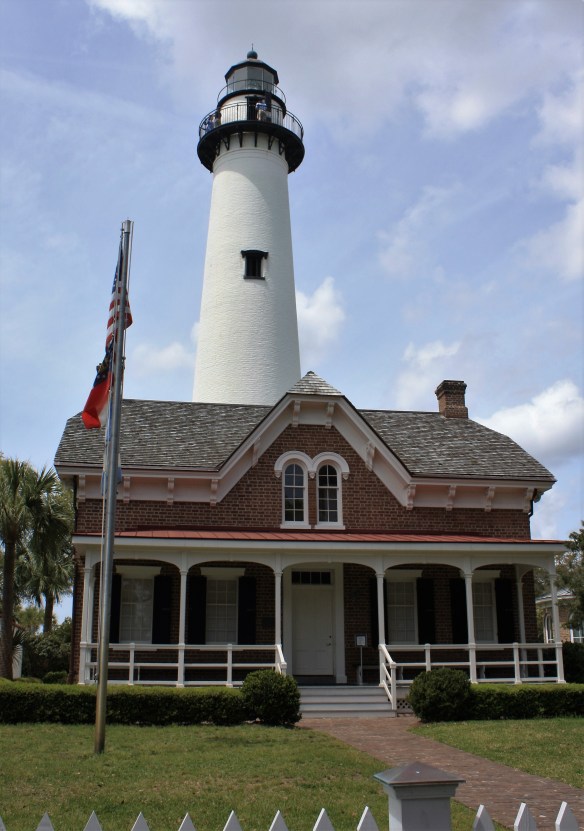
On the road to some of Georgia’s coastline, we stopped first at St. Simon.  One of five surviving light towers in Georgia, we decided the only thing to do was climb it.  All 129 steps of it.  Then we toured the two-story museum which was the residence of the light keeper. By then my legs felt like rubber bands.

IMG_6902.JPG

Sea breezes up high . . . .

Jekyl Island

The next stop was Jekyl Island and I fell in love. Often referred to as “Georgia’s Jewel,” it is one of the state’s most beautiful coastal barrier islands.  Rich with history as an exclusive retreat for some of the nation’s wealthiest families (J. P. Morgan, Joseph Pulitzer, William Vanderbilt, William Rockefeller, Vincent Astor,  Marshall Field, Macy, Goodyear and Gould to name a few) the Jekyll Island Club would become a winter social club for the wealthy elite.

IMG_6907.JPG

Croquet, anyone? . . . .

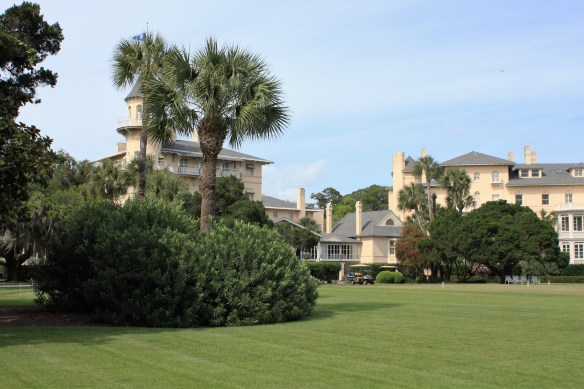
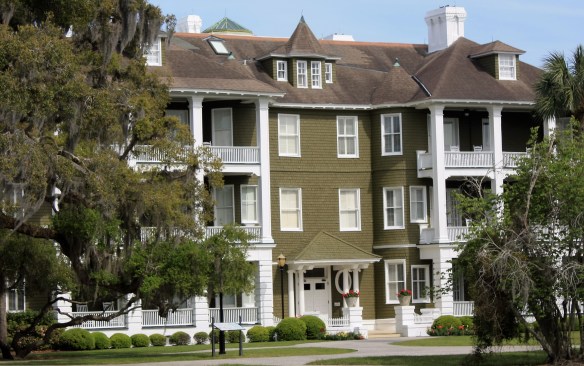
Opened in 1887, the clubhouse had indoor plumbing and was illuminated by gas fixtures.  An example of Queen Anne architecture, the design included wrap-around porches, towers and decorative features such as spindles and lattice.  The complex, which includes several cottages, was designated a historic landmark in 1978.  It was restored and reopened as a luxury resort hotel in 1985.

IMG_6909.JPG

Sans Souci Apartments . . . .

IMG_6913.JPG

DuBignon Cottage . . . .

From 1888 to 1928 club members constructed fourteen “cottages” in addition to the one built by the original family.  Queen Anne and shingle styles were predominant during the early years, while later cottages reflected architectural trends of Italian Renaissance and Spanish eclectic styles.

IMG_6908.JPG

Rockefeller Cottage “Indian Mound” . . . .

IMG_6915.JPG

Carriage for a princess . . . .

Carriage rides around the historic district are available but we chose to walk.  The grounds were so beautiful it gave us time to appreciate them more.

IMG_6925.JPG

Driftwood Beach . . . .

Leaving the lush environs of the historic district, we toured the rest of the island and stopped to photograph the “tree cemetery.”  A major weather event toppled trees along the seashore and they have been gradually eroding over time.

IMG_6922.JPG

Driftwood, anyone? . . . .

Next stop was the Georgia Sea Turtle Center where turtles are rescued and cared for until they can be released back into the Atlantic.  Our next stop would be St. Mary.

Cumberland Island National Seashore
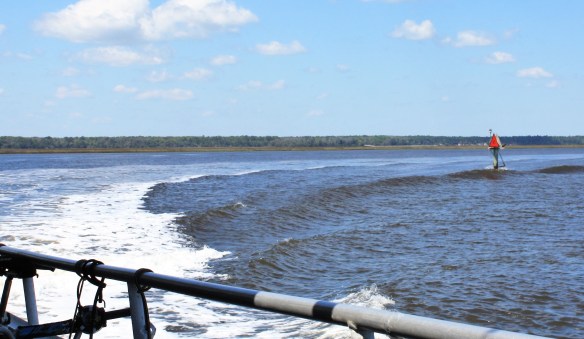
IMG_6930.JPG

The ferry to Cumberland Island . . . .

A pleasant visit to the St. Mary visitor center was cut short when we learned the ferry was leaving in about 15 minutes for Cumberland Island.  “It won’t wait for you,” was the admonition from a little lady who was trying to convince us to visit the radio museum next door.  We raced to the pier, searched for parking, purchased tickets and made it down the gang plank with no time to spare.  We didn’t consider that we had no lunch or food of any kind and none could be found on this beautiful, carefully preserved, natural environment which is mostly a national park and wilderness area.

IMG_6931.JPG

First class float . . . .

It is roughly a 45-minute ferry ride to the island, which crosses the Intracoastal Waterway. A few nice little boats float on the Intracoastal.

IMG_6936.JPG

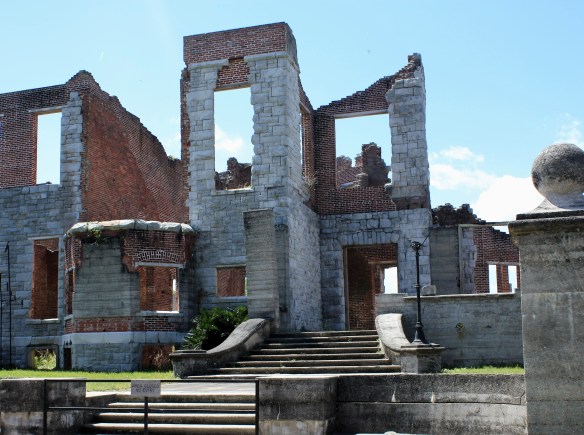
Dungeness . . . .

We set out walking to “the ruins” and came upon a compelling site that was once home to the Carnegie family and before that, the widow of General Nathanael Greene.  Fire destroyed the mansion and it sits abandoned except for the wild horses that wander through the area.  And a few other creatures.

FullSizeRender (003).jpg

Waiting for lunch . . . .

The “duck pond” on the estate must have once been lovely, but this day its only occupant was this alligator.  We were astonished to see it, but it’s just one of the “locals.”

IMG_6940.JPG

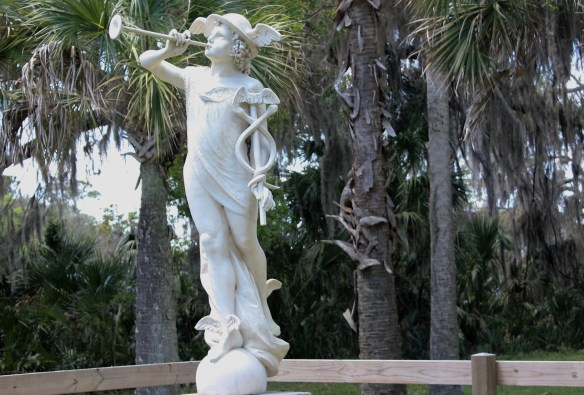
A call to ghosts of the past . . . .

This lovely statue stands alone, protected by a fence, on the spacious grounds.  It appears to be in excellent condition, while the rest of the estate is crumbling ruins.
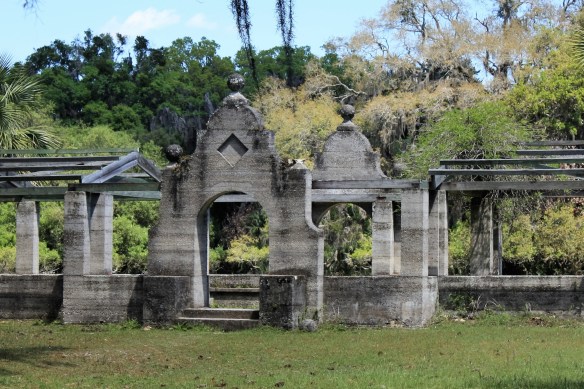
IMG_6938.JPG

Carnegie Mansion . . . .

IMG_6939.JPG

Pavilion . . . .

IMG_6947.JPG

Green House . . . .

IMG_6946.JPG

Cumberland Island horses . . . .

IMG_6962.JPG

New friend, Stormy . . . .

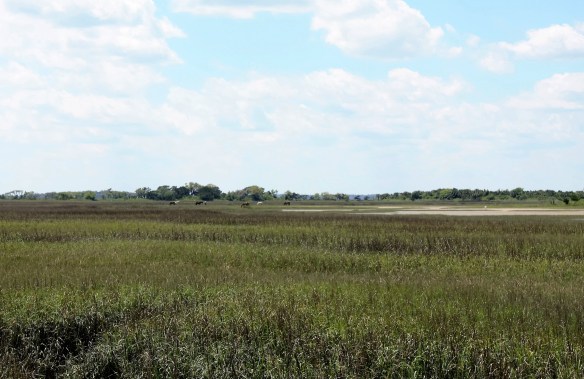
Cumberland Island’s feral horses roam the island’s maritime forests, wild beaches and salt water marshes.  I tried photographing a group from  a distance and did not expect to see any up close.  We came upon a mare and her foal, along with one other horse along the road near a park ranger facility and became entranced.

IMG_6965.JPG

Hi there . . . .

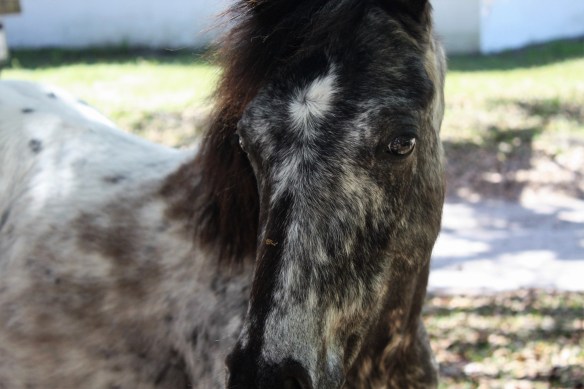
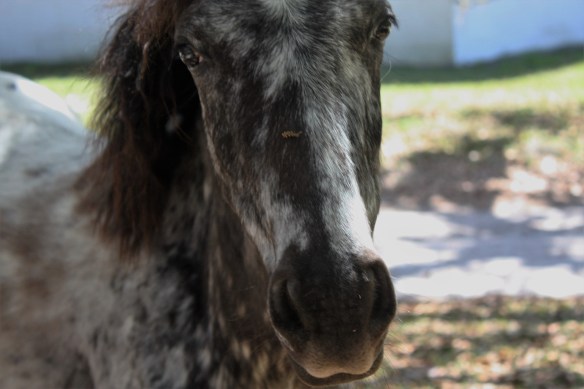
This foal was friendly and very curious.  He approached me and I kept taking photos of him until he had his nose right near my camera.  Park rangers discourage interaction with the horses, stating they “kick and bite” but this little one didn’t appear to have any aggression in mind.

IMG_6966.JPG

Nice to meet you . . . .

There are approximately 150 – 200 wild horses on Cumberland.  They are smaller than standard western horses, and live a challenging existence due to insects, parasites and the terrain. Rumored to have arrived with Spanish explorers in the 16th century, it is more likely they were brought in by the English in the 18th century.  The Park Service makes no mention of them in their standard brochure and they are not viewed as a “unique” species that merit protection.

IMG_6957.JPG

Where’s Mom? . . . .

Farewell, Stormy.  I hope you have a happy life on Cumberland Island.  Maybe I will see you again someday.


. .
The Wonder of Wurlitzer

IMG_6782.JPG

Jiving with the juke box . . . .
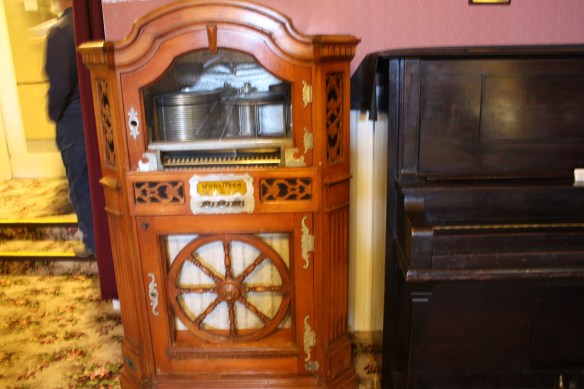
This old Wurlitzer juke box was a standout in a tour of the Pioneer Museum in Douglas, Wyoming recently.  It brought back some memories of an old Wurlitzer that stood in my grandfather’s general store in Kaycee.  The juke box I recall had curved glass neon-filled tubes that changed rainbow colors as the 78 rpm records spun out country tunes from the stars of the 1950’s (Hank Williams, Ernest Tubbs, Homer and Jethro, Jim Reeves, Eddy Arnold, Chet Atkins, Patsy Cline, Carter Family and Tennessee Ernie Ford, to name a few).

It took a nickel in those days to buy a song.  I begged for quarters to pick five tunes, and some evenings after closing, my grandfather would take out a huge ring of keys that he kept in his pocket, open the door and push a little lever that allowed us to select a few with no coins.  One of my favorites was Old Kawliga, a sad tale about a cigar store wooden Indian.  I still know most of the words!

I don’t know what happened to the old Wurlitzer, which was sold along with the general store when my grandfather retired in the 1960’s.  But I have my memories of being a little kid with face pressed to the glass, watching the records spin and being enchanted by the changing colors and sound of music.

Ode to March

IMG_6797.JPG

Celebrate! . . . .
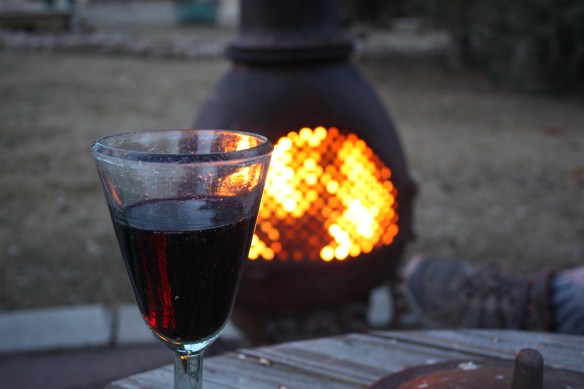
The joys of spring are within grasp, albeit tenuously, and are manifested in part by balmy weather in the 50’s.  We were inspired to build a fire in the cast iron outdoor stove, drag down a couple ancient metal lawn chairs, and pop the cork on a lovely Tempranillo. Rib eye steaks to follow!

IMG_6799.JPG

The fire is warming our hearts, and our feet! . . . .

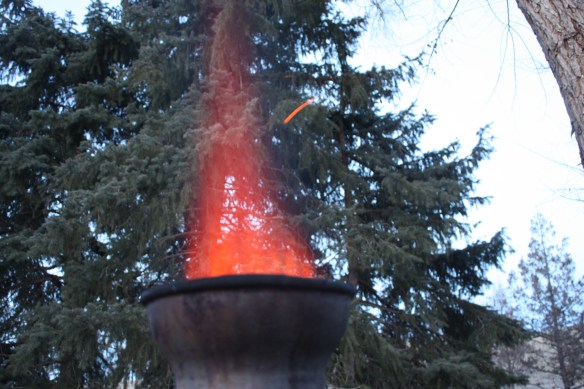
Flames rise above the chimney and a few sparks fly out, like lightning bugs in the twilight.  We do not have lightning bugs in Wyoming, but have experienced them in other places.  I used to help my children capture them in jars in Ohio on summer evenings.  But I digress.

IMG_6800.JPG

Johnny jumping up . . . .

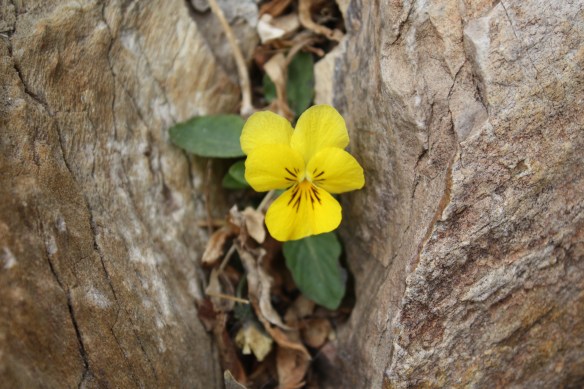
These sweet little Johnny Jump-ups have seeded all over the yard and have begun to sneak up in crevasses in the rock garden.  They don’t seem to mind the snow and cold of the past few weeks and keep persevering to bring us a little cheer.

IMG_6801.JPG

Cousin Viola . . . .

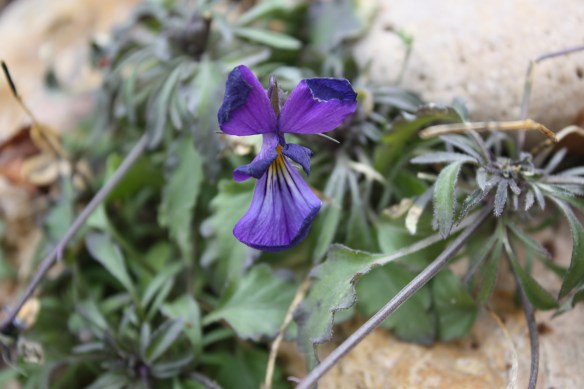
Not to be outdone, the violas have begun to bloom along the dry creek bed.  In a month the banks will be covered with these delicate little flowers who make their early arrival so special.

IMG_6805.JPG

A cold drink . . . .

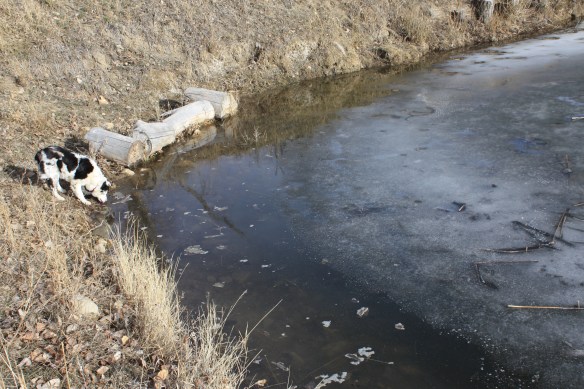
The ice is loosening its grip on the pond, with open waters around the edges.  Rosie likes ice in her drinks!  The logs where we launch to ice skate are right at water’s edge this spring which is a good indicator of the water level.  By August they will be high and dry!

IMG_6809.JPG

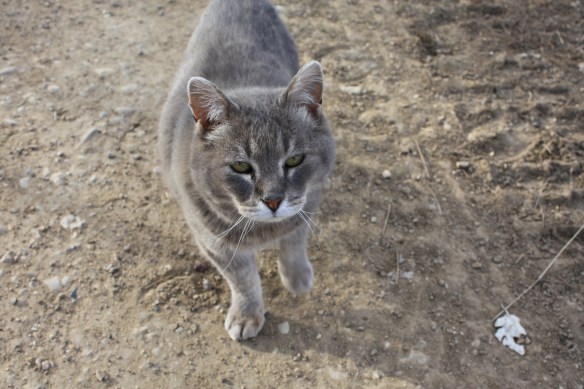
Top cat . . . .

There are additional voices to add to this harmonious ode to spring that could more likely be categorized as the “Ides” of March.  The barnyard is filled with strident voices, cage fights, pit battles and overall chaos.

IMG_6812.JPG

Enter Ruby, the fiery redhead . . . .

Mr. Mouse and Ruby have been seen streaking around the yard in hot pursuit of one another.  Poor Mr. Mouse is ancient and Ruby is no spring chick.  Whatever set them off to do battle with one another is a mystery. The chickens have spent the winter in the Big House and when I opened the door to let them out to enjoy a little spring weather, they went nuts.  Maybe Ruby just wanted to vent a little spleen. Maybe she mistook Mr. Mouse for Oscar the grey-striped kitten who resides at night in the Big House and has been observed teasing and raising some dust among the hens.  Only Ruby and Mr. Mouse know for sure.

012.JPG

Fred the Defender . . . .

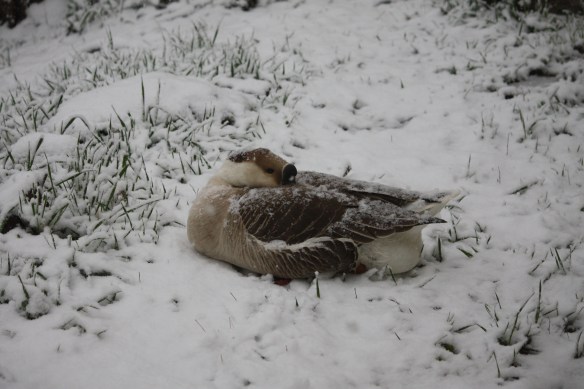
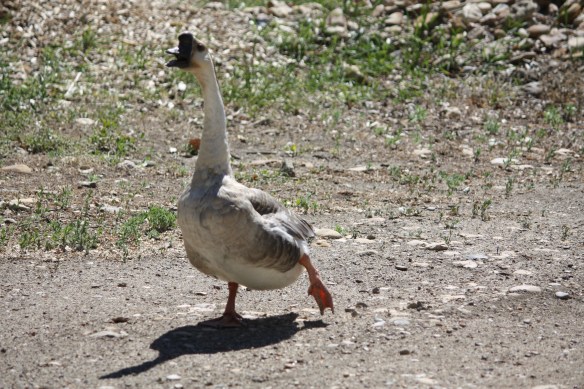
Evening chores a couple nights ago were about enough to put me away.  The fun began with frantic calls from Fred, one of three Chinese brown geese that remain on the farmstead.  Poor Fred has been ostracized by his handsome son, Ricky and hangs around the lunatic fringe of the goose kingdom.  (Fred and his former mate Ethel hatched four babies a few years ago, and Ricky is the remaining heir to the throne).  Ricky is very covetous of Ethel and lately has begun pounding poor old Fred into the ground with vicious attacks. On this particular evening, Fred had tried to escape through the fence into a pen where Cromwell the rooster and Miss Betty White, his companion reside.  He got hung up in a partition of plastic mesh that lines the stock panel and was wedged tight, with his head out one opening in the stock panel and one leg out another.  I had to open the gate, releasing Cromwell and Betty White into the goose pen while I attempted to drag Fred out of the sandwich made of stock panel and plastic mesh without tearing off his head or limbs.

IMG_6102.JPG

Enter Cromwell . . . .

I needed a knife to break the plastic that surrounded Fred, and hollered for a guy I know who always has a knife on him!  As he approached, Cromwell got into the game.  Cromwell apparently doesn’t like anyone but the one who feeds him each day (me) and began to attack Michael.  The cacophony that erupted was amazing.  Betty White was frantically flapping her wings and clucking; Ricky and Ethel were honking and racing up and down; Fred, who was still captive, was screeching in panic and pain; Cromwell had gone from a placid silky rooster into a spiky looking warrior with feathers sticking out like porcupine quills as he attacked Michael, who was attempting to hold him off with a water bucket and a stick.  Rosie  was in a frenzy, barking and circling the whole melee in an attempt to chase whatever creature tried to break loose.  But I digress.

IMG_6101.JPG

Stage left, Pearl . . . .

We barely had time to recover from Fred’s rescue, when Pearl disappeared.  As the hens were locked up in the Big House for the night, I noticed Pearl was not among them.  She is the most independent, hard-headed little hen and when the rest are indoors for the evening, she still wanders about, seemingly without a care for time or place.  I had given up trying to find her and went on about my chores.  As I rounded up Cromwell and Betty White to put them into the old brooder house where they roost at night, guess who I found?  Pearl.  She likes the brooder house and tried on several occasions last fall to return, only to be relocated back to the Big House where she has spent the winter with the other hens.  When Cromwell sighted Pearl, he went berserk and attacked her.  She was cowering along the back wall beneath a roost with Cromwell on her back.  I grabbed a stick and tried to push him off but his claws were buried in her feathers and he was pecking her head so fiercely I thought he would kill her.  After several more misplaced whacks with my stick I banged my head on the roost and got into the game madder than the proverbial “wet hen!”  I went after Cromwell with my stick so fiercely he ran out of the brooder house, allowing me to catch Pearl and beat a hasty retreat. Later in the evening, I was anxious to see if Pearl had survived her ordeal.  She was a little subdued and promised to behave.  That remains to be seen.  Tomorrow will be another day.

IMG_6641.JPG

Day has ended, chores are done . . . .

After the long cold winter, we are anxious for spring and are hopeful that our wild and domestic critters will settle down into a routine, of sorts.


Horse Fence

IMG_6789.JPG

Tools of the trade . . . .

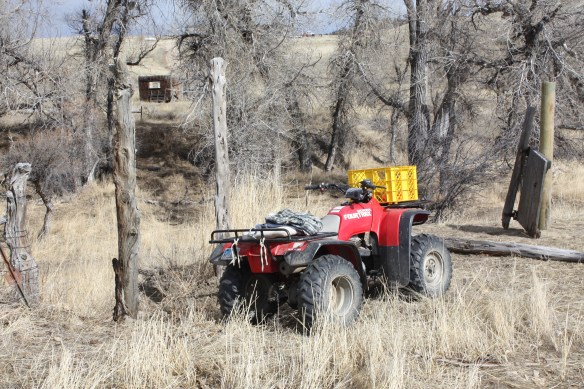
We decided to test whether or not frost in the ground had abated enough to dig some post holes.  Plans are to build a paddock where our horse Tilly can have a small pasture to romp in when we are away.  She hates being confined in the small corral attached to her loafing shed and has begun to gnaw on the poles when we don’t turn her out.  Our first step was to plant two ancient cedar posts for a man gate where we will re-use an old gate and some ancient technology.

IMG_6794.JPG

Gate anchor–of sorts . . . .

This old aluminum milk pail filled with rocks served the previous gate for as long as I can remember.  The pail was chained on the downside of the gate and the gravitational pull kept the gate closed, even in Wyoming winds!  Since the old path from the barn to the house drops down a steep bank to the creek bottom, the milk pail anchor swung freely whenever the gate was opened, banging the gate shut after you had passed through it.

IMG_6792.JPG

Post hole digging made easy . . . .

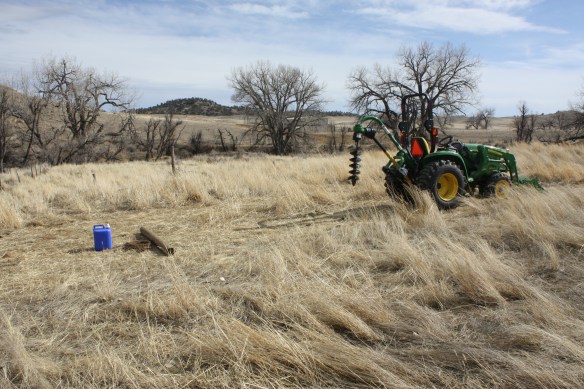
We have tried digging post holes in our barnyard by hand and learned that beneath a foot of topsoil is a plate of hard-pan gumbo that will cause your shovel to bounce and your arms to tremble.  We cannot even penetrate it with the tractor-driven post hole digger without filling the hole with water, letting it soak overnight and drilling it out next day.  At this rate, Tilly has a long wait for a paddock fence!

IMG_6791.JPG

Progress, at last . . . .

The plan is to re-use the old wooden gate leaning against the fence post.  It is fairly sturdy for a 50-year-old gate, give or take ten to a dozen years, and fits the personality of the old cedar posts, that are likely as old.  The part I don’t remember is how the milk pail gate anchor is chained to the gate, and what was used as a “stop” lever so the pull of the anchor doesn’t drag the gate open on the downside.  This part will require some heavy thinking. Another problem is how to remove the bent rusty nails that hold the hinges onto an old post that needs to be detached.

IMG_6796.JPG

If old posts could talk . . . .

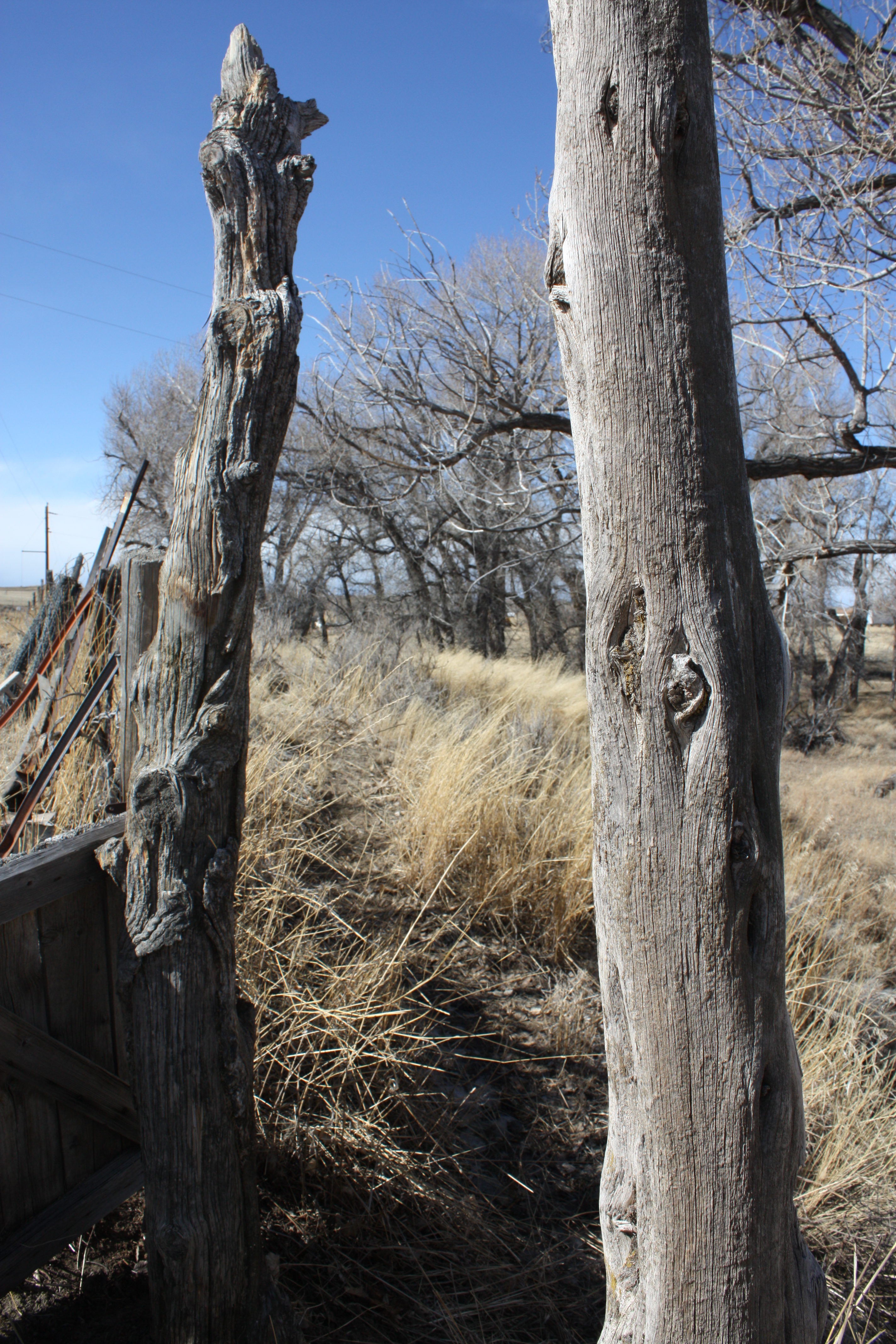
The beautiful patina, ancient scars and timeless character of the old cedar posts salvaged from piles of Dad’s abandoned poles and lumber scraps have a story to tell.  It seemed fitting to mount them where the former gate once stood, and swing another old salvaged gate between them.  Now if we can sort out the milk pail anchor technology, we’ll be back in business.

Mother must be looking down on us, remembering how many times she walked that steep path to the barn to milk Nancy and Doodle, our milk cows.  I loved walking to the barn with her and can clearly remember one day after a torrential rain we had to sit on the bank, watching the water rush by and fretting over the bawling of anxious cows waiting to be milked.  All these old memories come to mind as we build Tilly’s fence.

Granny’s Bread Pudding (with some differences)

A favorite recipe that we have enjoyed countless times began with a scratchy little note I made as my grandmother Clara demonstrated what should go into a good bread pudding.  I still have the original note on a tablet sheet of yellow lined paper, and have added my own notes to it a few times.  It is wrinkled, splattered and in terrible condition.  I actually misplaced it and managed to find it in a thorough search of my miscellaneous loose recipes a couple of days ago.  Strangely enough, yesterday I had a request for the recipe and was so relieved I still had it!  The timing was oddly coincidental.

Granny raised chickens and we grew up eating lots of fresh eggs.  And any economical cook knows that a great way to use up eggs and salvage stale bread is in a pudding.  One of the great discoveries (in my opinion) was the addition of challah bread to make a pudding. We ordered this dessert at the Alley House in Pagosa Springs, Colorado a couple trips ago and since that time, I have used this same bread for a rich, delicious bread pudding.

Granny Clara’s Bread Pudding

8 eggs (pullet) or 6 regular

3/4 C white sugar

1 tsp vanilla

l/2 tsp. salt

1 1/2 qts. milk

1 tsp cinnamon

1/2 challah bread loaf, torn into bite size pieces and left to dry a bit

raisens (optional)  slivered almonds sprinkled on top (optional)

Beat eggs, add sugar, salt, cinnamon, vanilla, and milk.  Place bread pieces in a 12-cup greased baking dish (I still use my grandmother’s decorative glass Fire King dish to make bread pudding and custard).  Pour milk mixture over bread and let sit for 5 minutes so the break can absorb the moisture. Sprinkle with raisens and/or sliced almonds.  Bake at 400 degrees for 30 minutes–test by inserting knife into center.  If milk mixture clings to knife, bake 10 additional minutes.  Should be a nice golden brown.  Cool in baking dish on a rack while you prepare sauce.

Sauce

1 cup brown sugar

2 Tbsp. flour

dash salt

l/2 cup water

l/3 cup unsalted butter

1 tsp. maple flavoring (can substitute dash of nutmeg with 1 Tbsp. bourbon)

Melt butter in saucepan over low heat.  Mix dry ingredients with water, add to butter stirring constantly to avoid lumps.  When sauce is thickened, remove from heat. Pour while warm over individual servings of bread pudding.


Soup Kitchen is Open

IMG_6739.JPG

Veggies and more veggies . . . .

Cold winter afternoons are great for making soup!  On this particular day, an emptying of refrigerator drawers and the freezer, added to a few things off the pantry shelf resulted in a delicious, hearty vegetable soup.  Primary ingredients for this vegetable medley included carrots and golden beets from the garden that are wintering nicely in the downstairs refrigerator and are as sweet and luscious as the day we dug them out of the ground; green beans that I froze in August; rutabaga; leeks; onion and garlic; cabbage and canned tomatoes.  A few chunks of summer sausage added a flavor boost, along with herbs, salt and pepper.  Great for lunch and supper!

IMG_6741.JPG

Where’s the beef? . . . .

Beef burgundy in a crock pot was a first.  We usually prepare it in the oven but it doesn’t matter where you slow cook it, so long as it is slooooow.  This time a raid for ingredients fell short of mushrooms which make this dish truly wonderful, but we had the pearl onions and a good red wine which helped.  The beef is the star of this dish and it was delicious, with a touch of bacon added.

IMG_6771.JPG

A trip to the fish market . . . .

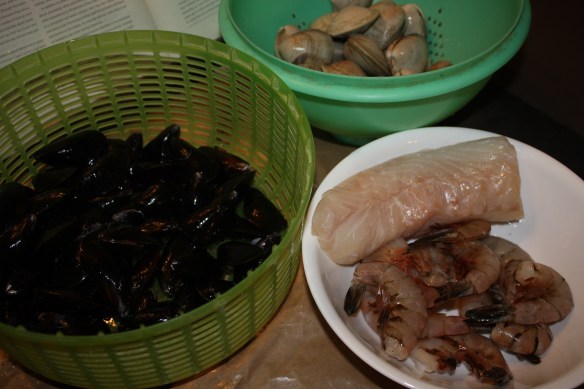
We don’t find lots of fresh seafood in the grocery stores where we live, so a trip to Fort Collins and Whole Paycheck meant an opportunity to load up.  Plans were for cioppino, a favorite fish stew.  Fresh clams, mussels, shrimp, and a firm white fish are basics.  Some restaurants serve king crab legs, but a tomato based stew makes for a messy finish when you wrestle with crab legs.  We decided against those and chose cod which, while it tasted delicious, didn’t hold together at all well.  Should have chosen the scallops!

IMG_6774.JPG

Hmmmm . . . .

A crusty loaf of bread, along with a nice white wine, and you’ve got a meal fit for a cold winter evening by the fire.  Other recent favorites were Super Bowl green chili and chicken vegetable soup. They were consumed before I was able to photograph them. Onward and upward!


Wild In Winter

IMG_6728.JPG

king of the road . . . .

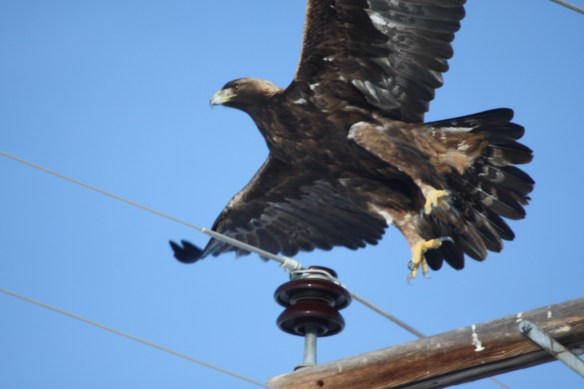
A recent winter-time jeep trip through the foothills of the Big Horn Mountains was filled with eagles and other surprises.  This cock pheasant was sunning himself along the edge of the road and was fairly patient to allow me time to grab a fast photograph.

074

“Too close for comfort!” . . . .

Our trip took us on a circular drive 10 miles west of where we live and ending up north about 30 miles.  The early hours were foggy and somewhat cloudy but the sky cleared to give us good visibility.  Recent snow left a mantle of white on the mountains and prairie, and frost sparkled on the grass and sagebrush.

IMG_6706.JPG

“Don’t be hunting on my turf!” . . . .

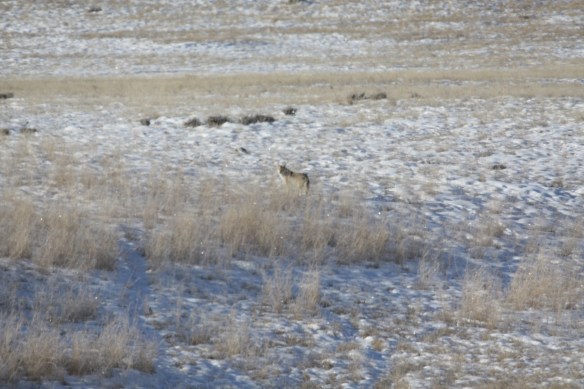
Wily Coyote is out searching for his breakfast and watched us from a safe distance.  His curiosity at the sight of the jeep on the landscape didn’t seem to faze him.

IMG_6722.JPG

Elk, elk and more elk! . . . .

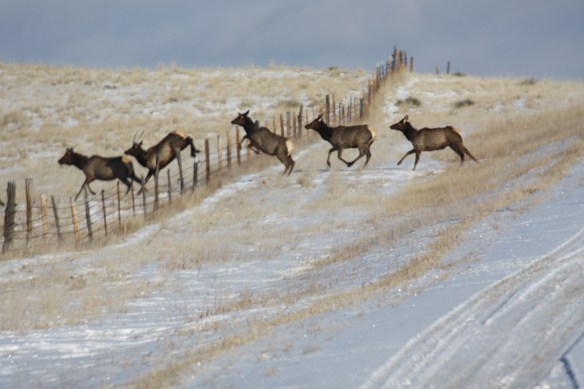
The startling sight of a dark mass along the ridgeline came to life in my camera lens.  A herd of elk, probably numbering in the hundreds, split and traveled east and west of the road in front of us.

IMG_6714.JPG

“What fence?” . . . .

IMG_6757.JPG

“Meanwhile back a the ranch” . . . .

Shortly after arriving home, we noticed deer gathering in the creek bottom below the house.  Piles of leaves that we had intended to burn have become winter forage for them and they come each day to nibble and browse.  Next year we will rake up piles of the leaves again and leave them for the deer.

IMG_6747.JPG

“I’d rather have sunflower seeds!” . . . .

This young doe makes her way to the old skillets that catch a few seeds from the bird feeders.  If she is lucky, she might have a nice snack, which beats eating cold, stale leaves any day!