What’s That? A Cat?

005

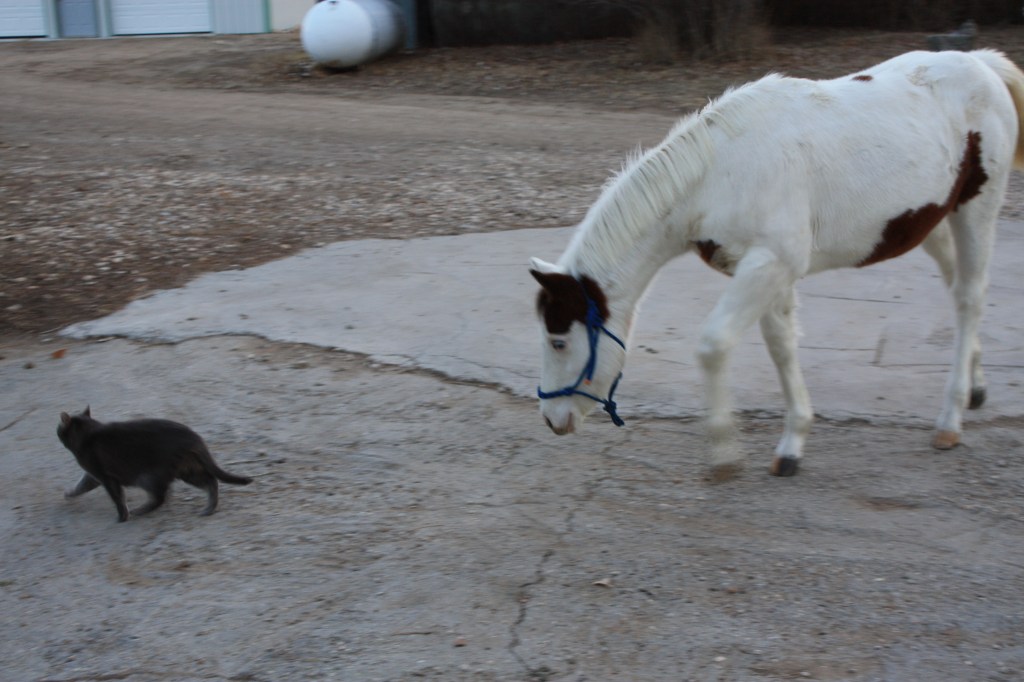
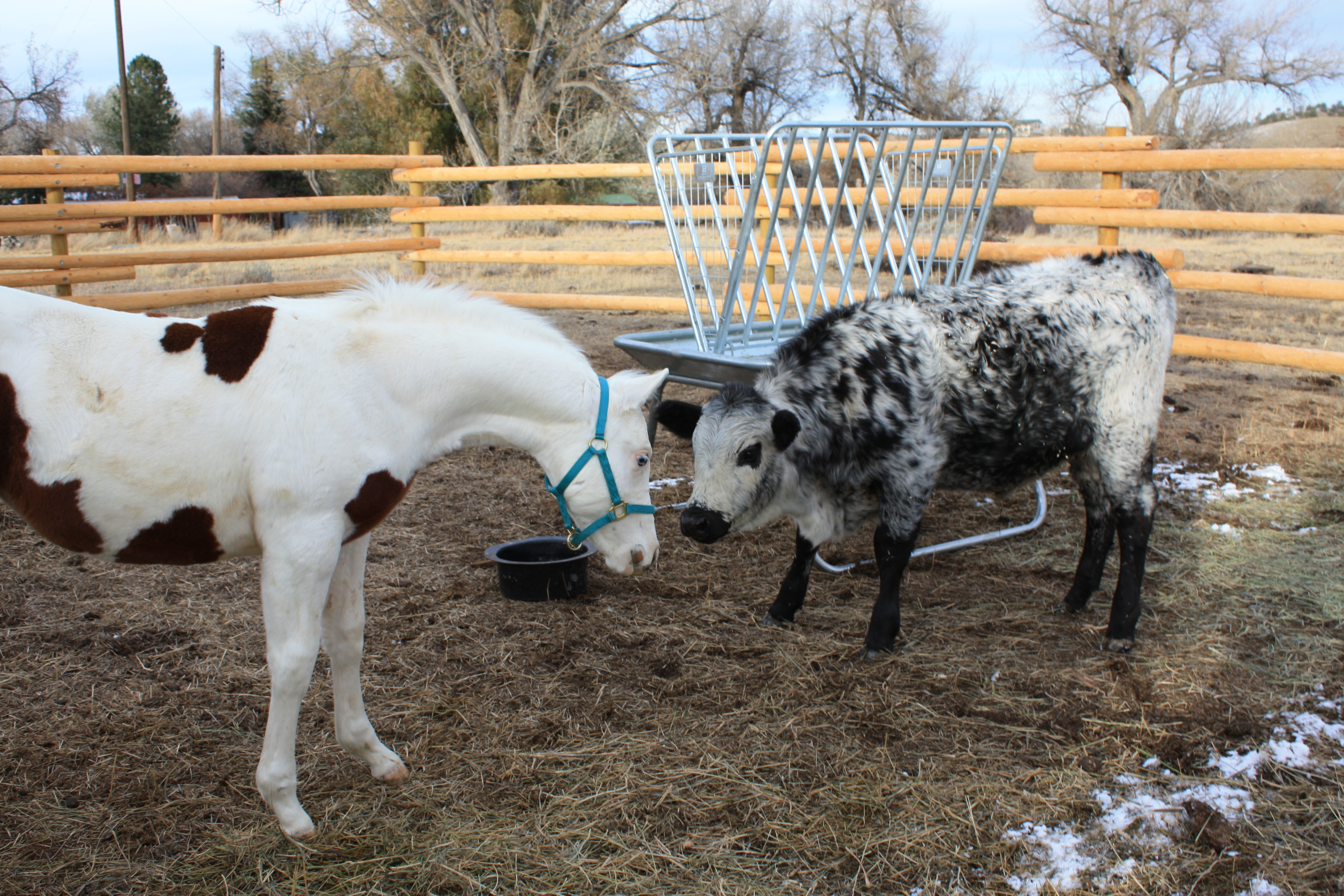
“What’s this little furry thing–haven’t seen one before!” . . . .

Tilly and Abe wandered into the yard one day this week, quite to our surprise.  A fence that will contain them in the lower pasture did not get built in the autumn rush to finish the chicken house and forty-odd things, and since Abe knows his way around the acreage, he led them right up to the front gate leading to the house.  Tilly adores Abe and has adopted him as her companion, paying little attention to the neighboring horses that she could visit at the fenceline.  She follows him around most of the time, and seemed quite interested in the unusual creatures that habituate the front yard on this particular occasion.  I expected her to spook at the guinea fowl and geese, but she ignored them.  What really interested her was Mouse, our barn cat who just happened to be headed across the driveway.

007

“Why won’t this little critter stand still long enough for me to sniff him?” . . . .

Tilly followed Mouse around in a wide circle, not giving up until he crawled through the wire of the fence.  It occurred to us she might not have seen a cat before, since Mouse doesn’t wander to the barnyard and Tilly’s former home did not have barn cats, or any we observed.  It is hard to imagine what Mouse thought of this intrusion, but he was beating a hasty retreat!

Winter Lettuce

001With the help of heavy plastic sheeting over p.v.c. hoops, we have managed to grow a little crop in the garden in December!  The lettuce is doing fairly well in spite of no heat source other than sunshine, but the kale and spinach is still too small to harvest.  They will, however, rise to the occasion in the spring and produce a prodigious crop beginning in April, lasting well through May when we will plant a new crop.

This is know as “poor farm” gardening–a greenhouse with lights and heat would produce a real crop all winter but is expensive to build.  It would have to withstand the Wyoming winds which blow fiercely and are often accompanied by tree limbs, flying gravel, tumbleweeds, cardboard boxes, feeding tubs and anything else that is left unattached or without an anchor to hold it down.

We have about finished the last of the garden cleanup, and delivered a load of frosty collard greens and kale to neighbor Tom’s pigs, who will enjoy gnoshing on this late harvest bounty.  A row of young potted cottonwood trees line the garden fence and are mulched with two feet of straw and leaves.  Hopefully they will survive to be planted in the spring.  The rest of the garden has been tucked beneath black plastic weed barrier which prevents the weeds from getting the jump on us before planting time next year.

And now for a long winter’s nap!

Wintry Wonders

038046051057070088042063032077036050101089

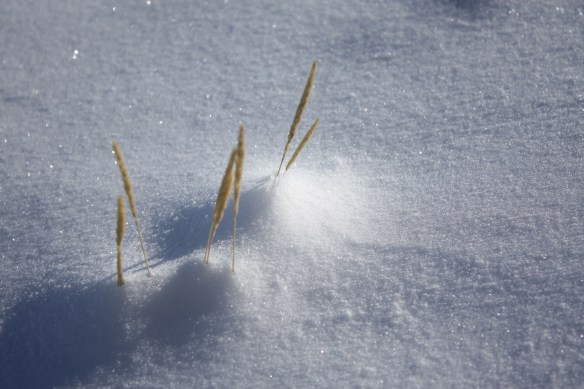
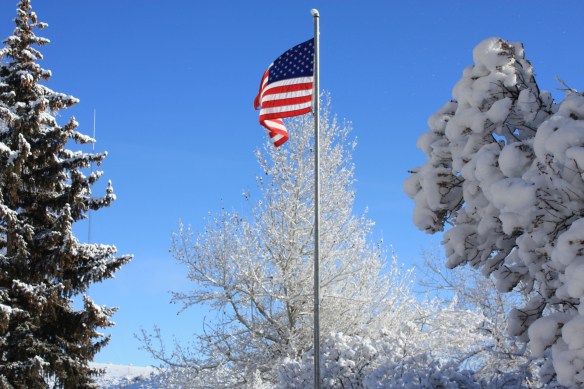
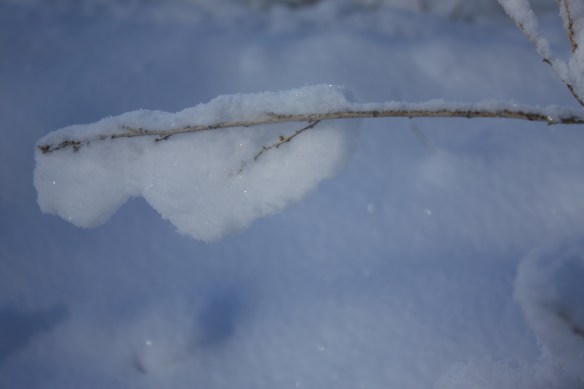
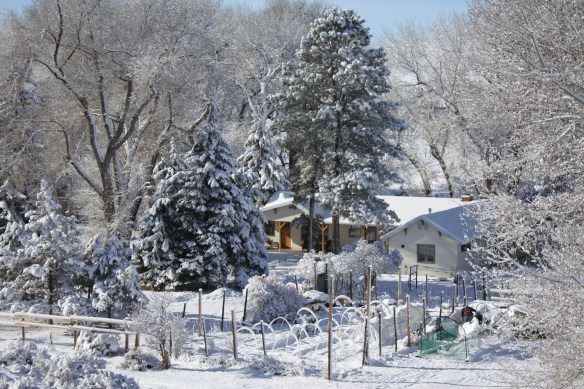
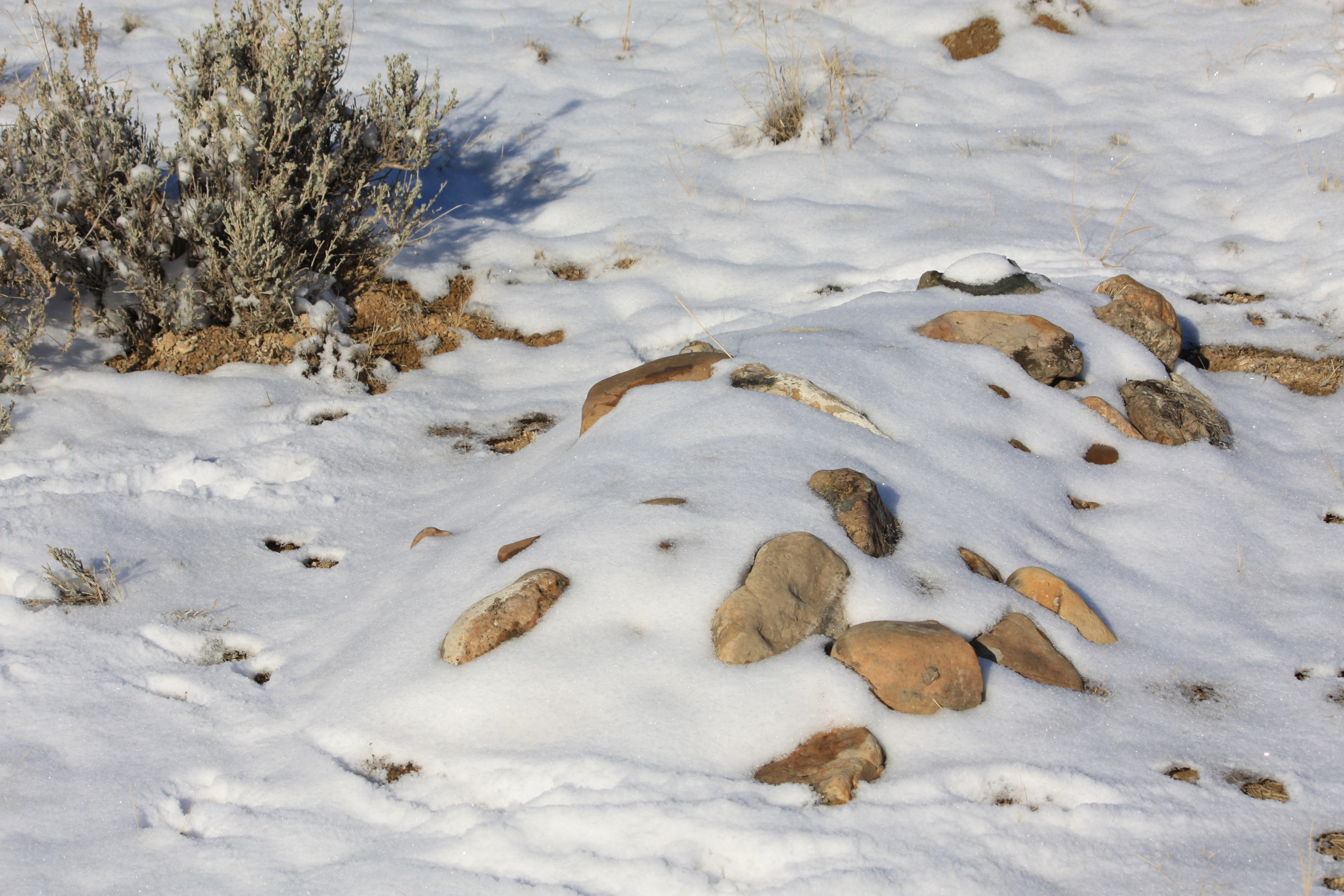
033When it snows in Wyoming, it usually blows  the snow sideways and hard until most of it lands in South Dakota or Nebraska.  Rare is the morning when you find the snow has fallen softly in the night, and is layered like frosting upon everything.  So beautiful this day that it was necessary to rush out the door and record the magic. This wintry wonder of a snowfall makes everything look softer, more beautiful and sets the stage for early December thoughts of Christmas.

Chicken House Restoration For The Birds!

“the old chicken house ain’t what she used to be!” . . . .

What was once a thriving poultry operation now sits abandoned and filled with a 30-year accumulation of cast off tires, fuel tanks, lumber, roofing steel, chimney pipe, left-over insulation, a variety of ladders, cast off windows, doors, screens, old bicycles and various trash.  And should we mention the ton or so of old straw, dirt and manure that accumulated over many years on the floor?  This photo was taken in August, 2012 as rehabilitation was about to begin.  Relatively new roofing steel from a house recently demolished is piled on the ground and will be recycled in Phase I, after major branches are cut away from the elm tree rising above.

fresh air vent leads up through the roof–no guineas have escaped as yet . . . .

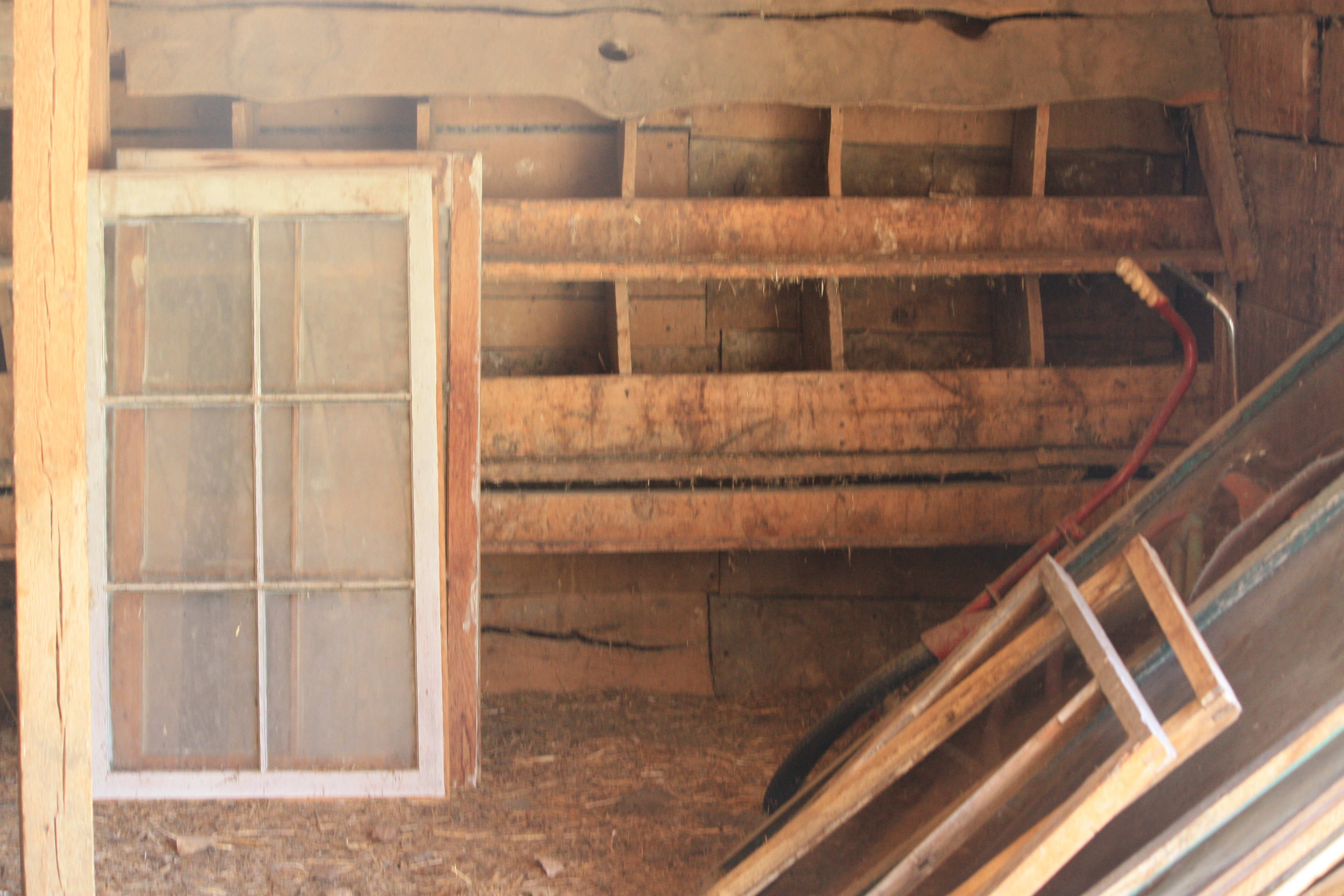
Constructed in the early 1920’s, the chicken house was built to be efficient and to endure.  It is large by most chicken house standards, at 40′ x 16′.  Nesting boxes, feeding troughs, a grain storage bin, roosts that could be lifted for cleaning, windows for light, fresh air silos for ventilation, and insulation with a mixture of straw and coal slack are just a few of the “modern” innovations the designer/builder thought of.  The chicken house held upward of 200 laying hens in the glory days, and the “egg money” often paid the bill at the local general store where food and other staples were purchased.

roosts are quiet now, but a clucking cacophony could be heard within these walls . . . .

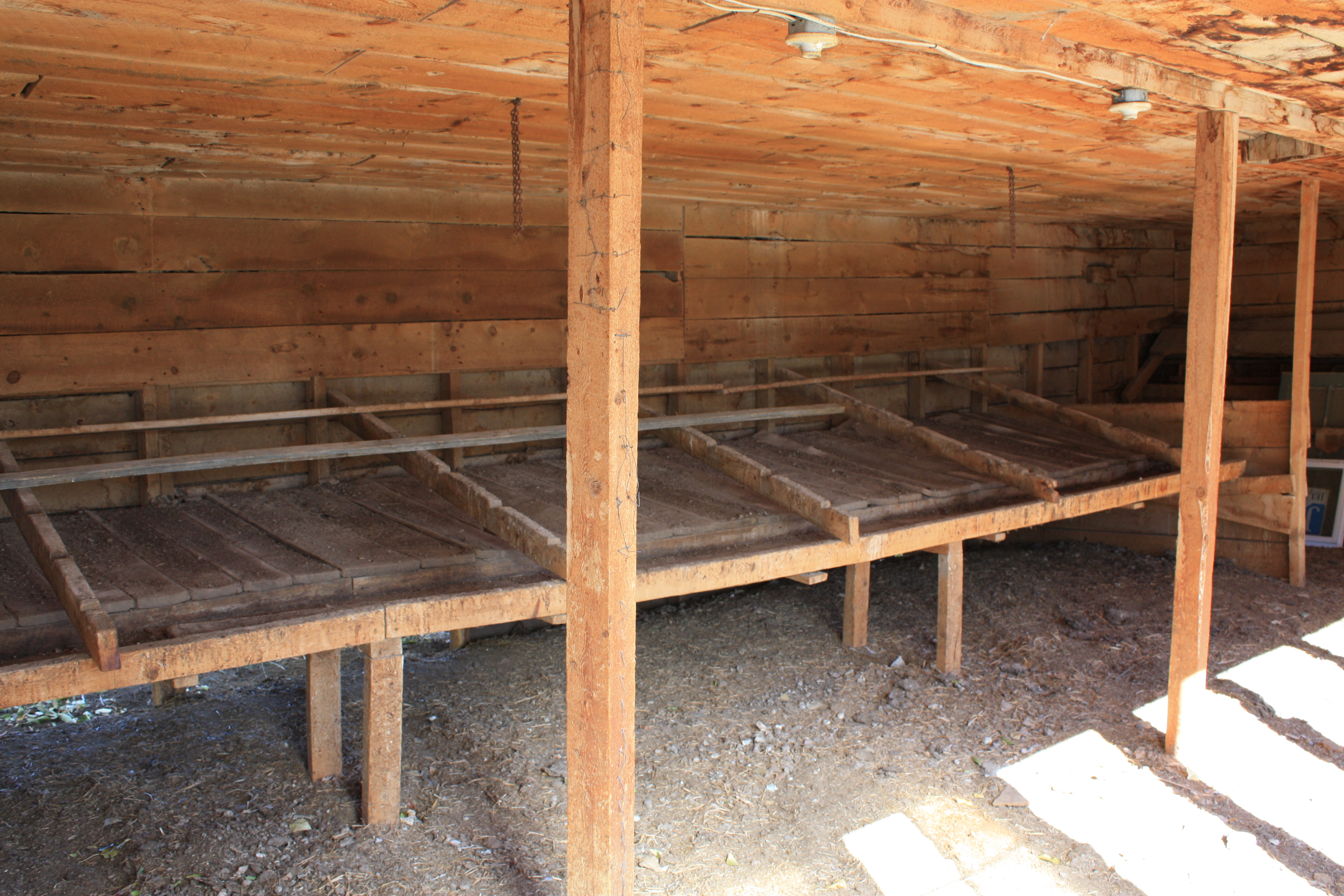
Roosts are currently being removed for cleaning and some replacement.  The notched 2×4’s lift up and are anchored by the chains hanging from the ceiling.  Manure was raked down into the “poop chute” and shoveled out into a cart to be recycled on the flower and vegetable gardens.

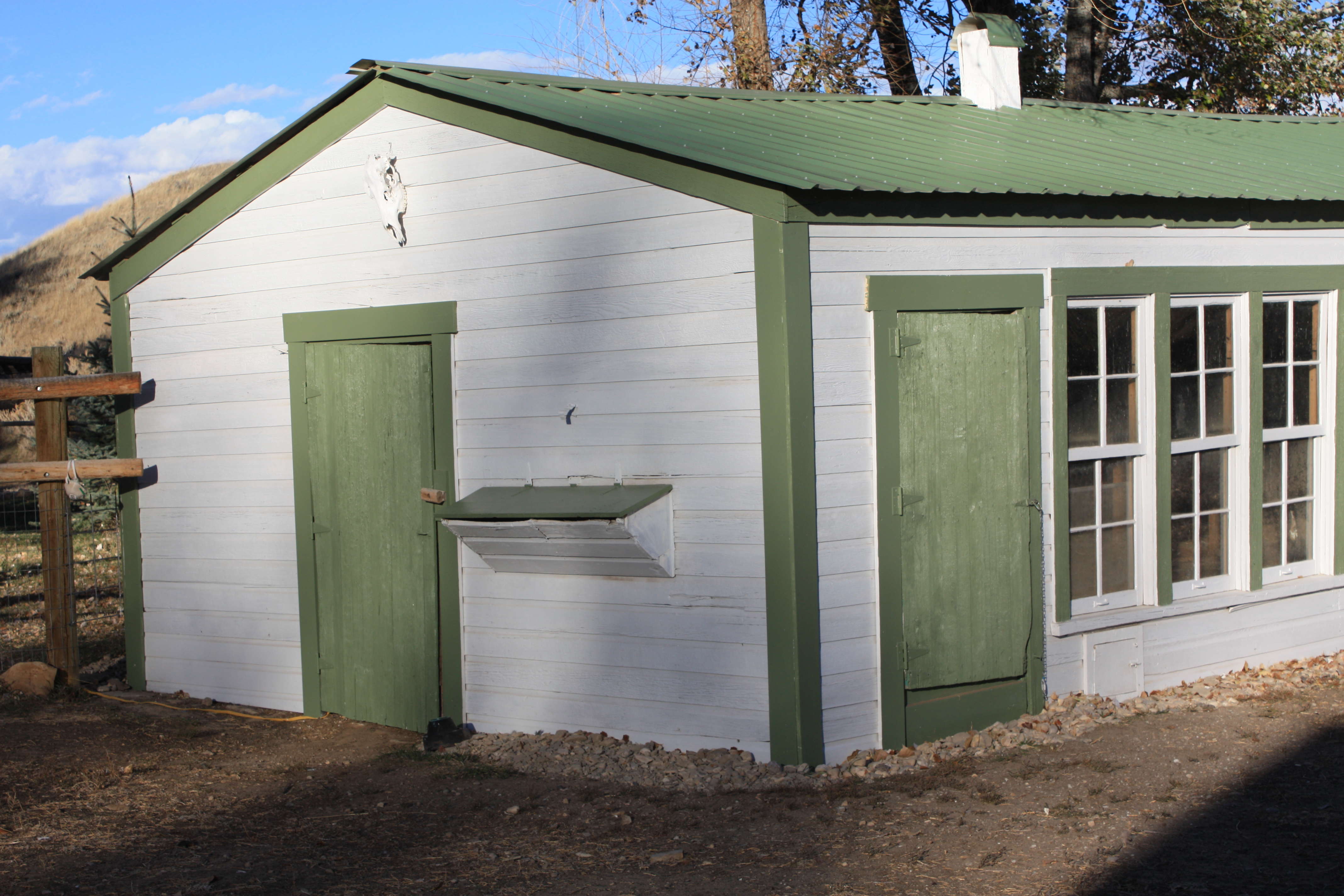
exterior door to the grain bin–convenient!

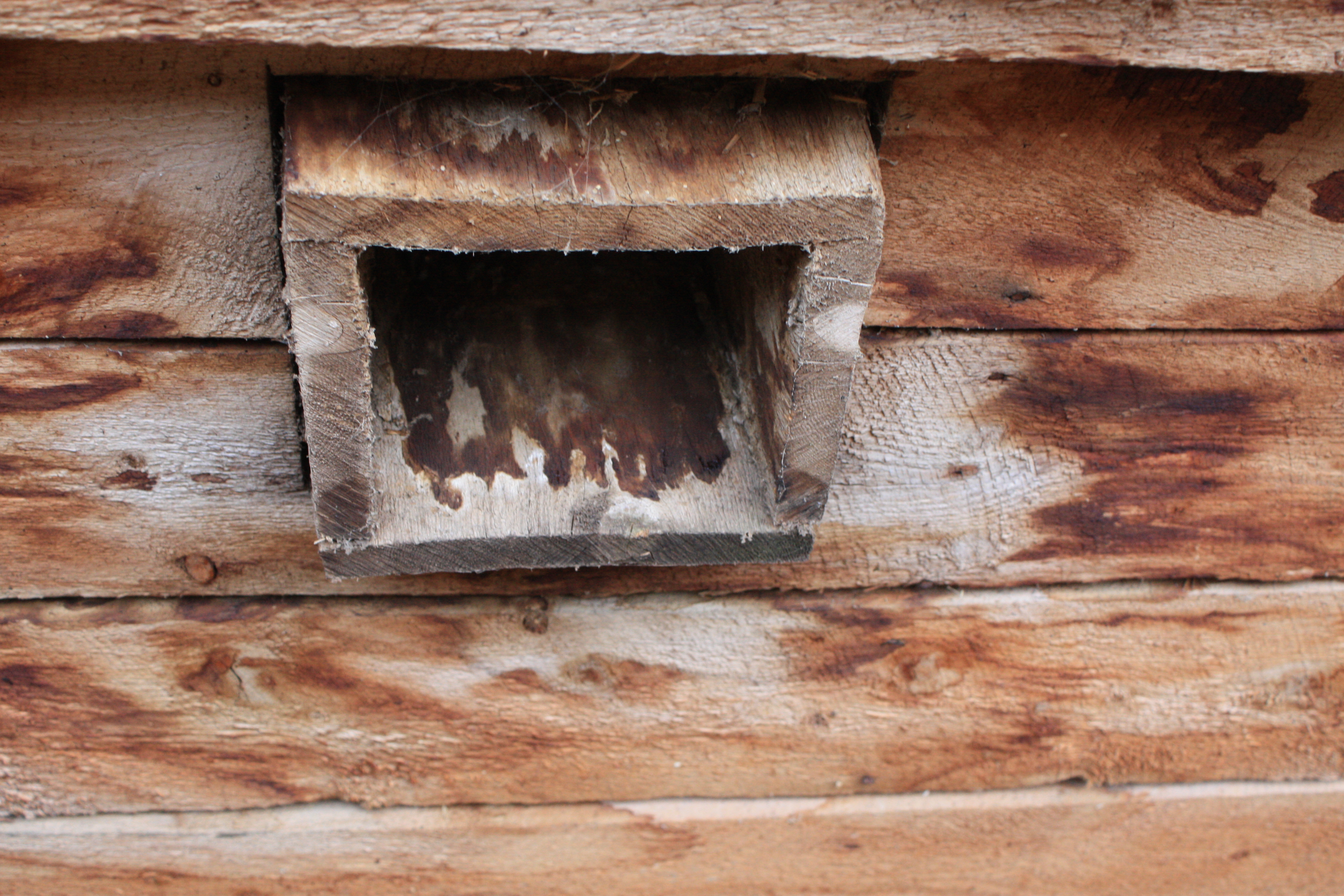
A lot of grain was shoveled into barrels inside through this little chute.  Made for an efficient way to replenish the chicken feed.

the grain bin could be accessed indoors or out . . . .

Two 50-gallon barrels held chicken feed inside this bin, which has an outside opening which made re-filling easy.

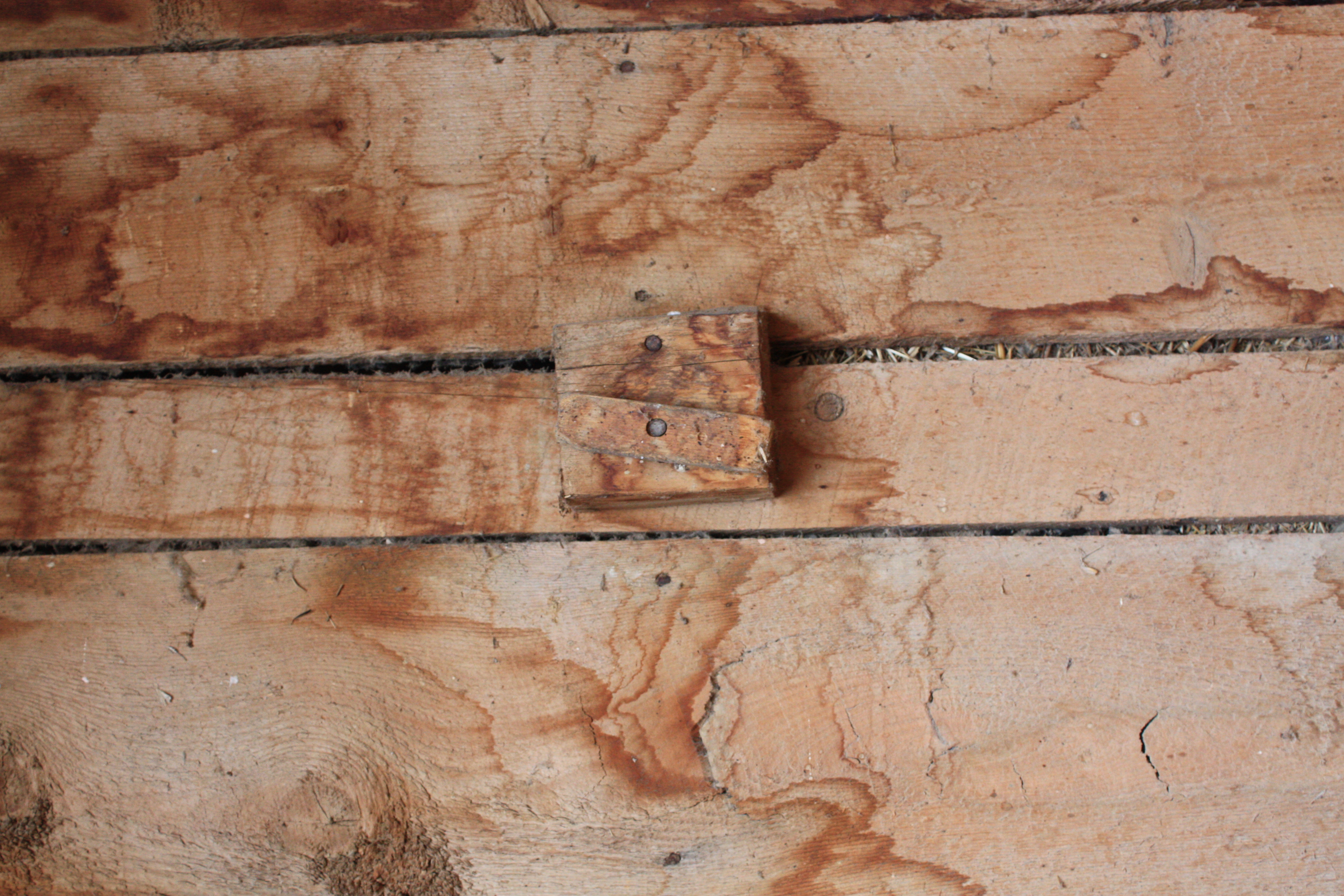
the latch that holds the grain bin lid open . . . .so it won’t fall on your head!

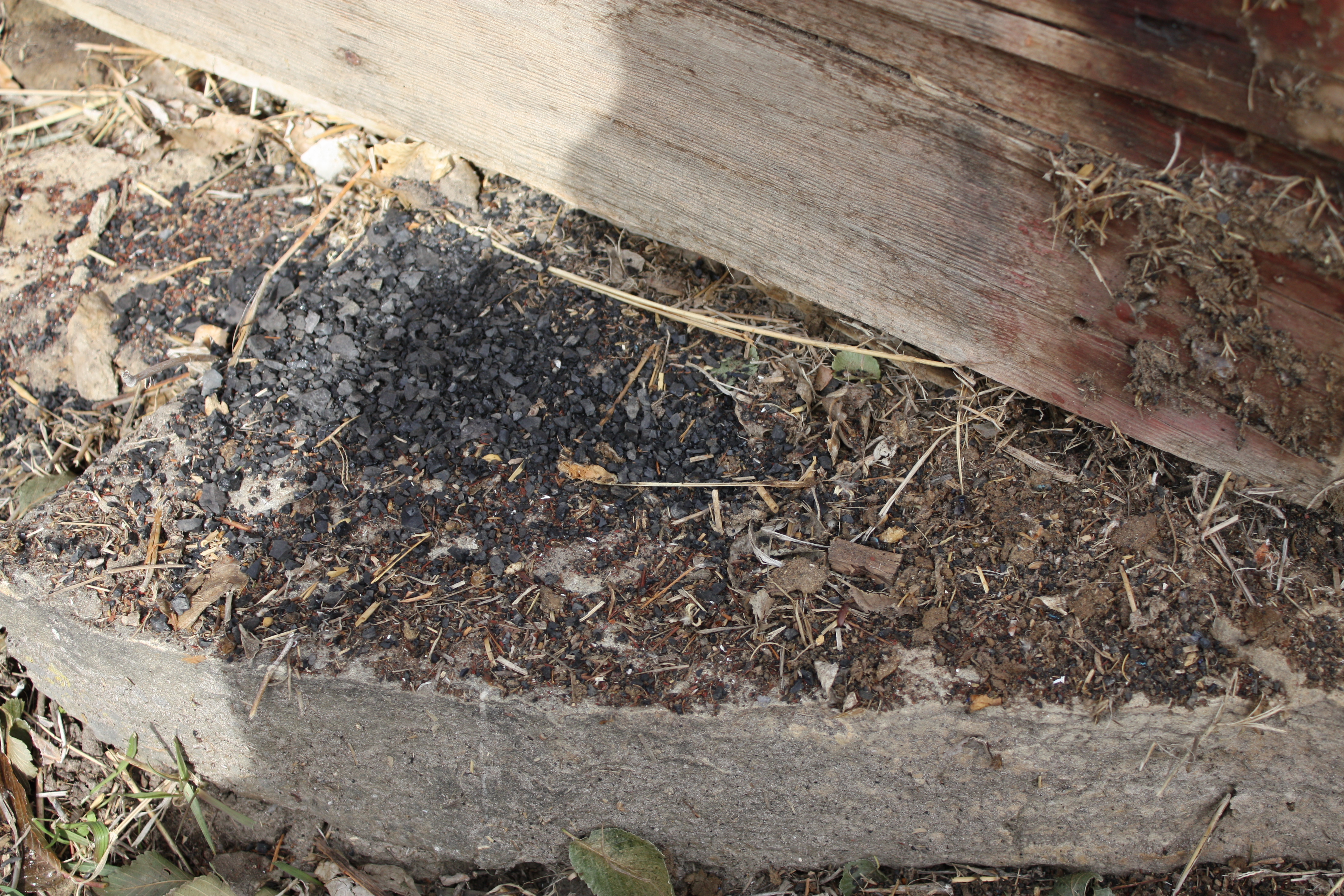
Note the insulation in the cracks behind the rough lumber interior walls.  It is comprised of chopped straw and fine coal slack, which is a curious mixture indeed!  While trying to nail down a loose base board, I scooped out some of the insulation so the board would nail back to its original position, and the stuff just kept coming.  I emptied most of a small section of wall before I could stop the flow of straw and coal slack cascading down through the opening behind the loose board.

10 sets of double hung windows waiting to be restored . . . .

Determined to save and refurbish the old windows, I began by removing all of them (20 individual windows, 80 panes of glass, need I say more?)  I went to the Internet for the best technical advice and realized I didn’t have much of the available technology (a heating tool to soften old window glazing, a gun to install glazing points, skill saw to create new muntins).  What the heck, this job was going to get done with grit, elbow grease and sweat equity.  1. Remove old glass; 2. remove old glazing; 3. remove old glazing points; 4. scrape and brush old paint, dust, dirt and grime; 5. replace broken muntins (this required the help of my carpenter/contractor);  6. paint all surfaces with linseed oil; 7. install new heavy duty glass panes with new points; 8. glaze all 80 panes with oil-based putty; 9. wash residue from glass; 10. trim off excess putty; 11. paint exterior of window frames and glazing with oil-based primer; 12. remove excess paint from panes; 13. prep window openings with linseed oil and primer; 14. install windows.  No hill for a climber.

foundation stones hauled from the foothills of the Big Horn mountains . . . .

Early-day construction began with a foundation of flat stones picked up from the mountains and hills nearby.  I was relieved, after digging about a foot of soil away from the baseboards, when the shovel struck these stones.  It was a comfort to know the old chicken house actually sat on a solid foundation.

her underpinnings needed a little help . . . .

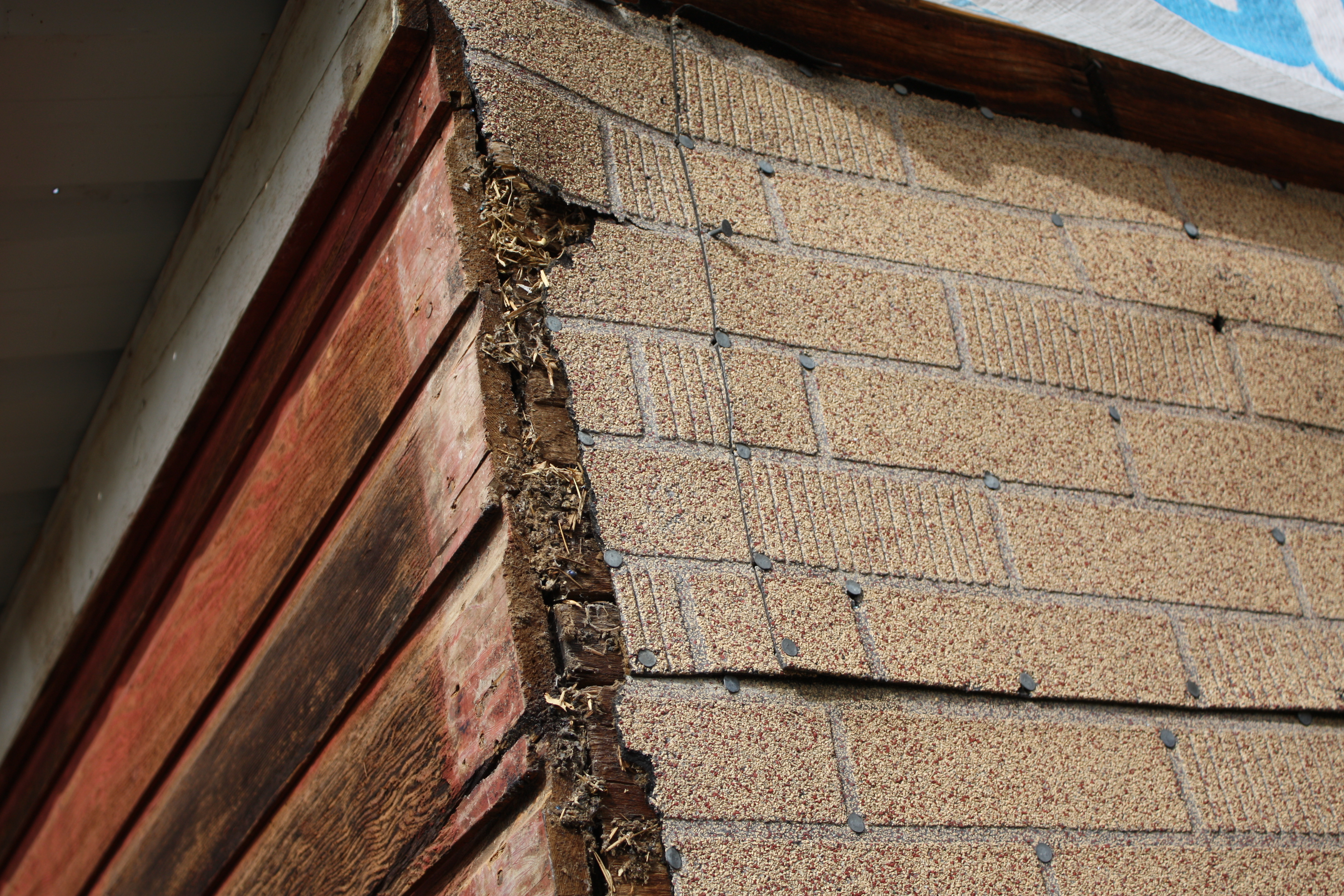
The north wall of the chicken house did not have the Dutch cove fir siding the rest of the building was finished with.  Instead, bales of straw were stacked to the roof, held in place with poles and sheets of tin.  That insulation kept the north wind and bitter Wyoming winters at bay and worked for well over 30 years.  Sometime in the 1950’s the straw wall had deteriorated to the point it had to be replaced with asbestos siding, which today is badly in need of replacement as well.  Back to the Internet to locate Dutch cove fir siding.  Eeeek!  They don’t give the stuff away and we will need 500 square feet.  Haven’t found any local suppliers, so will have to pay shipping costs as well.  And, I need some extra for the old homestead cottage which has the same siding and could use a little sprucing up.  But that’s another project!

A good segment for “Dirty Jobs!” Rip off the old roof down to the 2×4 trusses.

The old steel roof has a beautiful rust-colored patina but has been trying to blow off for years.  The 1″ x 6″ cross beams had rotted due to moisture and age and all had to be ripped off.  Fortunately, we had cleaned and saved a pile of 1″ x 6″ lumber that was used to frame the foundation for an addition to our house.  We only had to purchase a few more to completely replace the cross members and then screw down the new (recycled) steel roof.  We also had quite a few rolls of left-over insulation that we laid down over the foot of old straw, which was in remarkably good condition.  And we got to wear our new knee pads for the occasion – I thought I would never need them!

Nesting boxes have collected thousands of eggs and heard many chicken stories . . .

The east end contains 16 feet of nesting boxes with rails for chicken access.  As a child one of my chores was to gather eggs, and often the hens would still be sitting on their bounty, which was warm amid all the soft feathers.  The hens would squawk in protest, leap to the floor and tear off in clucking indignation at the injustice of surrendering their eggs to the basket.

half of the new roof is on at last–the frosting on the cupcake! . . . .

We were fortunate to obtain this recycled tin in the same color as the roof on a new pole barn we built to house our cars.  In the spring a coat of paint will have the old girl looking like new!  The old red and white has lasted 50-odd years but is looking pretty tired.

rushing to keep old man winter out . . . .

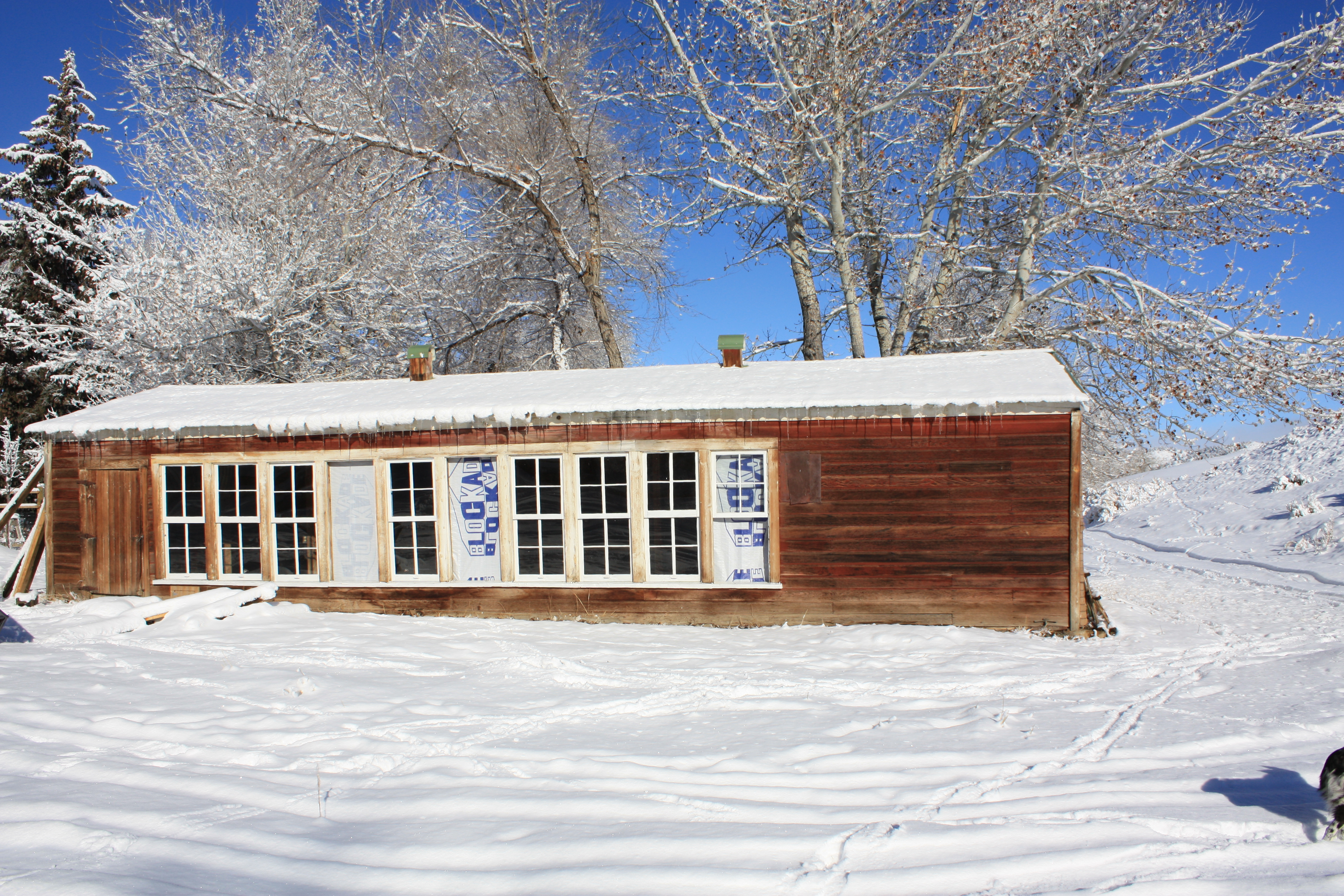
We installed most of the windows before a winter storm arrived on Thanksgiving weekend.  Awaiting two frames that needed new muntins and stiles, which is giving our carpenter fits.  Also have one window waiting for primer, then we can finish installing all the windows.  The guinea fowl won’t wait, however, as winter has arrived and the geese need to move into the former guinea quarters.  Such is life with too many critters!

guineas are enjoying the afternoon sunshine in their palatial new digs . . . .

Twenty guinea fowl in a chicken house built for 200!  They seemed a little lost at first and have to keep warm with a heat lamp hung over the roost at night.  We are hoping they will be comfortable, and pleased that we have been able to bring a marvelous old chicken house back to life.  In the spring, we will install the fir siding on the north wall and east end, repair some of the trim and put a new coat of paint on everything.  We will also restore electricity to the building by laying it underground.  We currently are running an extension cord for the heat lamp and heated water bowl. That will be Phase II and when completed, we will have the satisfaction of knowing we restored an historic structure that should last well into the future.  And it will look great to boot!  My granny would be proud.

this looks like work . . . .

this looks like work . . . .

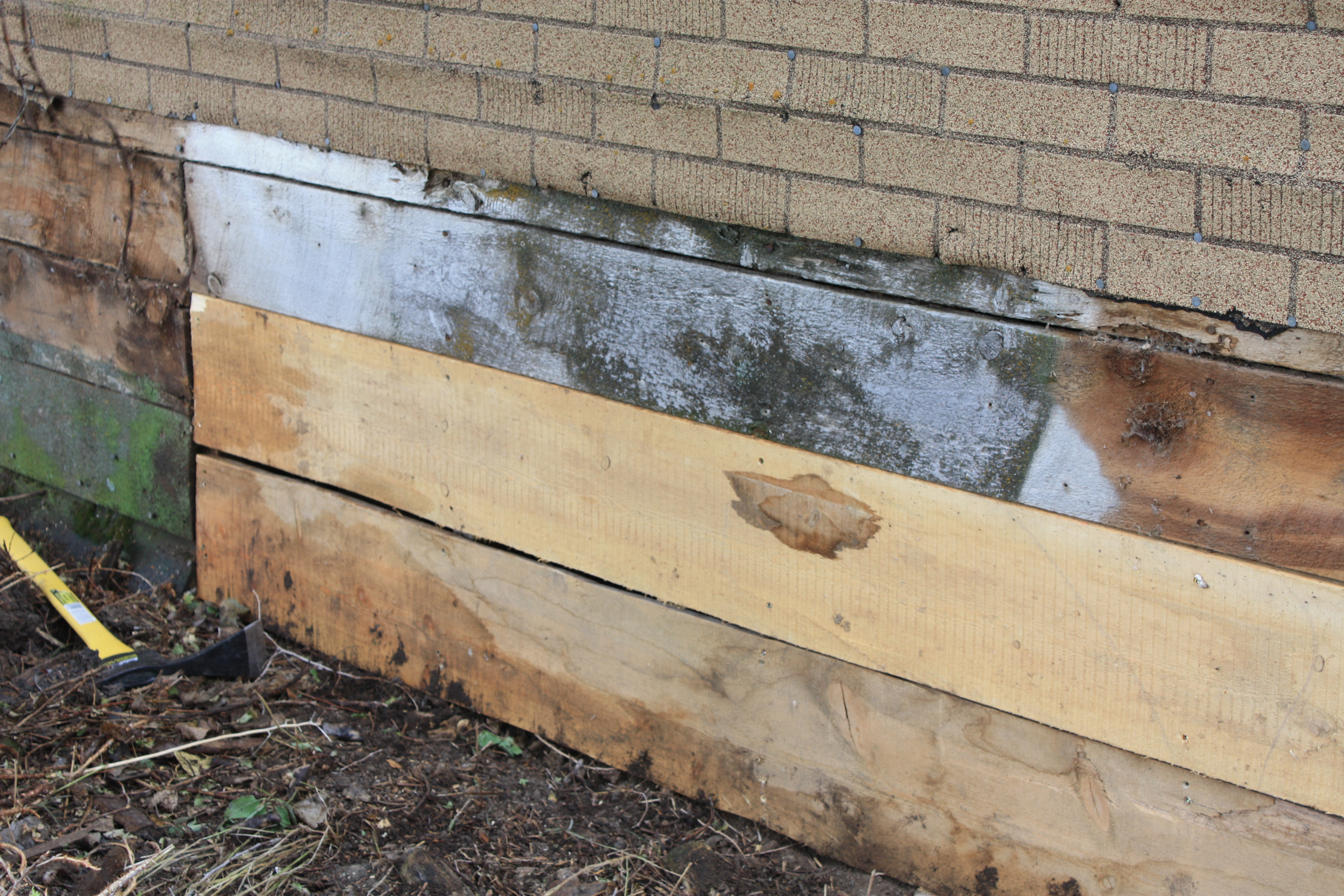
Segue to September, 2013 and Phase II is underway.  Scraping the old siding was a tough job and required a mask to prevent lead based paint chips from being ingested.  The old siding, nearing 100 years old, is still sound in most places.  A few of the bottom two boards had to be replaced and that was another miserable job trying to get the grooves to fit and the straw and coal insulation from rushing out from between the walls.

will it ever stop? . . . .

will it ever stop? . . . .

Trying to get a coat of primer on before cold weather hits.  Oil-based primer, with an addition of linseed oil worked very well.  The deep grooves of the weathered wood sucked up paint and the local Sherwin Williams was so happy to see me coming.

this stuff has to go! . . . .

this stuff has to go! . . . .

The old rolled siding, installed during the 1950’s, has begun to deteriorate.  It served its purpose, as the original builder did not put cedar siding on the north wall or the east end.

new hemline . . . .

new hemline . . . .

New boards replace the old, rotted ones.

"what has happened to our house?" . . . .

“what has happened to our house?” . . . .

My toughest critics, the guineas aren’t sure they like the paint job.

aw, the smell of new lumber! . . . .

aw, the smell of new lumber! . . . .

Western red cedar siding, 518 sq. ft., for the north wall and east end.  This was our major purchase for the chicken house restoration and was an education in itself.  I learned about “reveals” and “rabbets” and was able to duplicate the original siding with this Dutch Lap pattern. The lumber company provided a 20-page installation manual that we found most helpful.  The first step was to prime the lumber on all surfaces, front and back, with a sealer.  I used a roller and draped the boards over saw horses.  I re-stacked them with enough air space to allow the sealer to dry.  This was the most tedious task of all.

changes to the north wall . . . .

changes to the north wall . . . .

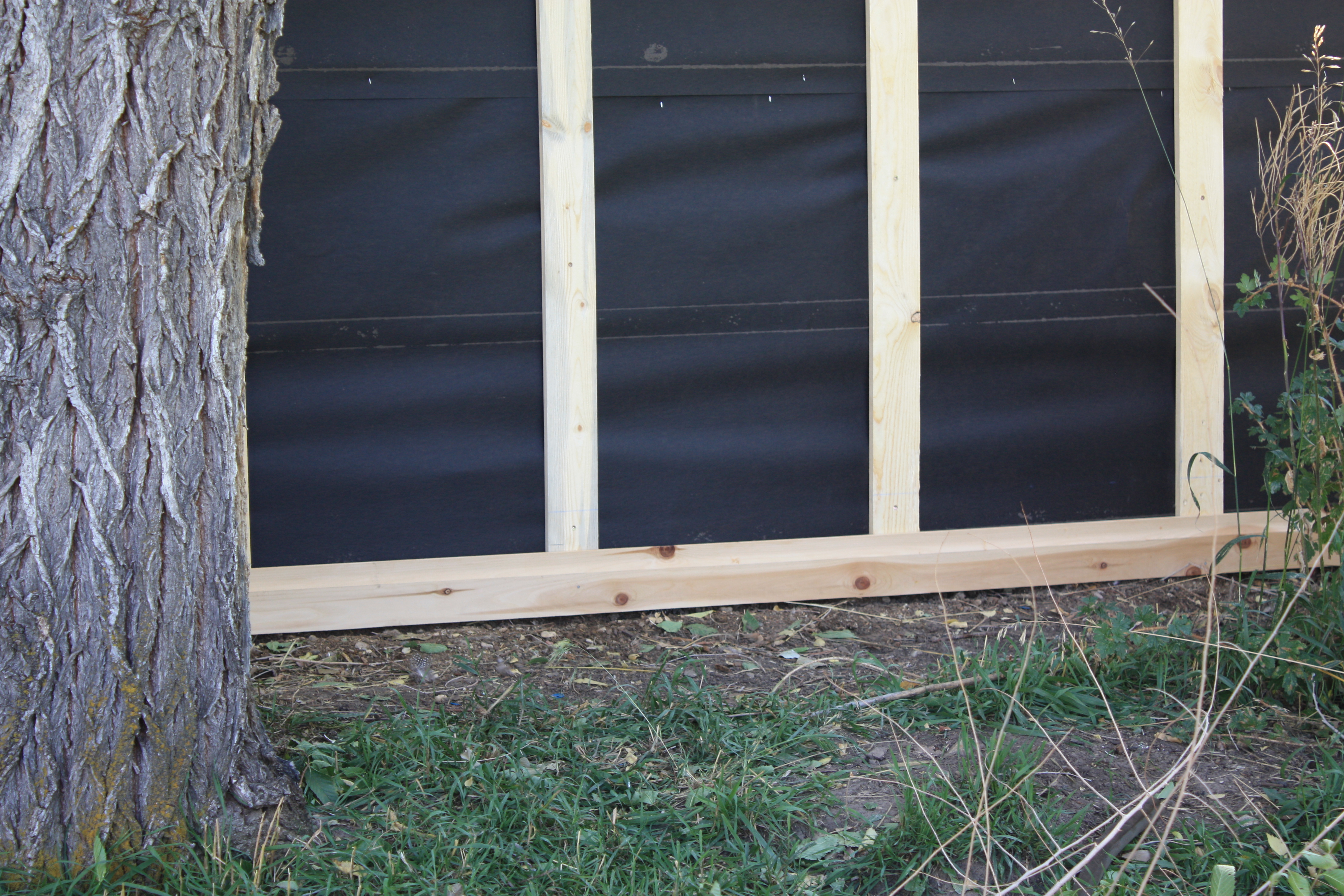
With the help of our contractor/neighbor Tom, we installed #15 tar paper over the rough lumber of the north wall.  Then we applied 1×4 firring strips to nail the siding to.  This step was necessary due to the uneven surface of the old lumber.

east end looking pretty snappy! . . . .

east end looking pretty snappy! . . . .

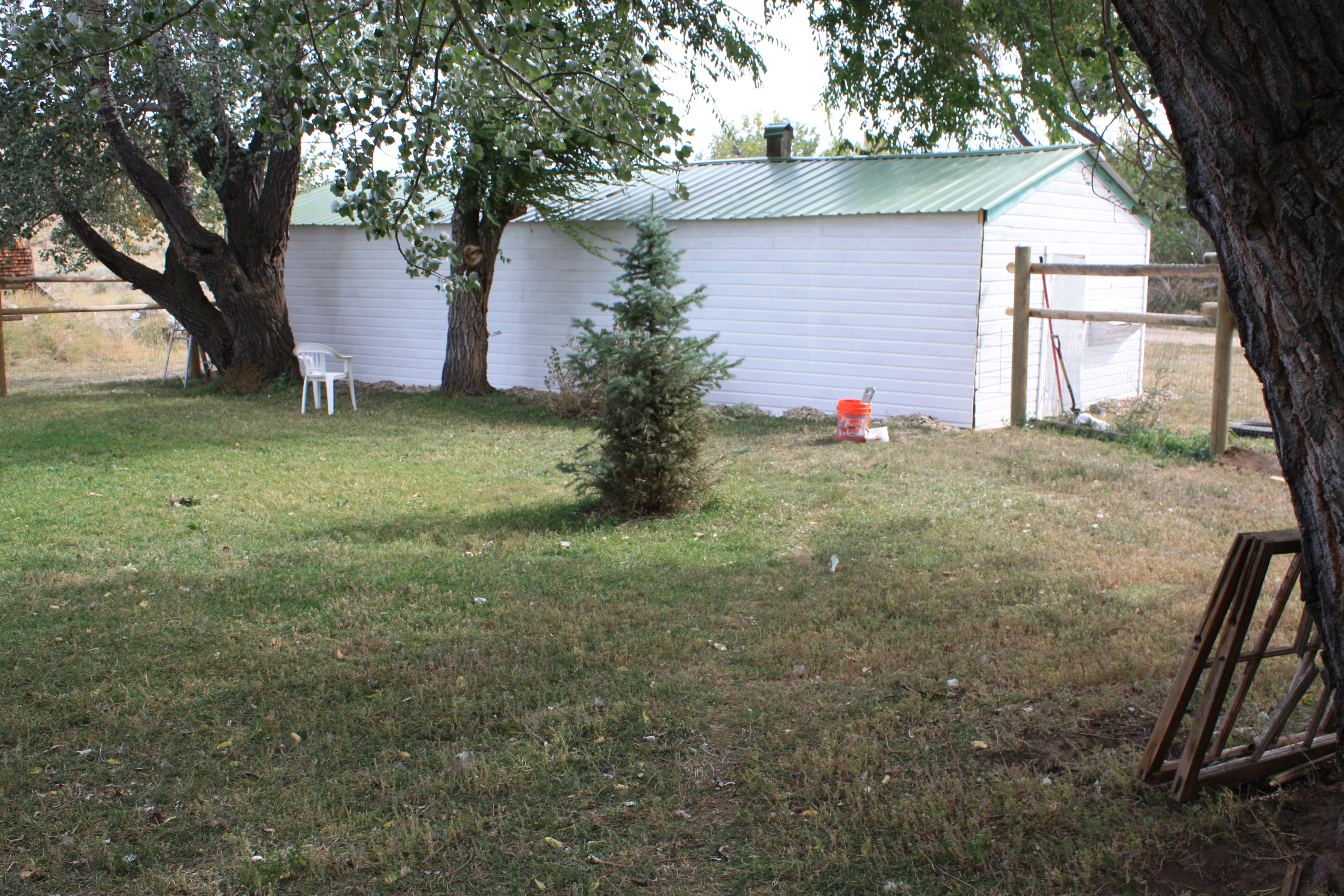
The siding went on beautifully, and made me wish I didn’t have to paint it.  We laid gravel along the sides to prevent dirt and mud splash back on the walls and protect the paint.

Primed and ready for paint . . . .

Primed and ready for paint . . . .

By the time I finished priming, then painting this 40-foot north wall, I was sick of it.  And we still have to install, and paint the trim along the top of the wall.  Trying to balance a paint bucket, brush, rag etc. and keep from sliding off the roof as I primed the fresh-air stacks was a challenge as well.  We secured an old wooden ladder for me to cling to as a scaffold of sorts, and it worked.  I remember hammering nails in the old tin on this roof with no fear.  The new roof is a lot more slippery and I am a lot older!

I think I'll move in . . . .

I think I’ll move in . . . .

This old structure has a new lease on life and should last another 100 years, barring some calamity.  Our investment of $3,800 fine-tuned an historic building that still had lots of useful life and structural integrity.

the chicken lodge . . . .

the chicken lodge . . . .

The plan is to move our little flock of 12 chickens into their rightful home.  The guineas will move into another shed and we don’t know how they are going to feel about that.  We still have to clean the windows and put fresh straw in the nesting boxes. Now it’s on to the next restoration project!

Vole Eviction

“some dirty rotten creep stole the roof off my house!” . . . .

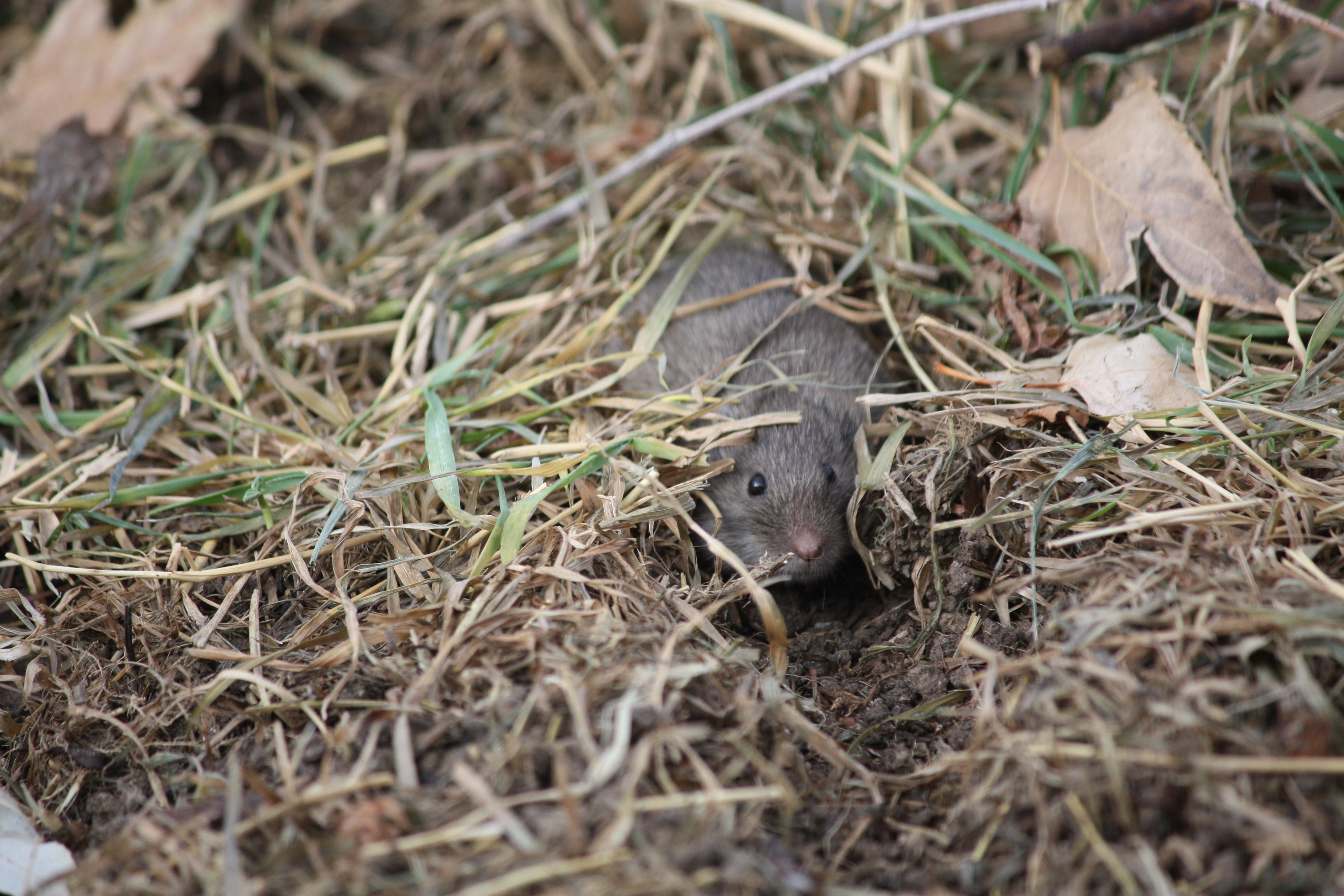
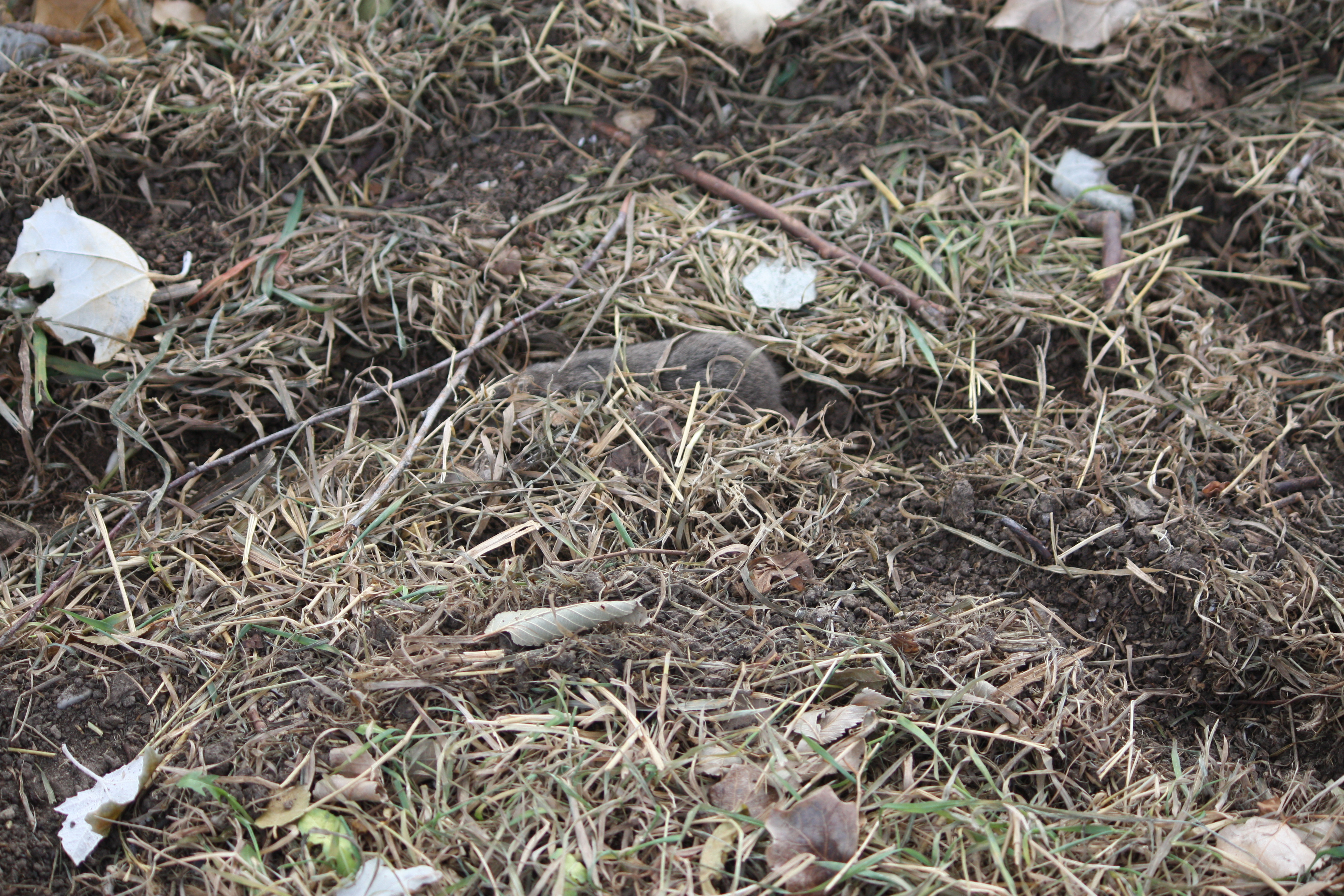
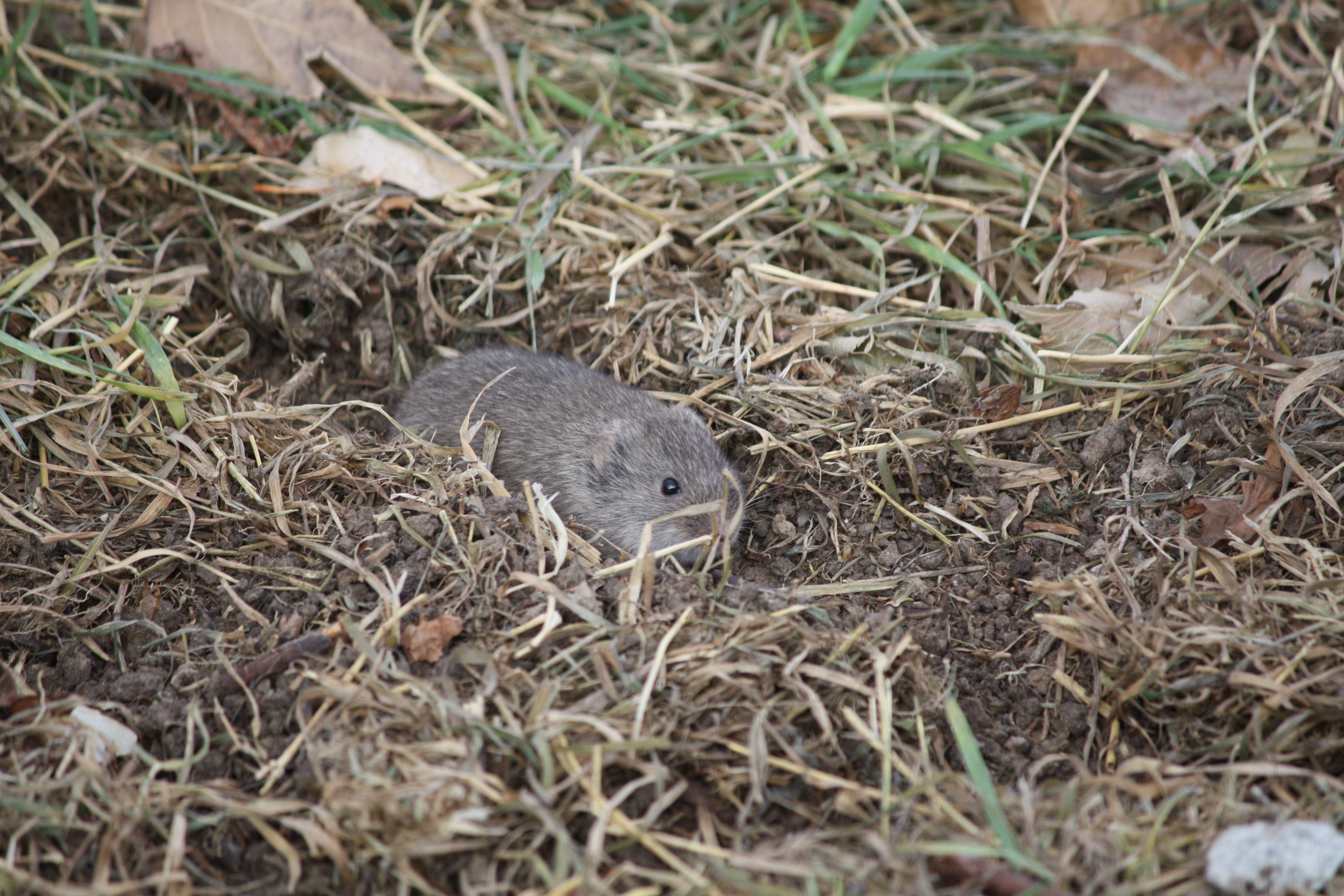
We recently moved a pile of old roofing tin that came off the chicken house, and lo, underneath was a maze of little tunnels created by a pair of short-tail voles.  They had created quite an elaborate home, burrowed down in the grass safe from predators and the coming winter weather.  They seemed  surprised to have the lid of their home lifted up so abruptly and did not immediately run away.

“my cover is blown! . . . . I must keep searching” . . . .

Veronica Vole and her husband Reggie have been evicted, it seems, since no self-respecting vole would live under the open skies.  Time to dig a new tunnel underground where a roof seems more certain.

“no time to waste – we’re blowing this joint!” . . . .

Farewell, little furry friends.  We’ll see you around, I’m sure!

Dog’s Day In The Afternoon

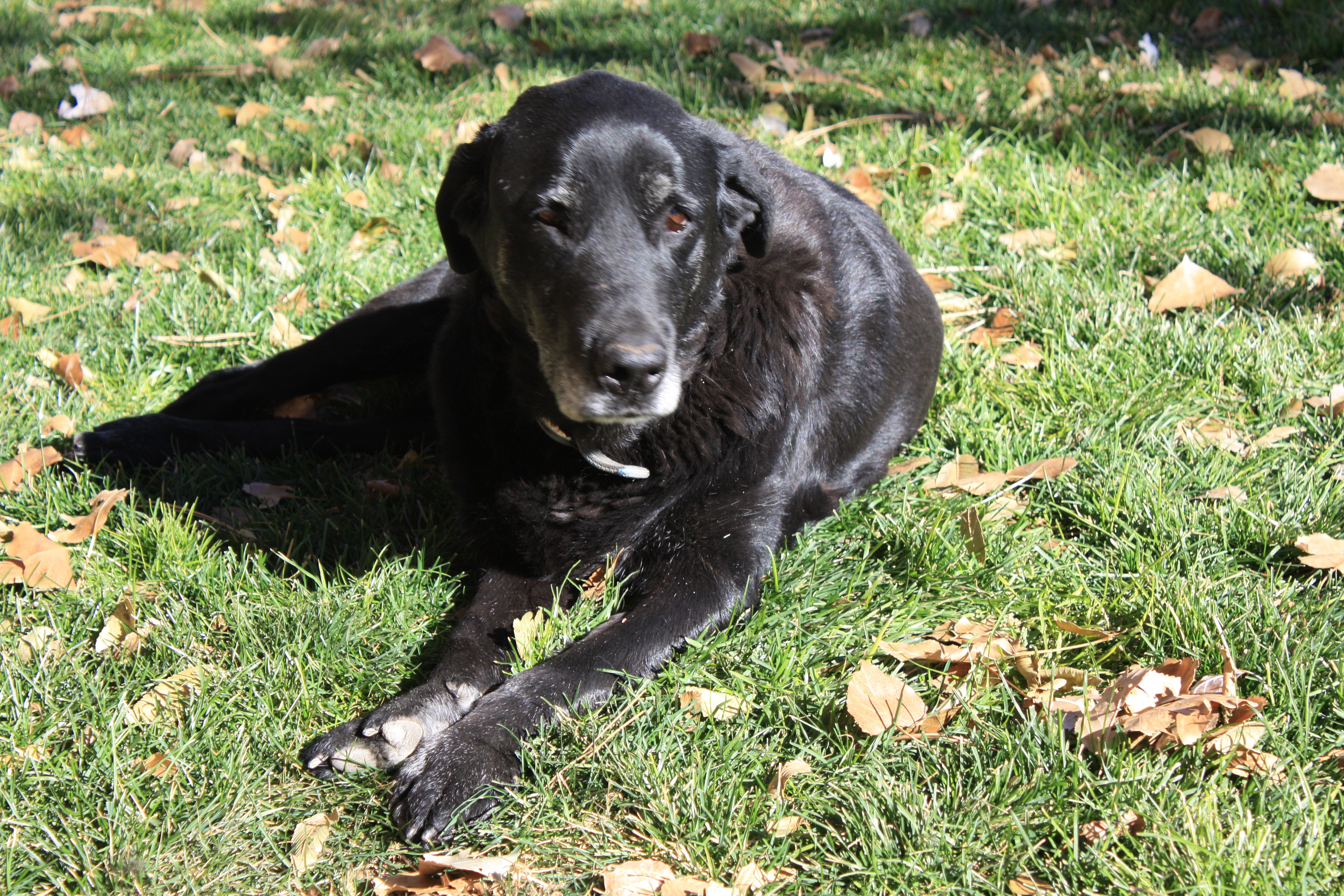
“autumn afternoon sun warms my bones” . . . .

Lady has been a member of the family since we brought her home from the shelter about ten years ago.  Rocky the Wonder Dog had wandered away from the ranch in a severe thunder storm one night, leaving our parents with no watchdog.  After a lengthy fruitless search for Rocky, we decided a replacement was in order, and since our grandparents had once owned a big black Lab named Lady when we were children, this black Lab seemed a natural fit and was a sentimental favorite.  She had been found wandering along the highway and had suffered from an injured shoulder, possibly from a fall from a vehicle.  The vet estimated her age at between 2-3 years of age.

Lady settled in and immediately claimed an overstuffed chair in the living room of our parents’ house which was an indication she was accustomed to living indoors or had every intention of doing so. Mom and Dad were pushovers, even though Lady’s energetic tail wagging would clear off table tops of their assorted detritus– magazines, newspapers, prescription bottles, coffee cups, potted plants–all the “necessaries” elderly people accumulate next to their favorite chair.

Lady became their protector, friend, and watch dog.  On a couple of occasions she became jealous and chomped on female dogs who were visiting, which was a very bad outcome requiring lots of stitches and apologies.  She could be ferocious!   She could also be courageous.  One Sunday she set about barking furiously in the rock garden near the front of the house and upon investigation, it was discovered she had cornered a rattlesnake.  Dad went for his gun, even though advanced age, poor eyesight and a slow gait left him at a serious disadvantage.  He blasted away at the garden, shooting the rocks, flowers and anything else he could get in his sights, with no success.  Little wonder he didn’t shoot his foot or something more serious!  When the smoke cleared, it became apparent that Lady had been bitten by the snake, as her jaw was swelling.  Fortunately, a trip to the vet saved her life.

We lost Dad in 2005 and Mom had to go to a nursing home following cancer surgery.  She had been wheelchair bound for many years, and though she had shrunk in size, she was still a 90-pound bundle that needed 24-hour care.  I took Lady to visit her in the nursing home, thinking it would cheer her to see her beloved old dog.  I could barely restrain Lady on her leash as she dragged me down the long hallway to the wing were Mom’s room was.  Lady seemed to know we were there to see her old friend, and she greeted Mom wiggling with excitement and filled with wet kisses and dog love.

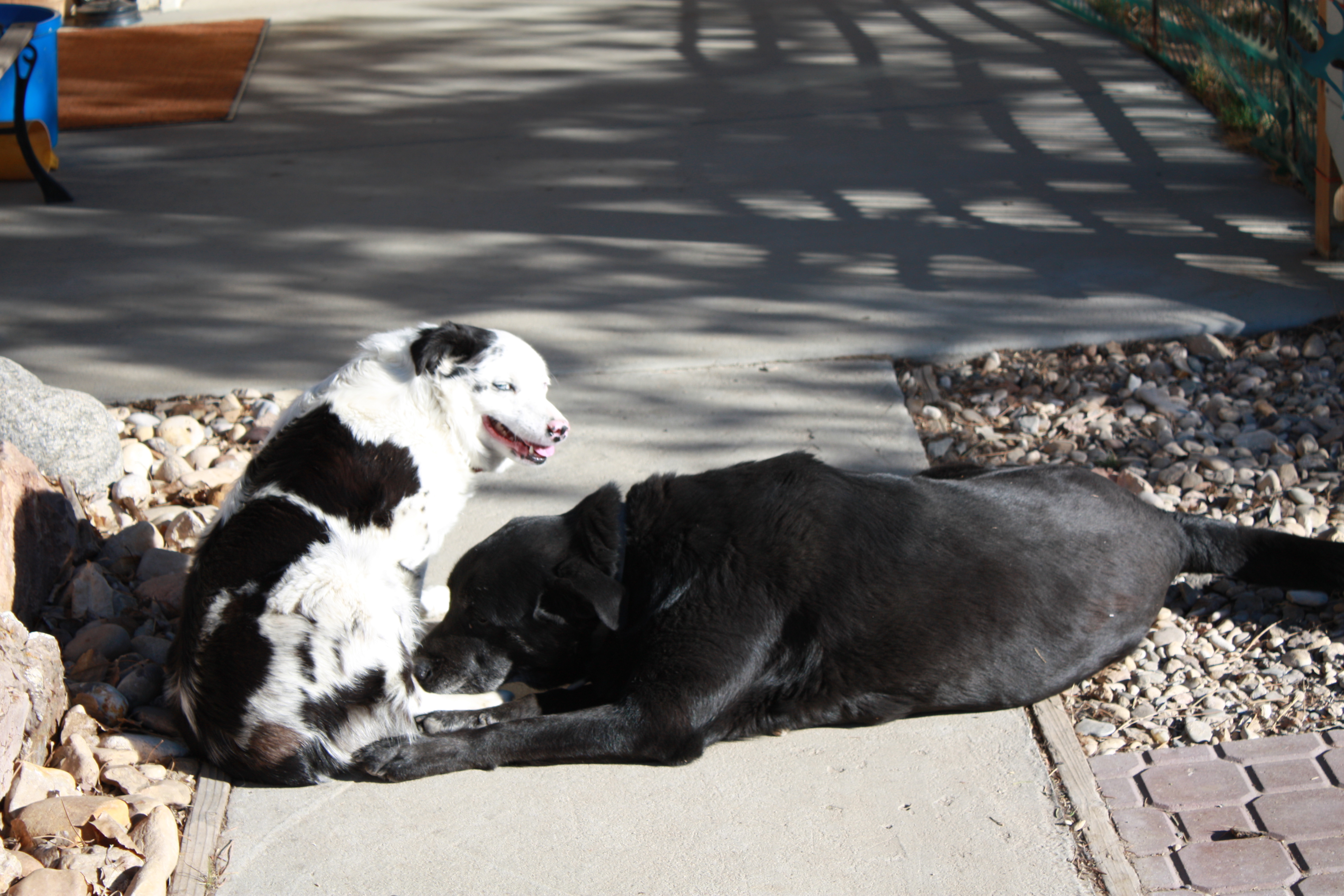
We lost Mom in 2007, not too long after Rosie, our little border collie/Aussie mix joined us here on the old home place. We were relieved when the two dogs bonded and became good friends.  Lady was steadfast and could be counted on not to wander from home, which kept Rosie from most of the mischief a young dog will seek on her own.

“girls just gotta have fun” . . . .

As Lady became older, the injury to her shoulder began to slow her down and the joint where her leg joined the shoulder jutted out at an odd angle.  She adjusted her gait to accommodate this infirmity, as well as the arthritis that was settling in her hips.  When she walked, she began to swoop and sway a bit to adjust her weight to the aching joints.  When she began to exhibit signs of lethargy due to the difficulty of getting around, we started her on medication for the inflammation. She fared pretty well for the past year and still managed to follow me on my rounds to water trees, walk to the barn or other outside activities.  She wanted to be a part of whatever was going on.

A week ago Lady took a sudden turn for the worse.  She refused to climb into her dog house one night and we were reluctant to force her for fear of hurting her.  The Indian summer days had been warm, but the nights quite chilly, so we brought her into the house, and Rosie too, to avoid any unfair treatment.  In the next few days she became so lame she could barely hobble, so a trip to the vet for x-rays revealed hips devoid of cartilage.  We left with some additional medications to make her comfortable while trying to sort out what other options the vet proposed.   Considering her advanced age and prognosis, we decided it was time to euthanize her.  But not before she had a few days in the sun, made more comfortable by her new pain medication.  She rallied a bit. While  hanging a gate over at the barn, we looked up and there was lady, wagging her tail and grinning at us as if to say, “see, I can still get around to help out!”

A weather forecast for a big snow storm and bitter cold Arctic air set the timetable for us.  Lady would not be able to endure the cold, nor could she make it over the  threshold coming into the house without lots of hoisting and pulling.  The thought of several trips outside during the day to take care of her bodily functions was out of the question.  We laid a blanket over her sleeping pad on the porch and waited for the vet.  Lady was given a mild sedative to relax her while we held her.  She was then given another stronger dose which put her to sleep.  She began to snore and we knew she was unaware of us any longer. The final dose was administered and she was gone.  We buried her on cemetery hill where all the old ranch pets have gone to rest.

R.I.P., Ladybug

Leavetaking

The cold stung my face as I went through the gate and my gloves froze on the metal as I lifted the chain to leave.

I started the car and they watched as I back away, then started prancing and bounding in the snow, for my approval.

Light snow, fluffy and dry from the cold, scattered around the yard like dust as they danced and scurried around the car, to engage me.

The frost-lit morning glittered in the early light as the first rosy tint of sunrise shimmered over the hill to the east.

A faint glow enveloped us–a big black dog, a small mouse-colored cat and me– waiting in the car to begin the daily journey.

I drove forward carefully, making sure they had time to move away from the car as I started down the hill.

As I crossed the creek bottom and headed up the other side, I looked back in the rear view mirror and saw them coming, running after me.

I drove out of sight, but the image of a big black dog, a small mouse-colored cat and the old cottonwood along the road stayed with me.

Dry Creek – January 2004

Tilly Travels to Wyoming

“Eight hours on the road can wear a girl out!” . . . .

Tru Tahlequah Miss arrives at last!  Conceived in June of 2011 near Penrose, Colorado, “Tilly” was born on Mother’s Day 2012.  It has been a long wait, but at six months of age, she was finally old enough to wean from her dam and come to live in Wyoming.  She took the long drive in stride and seemed calm and curious about her new surroundings.

“What kind of bunk mate is this?” . . . .

Two weanlings get to know each other in a tenuous “sniff out” as they try to sort out what kind of critter stands before them.  Abe the longhorn steer (a.k.a. Feed Lot; T-Bone; Rib-Eye and a few others I cannot recall) has been around a horse or two, but Tilly has had no prior exposure to beef on the hoof.  Since they are close in age and both going through the weaning process, it seemed  they might enjoy some company as they pass the lonesome hours without “Mom.”  We’ll see.

“Enough with the introductions, let’s eat!” . . . .

Rosie is sizing up the new arrival and more than likely wondering what approach she will take to “herd” this new creature, who seems to be getting a lot of attention from her mistress.  Standard m.o. for a border collie/Aussie mix is to nip at the heels of a horse, which could have disastrous results.  This should be interesting!

Evening Sky

Another day, another sunset . . . .

Fly me up into the clouds . . . .

Autumn glory . . . .

September evening skies are extraordinary.  I glanced out the kitchen window and saw this sunset unfolding.  Since the evening sky changes from moment to moment, I had to run for the camera to capture it.  It seems there is never time to set up for the right shot, or moment.  Photography is a little like golf–intermittent reinforcement interspersed with frustration at lost opportunity!


Jeep Journal – Tetons, Yellowstone, Big Horns

Like no place on earth . . . .

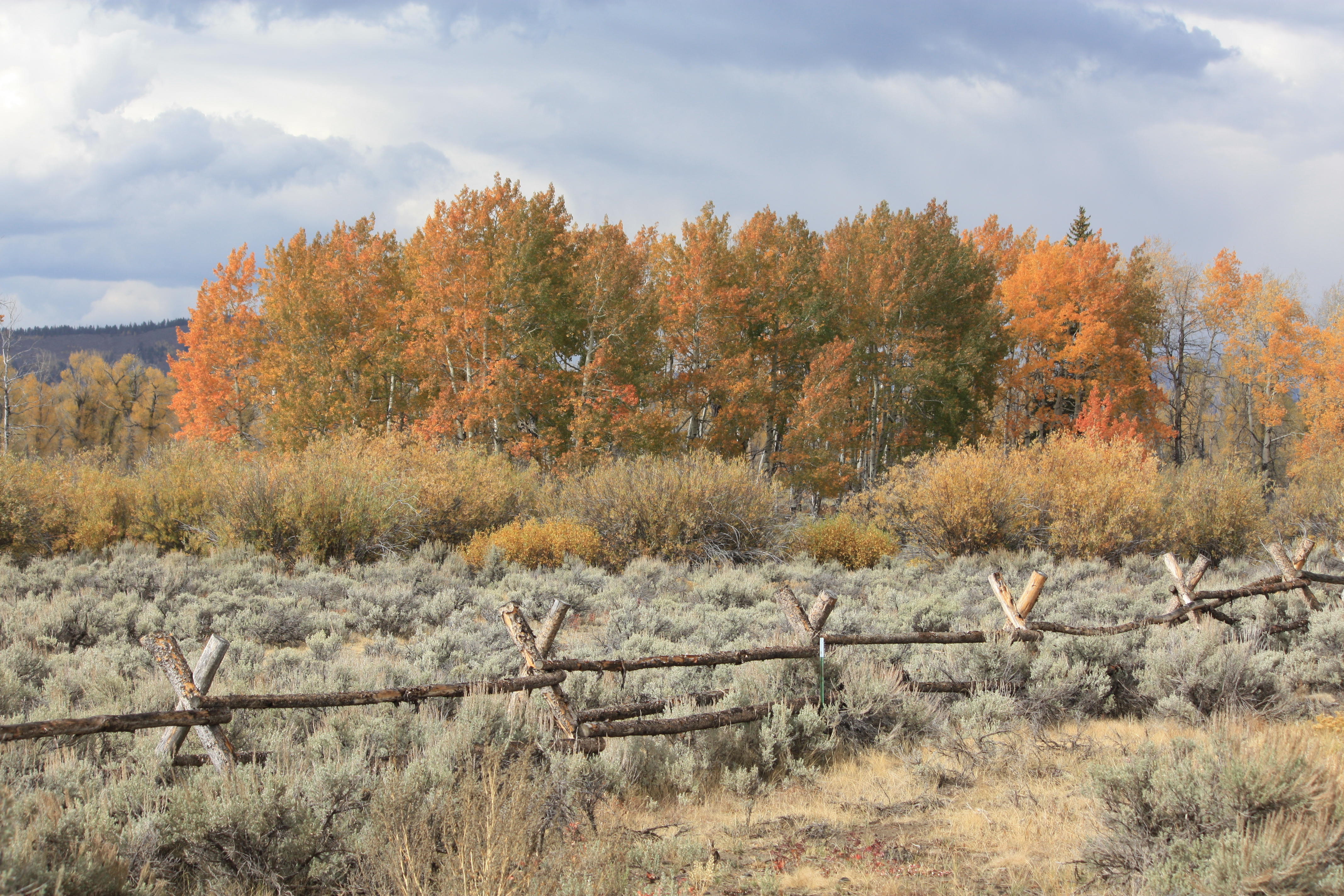
Our annual autumn trek pointed north this year to explore the fall colors in Wyoming.  We take for granted some of the most spectacular vistas in our home state, and it was rewarding to renew our memories of what makes Wyoming such a special place.  We spent a pleasant evening in Jackson revisiting some old haunts, and headed out early the next morning to Teton National Park for some serious sightseeing.

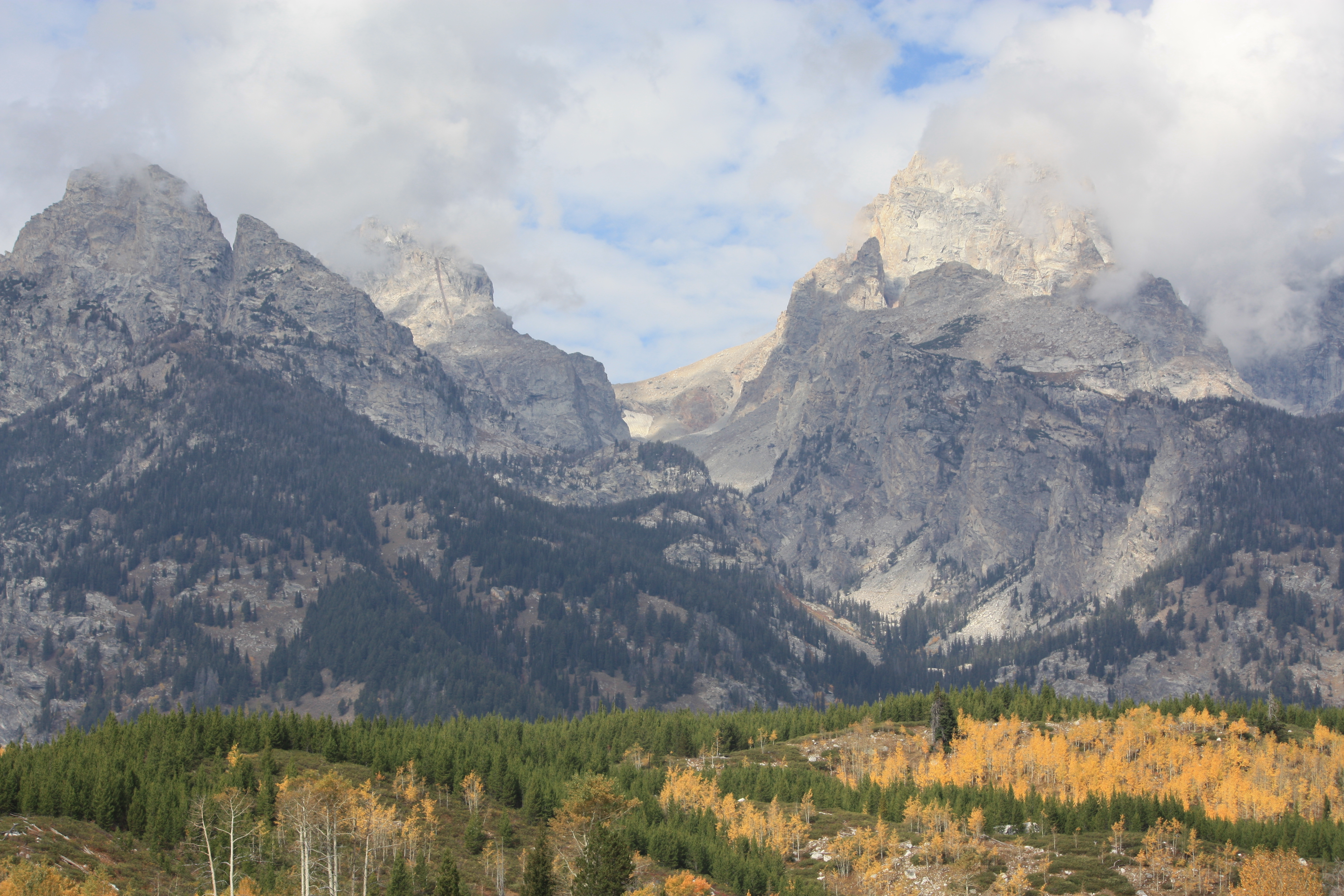
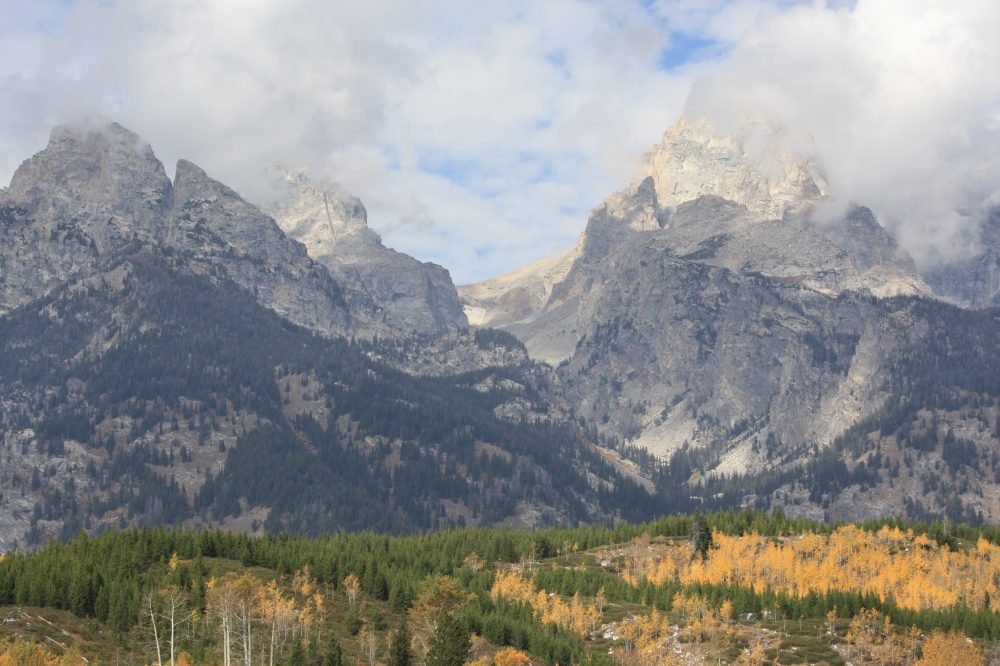
Terrible beauties bathed in clouds . . . These terrible beauties are bathed in clouds as the weather threatened rain or, this time of year, quite possibly snow.  Fortunately, the sun prevailed but the clouds added great interest to the mountain peaks.

Still the same, after all these years . . . .

Jenny Lake Lodge and surrounding cabins is a family favorite.  A photograph of Jenny Lake, taken by my father, hung in the family home for 50-plus years and I tried to duplicate his shot, to no avail.  The sun wasn’t with me and I’ll have to try again, on another journey.
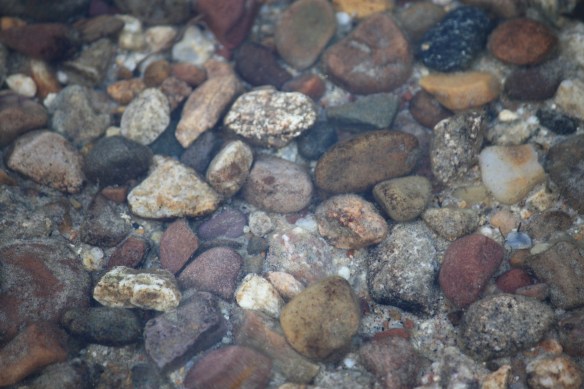
What’s this–a stone’s throw? . . . .

The clear, cold waters of Jenny Lake seem invisible and the rocks were so colorful I could not resist photographing them.  My consolation for not getting a great image of the lake!
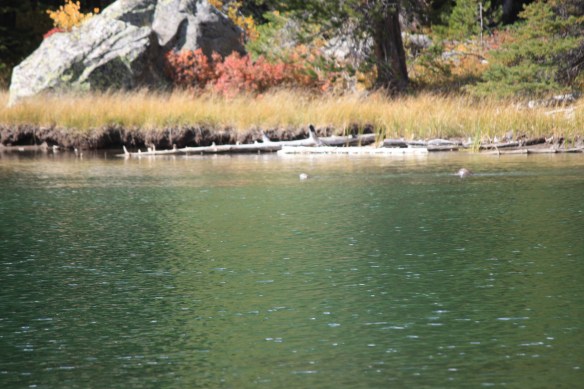
“I’ll bet I can race you to the other side and win!” . . . .

Racing river otters provided entertainment for a picnic lunch at String Lake, which is a narrow channel between Jenny and Leigh Lakes.  Wildlife shots are never easy, and a stronger lens is needed to do this justice, but I had to try.  River otters are fairly reclusive and a chance sighting was rare good fortune.
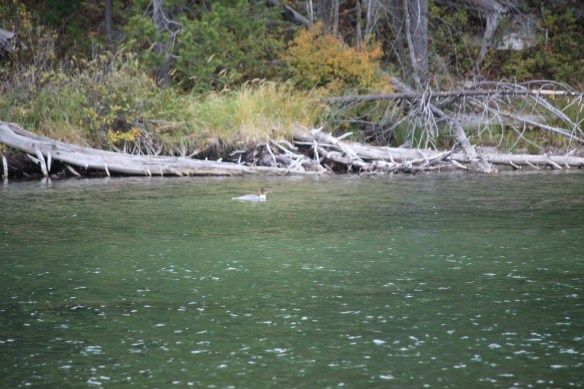
Cruising up the river on a sunny afternoon . . . .

This common merganser duck was another great sight at String Lake.  Multitudes of ducks, geese and birds ply the rivers and lakes, but this duck stood out in the crowd.
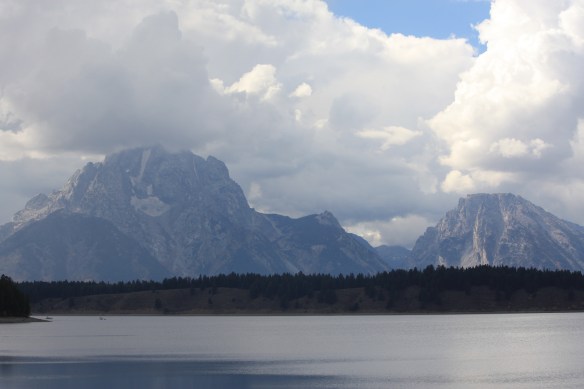
Clouds hovering over Jackson Lake . . . .

The cloud cover arrived in time to catch a shot at Jackson Lake.  It was hard to choose which was the more beautiful–the Tetons or the clouds above them.
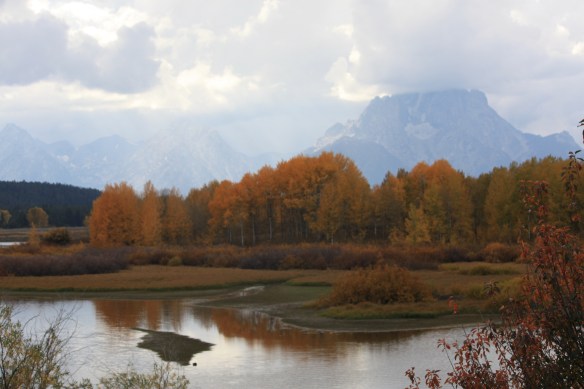
Oxbow Bend beyond belief . . . .

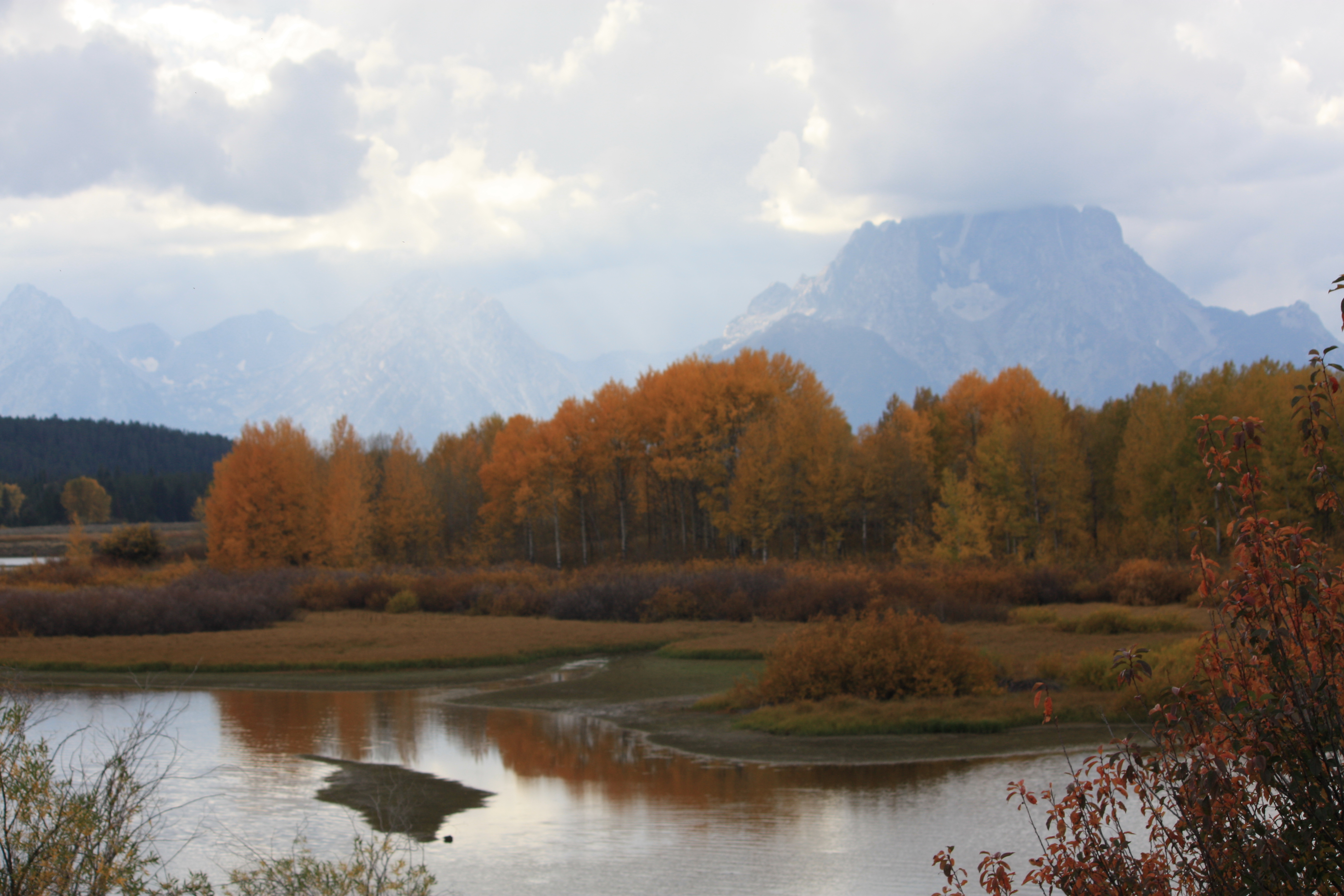
Just beyond Jackson Lake Junction, we came to the Snake River at Oxbow Bend and the colors were so intense it took our breath away.  Clouds obscure the peaks, but afford a softer light on the river.  Hated to leave this lovely spot behind.

On the road again . . . .

Our journey takes us north to Yellowstone National Park where we plan to spend the night at Yellowstone Lake which formed at the center of a great caldera. We are hopeful it will not erupt for another few thousand years.  About 2 million years ago, and then 1.3 million years ago, and again 640,000 years ago, huge volcanic eruptions occurred here.  The last eruption spewed out 240 cubic miles of debris.  Too close for comfort!  The central part of what is now the park collapsed, forming a 30- by 45-mile caldera.  Beyond imagining.

If this is Lewis, where is Clark? . . . .

A roadside attraction, Lewis Falls is the first of a number of spectacular water falls in the park.

In the grand tradition . . . .

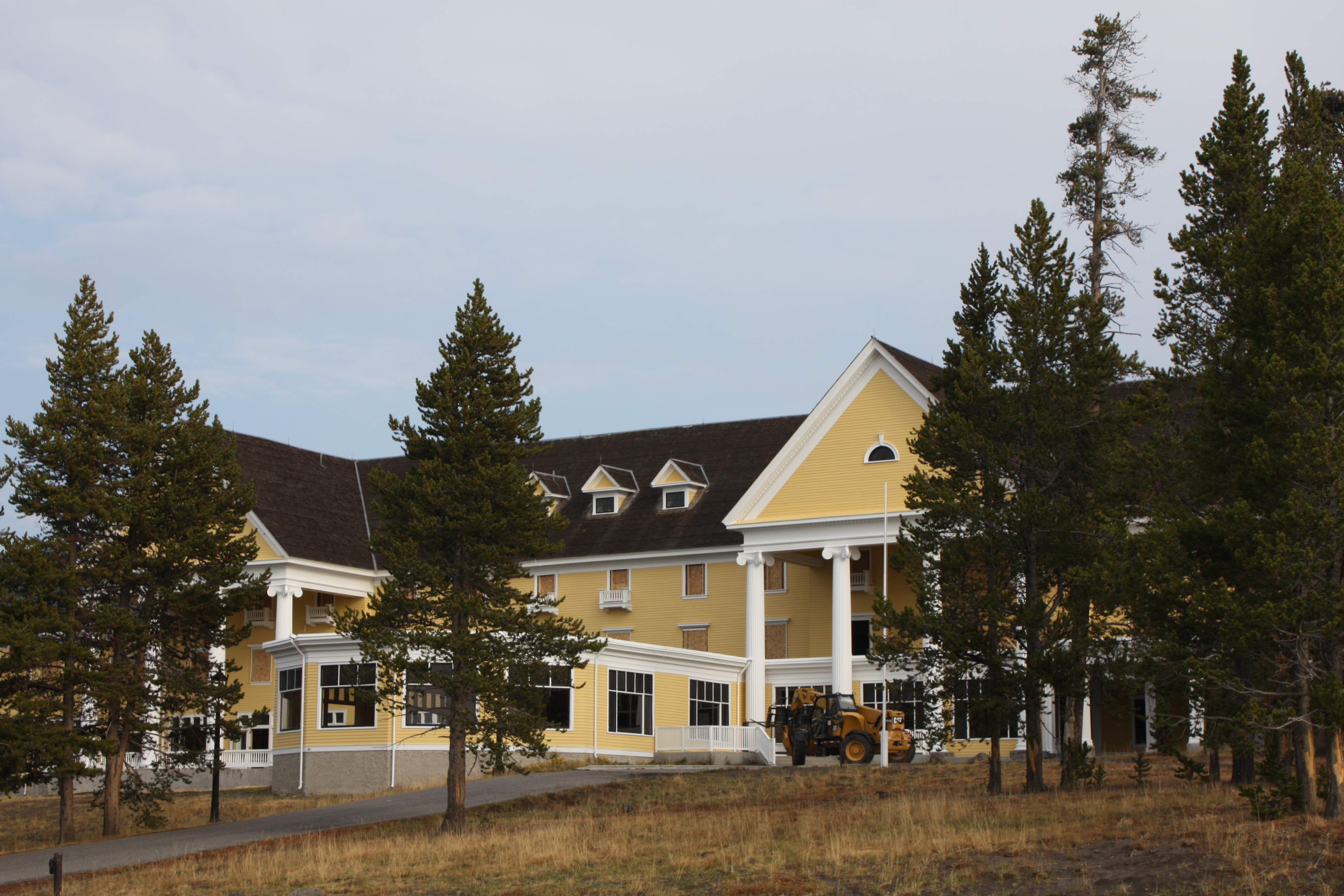
Yellowstone Lake Lodge check-in was required for our cabin, which was a delight.  This lodge and the cabins remain open until the end of September, however the grand old Yellowstone Lake Hotel was closed for the season.
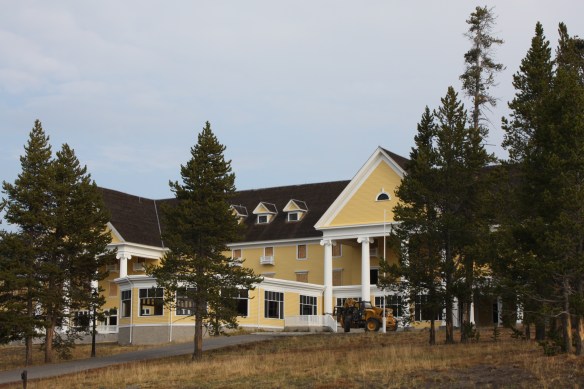
One of the world’s grand old hotels . . . .

Yellowstone Lake Hotel is so immense it has to be photographed in about six sections.  This is the primary entrance and the boarded windows will protect it from the harsh winter that will soon arrive.  Crews of maintenance workers were crawling literally over the length and breadth of the hotel to make repairs and secure the site for winter.  The only regret of the journey was that we could not book a room here.  Ah well, next time.  Our cozy little cabin was a delight and a great value.
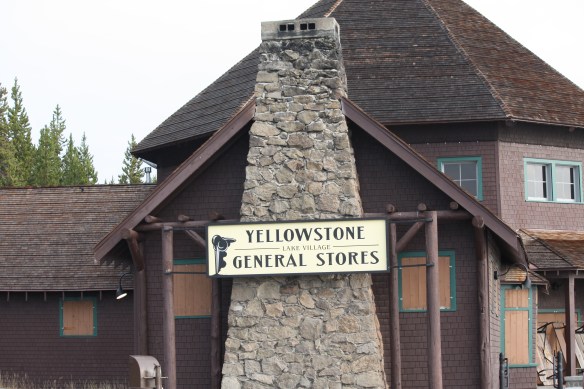
An architectural icon . . . .

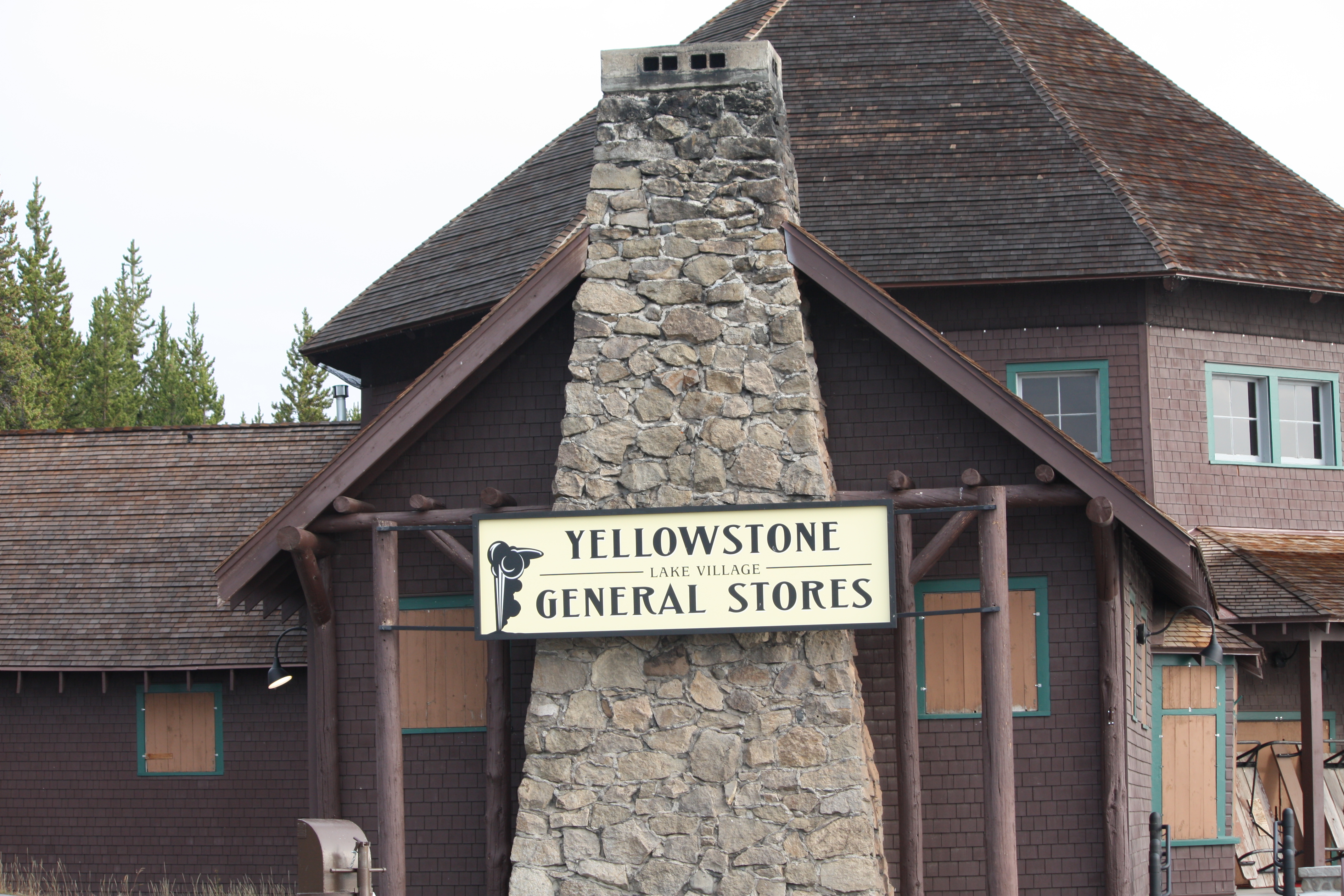
No rubber tomahawks for sale today.  We can only imagine what wonders await the visitors next year in this fine old store.

Where’s my breakfast? . . . .

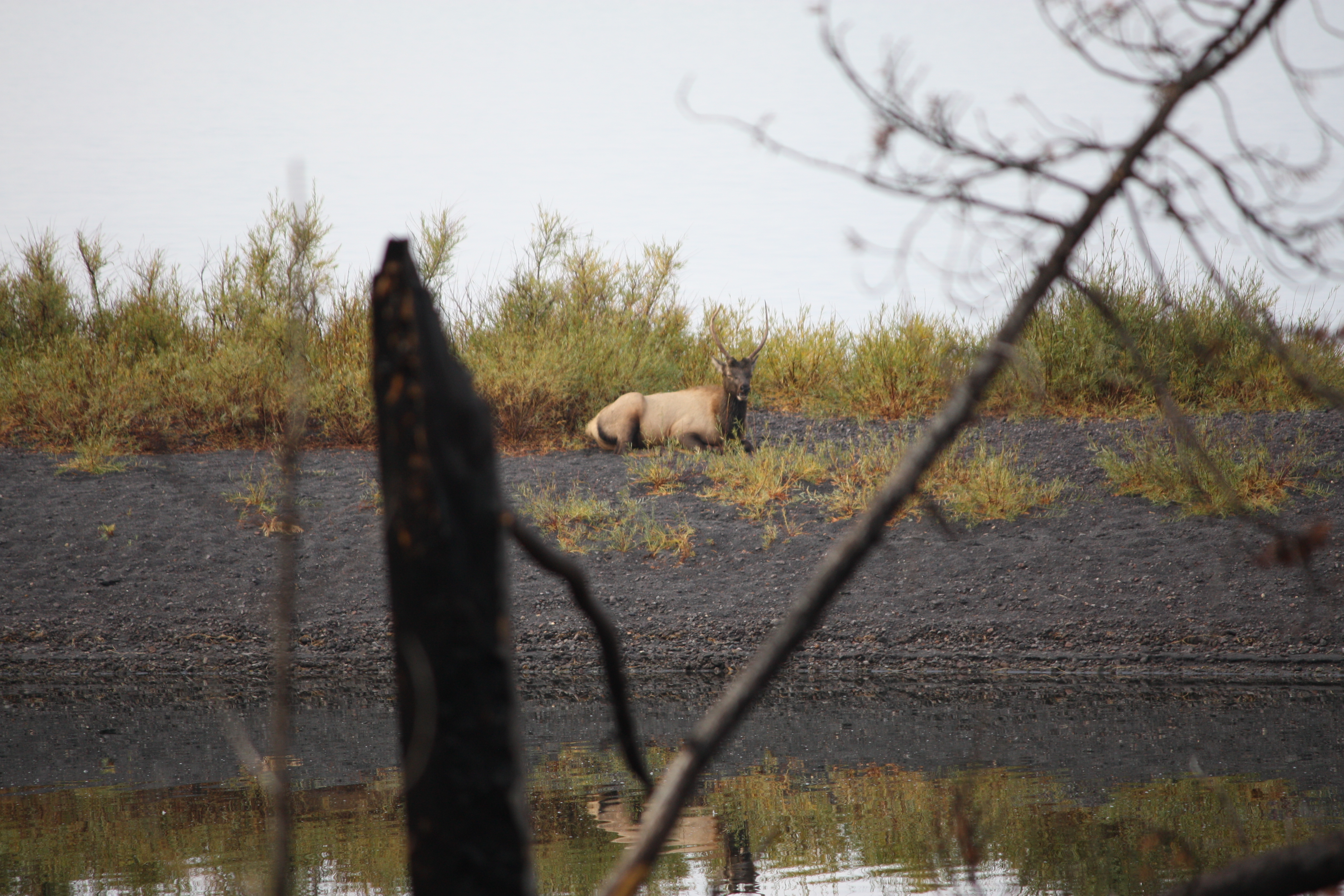
This young bull elk was enjoying a respite on a sand bar along the edge of Yellowstone Lake.  Three cow elk were holding court nearby in case he needed any female attention.
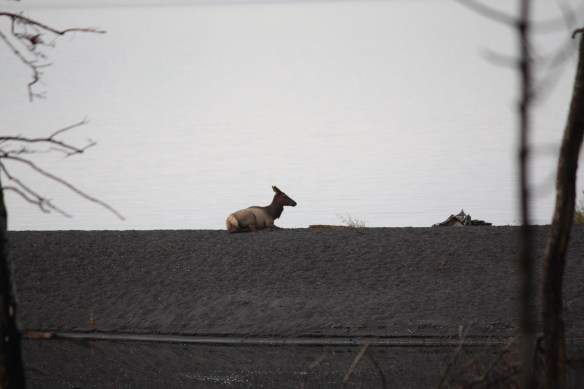
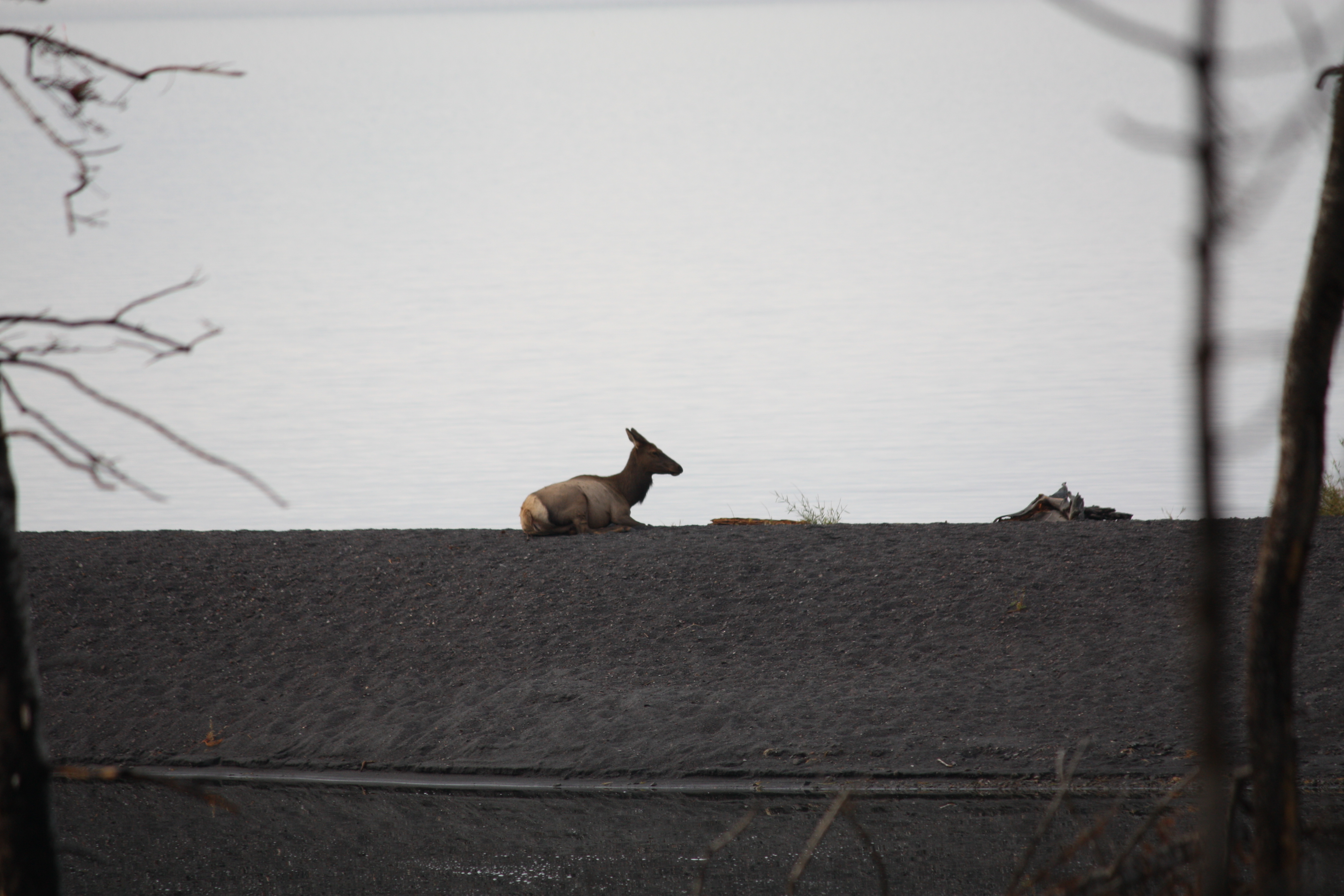
The lady of the lake . . . .

She seems to enjoy her repose a short distance away from the male elk.  Life is sweet for this moment, and a wolf sighted up the road a short distance from her is not likely to pose a threat today.  The wolf moved into the brush too quickly for us to get a clear view of him, and it was a great photo loss.
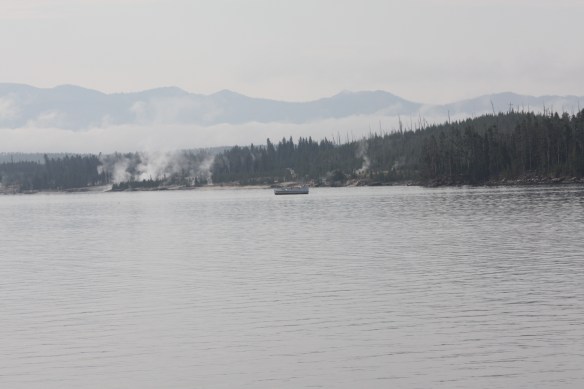
A tiny little boat on a great big lake . . . .

Hydrothermal steam rises from the shoreline of Yellowstone Lake, North America’s  largest high-altitude lake.  Twenty miles long, 14 miles wide, 410′ deep at its greatest depth, and 141 miles of shoreline.  The lake bed is a volcanic caldera that is constantly monitored for seismic activity.
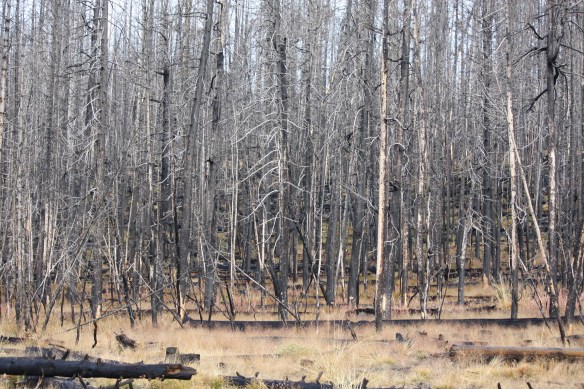
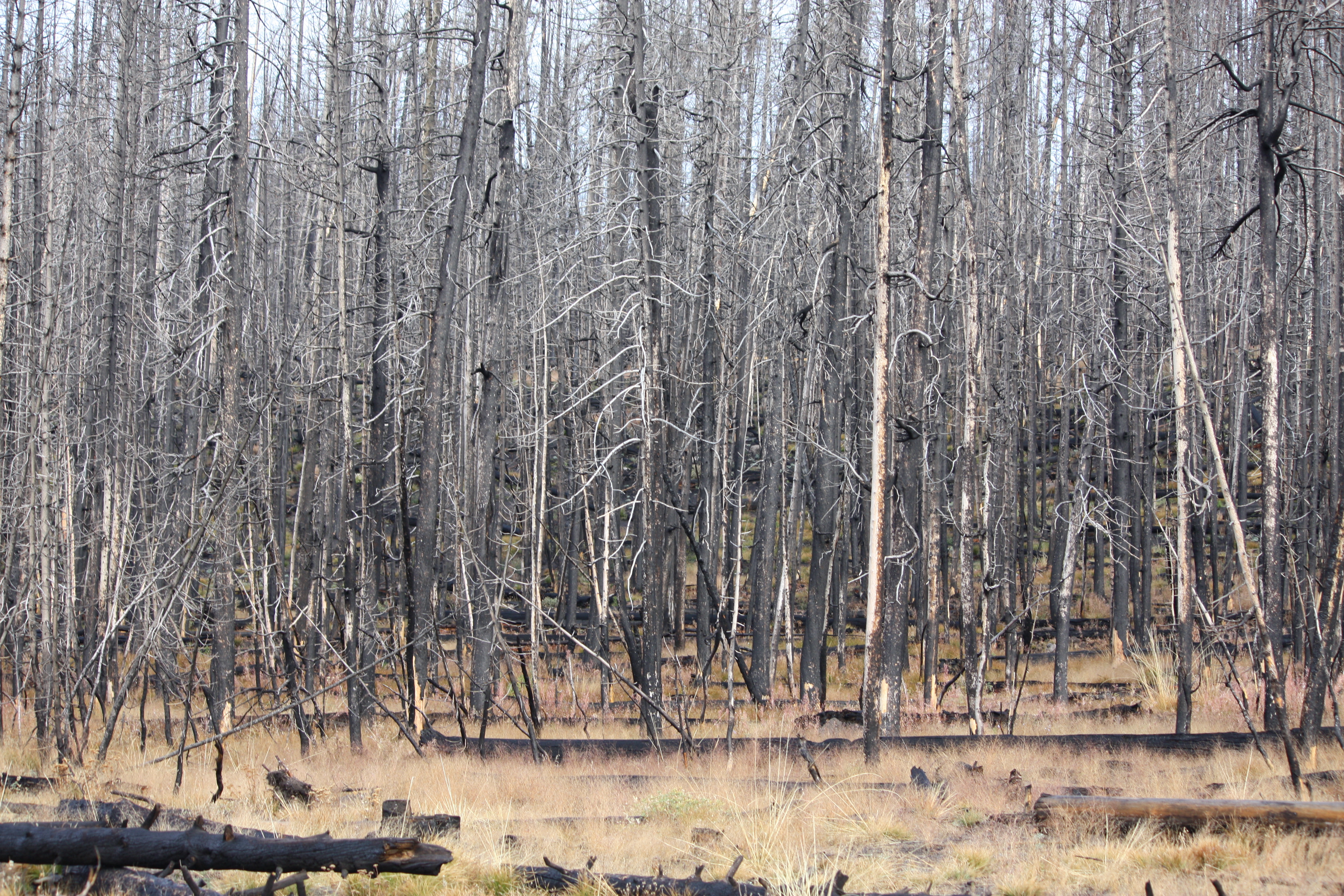
The ubiquitous burn . . . .

Fire leaves its mark on the forest, and Yellowstone has many fires throughout the years.  Fortunately, not many are as devastating and threatening to historic structures as the “big burn” of 1988.

just a humble log cabin . . . .

This intersection of Old Faithful Inn is interesting to understand the log construction of this massive lodge, which is described as the largest log structure anywhere.  Our favorite viewing site for the Old Faithful geyser is on the second-story deck above the entrance.  Armed with a steaming cup of coffee and warmed by the morning sun, it made for perfect viewing.

Curly logs for support and decoration . . . .

The deck also affords afternoon cocktails.  As we waited for Old Faithful to erupt, I was reminded of an elderly man playing the grand piano inside the lodge on the mezzanine.  Egad, that was about a dozen years ago now.  The memory will stay with me forever, and I have struggled mightily to master one of the pieces he performed–Traumerei by Schumann.

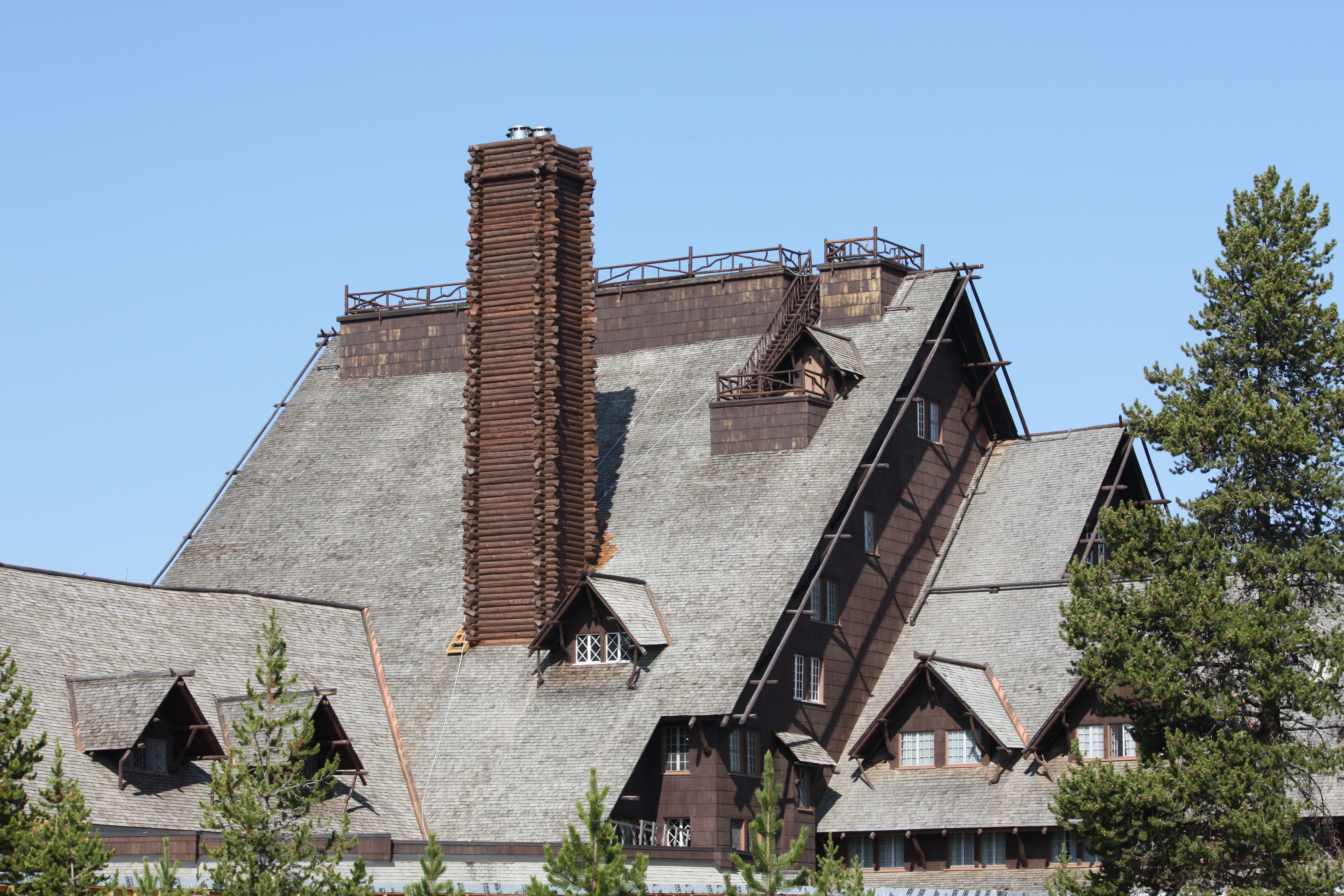
What a chimney–try building one of these! . . . .

Even the chimney is clad in logs!  This massive four-sided stone fireplace rises four stories high.

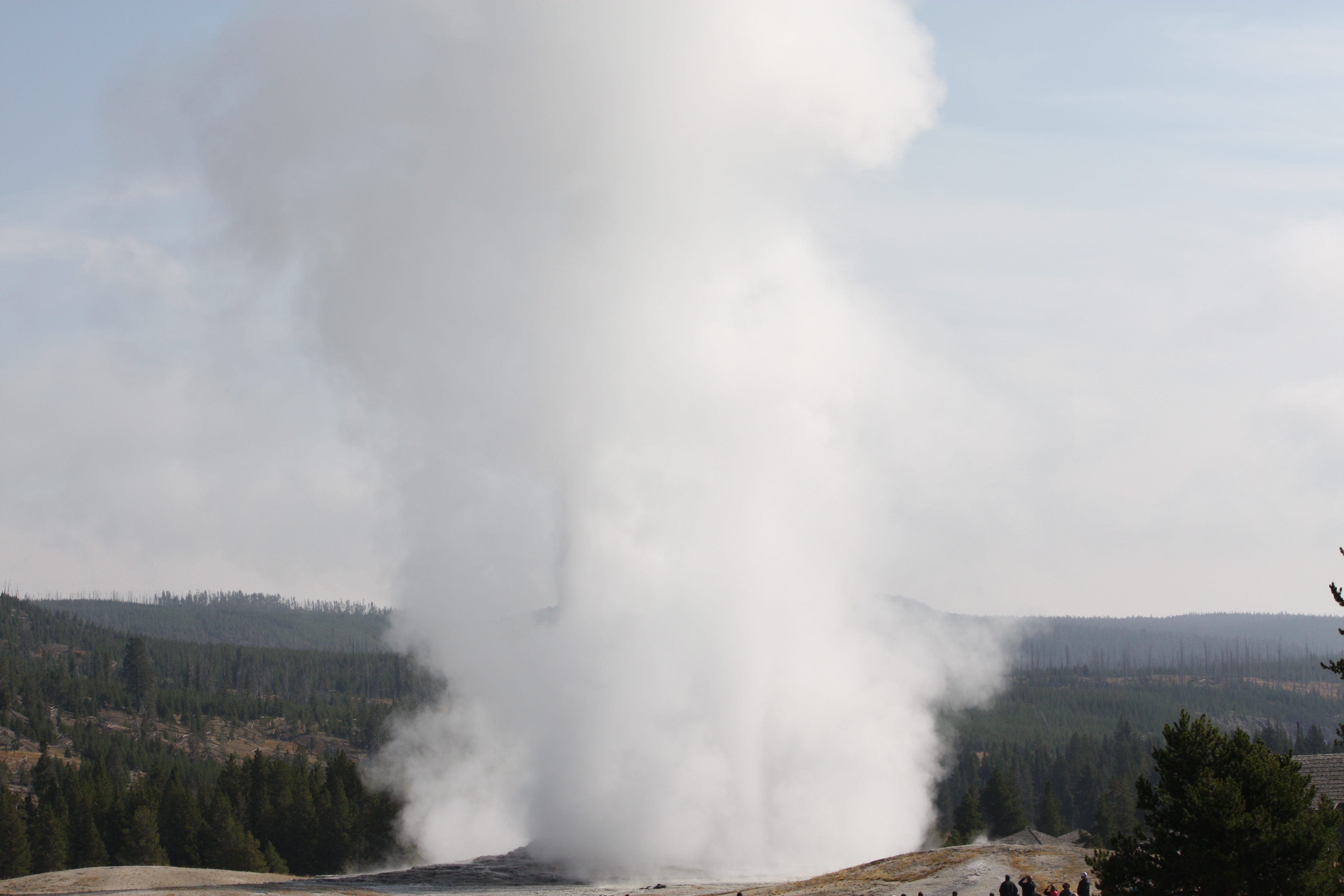
Thar she blows! . . . .

Old Faithful never fails, and is truly a wonder to behold.  My first sight of it was as a child, and I still feel the thrill as if for the first time.
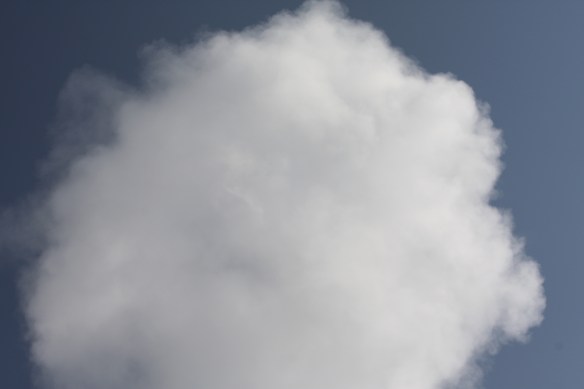
Up, up and away . . . .

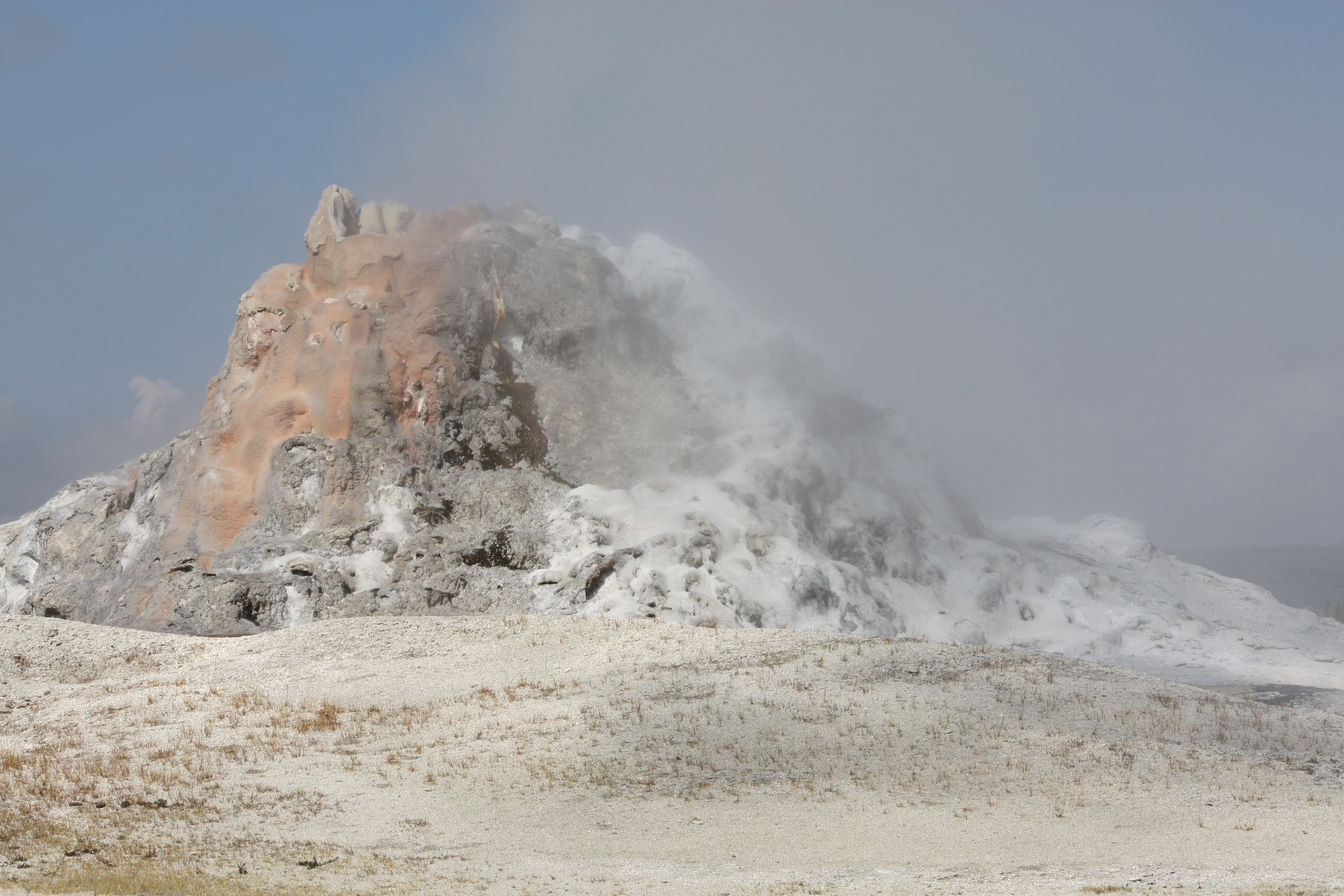
Having journeyed through Yellowstone a number of times, the multitudes of geysers, thermal pools, mud pits and other wonders were not on our list of priorities.  We did enjoy some along the way, but our greater interest was in viewing and photographing the wildlife.  We realized soon enough that our itinerary was not conducive to seeing as much as we had hoped, as evenings are some of the best viewing hours and that requires planning and preparation.  We learned from this visit, and will arrange our lodging and schedule for more early morning and evening viewing.

Mudpack, anyone? . . . .

This  “painted pot” was just beyond Old Faithful Inn, and with easy access, seemed to call out to be included in our photo album.

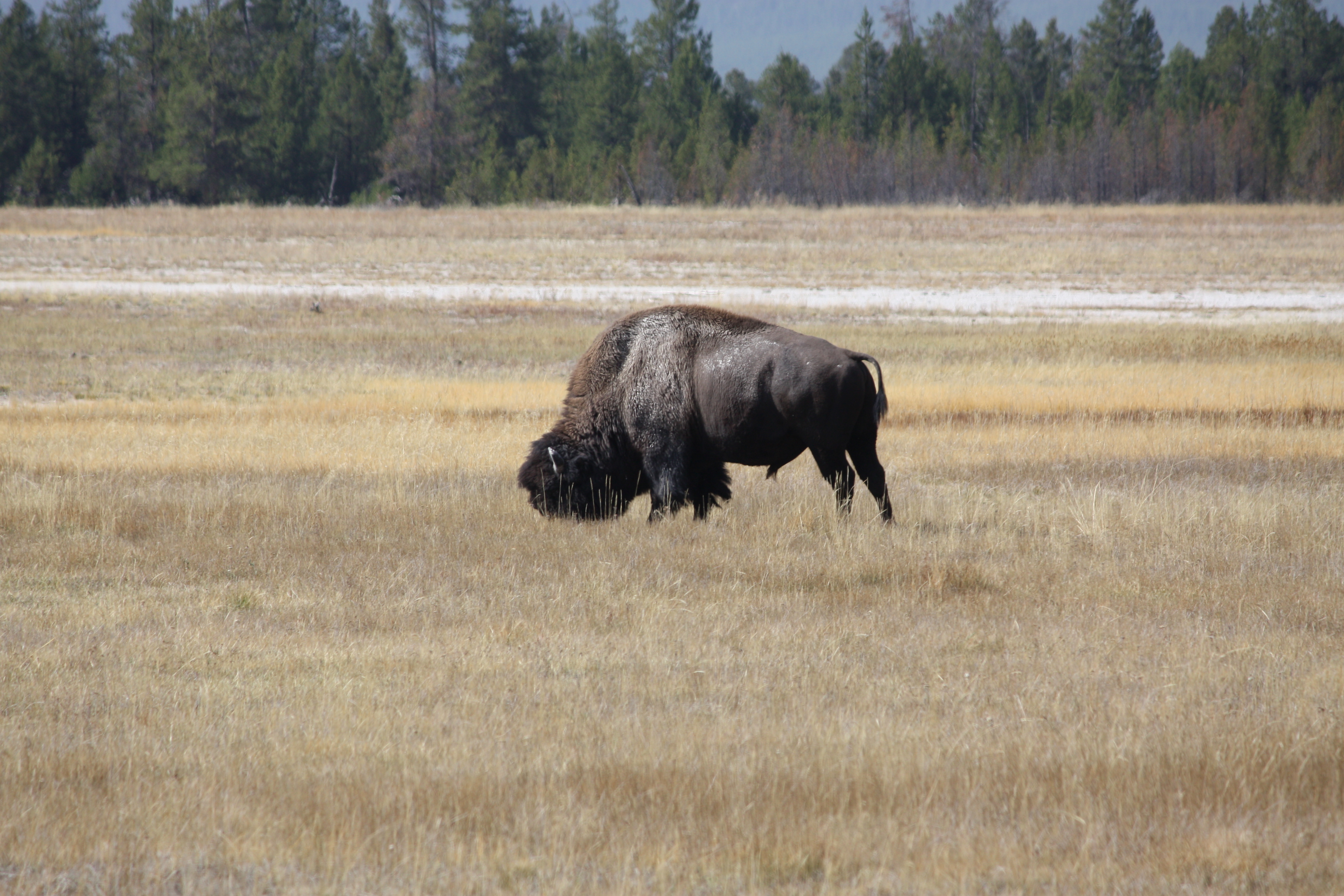
Nothing like a mud bath to keep the flies off . . . .

An old “hermit bull” bison grazes alone and far from the herd.  He has likely been displaced by a younger, stronger and more virile bull who now rules his harem of female bison.
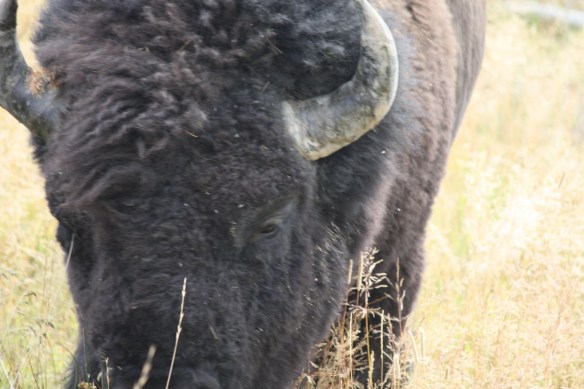
“I’m just a lonely boy”
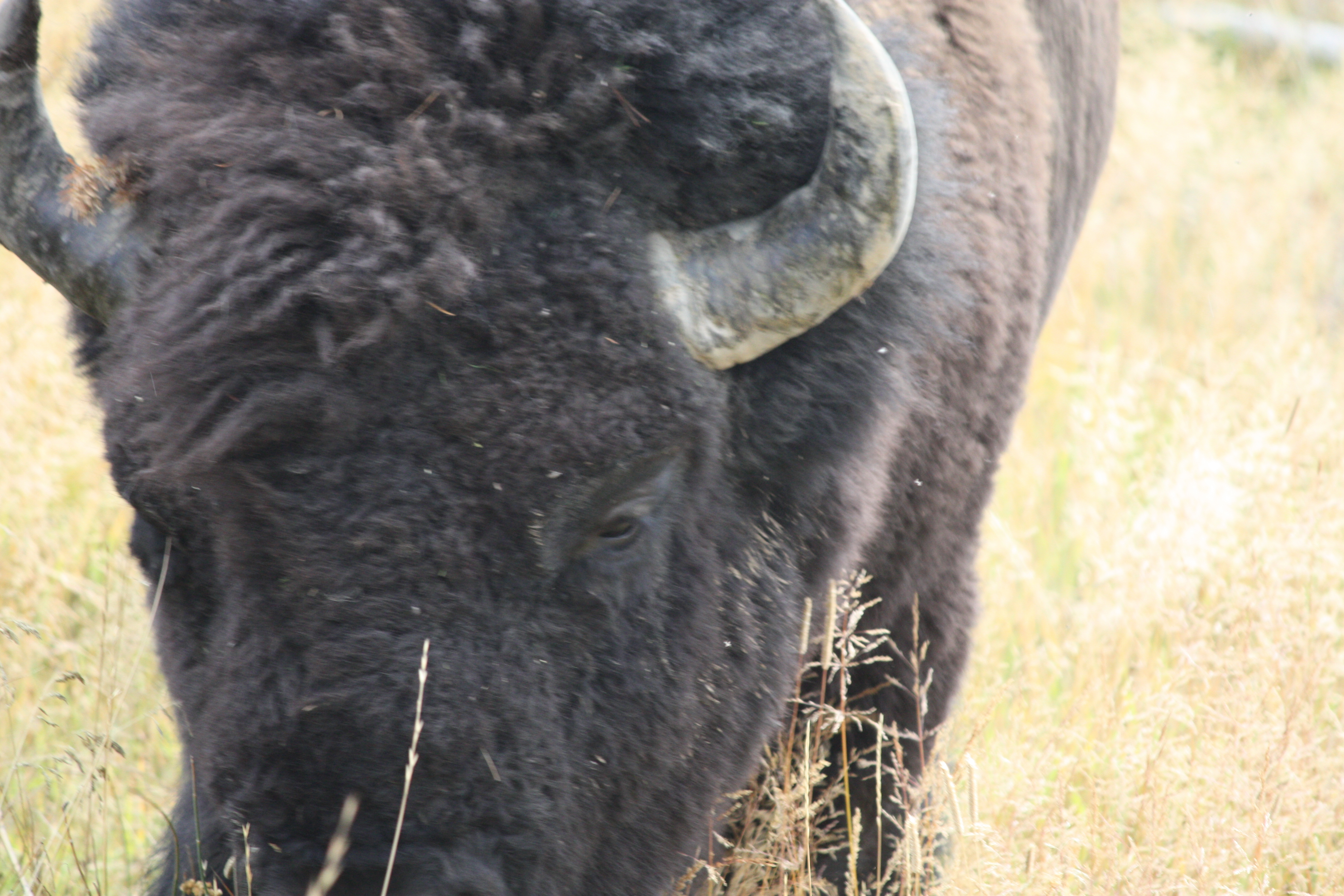
. . . .

This old bull was lounging along the road and presented an opportunity for an “up close and personal” conversation.  A little zoom brought him close enough to be out of harm’s way, however.

just another waterfall along the way . . . .

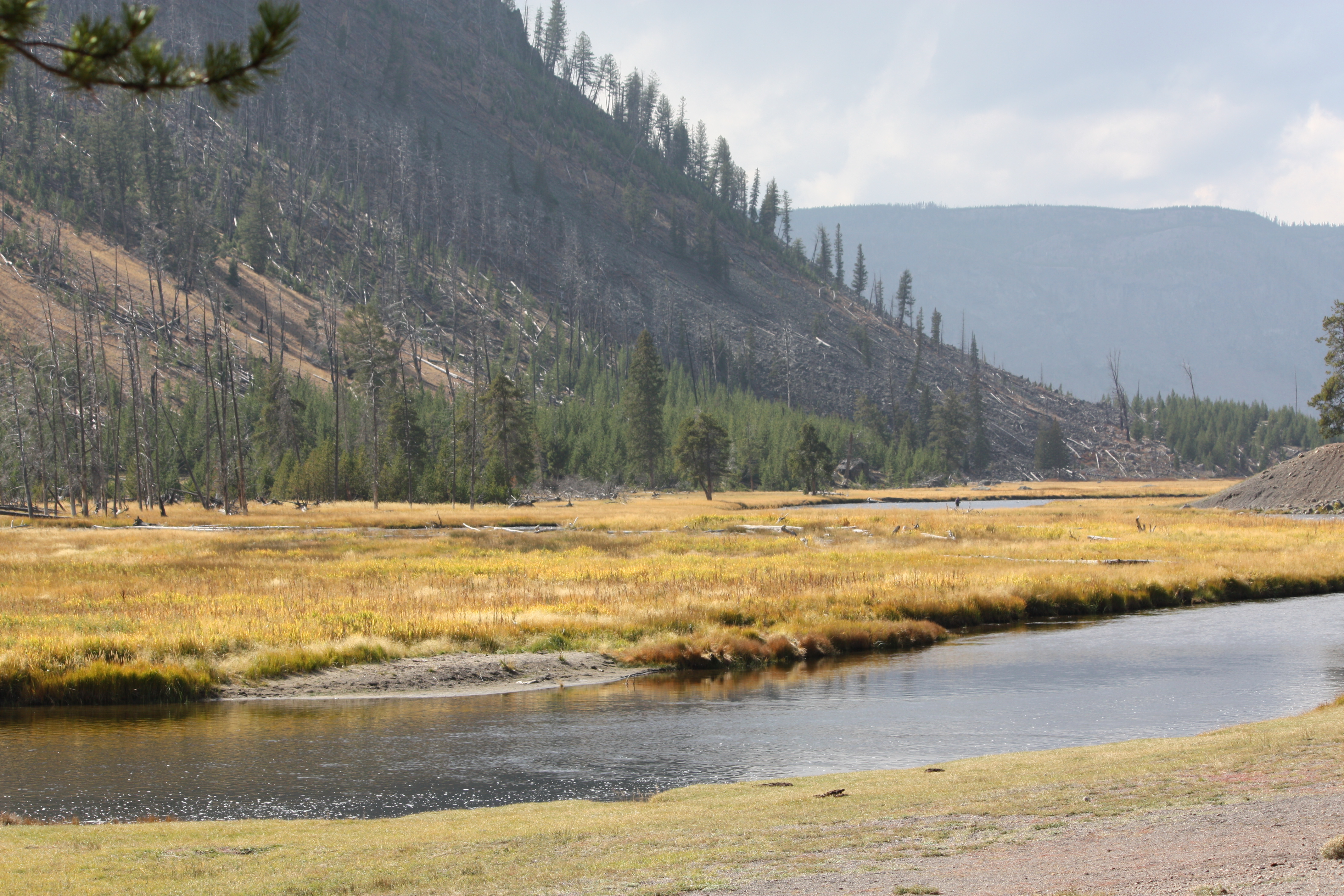
A side trip to Firehole Falls led us along a spectacular canyon drive that we had never seen before.  The Firehole River flows between two lava flows.  Impossible to capture on camera, we found this one-way stretch of road to be awesome.

a log in the sun, wine, cheese and thou . . . .

Lunch along the Gibbon River was a peaceful contrast to the thundering Firehole Canyon.  The Gibbon River joins the Firehole at Madison Junction, becoming the Madison River–one of three forks forming the Missouri River.  An ampitheater, information center and the best restrooms in the park were nearby.  About five miles further on, we came to Gibbon Falls.

can it be?

One waterfall is more beautiful than the next.  Cannot remember seeing so many in a single day since touring the big island in Hawaii.
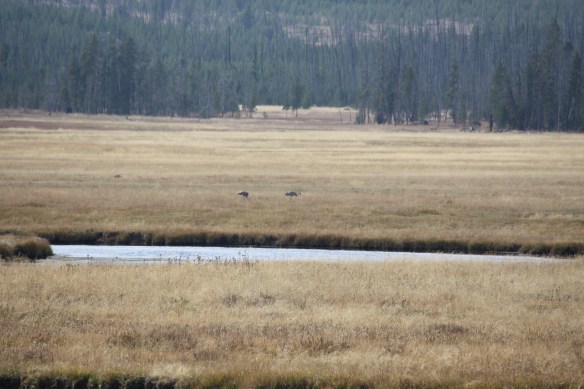
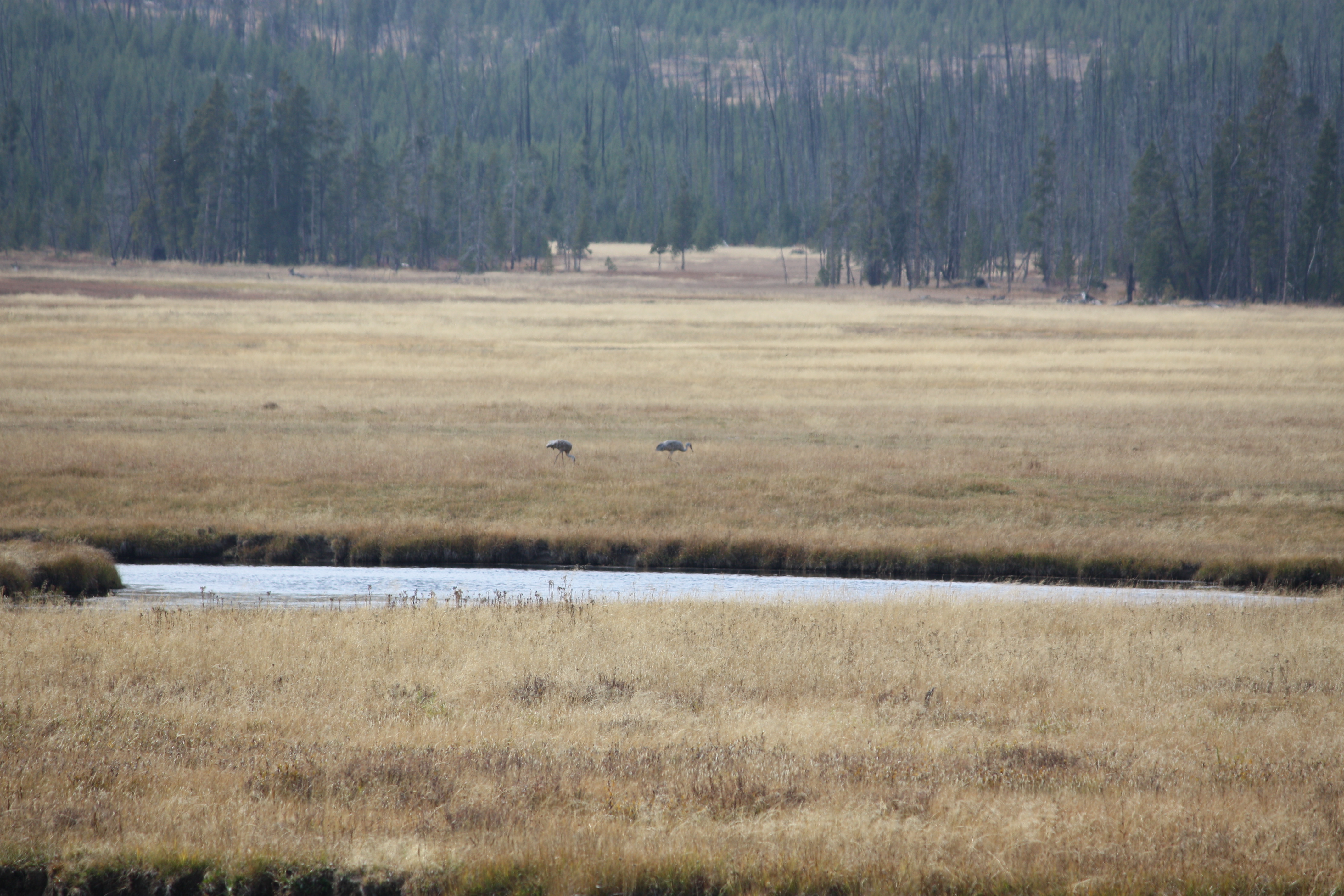
oh for a better lens . . . .

Sand Hill Cranes are grazing in a great meadow that is likely teeming with wildlife later in the day.  We were torn, but had to travel on to our next destination.  We noted this location for another exploration.
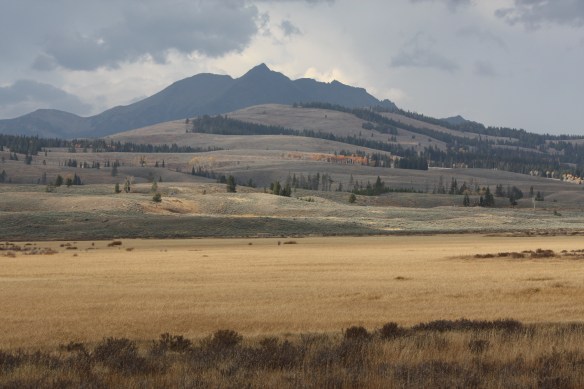
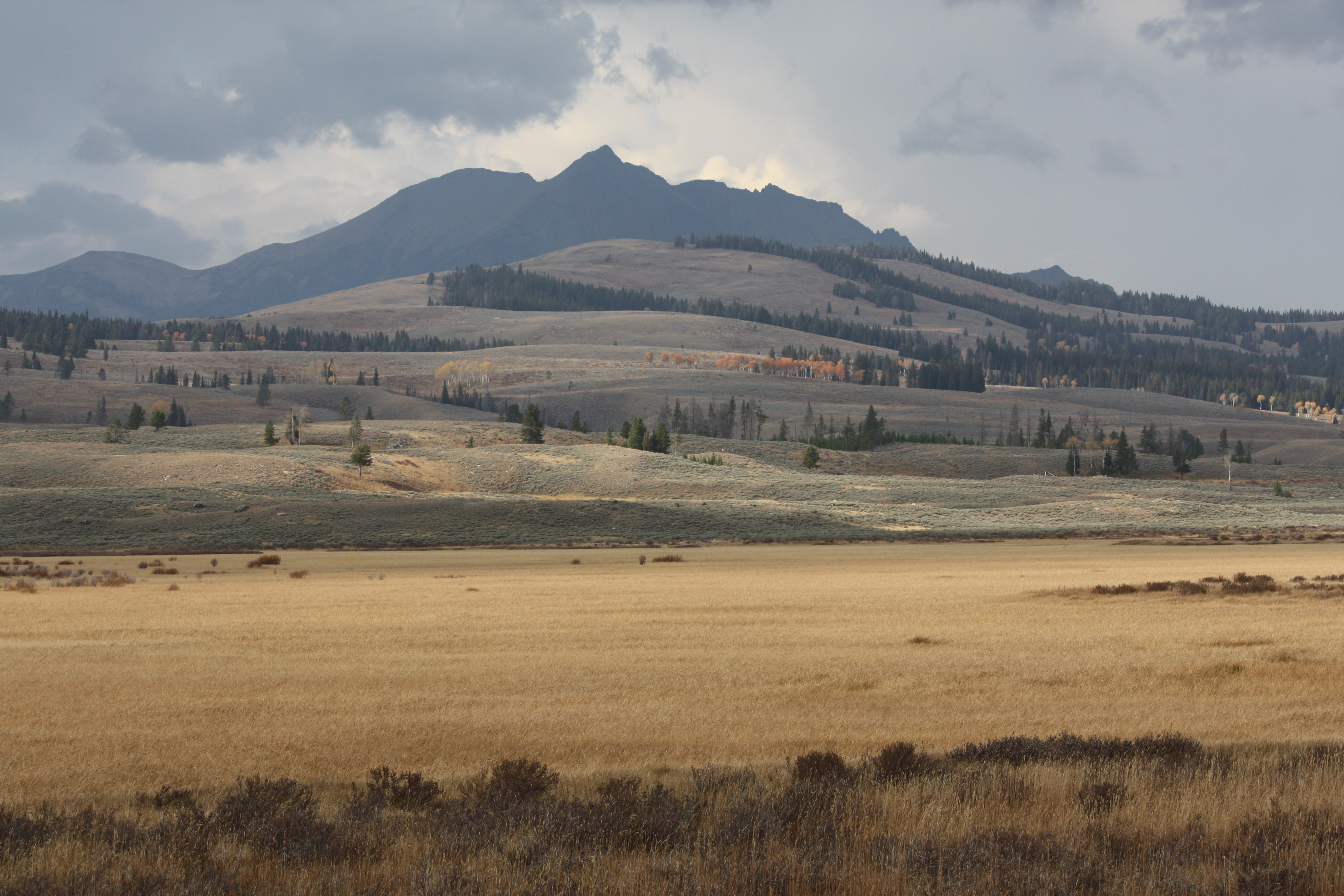
I can see forever . . . .

Nearing the north entrance of the park, late afternoon light on Electric Peak is quite lovely.  So many mountains, so little time.
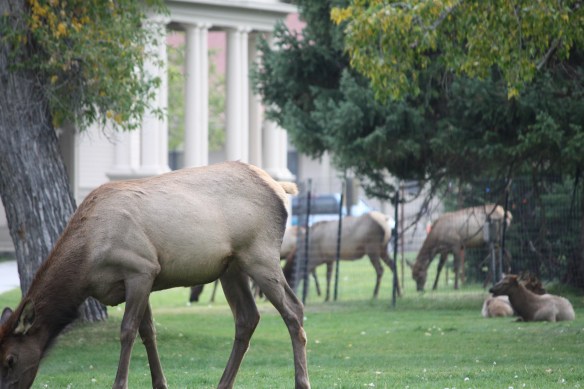
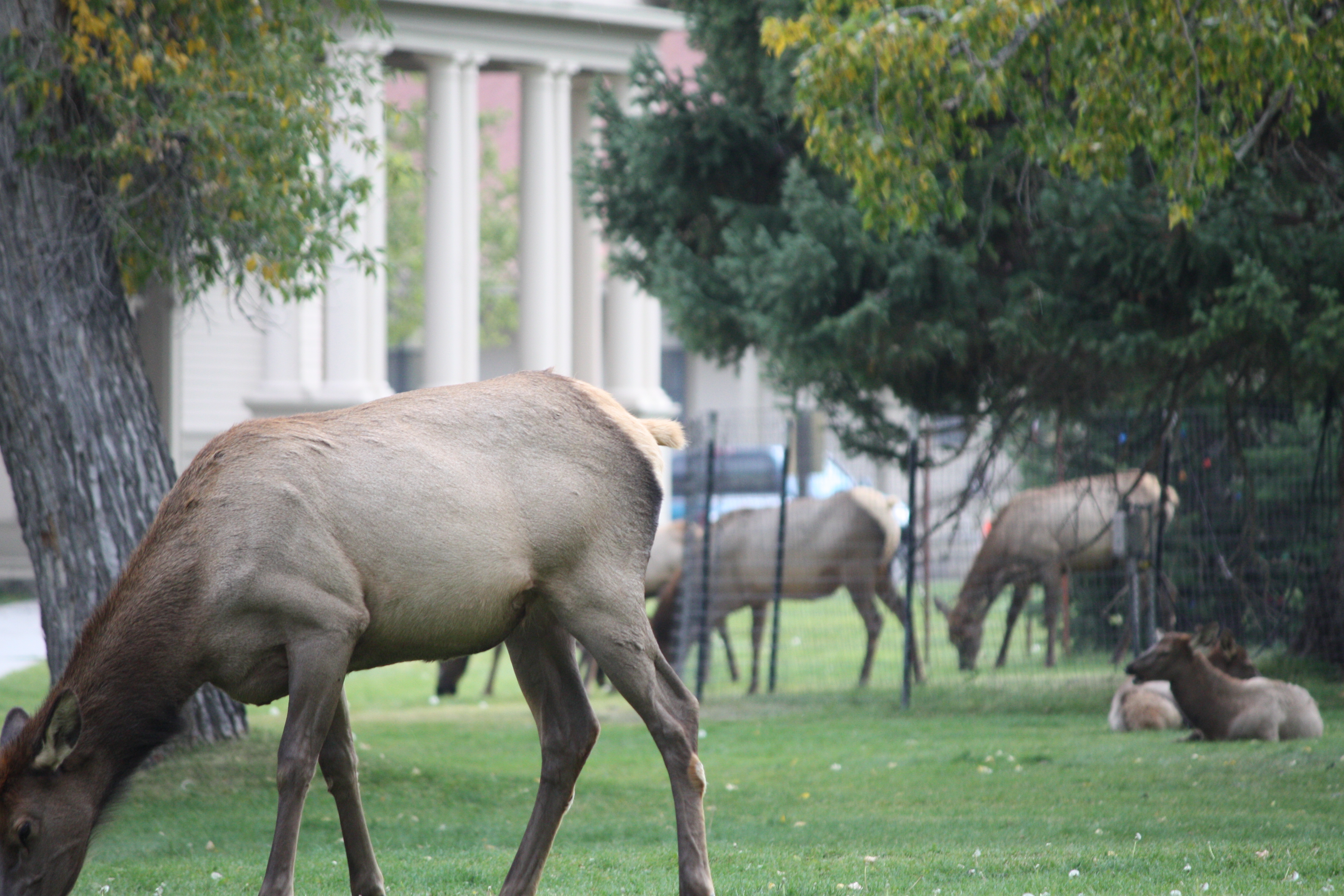
Elk for dinner? . . . .

Mammoth Hot Springs is the northwest entrance to the park.  Late afternoons will find a herd of elk moving in for cocktails and dinner.  We missed a shot of two great bull elk who were cruising the scene, but the cows were placidly grazing and hanging out.

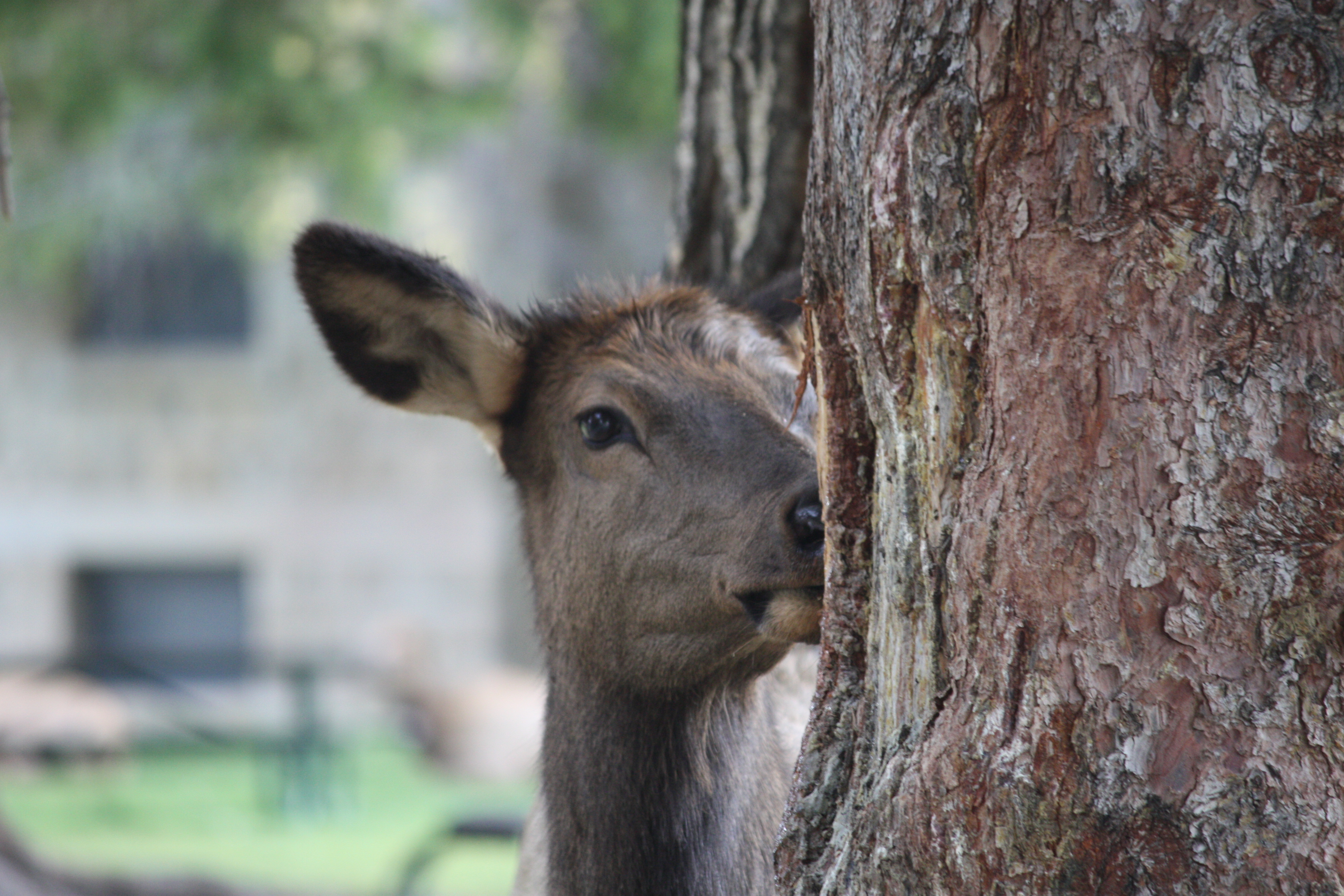
“Now you see me, now you don’t” . . . .

Peekaboo with an elk is good entertainment, as she kept peering from one side of the tree to the other.  Park rangers were a little nervous to have the elk commingling with the tourists, and kept warning everyone to stand back.  Just another day in the office!

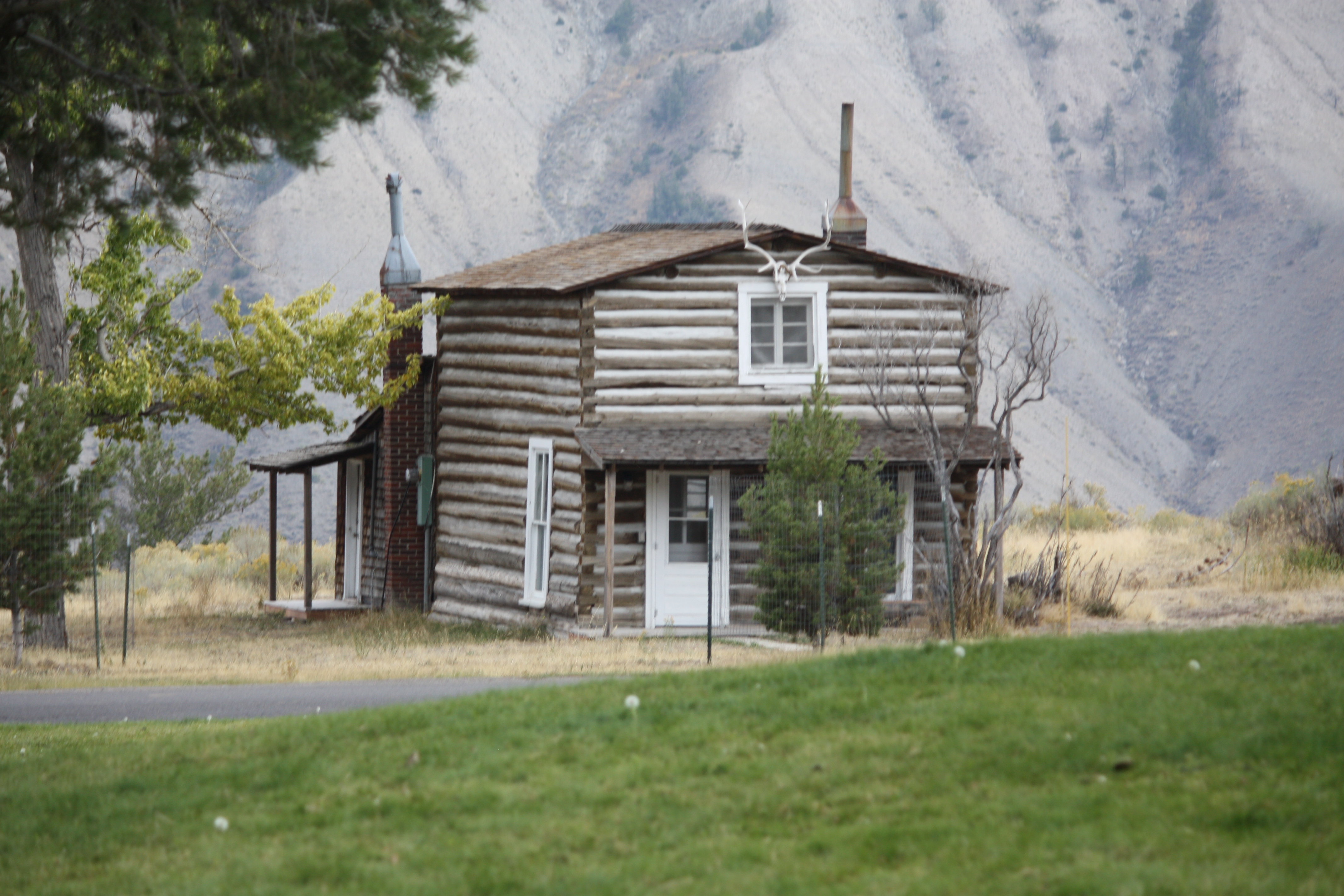
a little cabin in the wild . . . .

There are many memorable, historic structures at Mammoth, and this humble little cabin is our favorite, with the possible exception of the Roosevelt Arch.  Yellowstone is the world’s first national park and was established in 1872 by President Theodore Roosevelt.  The great stone archway that comprises the northeast entrance was dedicated to him.
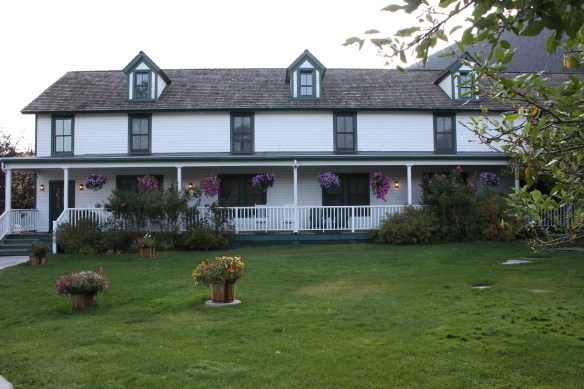
Great lodging north of the border . . . .

We left the park for a short drive to a truly unique retreat in the Absaroka Mountains of Montana.  Chico Hot Springs Resort taps into 112-degree water which makes for delightful bathing for weary bones and cramped muscles.  The hotel was built in 1900 and is listed on the National Register of Historic Places.  It combines Georgian-inspired architecture and warm Craftsman-style interiors, alongside a great swimming pool and bath house to “take the waters.”  Exceptional dining includes fresh vegetables grown in greenhouses heated by the hot water springs.
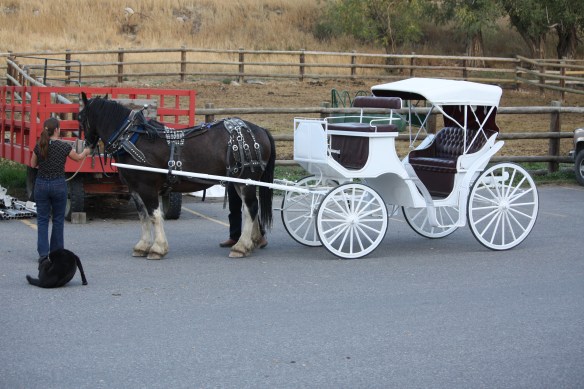
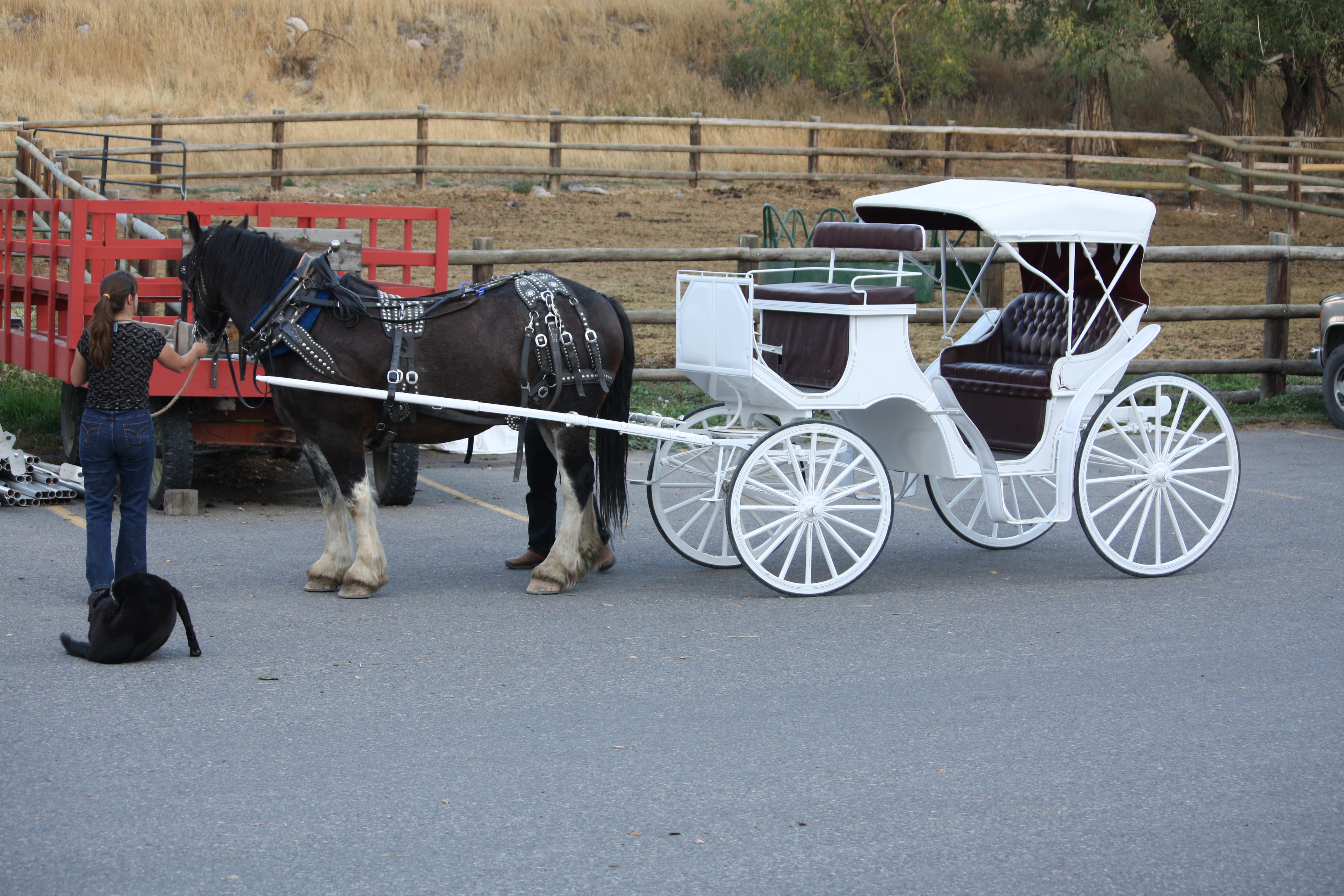
Carriage ride, anybody? . . . .

Horses have been an integral feature at Chico, and a carriage ride or trail rides are available to guests.  I don’t think the black dog is part of the ride, but he looks the part.

Can’t rollerskate in a Buffalo herd . . . .

The bison have taken the road and the cars have to fend for themselves.  They were in no hurry and dawdled along the roadway, but the drivers of these cars didn’t seem to mind.  We are back in Yellowstone National Park, driving toward the Lamar Valley.
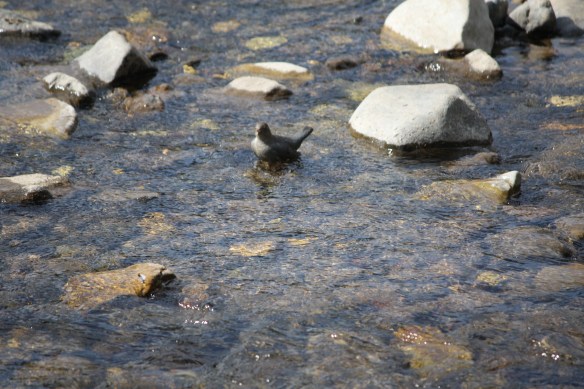
Ready for a dip? . . . .

An American Dipper (a.k.a. Water Ouzel) joined us for lunch along Soda Butte Creek in the northeast quadrant of the park.  Delightful to watch, these birds dive into the water and submerge beneath rocks to forage for food.  Usually found along rushing mountain streams, they have become symbolic of our autumn sojourns into the wild, as we have sighted at least one every year for the past three seasons.
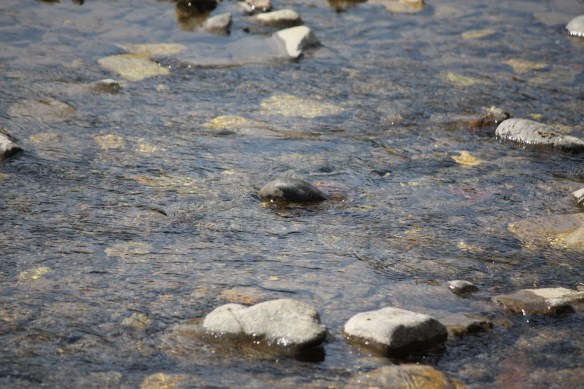
Underwater espionage . . . .

The dipper doesn’t seem to mind the icy cold waters as he trolls for lunch.  He darts in and out so quickly that all the physical activity must keep him warm.  The show lasted for about ten minutes, and my lunch grew stale while I tried to catch up with this delightful bird on the camera lens.

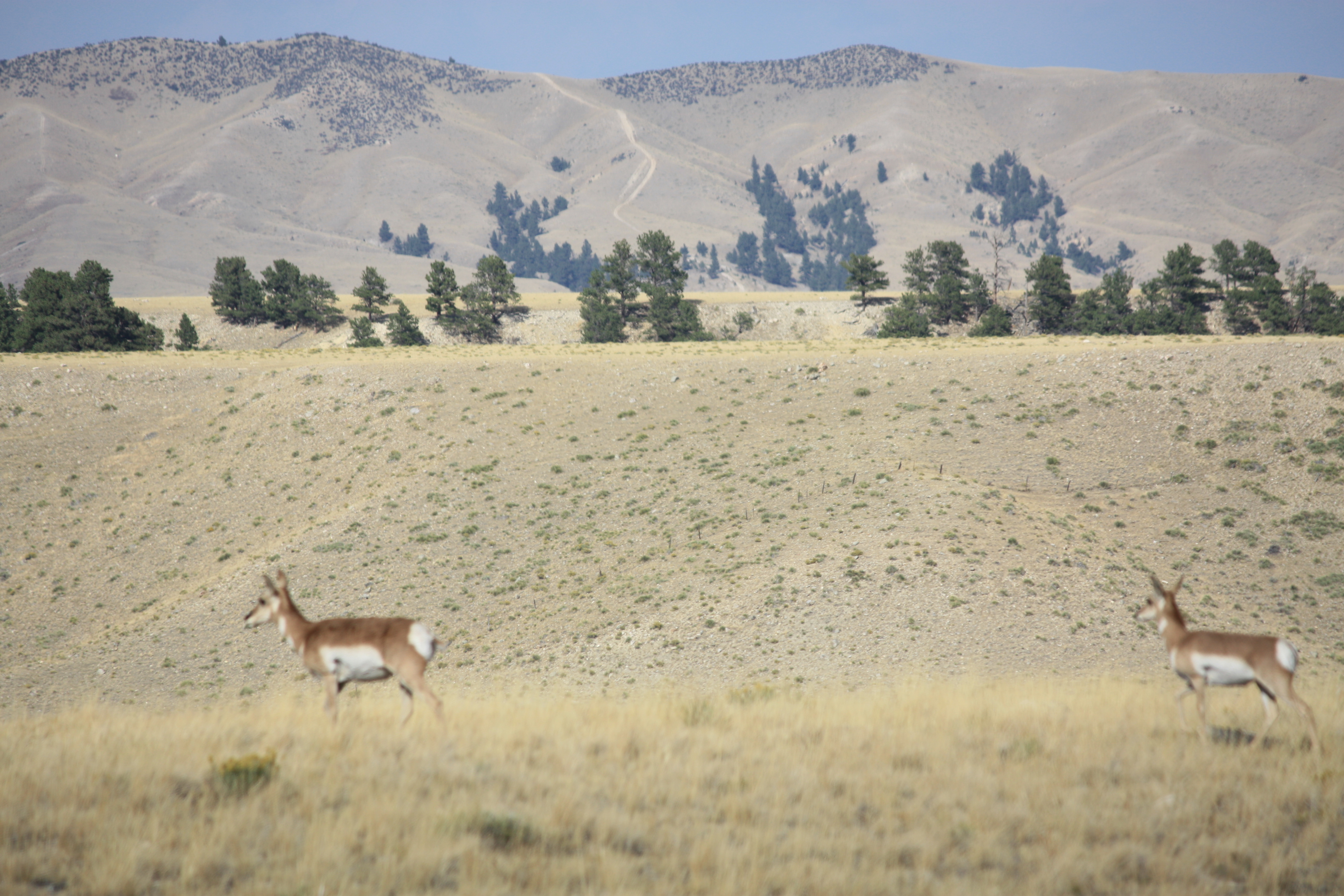
Always in a hurry . . . .

North America’s fastest animal, these antelope have run a complete circle around us and don’t seem ready to stop to think things over.
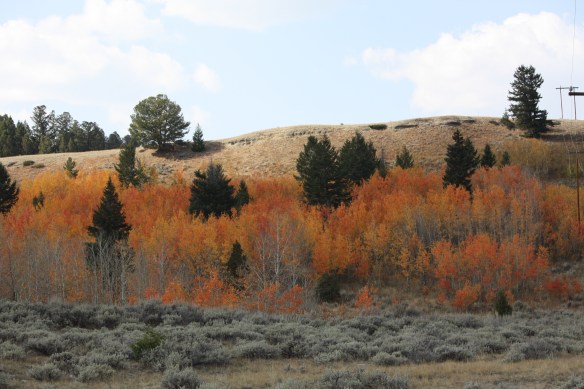
Autumn fire is aglow . . . .

The view from Chief Joseph scenic byway is spectacular and ranges from great valleys to the tall mountain peaks of the North Absaroka Wilderness Range.
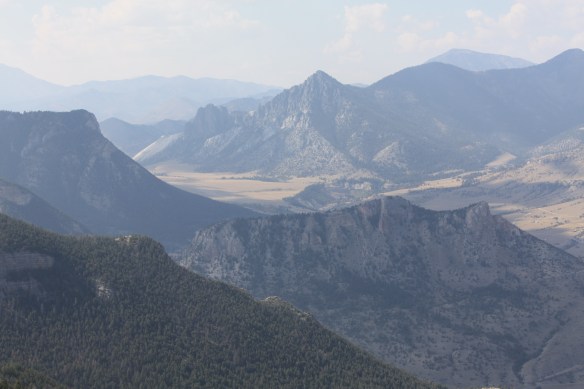
Shangri La of the West . . . .

This view from Dead Indian Pass overlooks the vast expanse of Sunlight Basin upper left and Clark’s Fork of the Yellowstone River below.  Named for a member of Chief Joseph’s tribe who was killed by U.S. Army troops, it marks a sad chapter in the history of the West.

The beginning of the end . . . .

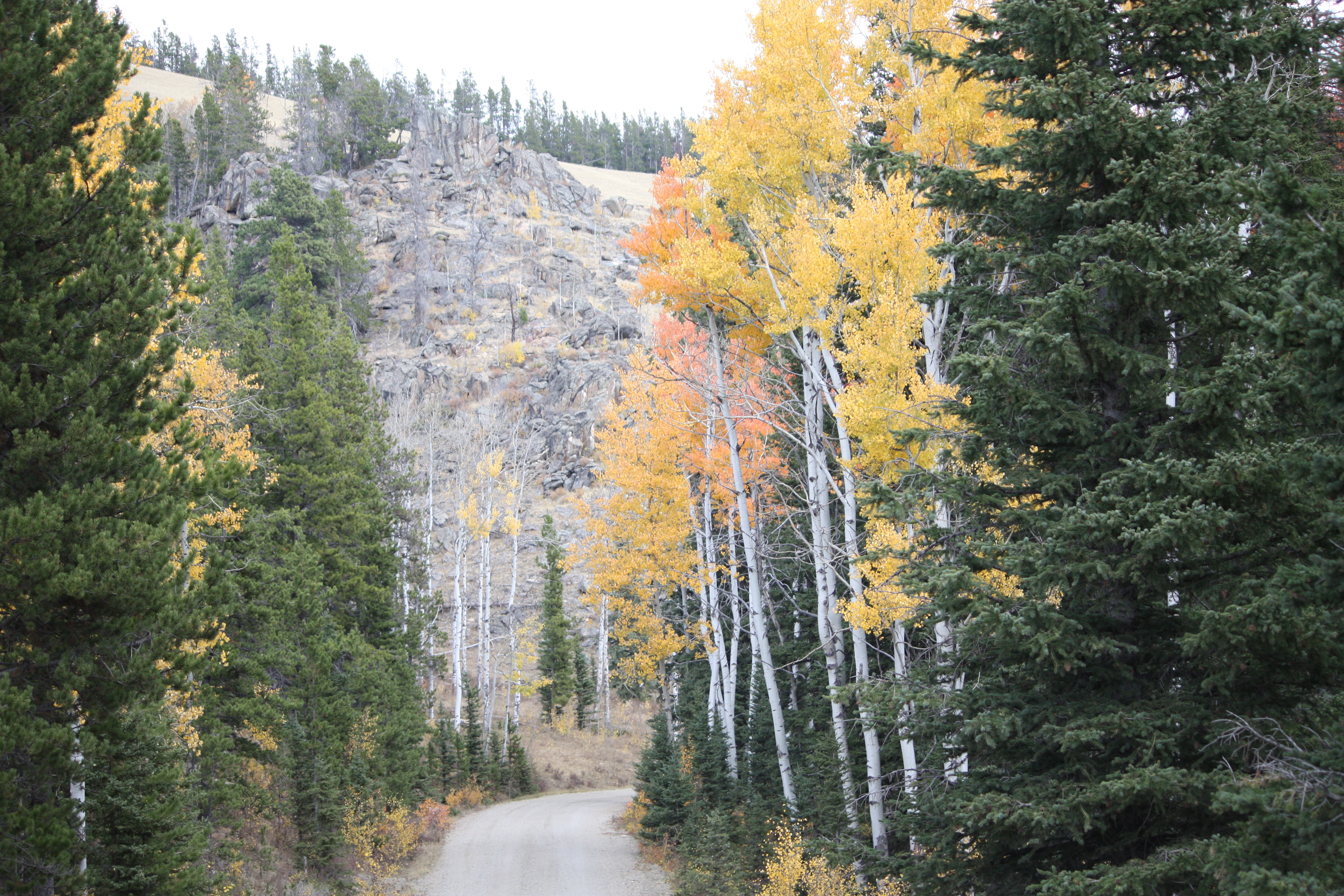
Our journey leads from Cody, across the Big Horn Basin, and into the Big Horn Mountains.  A favorite jeep road down the face of the Big Horns was a sheer delight, as the colors were incredible.

Aspens shimmering in the sun . . . .

We didn’t mind the bumps, rocks, washboard and loose gravel of the road into Crazy Woman Canyon.  Actually, the road is in better condition this year than in many years past and we dropped down to view wonderful fall colors and wildlife.

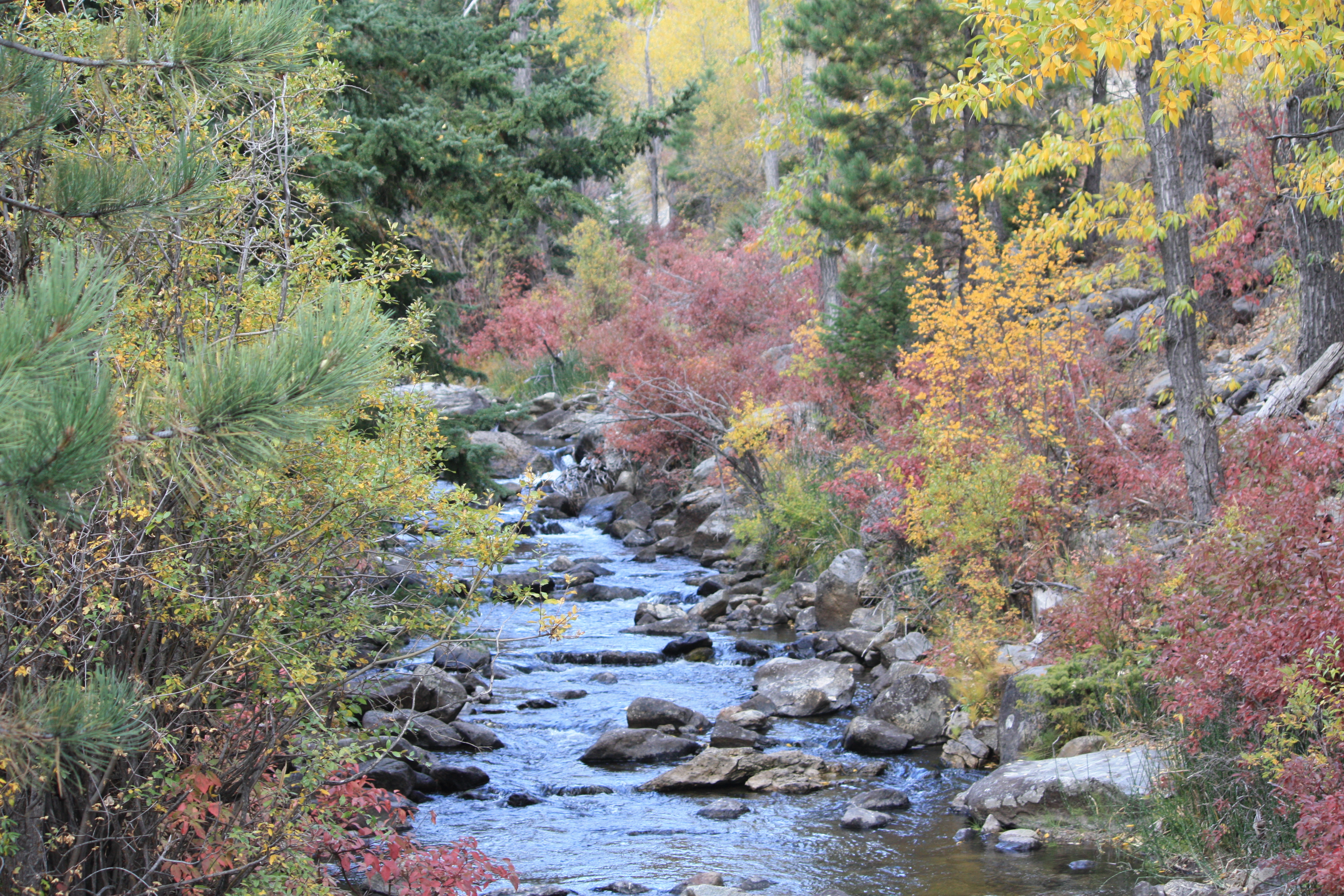
The rush and roar is no more . . . .

The sounds of Crazy Woman Creek as it winds along the roadway have always been part of the thrill of this canyon drive.  In the spring and early summer, it rages and roars from melting snows as it rushes down the mountain.  This year a prolonged drought has reduced the creek to a much lower stream-flow.  It is still wonderful to hear and see, however.
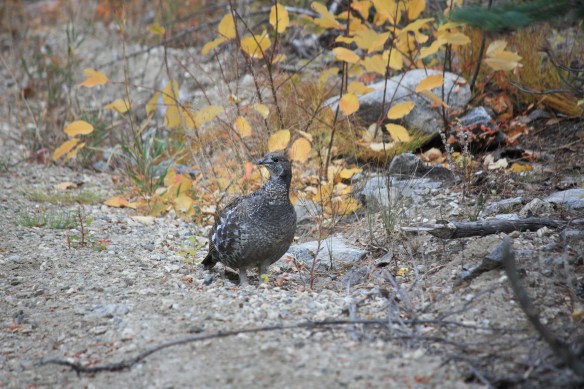
“What is it you want to talk about?” . . . .

A blue grouse seems determined to hold the road for awhile, and we couldn’t believe our good fortune that he waited around for our camera.  Highly sought for hunting and eating, it seems a better course of action to just take their picture and let them enjoy life.

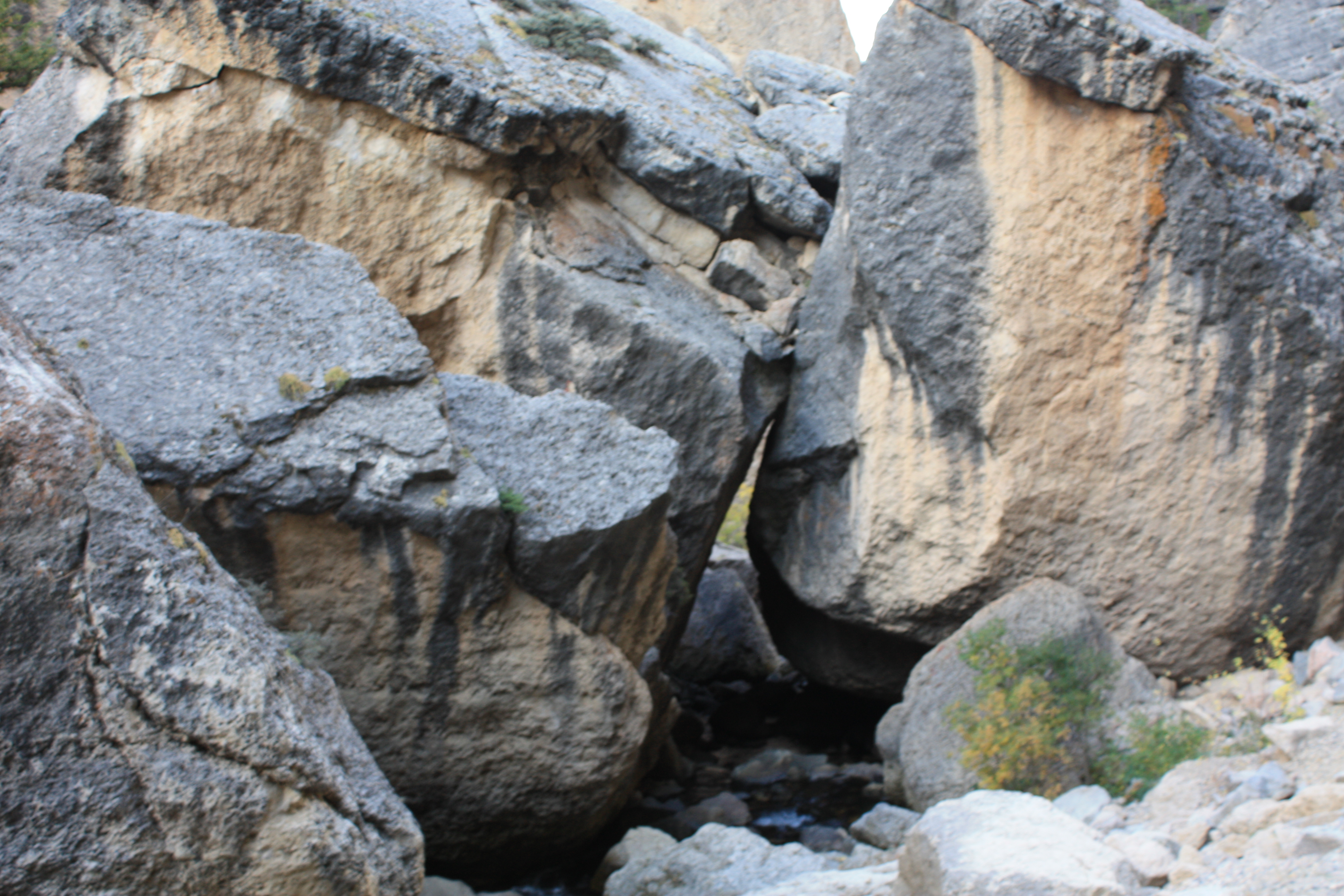
The rock piles hold steady . . . . for now

Giant boulders the size of a barn have tumbled to the base of Crazy Woman Canyon and the creek rambles in and out as it rushes to the canyon floor.  The one-way road narrows at this point, but we find a little spot for a pullout.  Meeting oncoming traffic in the canyon is always a challenge, but this day we met only two vehicles coming up and we seemed to be the only vehicle going down.
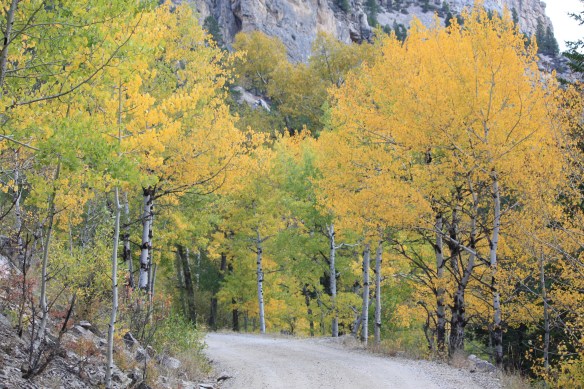
Autumn leaves, anyone? . . . .

By now we are drunk with spectacular autumn colors, but a few more won’t hurt.
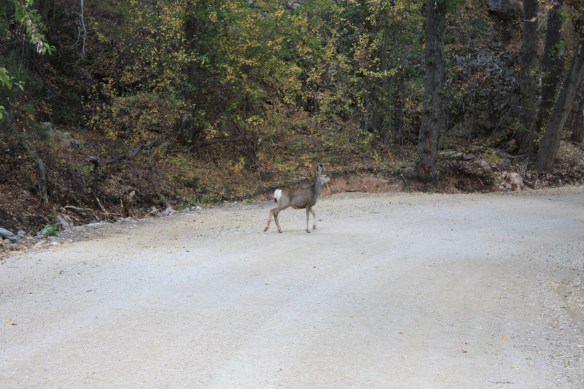
Deer crossing . . . .

This young mule deer darted across the road in front of us, then hesitated.  She didn’t seem to know whether to retreat or keep going and she finally opted to leap down into a rocky gulch and scramble up the side of the slope.

Here we are without fishing poles! . . . .

Dad never liked to fish this stream.  He said there were no fish here, however we suspect the boulders, willows and rugged terrain had something to do with it.

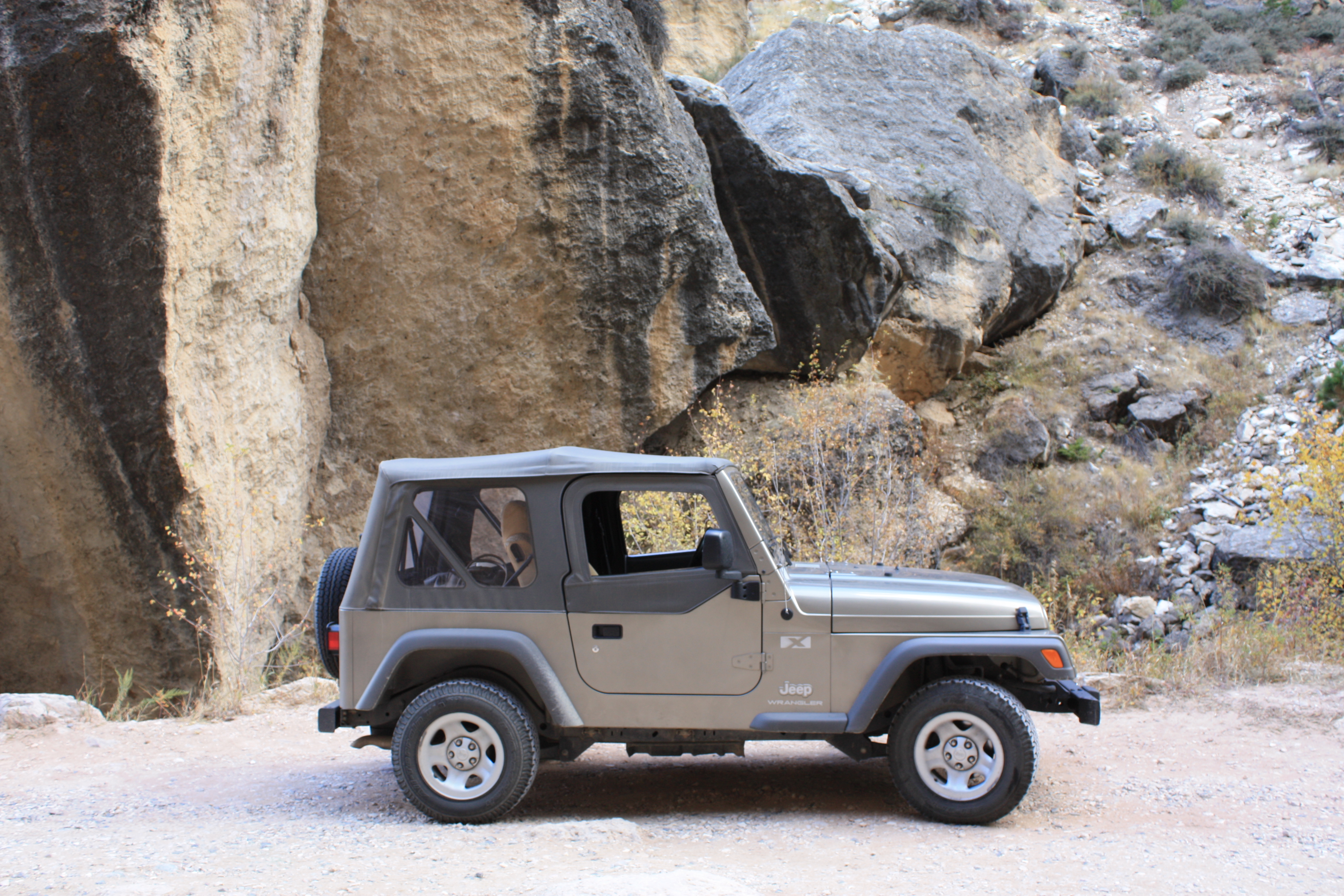
Willy takes a break . . . .

To lend some perspective to the size of the boulders, a jeep helps.  To have a great journey, a jeep helps.  To get great mileage, comfort, and maneuverability, a jeep helps.  And to get an outdoor experience (doors off, roof rolled back), a jeep REALLY helps.  Five days, 1000 miles, and seemingly endless beautiful vistas–Willy made it so much fun.

And did we mention wine? . . . .
Snake Fence – Who Knew?

curbside critic says it is a “snake” fence . . . .
An aging pile of logs stacked alongside the boat house seemed the perfect material to create a stacked log fence.  The logs were a bonafide surplus, since it would take the next twenty years to burn them in the pot belly stove inside our mountain cottage, and they likely would moulder and rot before we got around to burning them.  They had developed a lovely silver-grey patina that would blend into the landscape, and would create a boundary fence that would appear to have been erected a very long time ago.  So, to work!

Having no blueprint or instructions, we began dragging the logs from the back of the property to the front, where the fence would begin at the road and travel up the driveway. After dragging twenty or so logs, we voted to “give it a rest” and sort out how to begin.  The first step was place a log up on the “saw buck” and cut two-foot sections that would be used as support to hold the logs up off the ground.  The supports had to be notched, and while a chain saw isn’t the best tool for the job, it worked–finally–after the chain came off in protest and caused a considerable delay and many expletives deleted.

Next the chain saw had to be transported to the job site, with lengthy extension cords, to notch the logs so they would stack.  It isn’t quite as easy as Lincoln Logs – does anyone remember those?  We had no tools to measure with, and eroded at least a foot of topsoil dragging and re-placing the logs to try to get  the proper angle of repose.  Many trips were made up the hill to “eyeball” whether the logs pointing in each direction were parallel.

A neighbor stopped to watch quietly for about an hour as we struggled, sweat and swore.  Then he abruptly decided to take his leave, but not until he informed us we had a crooked log that needed replacing in our “snake fence.”  Of course it was on the bottom and required dragging another log from the back of the property over the hill to the front, and re-positioning five or six other logs that were stacked over the top of the crooked one.  Thanks, Charlie!!!

fence looks as old as the view (almost) . . . .

At the end of the day, we had utilized all our logs and the fence was taking shape.  There are many more logs out back, and we vowed to build another section as soon as we have recovered from bruises, scrapes and aching backs! Oh pioneer!