A Day In The Life Of Fannie and Freddie

The birds need to get busy and scatter more seed! . . . .

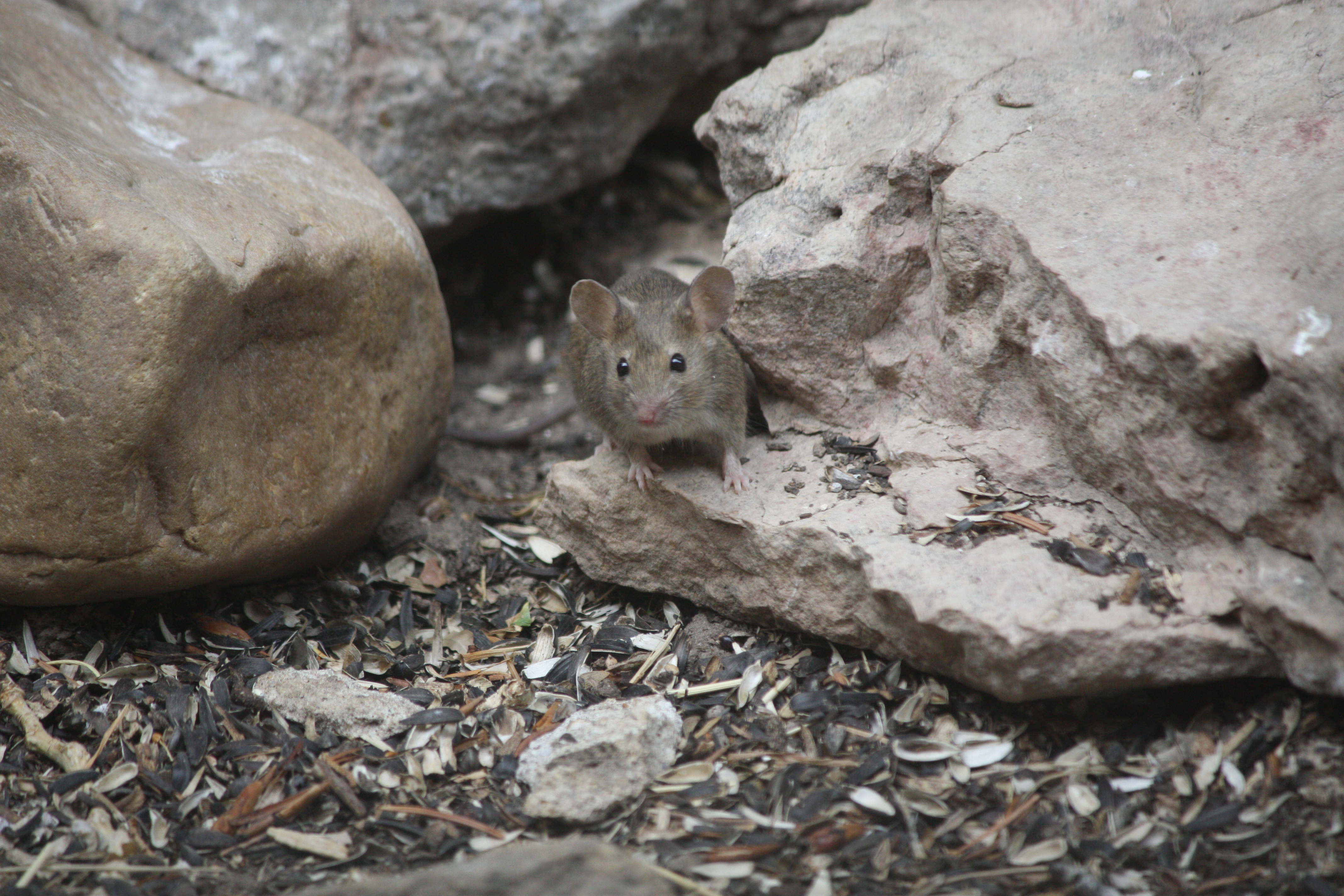
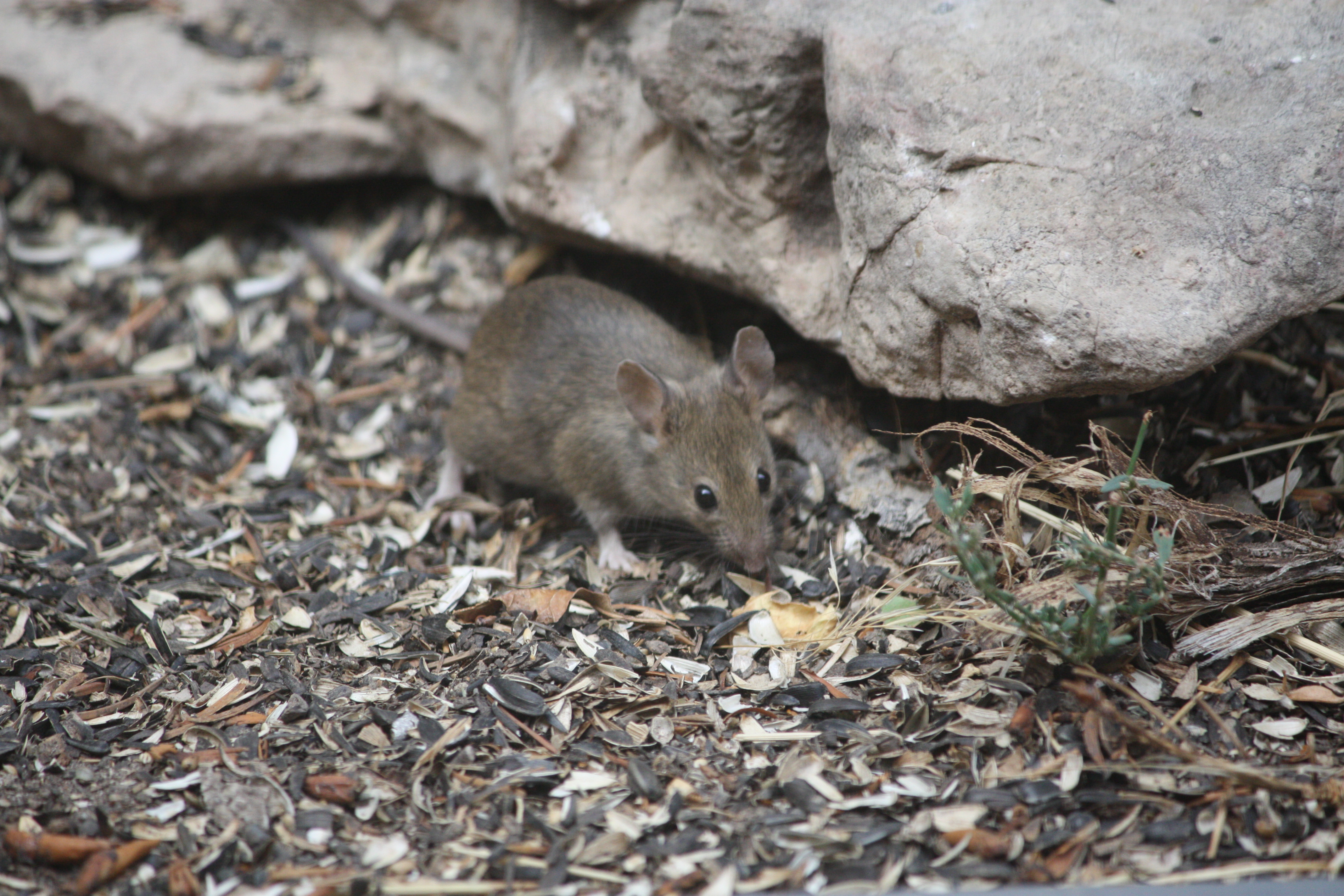
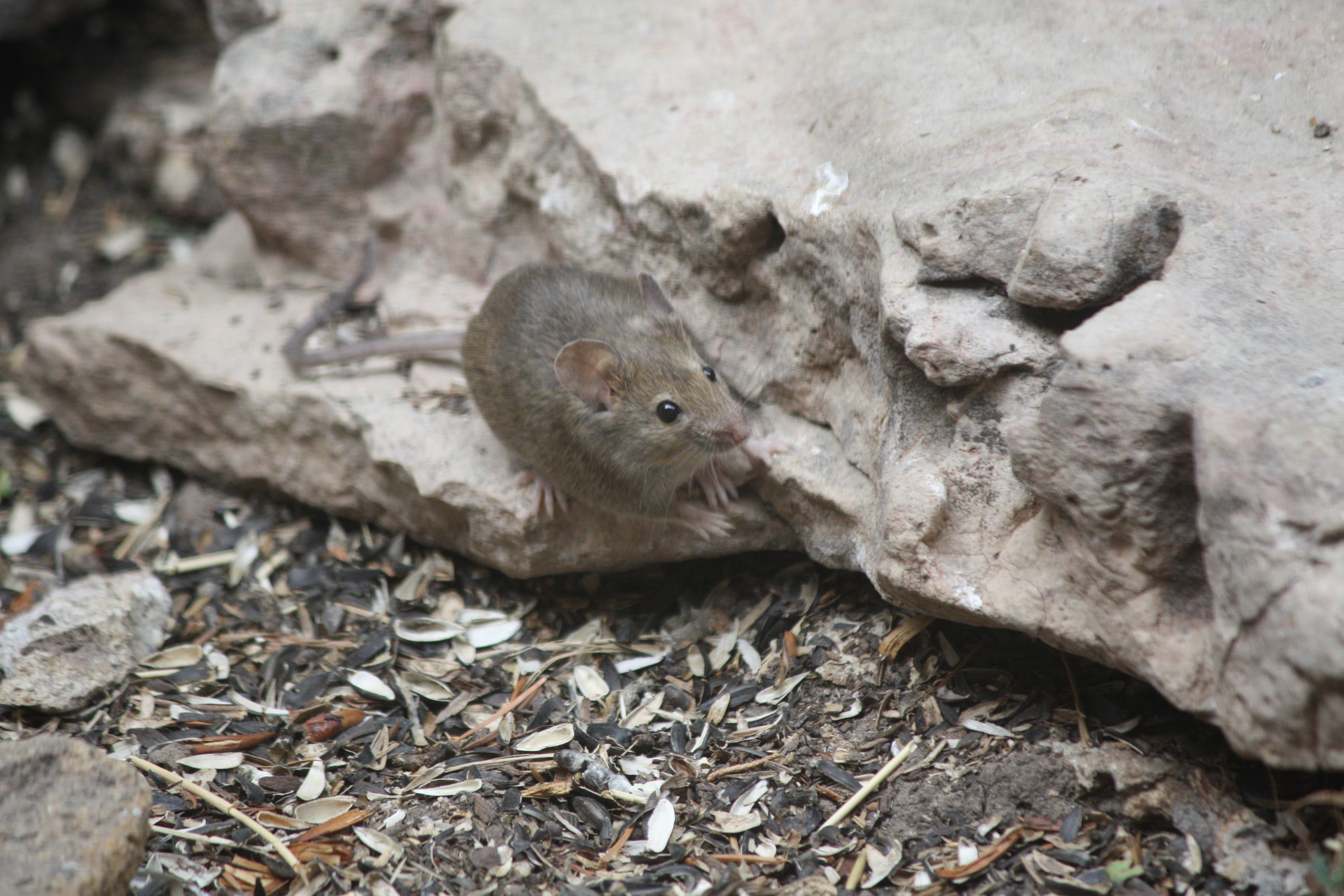
Freddie the field mouse and his mate, Fannie, have set up housekeeping under the rocks beneath the bird feeders.  A perfect location for catching a bounty of spilled sunflower seeds, the happy couple are cool and comfortable in their new digs.  There are, however, a few challenges.

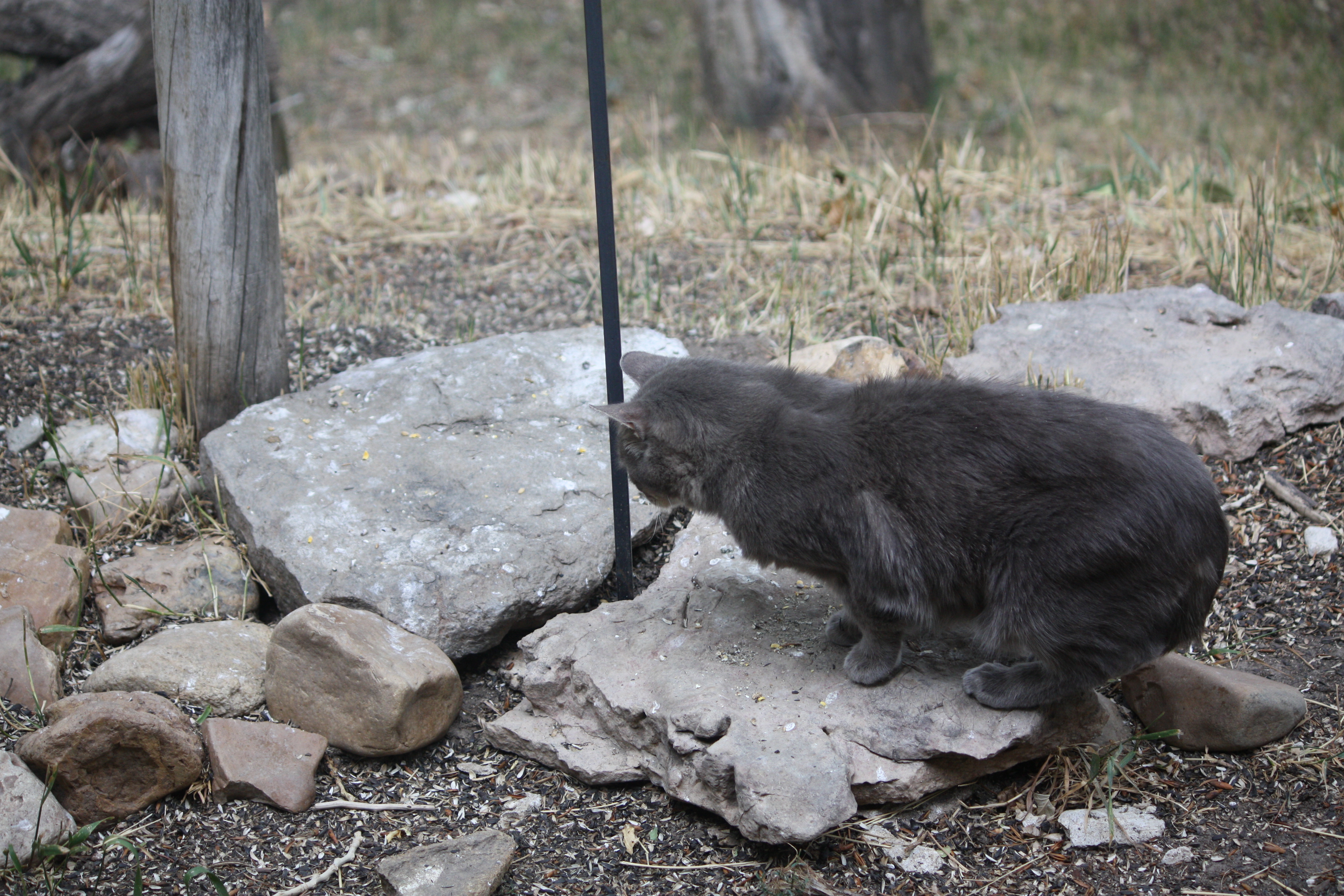
I’ll just wait here a little longer for them to appear, and then lunch! . . .

Mr. Mouse, the family barn cat, has spotted the activity around the bird feeder and crouches over the entrance to mouse heaven as he waits for an opportunity.  He waits, and waits, and waits . . .

Guineas are the most inquisitive, nosy creatures in the yard, and this one cannot resist interfering with Mr. Mouse’s quest to catch Fannie or Freddie.  After a peck or two and noisy squawks from the guinea, Mr. Mouse leaves in disgust to search for another opportunity.

Whew! Glad that nasty cat and the guinea are gone – now back to work . . . .

Fannie checks for the all clear and scurries back inside to alert Freddie that if there is going to be dinner on the table, he had better get back to his job of gathering sunflower seeds!

These pesky seeds are spilling everywhere! . . . .

An inverted pinon jay dives between the rocks for a seed he is trying to crack open with his long beak.  While he’s at it, he’s scrounging for the stash of seeds Fannie and Freddie have been collecting, and there is going to be trouble in mouse haven.  What is a mouse to do?

Don’t you dare darken my doorway again, you big bully! . . . .

It looks like a Mexican stand-off, and Freddie is determined to hang onto his turf.  The pinon jay will just have to try to spring a few seeds from the bird feeder above, and a few will likely shower down on mouse haven.  Mutual cooperation in the wild kingdom leads to benefits for all!

My oh my, what a bounty! . . . .

And so, another day in the life of Fannie and Freddie. Stay tuned for more adventures in the wild kingdom!

Tilly The Filly – Three Months

My spots have grown, and I’ve added a couple . . . .

Tilly has grown by leaps and bounds and at three months, is fast catching up with Tia, her mother, in size.  She loves to be scratched, stroked and rubbed in all the right places, and was a joy to spend time with recently.  She is gentle, calm and has a good attitude toward her training.  What more could one ask for in a horse?  Oh, and she loves to run around the pasture with her older half sister, Pip.

All this attention makes me hungry . . . .

Still a baby, Tilly will nurse until six months of age at which time she will be weaned and come home to Wyoming.  We are counting the days!

Where is my bonnet – the sun is so bright! . . . .

The “girls” bid us farewell as we leave them in the paddock.  Tia has done a great job with her foal, and we couldn’t be more pleased.  Until we meet again, Tilly!

Guineas Galore – The Story of #10

Missing in action for over a month, I’m back! . . . .

This guinea hen was identified as #10 late in June when she disappeared from sight.  Our evening headcount came up short, and a frantic search began for “#10” as she became known.  Rosie the guinea hunter almost always finds her girl and we have routed guinea hens from their far-flung nests on numerous occasions.  This time was different.  We tromped through the sage, peering into old rotting tree stumps and willow groves, and fanned the tall grass to find #10, to no avail.  We searched all the outbuildings and sheds, as well as the garden, where our last guinea hen managed to hatch five babies safely on June 9th.  After three nights of searching, we gave up and decided #10 had met up with a coyote, bobcat, racoon or heaven knows what else that lurks “out there.”  There was no sign of her during the day, sneaking into the coop for food and water, nor did we detect her anywhere at night. Survival outside the coop is unlikely.  Rosie’s nose doesn’t fail.  Or does it?

We tried to comfort ourselves over #10’s loss with the knowledge that five babies were growing and thriving in the goose house we converted into a nursery for the occasion.  Our little guinea flock would continue to thrive somehow in spite of all the obstacles!  And then one morning early in July, we heard a guinea hen outside our bedroom window, squawking her loudest to get our attention.  It was 5:30 a.m. and sleep befuddled brains tried to sort out why a guinea was outside our window when we had locked them all up the night before some distance away.  I peered outside and a guinea hen was walking slowly through the grass, stopping now and then to crouch and spread her wings as if to rest. She was heading to the guinea coop and pen east of the back yard, but going at a decidedly slow pace.  And then I saw something else flowing along underneath her feathers. Numerous little legs– like orange spokes on a wheel– were carrying her along.  It was a very cool, damp morning following a brief shower the night before, and #10 stopped intermittently to warm her babies.
Hurry through the gate, we’re almost home! . . . .

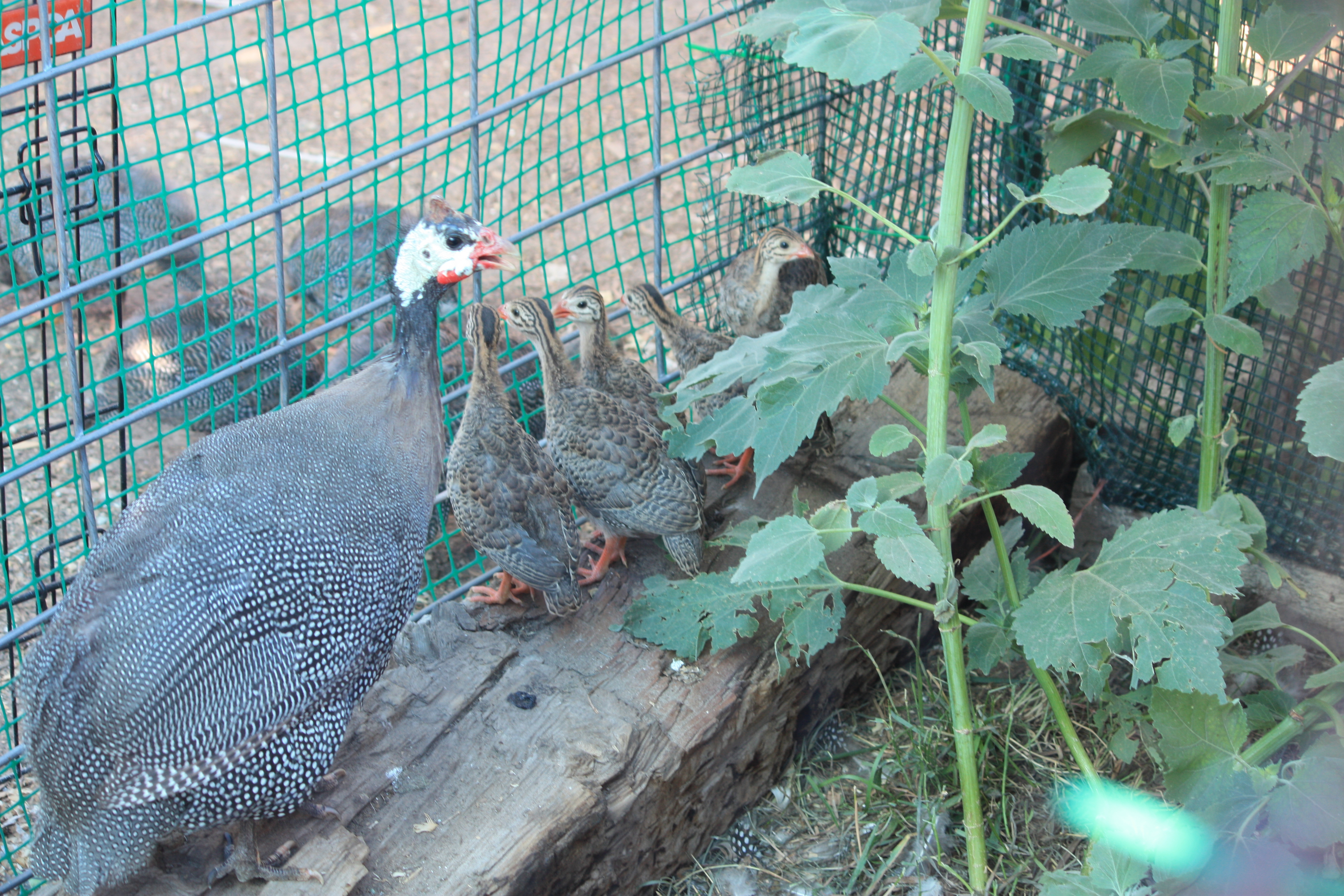
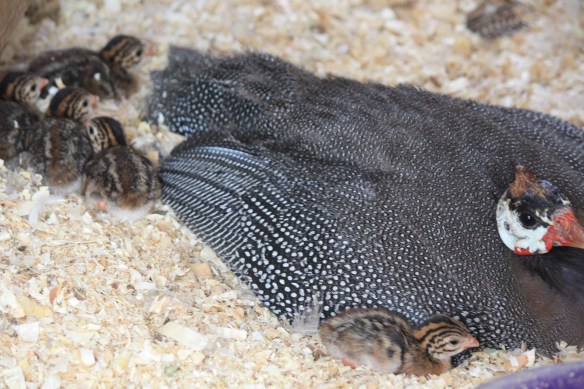
Six little tiny guineas, not much bigger than bumble bees, made it all the way from the nest, which had to be down in the creek bottom somewhere north and west of the house, all the way across the back yard, and now under the gate to home base just a few feet more.  Only hours old, they have covered approximately 1/2 mile and endured all sorts of challenges that we can only imagine.  No sooner did they make their presence known, than we gradually became aware that Rosie had been barking frantically and circling an old giant cottonwood down in the very creek bottom where #10 had recently departed with her brood.  Rosie had treed a very large raccoon ( much to the consternation of the raccoon), who likely had planned to raid a guinea nest for eggs for his breakfast.

We had no place to put #10 and her keets, as the current nursery had five occupants only three weeks old. We had allowed their mother hen to return to the flock, as she became very stressed being “cooped” up with her brood (hmmmm!) and these five were doing very well on their own in the goose house.  As we milled around in hopeless confusion, Neighbor Tom arrived in his golf cart to observe the early-morning pandemonium.  After a brief palaver, the men determined that the best course of action would be to dispatch the raccoon (at least that was an easy decision to make, since he was too big to fit into our trap and wasn’t likely to be talked down out of the tree).  I was left to sort out what to do with six squirming, darting keets and a stressed-out guinea mom who wanted someplace to go, now!

I had just cleaned and re-organized my garden shed after raising four baby geese in it, and   while I hated messing things up (and what a mess!) we decided it was our only recourse. The rabbit cage would be too small for #10 and her keets, the sheep trough would be large enough but would not fit in the shed, so it became apparent that #10 and her keets needed the goose house nursery and the five keets-in-residence would have to relocate.  Neighbor Tom returned in his pickup with a large wire dog kennel that just barely made it through the door of the garden shed, and after a furious flurry of flying frightened keets, we managed to contain the five and shove the kennel into the shed.  All but one.  There is always one who refuses to cooperate.  He wriggled out between the bars, (I say “he” because only male guineas exhibit such contrary behavior) which seemed impossible, and was darting about the shed, hiding behind rolls of weed barrier, snow fence, barrels of grain, and all the detritis of a garden shed.  Life outside the dog kennel would be brutish and short, so I had no alternative but to re-capture the escape artist and stuff him back into the kennel.

The garden shed has a sloped roof, and while I can stand on the south side, I have to crouch on the north side where the ceiling drops to somewhere between 3-4 feet.  It was constructed circa 1930’s as a poultry brooder house and the design was “depression-era short-on-lumber.”  As I rummaged behind flower pots, window screens, bags of fertilizer, et al trying to catch the elusive keet, I lunged for him and caught him by the wing, standing up prematurely and banging my head on the rafter above me.  The keet flew out of my fingers and I had to start all over again, in a somewhat dazed state.  I went through similar forms of torture three more times before he finally decided he had enough and stayed in the dog kennel where, in a few days, he grew too large to crawl out between the bars.

But I digress.  Meanwhile, #10 is still awaiting some decision about where to take her hatchlings, and as they scurry and dart about, she is growing more agitated.  We cornered her along the garden fence and decided we would grab her, catch the keets, and deposit everybody into the recently vacated goose house.  Ha!  Catching her was tough enough, but the tiny keets crawled under the garden fence and lodged under an old kitchen sink cupboard.  After some heated discussion, we agreed we had to lift the sink carefully to avoid crushing them, then pounce in six different directions to capture them.  Neighbor Tom was the fastest with the most catches (5) to my (1) and we tossed them into a red plastic bucket. (I, of course, had an excuse for such a low capture rate, as my experience in the garden shed with the other five left me somewhat incapacitated.)  And of course,  my husband was left trying to hold the sink!
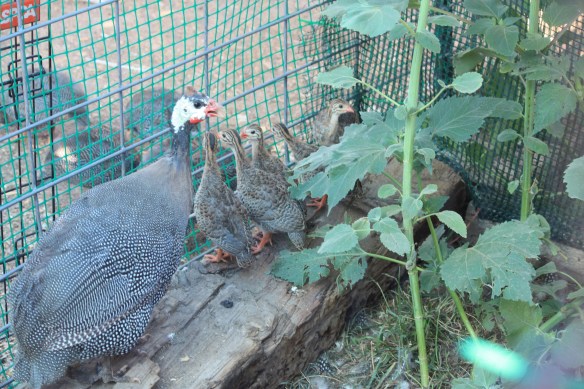
The glory of motherhood . . . .

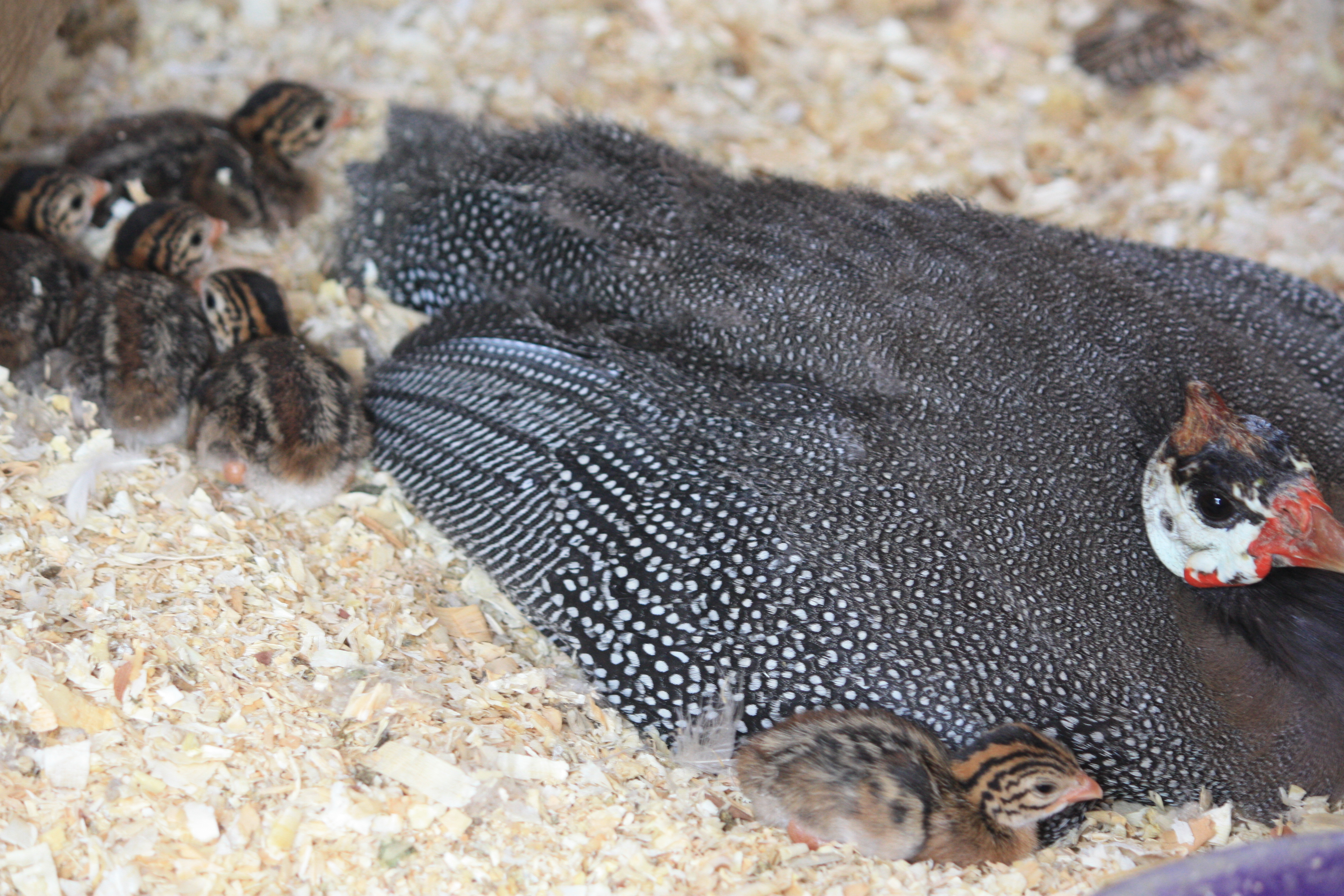
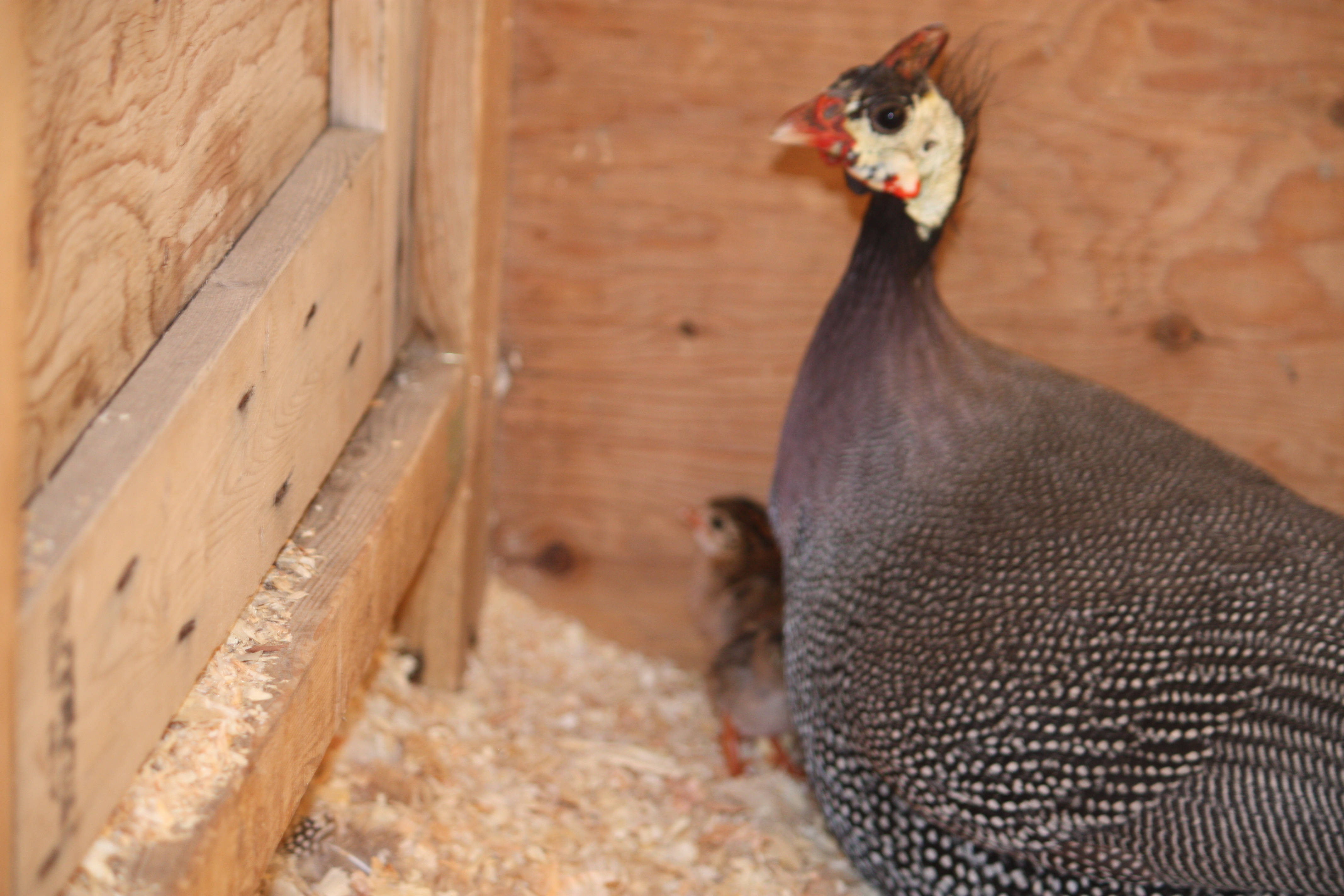
#10 is a model mother, and after her month-long travail out in the wild tending and protecting her nest, she and her six keets are thriving.  We are still slightly amazed that she pulled it off, and have decided that, genetically, #10 is a champ!  The five garden shed residents (in the foreground)  have just graduated to the adult pen, where they were picked at unmercifully this morning and had to retreat to the dog kennel for protection.  We have to watch and pray that they will be accepted and be fleet of foot until it happens.  By now,you’re probably wondering why there are only five little keets in the above photo with #10. THERE IS ALWAYS ONE WHO WILL NOT COOPERATE!
Wyoming Sunsets – Like Nowhere On Earth

So many lovely layers to choose from . . . .

Walking at dusk to change the water on some new cottonwood trees, and noted this gorgeous sky.  Had to run back to the house for the camera.  Sunsets change rapidly and I was able to capture the best of this before it began to fade.

The greatest art can be found in nature . . . .

After shooting the sunset, I was amazed to look directly up into the sky to find yet another unbelievably beautiful layer of color distinct and apart from the horizon where the sun was going down behind the hills.

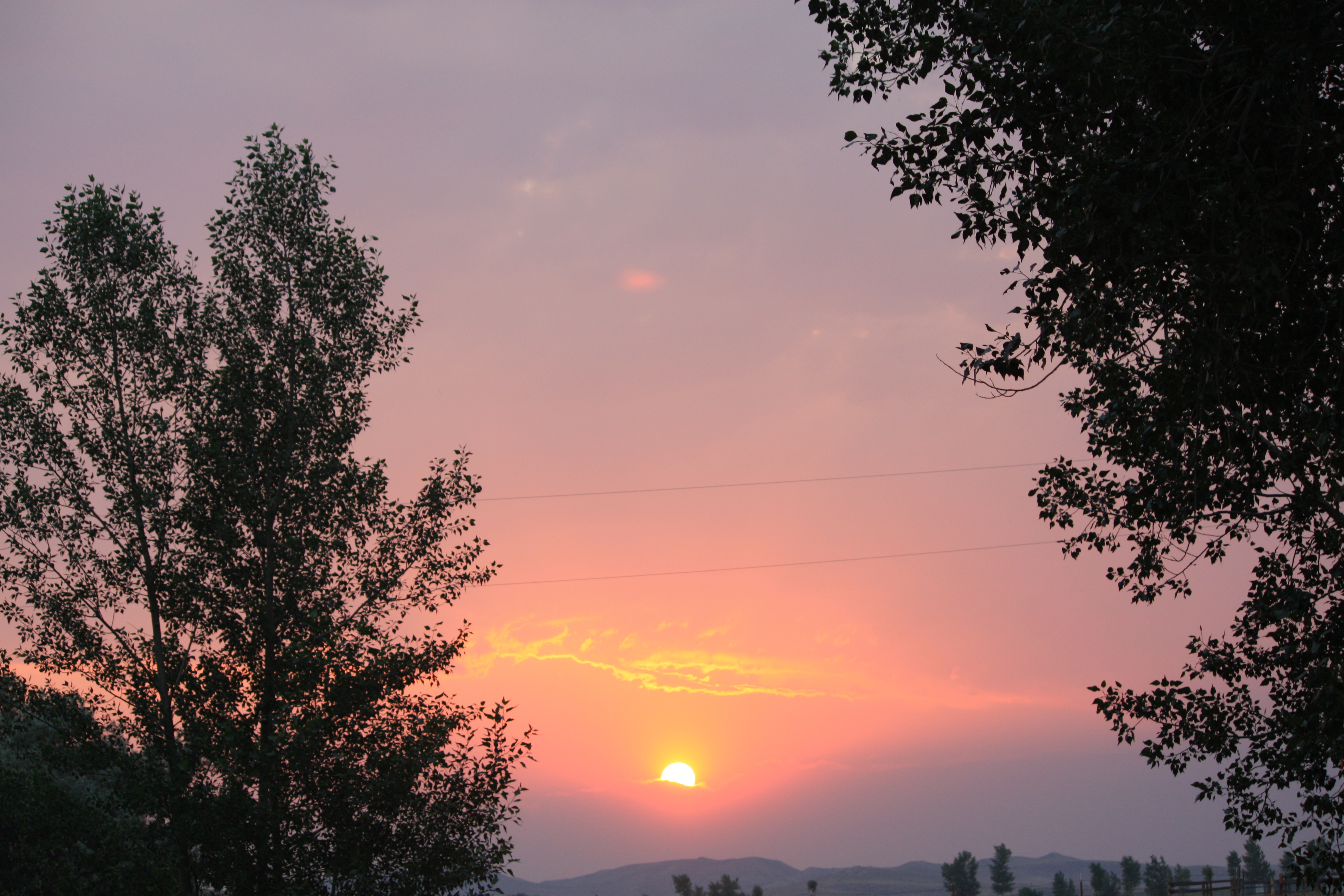
The sky aflame . . . .

Several major wildfires filled the sky with smoke early in July, and the sun is shrouded in smoke.  It is rare to capture a fiery ball in the western sky, as the lack of humidity and normally clear skies results in a more diffused sunset.

Bill the Prairie Dog

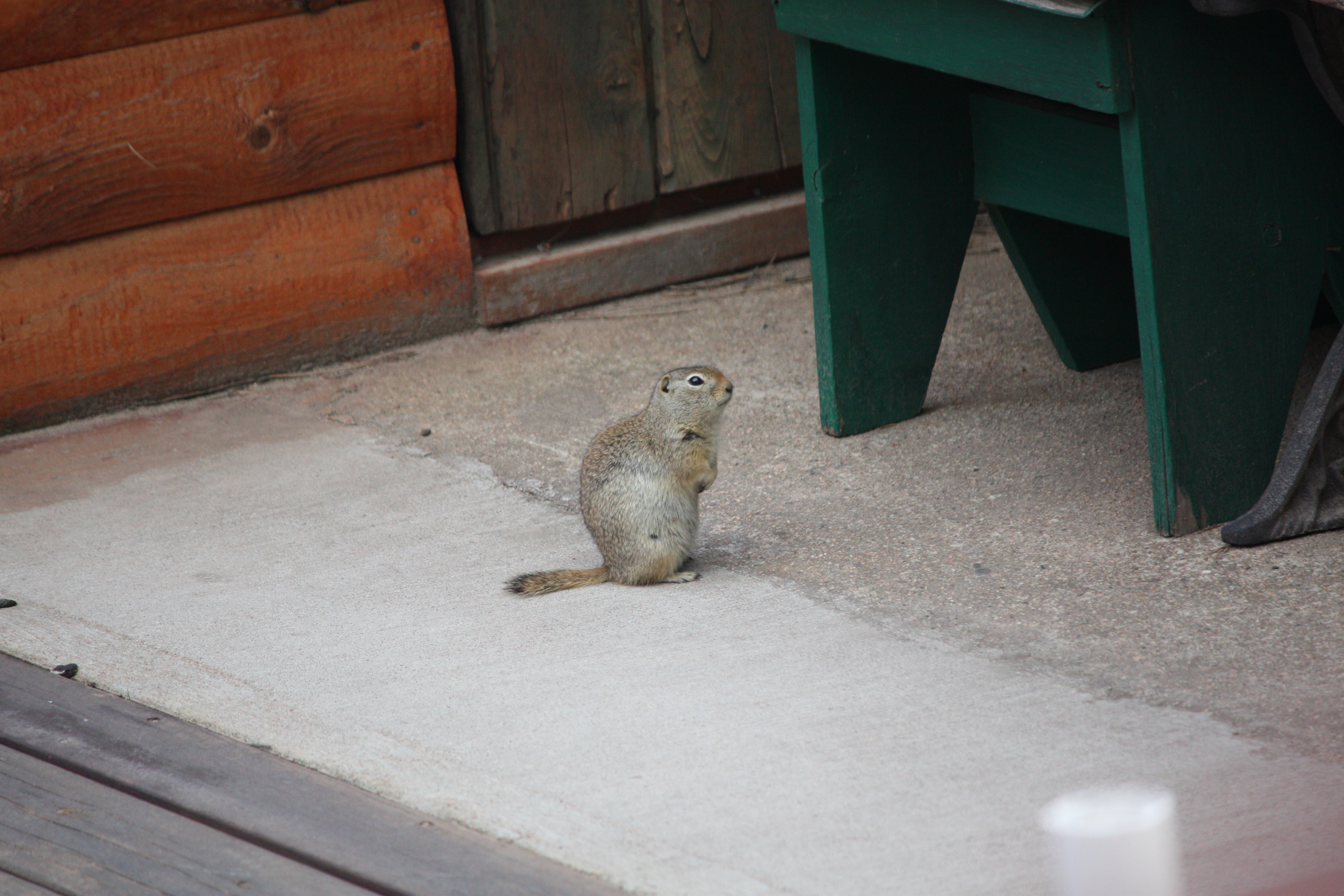
How nice to make your acquaintance . . . .

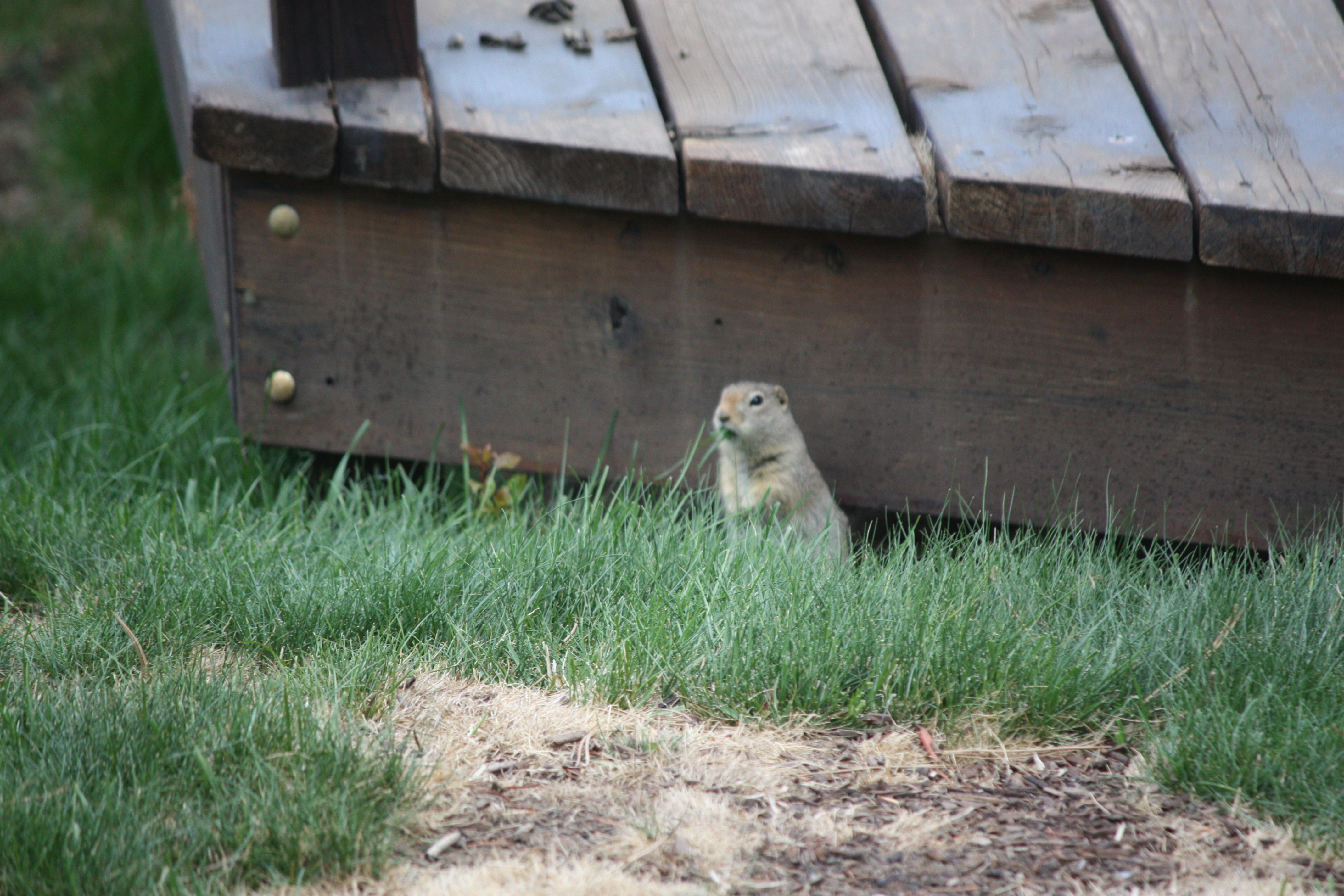
Bill the prairie dog is fat and sleek from all that lush grass.  He lives under the neighbor’s deck near our cabin in the mountains, and was quite`curious about our activities when we opened up for the season.  He seemed unafraid and a little shy, but the kind of guy you could grow to love (if he didn’t dig burrows in the lawn and bring all his friends and raise his  pups at a rapid pace and eat all that grass . . . . . . .).

Just Bill . . . .

Garden Girl Hangs Tough

Buzz off, I’ve got work to do! . . .

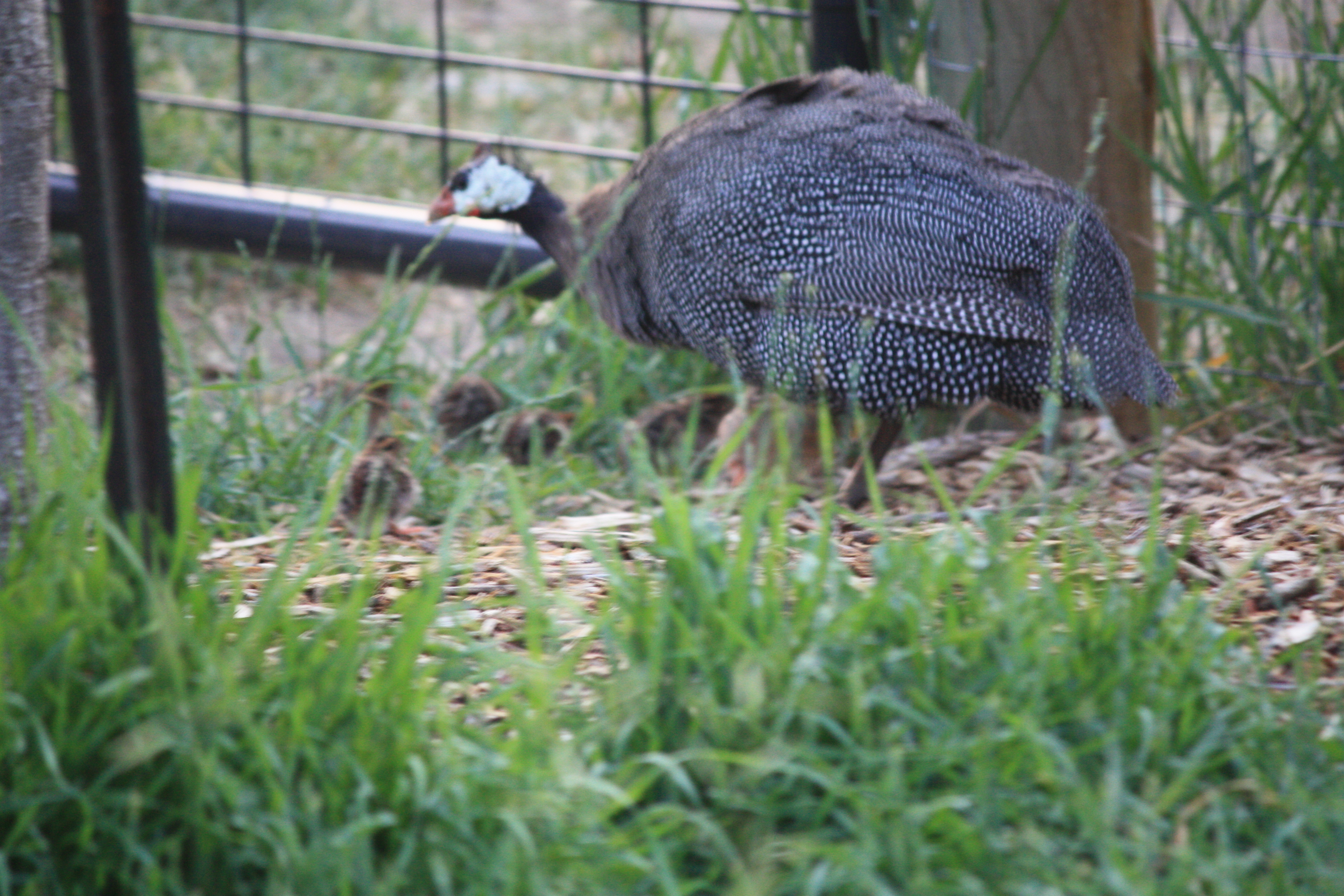
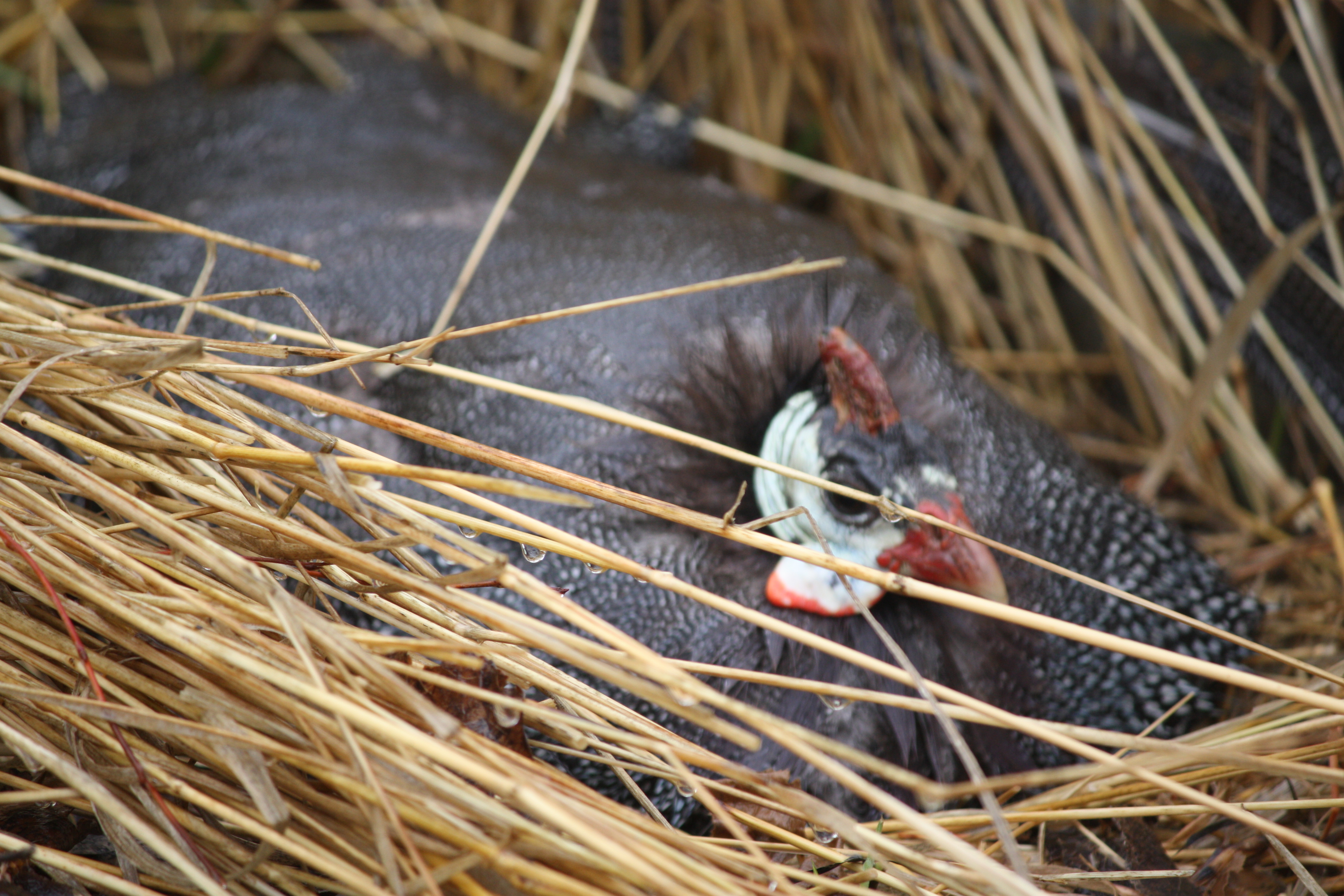
This guinea hen made a wise choice for her nest–in the vegetable garden!  She is protected by a deer-proof fence that also keeps dogs and most other pests at bay.  Guinea hens start nesting in warm weather and roam far and wide to find the perfect protected spot for a nest.  Unfortunately, predators locate them when the guinea begins sitting on the nest overnight, and too often, she turns up missing!

Each evening, if the headcount doesn’t turn up right in the guinea pen, Rosie the Guinea Hunter is on the case and takes off with her nose in the air.  She inspects all the fallen tree stumps, sagebrush, willow groves, and every old nest that she has previously detected in a wide area, focusing intently on “finding Guineas!”  She rarely misses her mark, and then it’s likely because the guinea has met her demise.  If she is alive and sitting on her nest, Rosie will find her.  Then the fun begins.

The first clue that we’re spot on is Rosie’s stance: body motionless; ears forward; head erect; stub of a tail wagging.  We arrive, breathless from a chase that may have covered a few acres of ground, and approach the nest to confirm Rosie’s detective work.  And then we take up the unpleasant task of interfering with MOTHER NATURE.  Disturbing a nesting guinea is akin to tackling a lion in her den.  After you have cleared away all the cover that typically conceals her (deep grass, branches, tree stumps) you take a moment to develop a strategy on which end to tackle her.  (Previous failed attempts have taught us that if you don’t grab her in front of her wings, thereby having some leverage, you will never hold on).  But first you have to get past the sharp pecking of her beak, staccato clucking and piercing eyes that warn of trouble if you try to rout her from her precious eggs!  She fans her wings out high over her back and lowers her head to prepare for battle.

If you aren’t completely intimidated by this time, you reach into the nest (with gloves on) and go for it.  After a skirmish, which you lose, she will shriek and climb off the nest, stepping aside to scold and call out to her kindred guineas.  Upon hearing her cries, the rest of the flock arrive in time to scold and create such a squawking cacophony that you know MOTHER NATURE will soon intervene and cast you into purgatory for ABANDONING GUINEA EGGS BEFORE THEY CAN HATCH!  But I digress.

Garden guinea is likely the smart hen who created her nest in the garden last year and things went well for her until a bull snake arrived to eat her hatchlings as soon as they were out of the shell.  We saved five and raised them in the house, but this time she made it to the finish line on her own.

Hey, you! Get in with the rest of your siblings . . . .

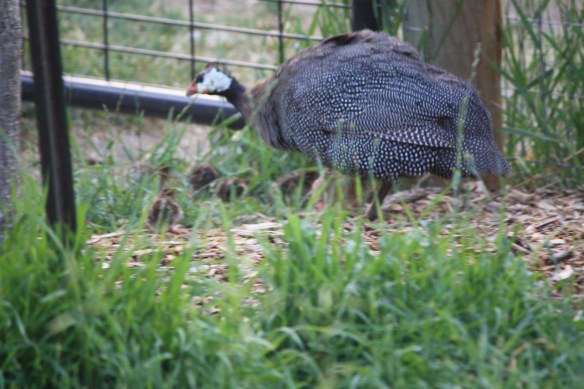
Believe it or not, there are six babies tucked in under her wings.  The curious one who wants to see the action will soon be enfolded in her protective embrace.  When she arrived at the guinea pen with her newly hatched chicks, a hasty arrangement was made to place her in Fred and Ethel’s goose condo for an extended stay, but that’s another story.

On the Wings of Things

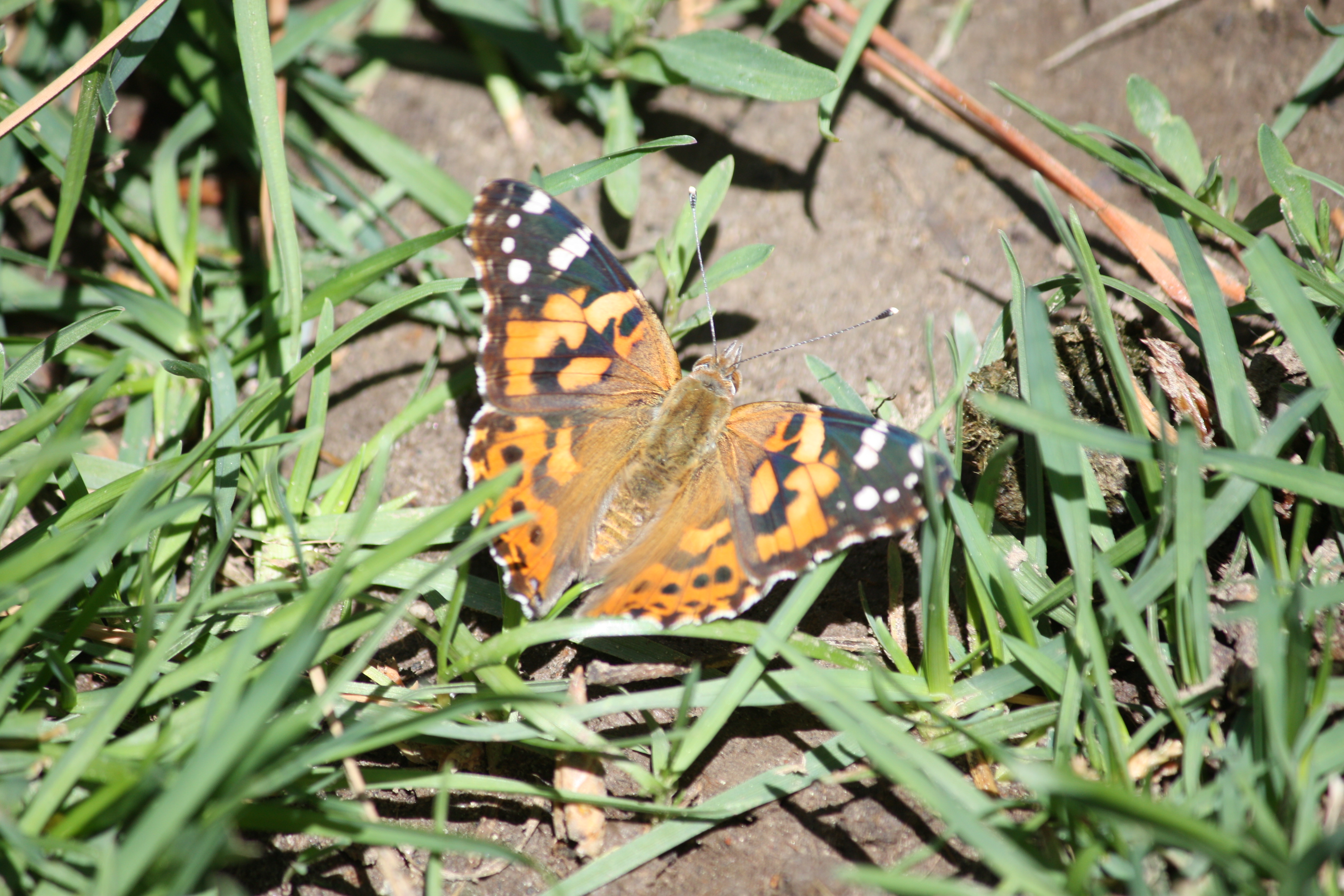
After such a long journey, a rest . . . .

This beautiful butterfly came floating in the breeze and landed in the grass on the front lawn.  After doing some research, we are still unclear whether it is a Monarch.  Very similar to a Viceroy, a Monarch does not have the black horizontal band along the edge of its wings and this one doesn’t appear to have the black bands.  It is lovely, and we were thrilled that it chose to land where we could observe it.

Can you direct me to the butterfly hospital? . . .

This lovely specimen, which we could not identify, got caught in the tidal wave of emptying the wading pool that provides the geese with water to drink, bathe and splash in.  It appeared to have an injury to one of its wings, which are so fragile you wonder how they stay aloft in wind, rain and all the rest of nature’s obstacles.  After observing it for a time, we gently laid it in a flower pot where it clung to a geranium for the rest of the afternoon.  Later, when we discovered it gone, we comforted ourselves that it may have gained strength to move on.

Goose Flotilla

Okay kids, no dunking, splashing or goose tipping! . . . .

Fred and Ethel finally took Ricky, Lucy, Esme and McGill to the pond for their first outing.  Swimming lessons didn’t seem to be required, as they cautiously entered the water and floated for the first time.  Before long, they were diving and paddling serenely across the pond as they were born to do.  Each day thereafter, they have left at dawn and stay at the pond until evening, when they return for a ration of cracked corn and their wading pool.

Ethel has been laying more eggs and trying to nest, but we are trying to discourage her.  We have no room for more geese and now that her four babies are adults, they will be a challenge to house this winter!  Perhaps we should advertise and see if there are homes for goslings in the realm, since Fred and Ethel have figured out how to be so prolific.

Longhorn Terrafirma

Come any closer and I’ll have your nose! . . .

Rosie and Abe, the longhorn calf, are having a standoff in the front yard.  Abe seemed playful and pranced around a bit, trying to lure Rosie into a little romp.  She was having none of it and planted herself firmly on the ground as if to say, “no trespassing on my turf!”

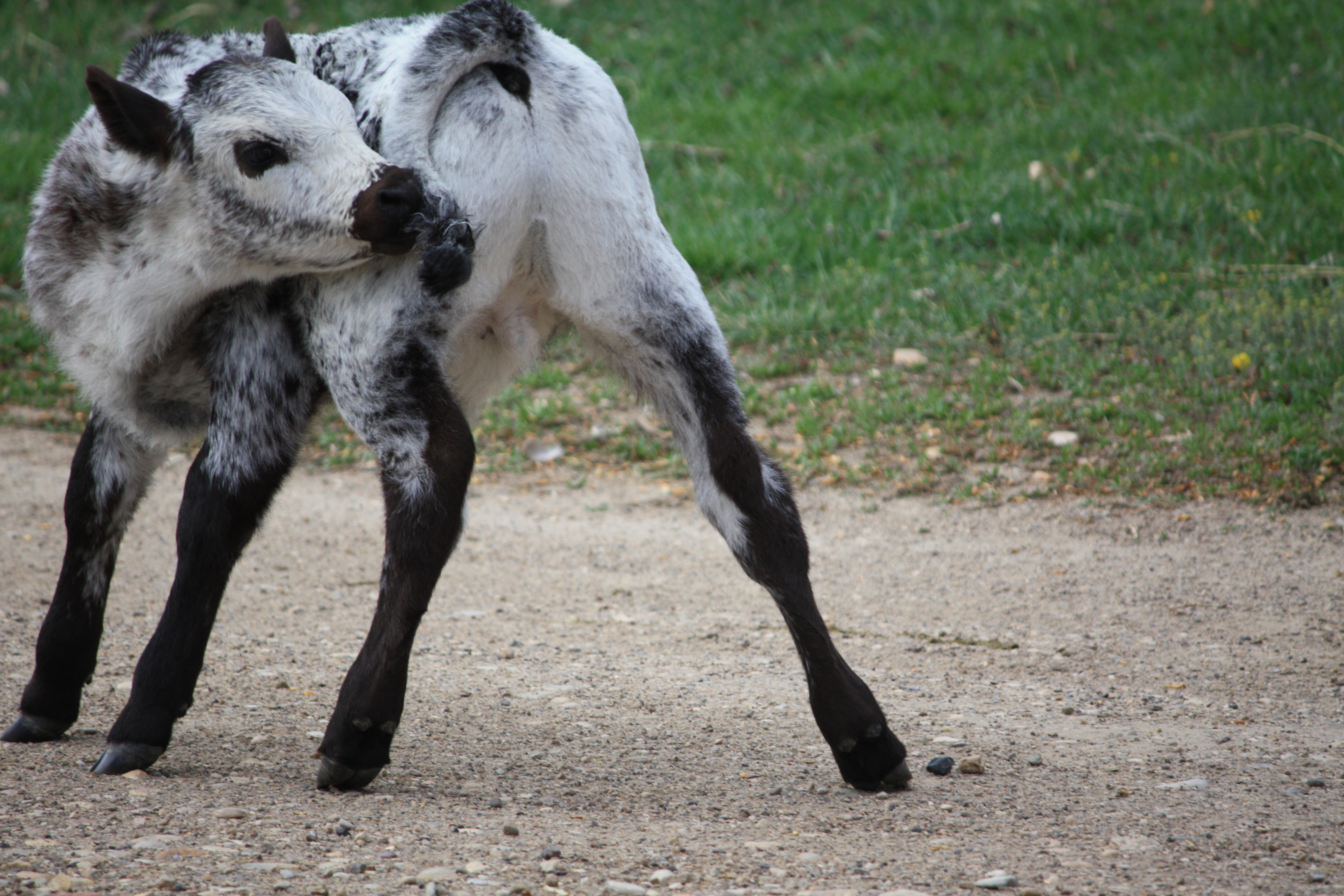
Now where did I leave my tail? . . . .

Abe grew bored with trying to interest Rosie in a little fun, and decided to undertake a little grooming.  Surely she would pay attention if I spruced up a bit?

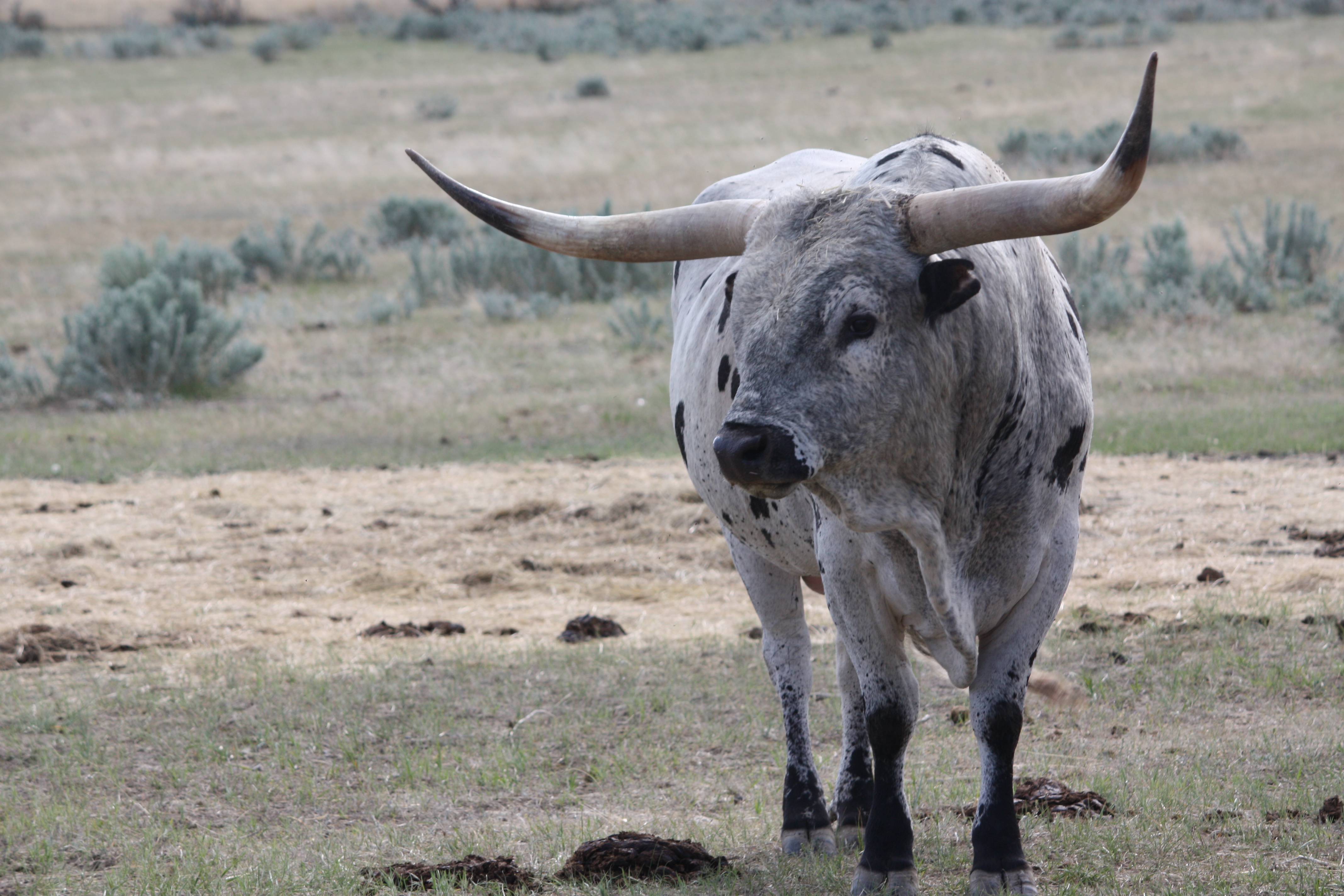
Mom’s new boyfriend . . . .

Abe and his mother Jezebel are visiting the neighbor’s Longhorn bull for a couple of months, and next year we hope there will be another beautiful calf from this pairing.  This guy seems quite docile and gentle, but his horns give one pause to think before approaching him.

Deerly Beloved

Anyone brave enough to try the garden fence? . . . .

Our deerly friends abound after a dry spring with little rain.  They gaze down on the green expanse of lawn, shrubs and garden with great interest, and we are thankful for the new fence that keeps them at bay.  We do welcome their presence–just not inside the yard!   They are shedding their winter coats and look thin and scruffy, but will be sleek and fat in no time.  Does, or female deer, will be giving birth in June and will keep their fawns hidden from view for most of the summer.  We try to walk carefully around the secluded areas they choose each summer to sequester their babies.

deer herding guinea fowl who won’t get “out of my way” . . . .

A loud squawking of guinea fowl erupted outside the office window and a hilarious encounter of a young buck deer and the guineas turned into a rout.  The young deer seemed curious and tried to approach the guineas by reaching his head down to examine them closer.  They did not appear to like this intrusion, but held their ground and clamored for him to leave.  He snorted, humped his back, jumped into the air, and shook his stubby little horns at them in a macho display that had little effect.  Then, apparently disgusted and with his pride in tatters, he attempted to depart but found his path blocked by two of the guineas who simply refused to be hurried along.  Guinea girls are not to be messed with!

lunch among the ruins . . . .

Snapping a shot of the deer grazing among the old relics was hard to resist.  They pass through the area on the way to the pond for a drink of water each day, usually stopping to nibble a few leaves from the lilac or chokecherry bushes.