Robins in the Hot Tub

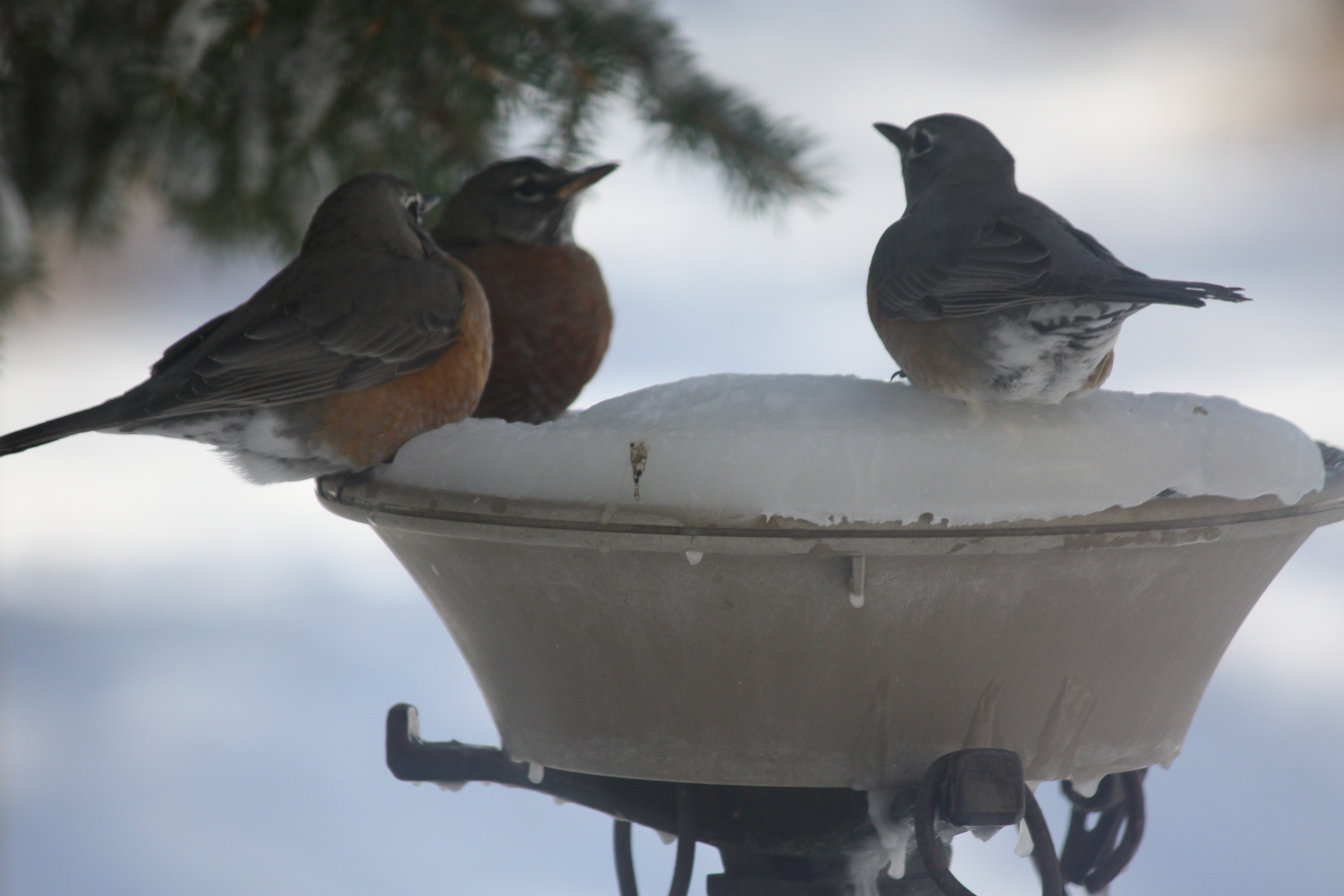
"when are we going?"

“are we going? should we go? are you going? when shall we go?”

The heated water bowl has been busy with birds arriving for a drink, a quick bath and a little conversation.  These Robins seem to be enjoying this little respite from the cold, although we were surprised to see them.  Traditionally they migrate and we see them again in February, however a few have been sighted staying over for the winter in recent years.

The low temperature just a couple nights prior to their visit was -30 degrees and it stayed cold for an extended period.  We subsequently have had two additional snow storms, high winds and below-zero temperatures on many nights. If the Robins persist, we will have to knit sweaters and boots for them!

Mister Coffee

"Who moved the honey?"

“Who moved the honey?”

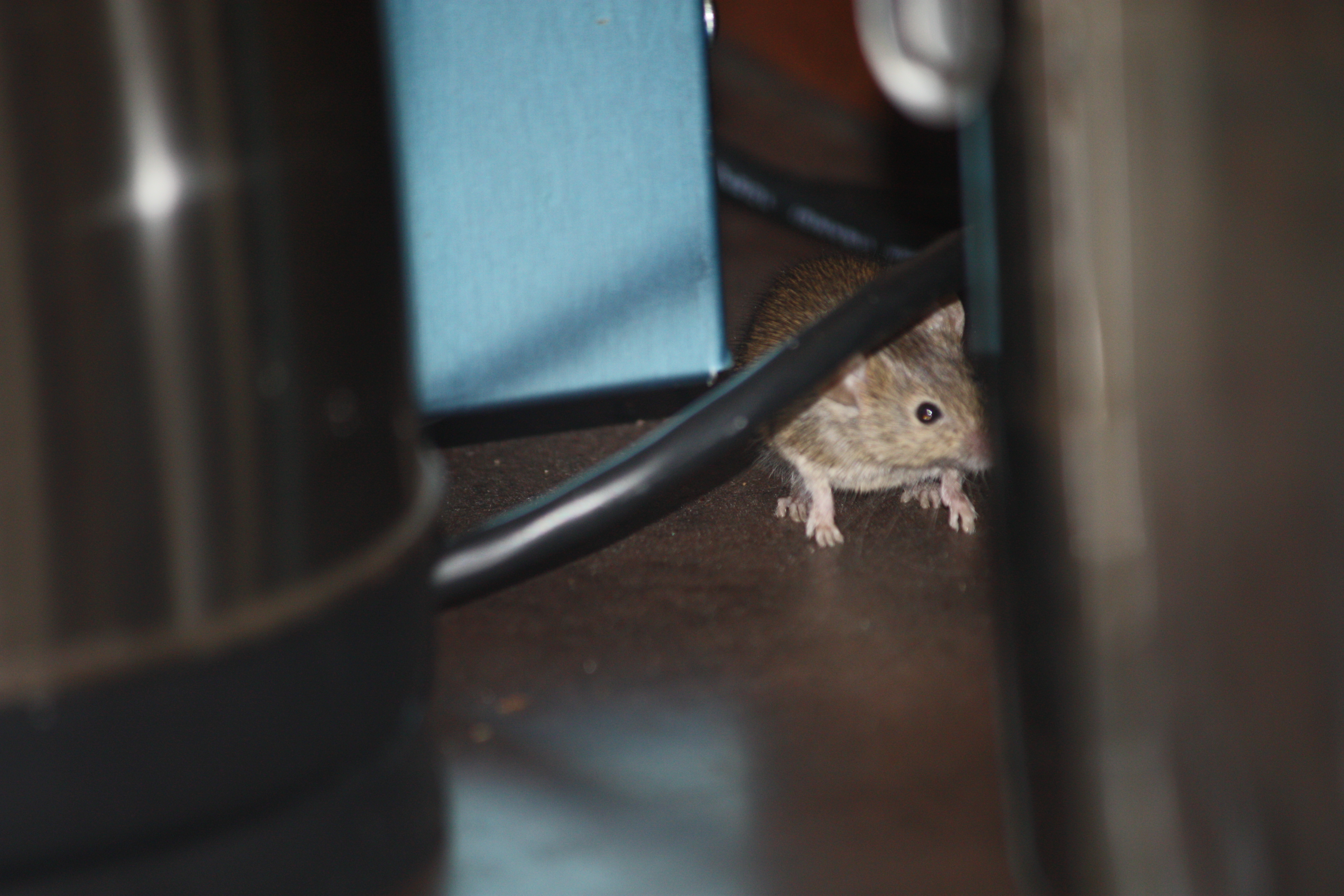
This furtive looking fellow greeted me at the coffee pot one morning recently.  He seemed unafraid and approached a jar of honey left on the counter, licking on the side of the jar for a droplet of sweet nectar.  Some nerve!  We have had a steady stream of mice lately as they seek a warm place to spend the winter.  As cold as it has been, I guess I cannot blame them, but I’m not too crazy about sharing my kitchen with them.  A trusty old mouse trap has been engaged to take care of the problem – wonder if this guy will fall for a little peanut butter snack?

The owls have been singing in the tree tops early in the morning, which is unusual.  They usually return in January, but this year we noticed a pair in late October.  We can only surmise that the abundance of rabbits, voles and mice this year has tempted them to return to this smorgasbord earlier than usual. We enjoy their serenade outside our bedroom window each morning at dawn and hope they spend the winter with us.  Looks like there will be plenty of mice to keep them happy.

Too Many Guineas

"Hello, world. Where's Mom?" . . . .

“Hello, world. Where’s Mom?” . . . .

We had a very prolific year with our guinea flock.  And the hens did it all on their own, with no assistance from us.  This group were lucky to be hatched inside one of the nesting boxes in the old chicken house.  Two other batches were hatched “in the wild” hidden down in the creek bottom.  We discovered a swarm of babies barely a day old running through the grass.  Two Guinea moms had done the tag-team duty of sharing a nest and were they successful!  We counted 16 tiny little fluff balls darting around and our attempts to catch them and bring them in to “safety” to be raised in the rabbit cage proved elusive.  We did finally manage to gather up 14 of the keets from three separate batches and share them with a nearby ranch family who wanted to raise them.

"one, two, three--where is everyone else?" . . . .

“one, two, three–where is everyone else?” . . . .

From the moment they hatch, guinea babies are on the move and can dart through the grass like greased lightning.  The hens go about their daily routine, traveling through the fields, the barnyard, up into the hills and beyond. The little ones are expected to keep up. They are so tiny they are largely invisible, moving along in a brown tide barely stirring the blades of grass.  We watched from a distance, certain they would be gobbled up by predators. We noted how they were accepted into the entire flock and how they all traveled in a tight-knit group.  When we introduced keets we raised separately from the flock the previous summer, the adults pecked at them and did not immediately accept them.

These baby guineas thrived in spite of our failed attempts to bring them in to safety.  As they grew to become indistinguishable from the adults, it became apparent we had a problem. Too many guineas!  With winter coming, we planned to move them into a smaller abode which would accommodate about a dozen total.  We inquired whether the family who had previously taken the babies would like to have some adult birds.  When they agreed, we were suddenly faced with two questions:  1) How would we catch them?  and 2) What would we do with them once we caught them?

glorious guineas . . . .

glorious guineas . . . .

I remembered helping my grandmother catch chickens that she planned to butcher.  It was simply a matter of going with flashlights into the chicken house, selecting the birds she wanted, grabbing their legs and putting them in a gunny sack.  I helped her with the butchering a couple of times, and quickly decided this was not my cup of tea.  I had to hold their legs, lay them over a chopping block and she cut off their heads. I watched in horror as they spun around in a crazy dance, spurting blood, without their heads.  But I digress. Catching the guineas would be easy–we would simply go into the chicken house– after dusk– with flashlights– grab some off the roost– put them in a wire cage we borrowed from neighbor Tom– and call the people who agreed to take them off our hands.

Guineas are another matter.  They do not allow you to come into their house, after dark, with flashlights, and grab them off their roosts!  They fly.  Everywhere.  Bouncing off the ceiling, the walls, the windows, off us!  Running into corners, under the roosts, under the nesting boxes, everywhere out of reach, faster than we could move. Stirring up dust so thick you could not distinguish the birds flying at you, near you, away from you, behind you or over you.  A tornado of dust whipped up by whirling dervishes, so dense you could not breathe!  Gasping and choking, we were able to capture eight birds and place them in a jail of sorts to be taken away.

As we waited for the new owners to arrive, we went to wash up.  The whole episode left me sad, and tears streaked the dirt on my face.  I felt we had broken a trust with these wild creatures we invited to make a home with us.  I remembered how excited we were the day we picked up a box of baby guineas at the post office, and the trials and tribulations we went through to raise them successfully.  We were too successful!  The whole episode was traumatic for us, knowing as we did that we had put the guinea fowl through a terribly frightening experience. Our only comfort was the knowledge that our guineas were going to a good home. It is our hope we gave away all our roosters!

Wisconsin Autumn (and other things)

Wisconsin Autumn . . . .

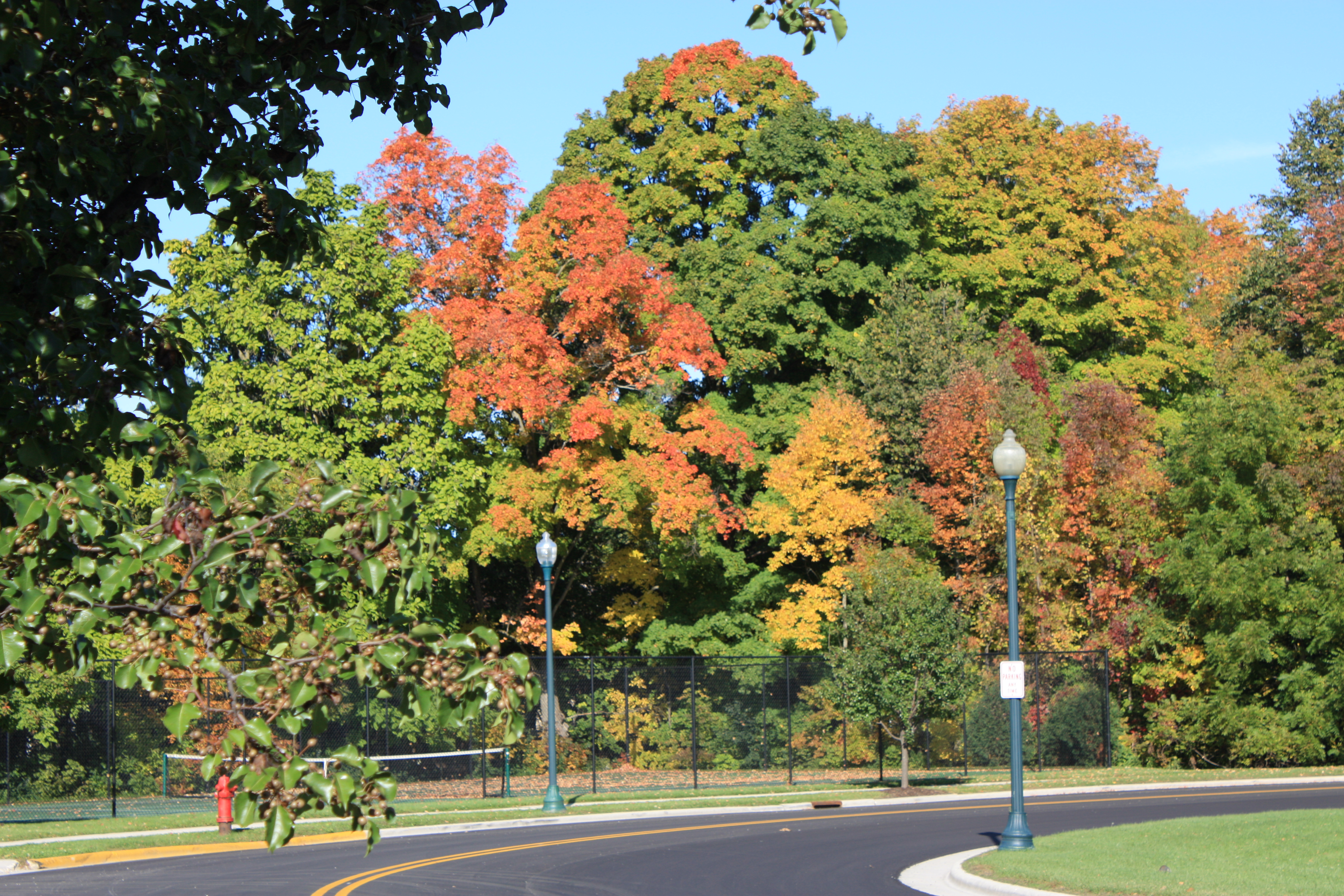
Wisconsin in autumn is a lovely sight.  Heavily wooded with a variety of trees, the colors range from orange, yellow, red, gold, and magenta. One of our favorite areas to visit is the Kettle Moraine, where glaciers deposited massive rock outcroppings visible today along the farm fields, river valleys and hillsides. The topography is enhanced by dense woodlands, lush green fields of corn and grain, and lakes and rivers.  The rural character of the countryside surrounding the Kettle is sustained by dairy farms, some with historic stone farmhouses, and most all with ubiquitous big red barns with hay mow.  Black and white Holstein milk cows provide contrasting color to the green pastures.

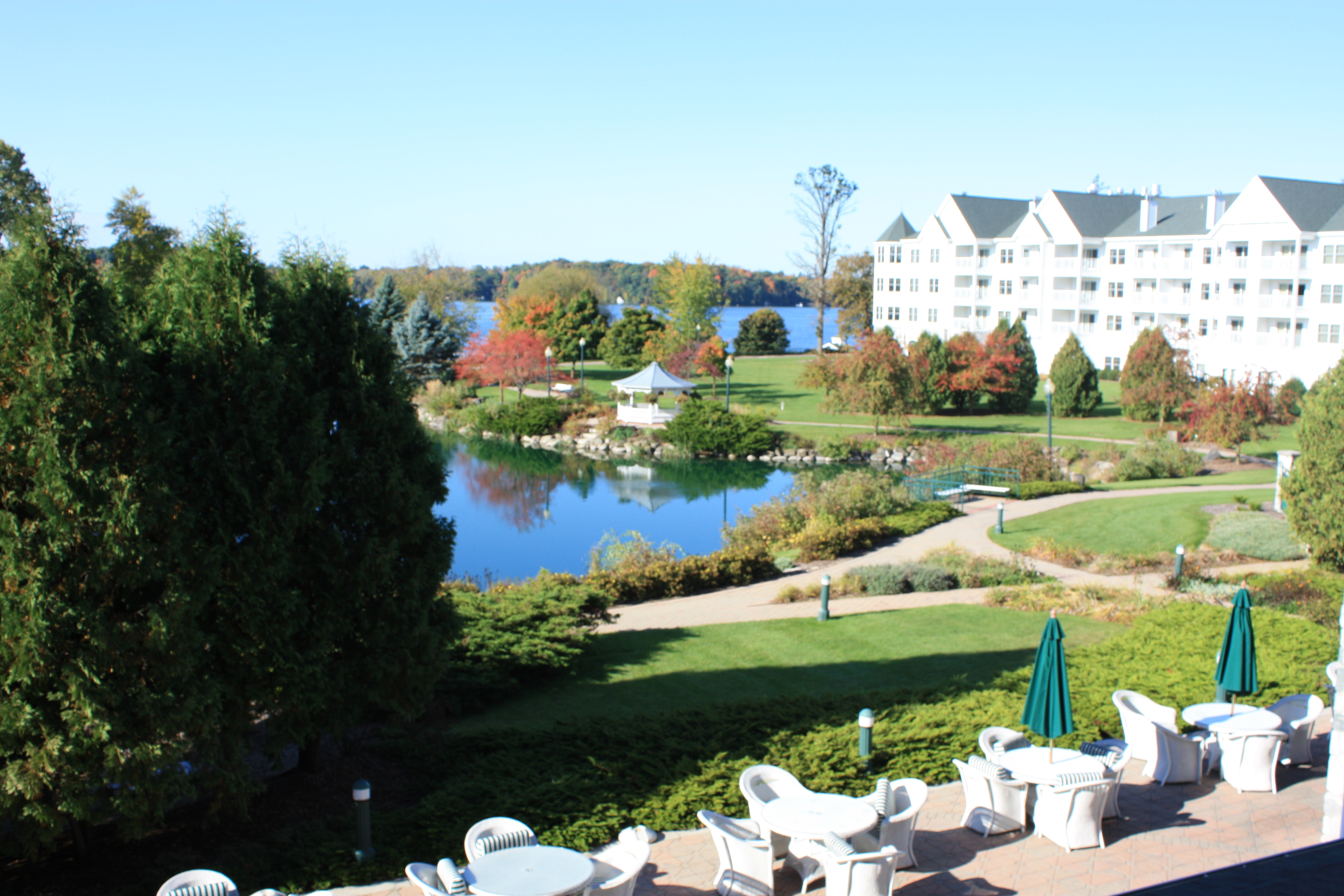
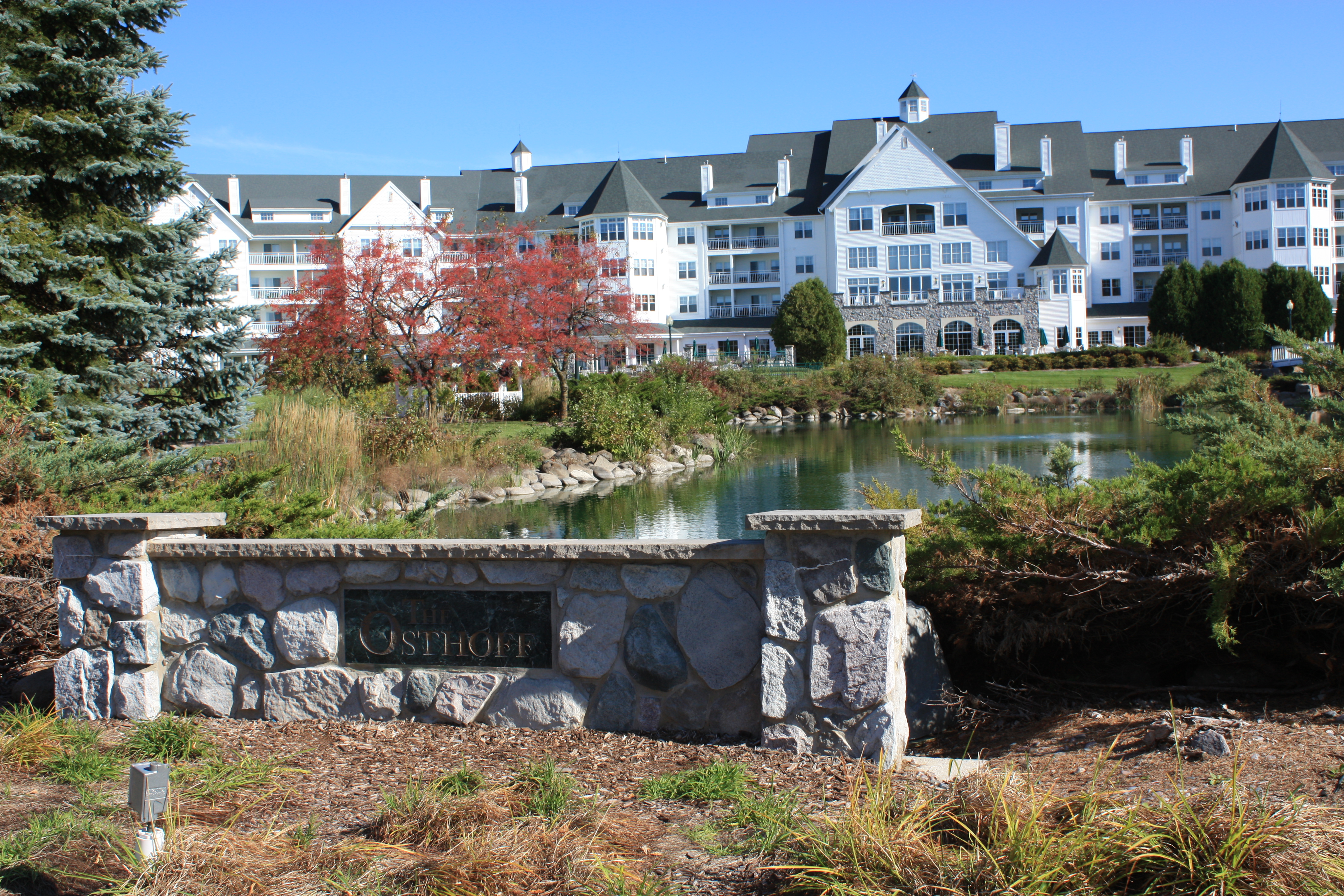
The Osthoff Hotel opened in 1886 and became a destination for summer tourists from Chicago, St. Louis and Milwaukee.  Situated on the shores of spring-fed Elkhart Lake, the hotel re-opened in 1995 as a condominium resort and quickly earned a four-star rating. Located in the small town of Elkhart Lake, pop. 1000, the resort is in a beautiful, quiet setting where “getting away from it all” takes on a whole new meaning.  We walk the lakefront, the hillsides, and along the golf course, as well as strolling the neighborhoods of Victorian homes, restaurants and small shops.

what a backdrop for a game of tennis! . . . .

what a backdrop for a game of tennis! . . . .

We have visited in summer and autumn (June and October); we hope to explore other seasonal amenities on a future visit.  A German Christmas Market, beautiful holiday decorations throughout the resort and the countryside blanketed with snow have great appeal.  Maybe even some ice skating!

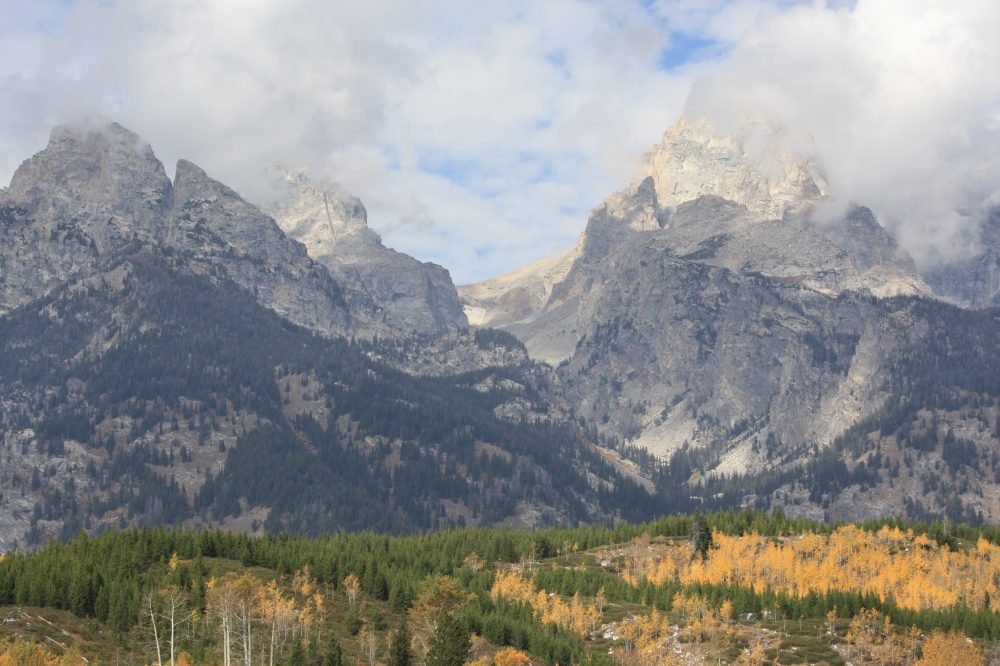
Autumn colors in Wyoming consist of the yellows and golds of native willows, cottonwoods and aspens, and the season is short lived.  An early September snow and cold spell had our leaves on the ground when we photographed this scene in October.
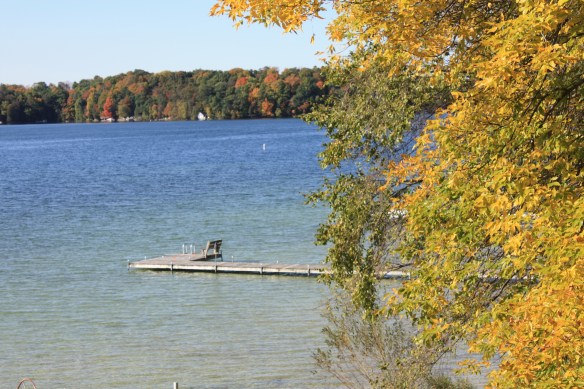
didn't bring a fishing pole! . . . .

didn’t bring a fishing pole! . . . .

According to legend, the Potowotomi Indians first called Elhart Lake “Me-shay-way-o-deh-ni-bis” or Great Heart Lake for its shape resembling an elk’s heart.  Carved out by glaciers, the lake is one of the deepest fresh water lakes in Wisconsin.

how can we create this at home? . . . .

how can we create this at home? . . . .

A pond surrounded by gardens leads up from the lake shore to the hotel.  The autumn colors are almost as beautiful as the gardens in June.

uh . . . .I think I can see our room . . . .

uh . . . .I think I can see our room . . . .

We have explored a variety of restaurants in Elkhart Lake and our latest find, The Black Pig, was over the top.  Naturally, most of the best menu items were pork (as in pig).  One wall of the dining room was a backdrop for a famous quote by Winston Churchill, which goes something like this:  “A cat will look down on you; a dog will look up to you, but a pig will look you in the eye and be your equal!”  The bar was friendly, the food delicious and we left with a new appreciation for “the pig.”

crimson climbers . . . .

crimson climbers . . . .

This stone building was covered with autumn color in downtown Elkhart Lake.

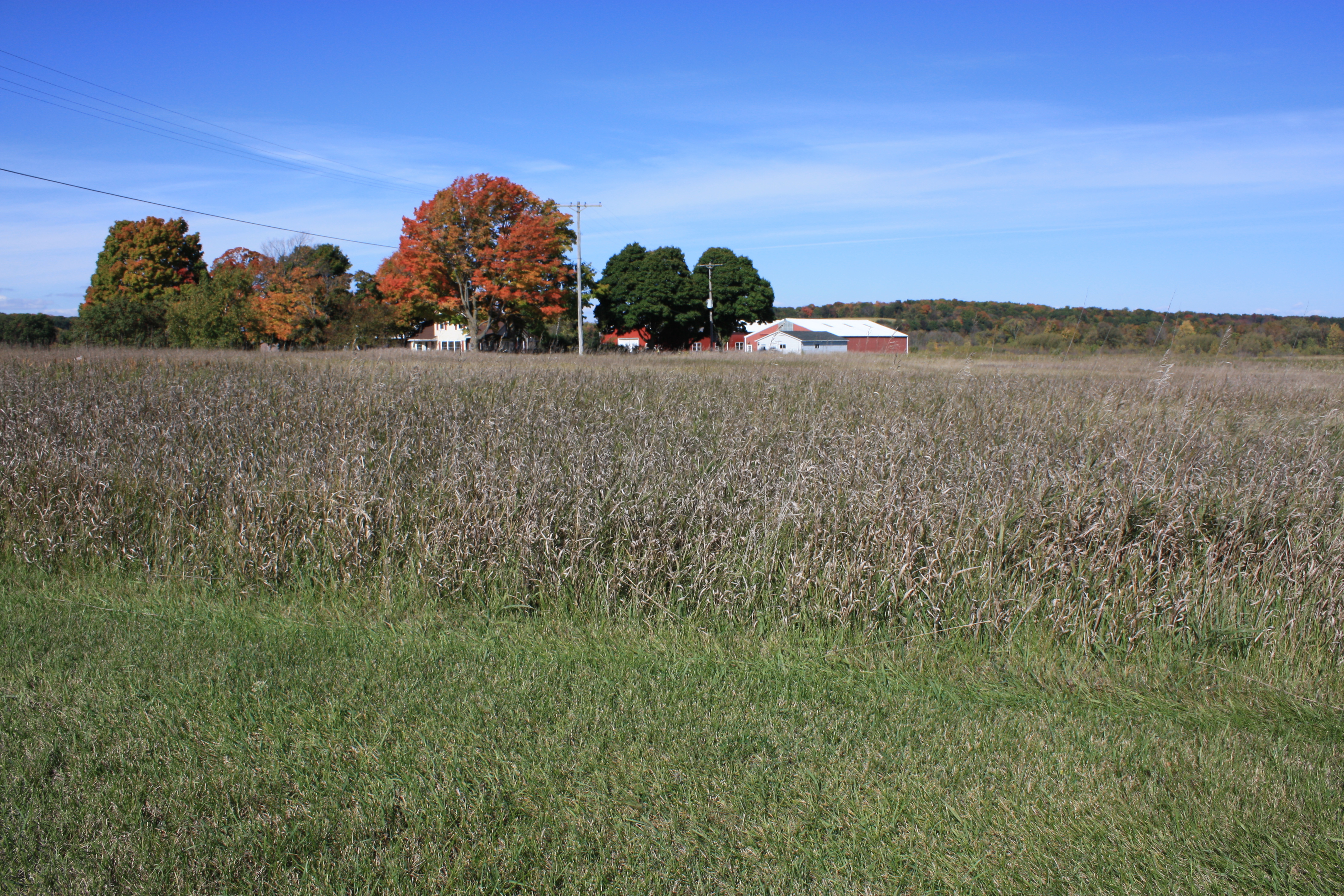
Farms along the open road . . . .

Farms along the open road . . . .

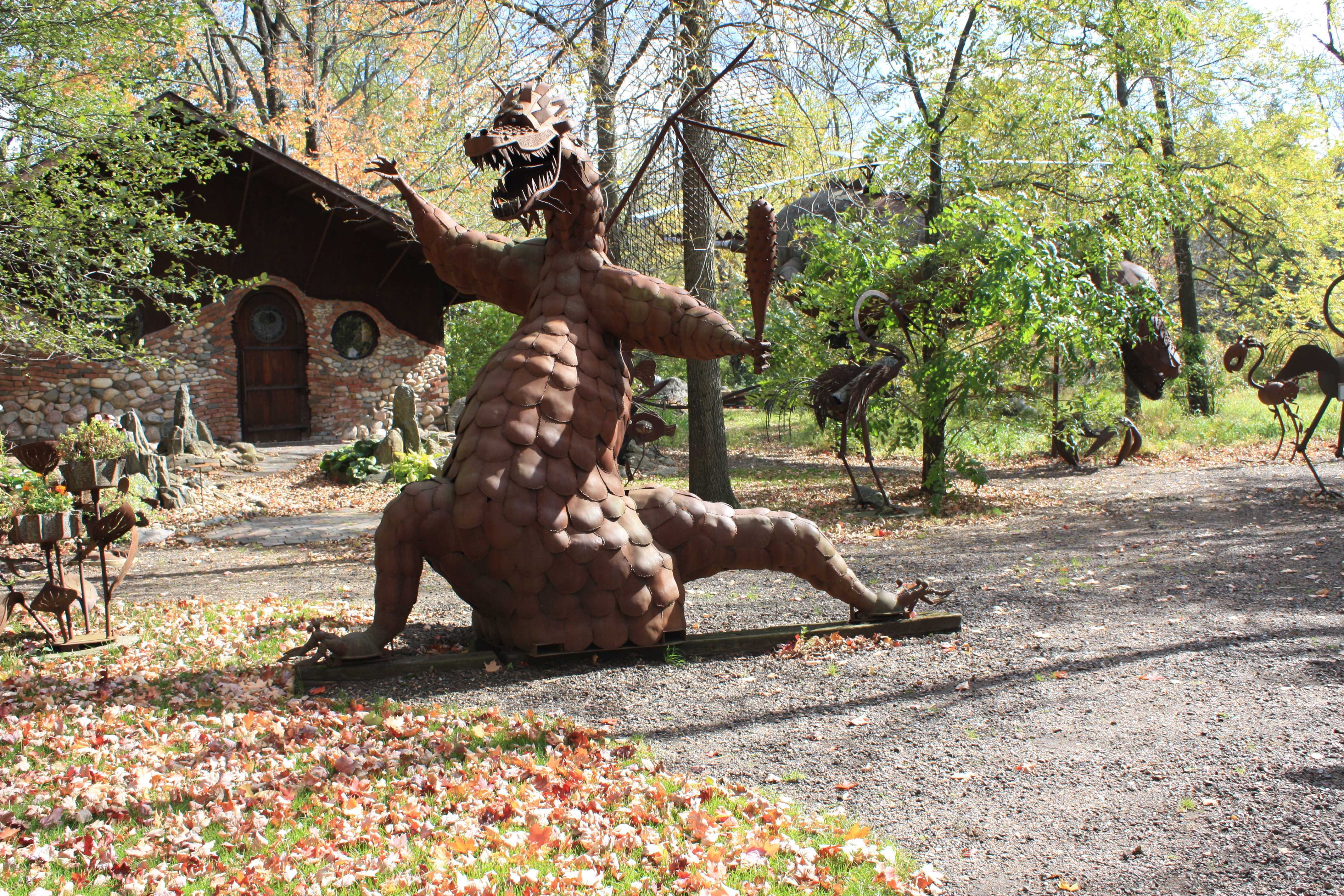
"Come in to my garden" . . . .

“Come in to my garden” . . . .

This creepy spider and assortment of pals is the entrance to Jurustic Park located in Marshfield, Wisconsin.  It claims to be a “display of many of the extinct creatures that inhabited the large McMillan Marsh near Marshfield during the Iron Age.”

"where's lunch?" . . . .

“where’s lunch?” . . . .

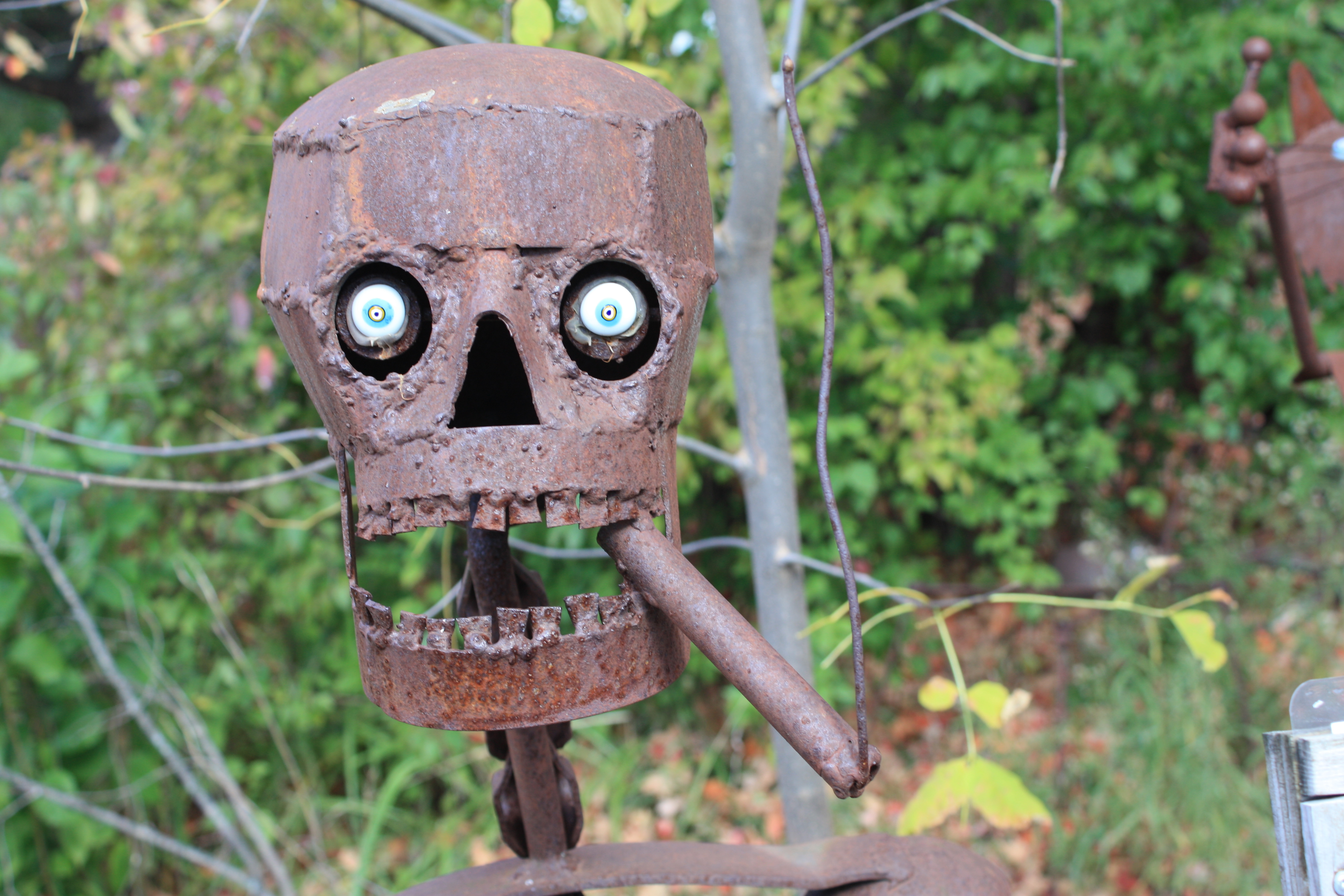
With tongue in cheek, creator Clyde Wynia has created an endless variety of rusted iron creatures welded from junkyard metal.  His imagination knows no bounds.
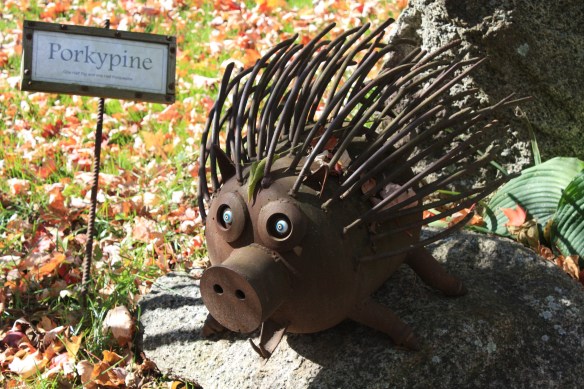
a hedgehog perhaps? . . . .

a hedgehog perhaps? . . . .

Nah, it’s a porkypine.  Can’t you read the sign?

"Got a light?" . . . .

“Got a light?” . . . .

Marshfield is about a three-hour drive west from Elkhart Lake, and seems otherworldly.  I could not begin to capture all the creatures at Jurustic Park.
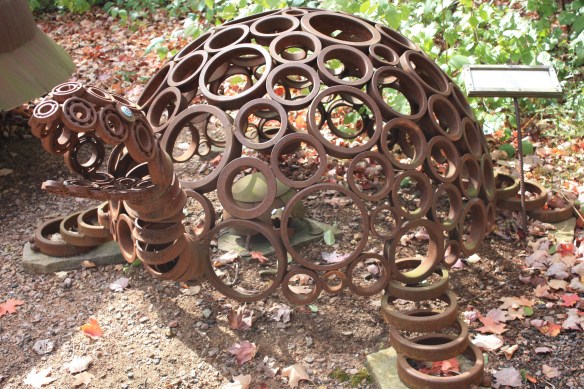
a tortoise, of all things . . . .

a tortoise, of all things . . . .

Clyde gave us a personal, guided tour and said turtles are one of his favorite creatures.

"let's get some action!" . . . .

“let’s get some action!” . . . .

Clyde gives this feminine form a kick to get her to shimmy and shake.  He took up welding after retirement and let his imagination run wild.

a hang-dog expression? . . . .

a hang-dog expression? . . . .

Hard to say what life form is draped over the back of this hound, or lurks in his abdomen. It takes careful scrutiny to capture all the surprises.

a use for all my old CD's . . . .

a use for all my old CD’s . . . .

A stunning array of fish scales made from CD’s!
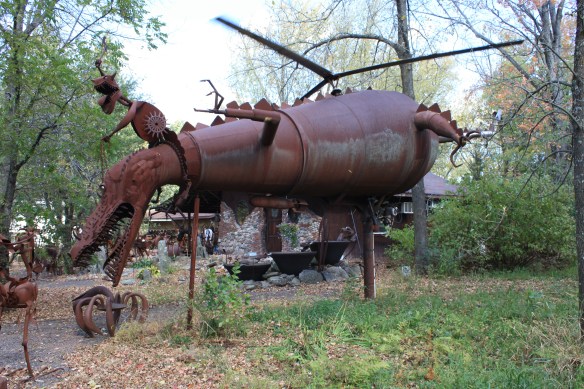
creature from middle earth . . . .
creature from middle earth . . . .

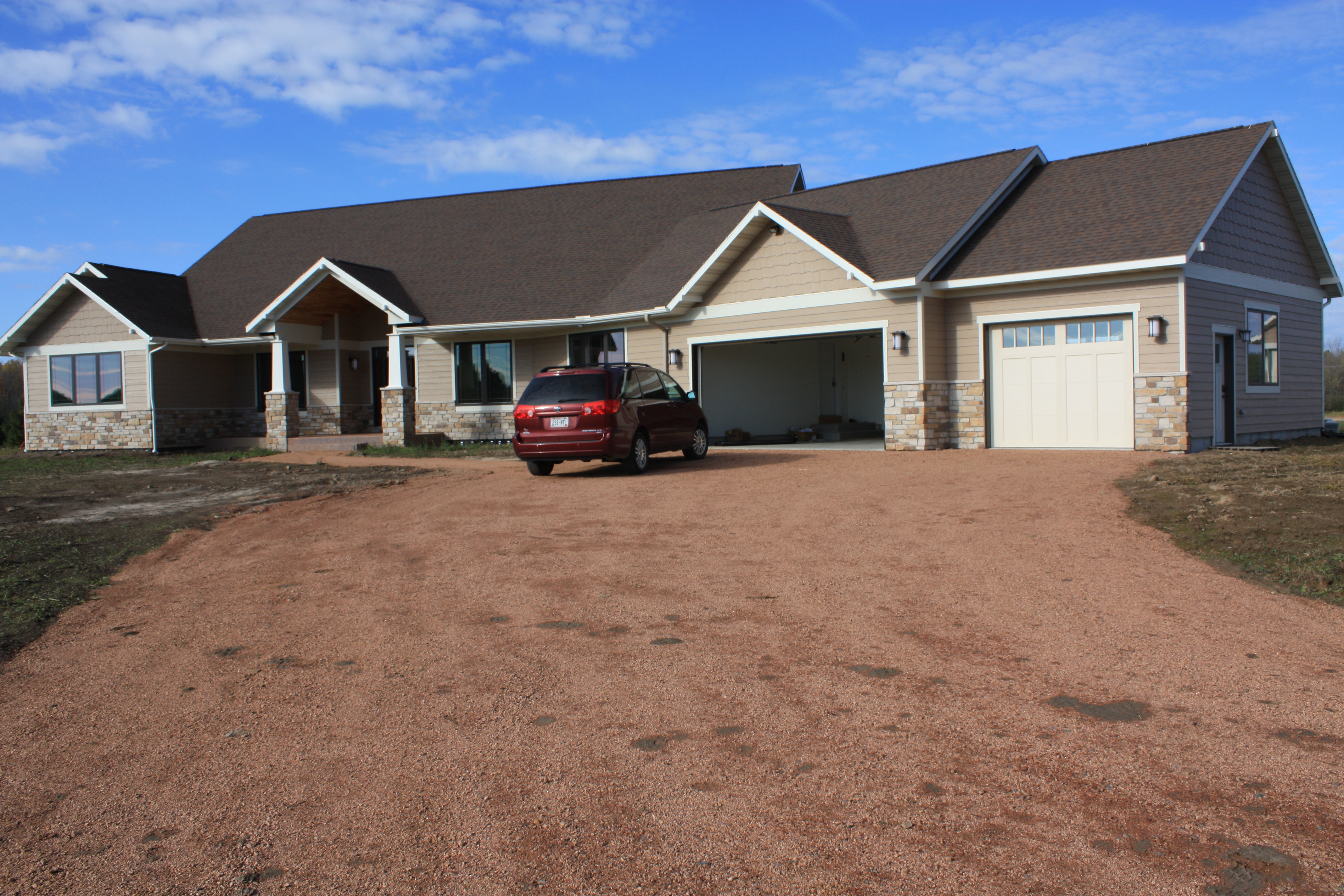
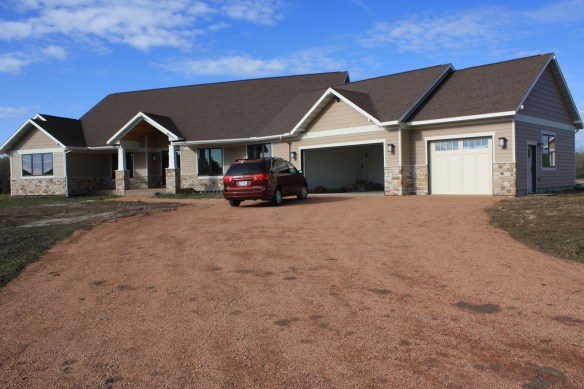
a new home . . . .

a new home . . . .

Nearing completion, this lovely new home was being readied for a move-in date a couple of days after we departed.

on the road again . . . .

on the road again . . . .

Miles and miles of roadside colors greet us on our return to Elkhart Lake.  We spent another evening at Osthoff and drove to Madison next day to catch a plane. Farewell to Wisconsin, we’ll be back!
 

Old Man Winter Has Arrived

bird buffet . . . .

bird buffet . . . .

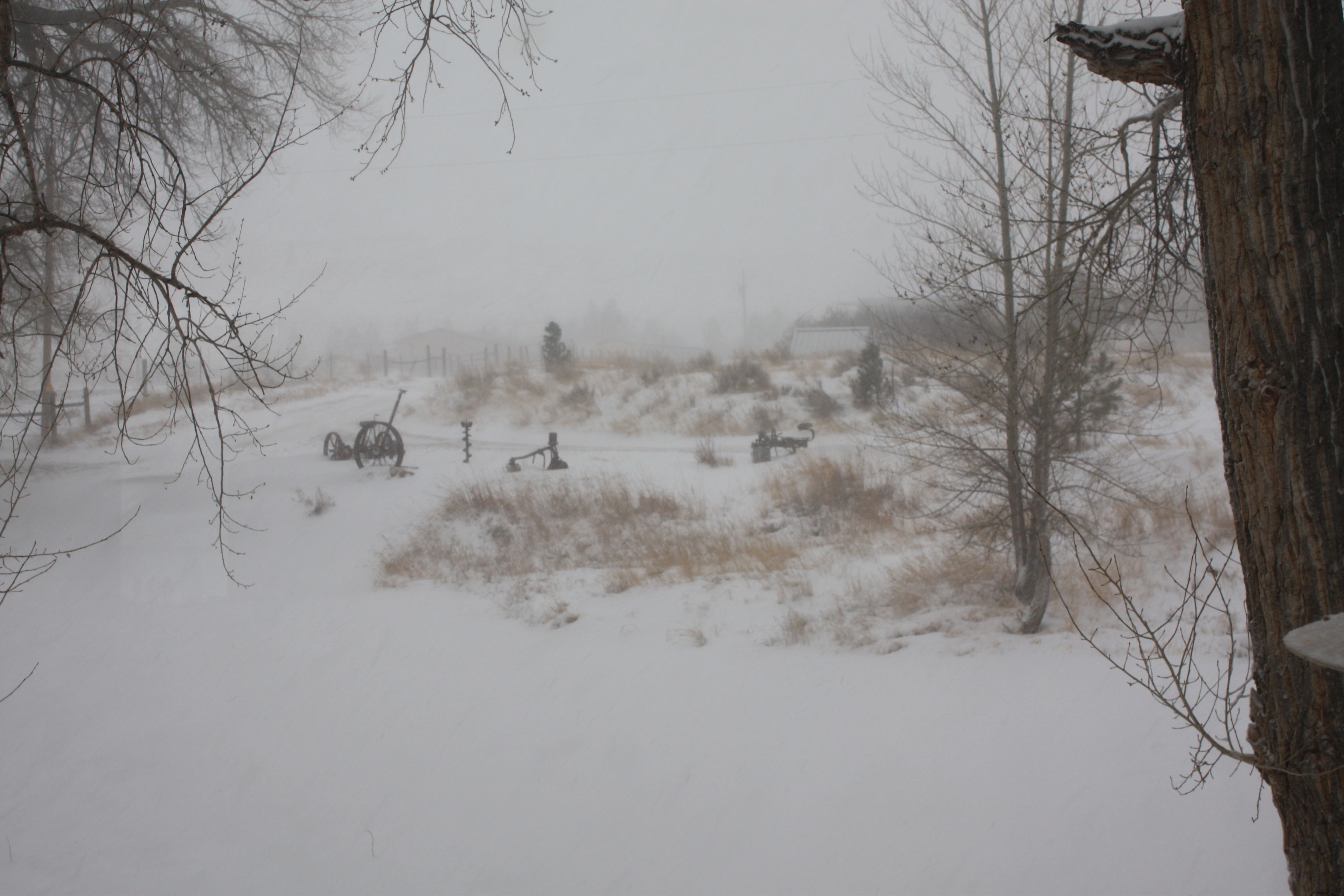
The weather forecasters weren’t joking when they warned of a “polar vortex” arriving in the northern Rocky Mountains.  After 48 hours of howling winds and blowing snow, we were left with some 3-ft. drifts and plenty of misery all around.  We observed Veterans Day digging out and dressing in every item of apparel we could layer on to take care of animals and daily chores.  The high temperature for the day was 5 degrees above, but that felt like a heat wave compared to the low last night of -27 degrees.

working for a meal . . . .

working for a meal . . . .

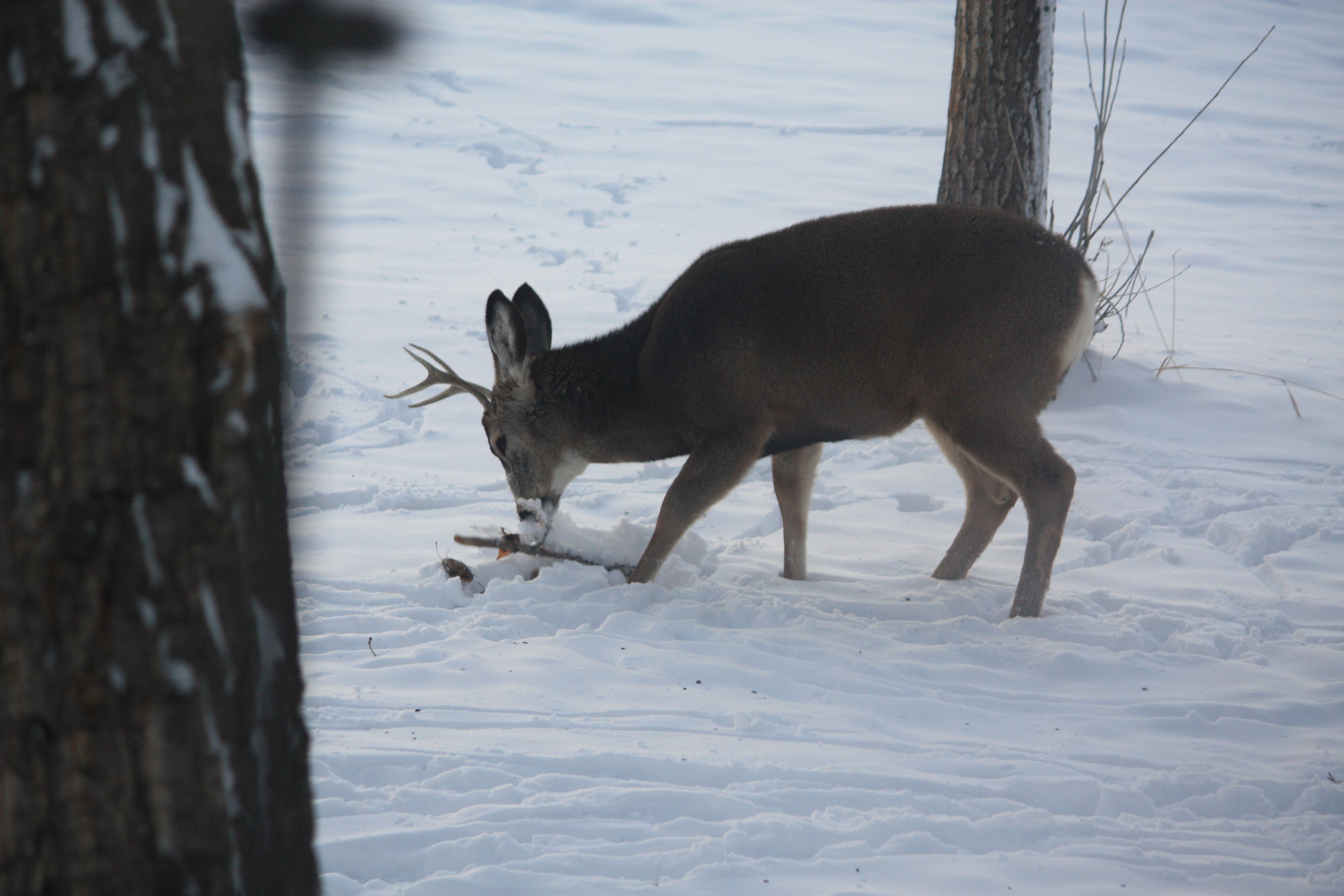
This young buck mule deer was outside the window yesterday working on a pile of leaves and twigs I raked up and have not had a chance to burn.  Foraging for enough food to keep warm is a challenge, and although I know we are not allowed to feed them, it makes you wish you could toss out a bale of hay to help them out.

the color of cold . . . .

the color of cold . . . .

We had some wet snow Sept. 10 and regular frost since then, but it has been a lovely extended autumn until we got slapped alongside the head with this storm.  The carrots didn’t get dug and I am hopeful I can still save them.  They are blanketed with a foot of snow but the temperatures are predicted to be even colder tonight.  The rest of the garden is probably finished.  Goodbye to my tasty spinach, kale, chard and lettuce crop.  Finished canning as many tomatoes as I could stand and donated the overripe remains to the chickens and the pigs next door.

a startled starling . . . .

a startled starling . . . .

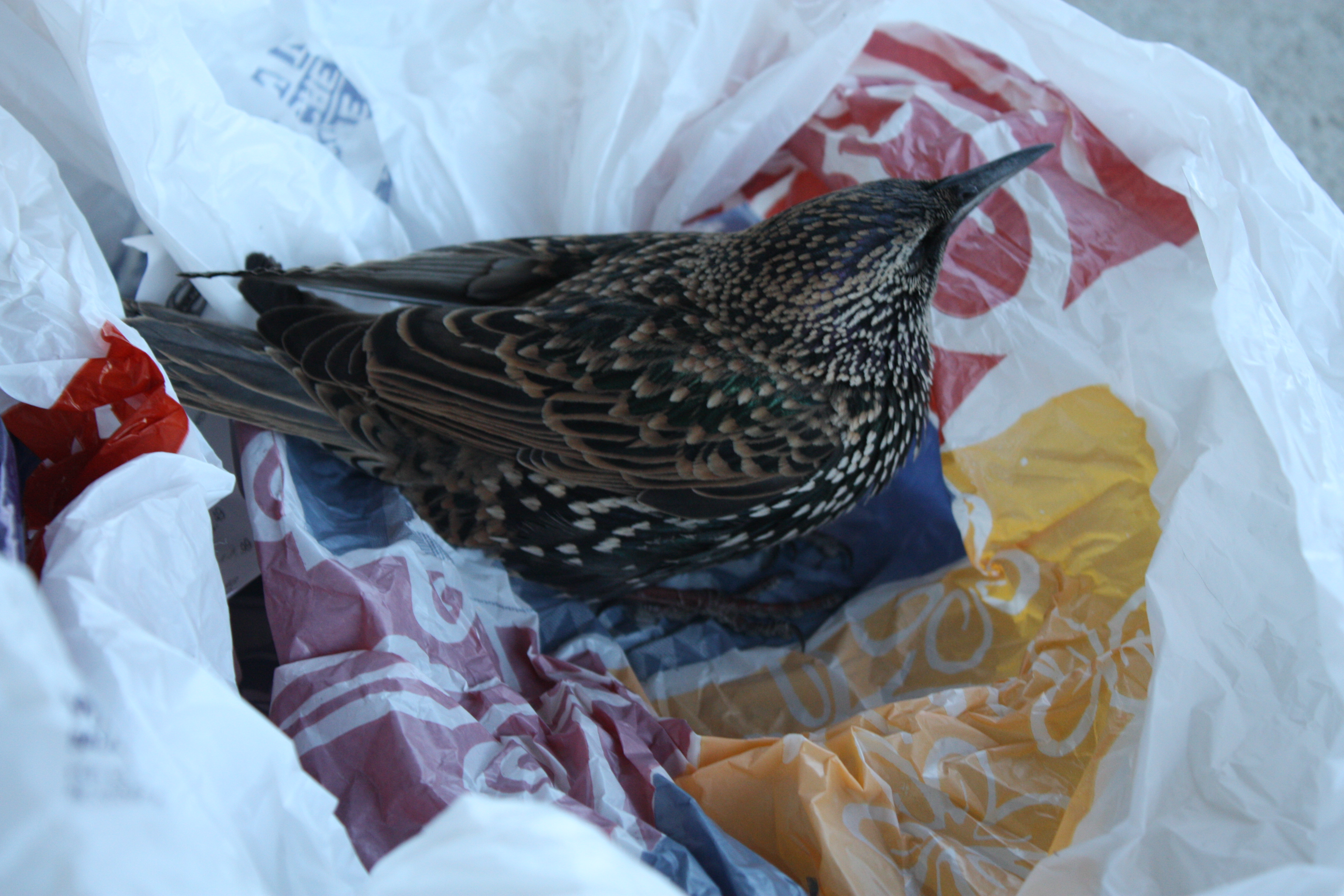
We were taking a late afternoon break with the news when we heard a strange rustling sound.  We thought it might be snow sliding off the roof, but a quick look outside revealed no disturbance in the snow drifts surrounding the house.  A quick trip to the basement turned up nothing unusual. A little later Bleu and Rosie approached the glass doors on the fireplace with great interest and Bleu jumped up on the hearth to get a closer look.  A very angry, frightened starling was glaring at us as if to say “what the heck happened?”  Was he seeking a little warmth atop the chimney and accidentally fell down into the fireplace?

"next you'll want my autograph!" . . . .

“next you’ll want my autograph!” . . . .

The evening fire was laid and a few bad jokes flew around about what the poor bird would do if we lit it.  Baaaaad jokes.  To the rescue with a large plastic bag, I reasoned I could catch the bird if I opened the doors very carefully.  The starling crouched behind the logs until the coast was clear and swooped out so fast I had no chance.  He bounced off the ceiling, into the bay window, and made a crazy pattern of flying amok in all directions trying to find an exit.  On to the kitchen, he bounced into the kitchen window so hard he fell into the sink and I had him!

you know it's going to be a bad day when . . . .

you know it’s going to be a bad day when . . . .

I took my plastic bag outside, confident that I had a bird inside, and opened it to release him.  Stunned, he just sat with his beak slightly opened and panting as if he had run a marathon.  I stepped back inside to grab a coat, and decided I should have left him in a more protected spot to keep him from freezing before he was able to collect his wits. When I returned, he was gone.  He will have some tall tales to tell about his misadventures, but he likely won’t try to keep warm in a chimney anytime soon.

stew on the menu . . . .

stew on the menu . . . .

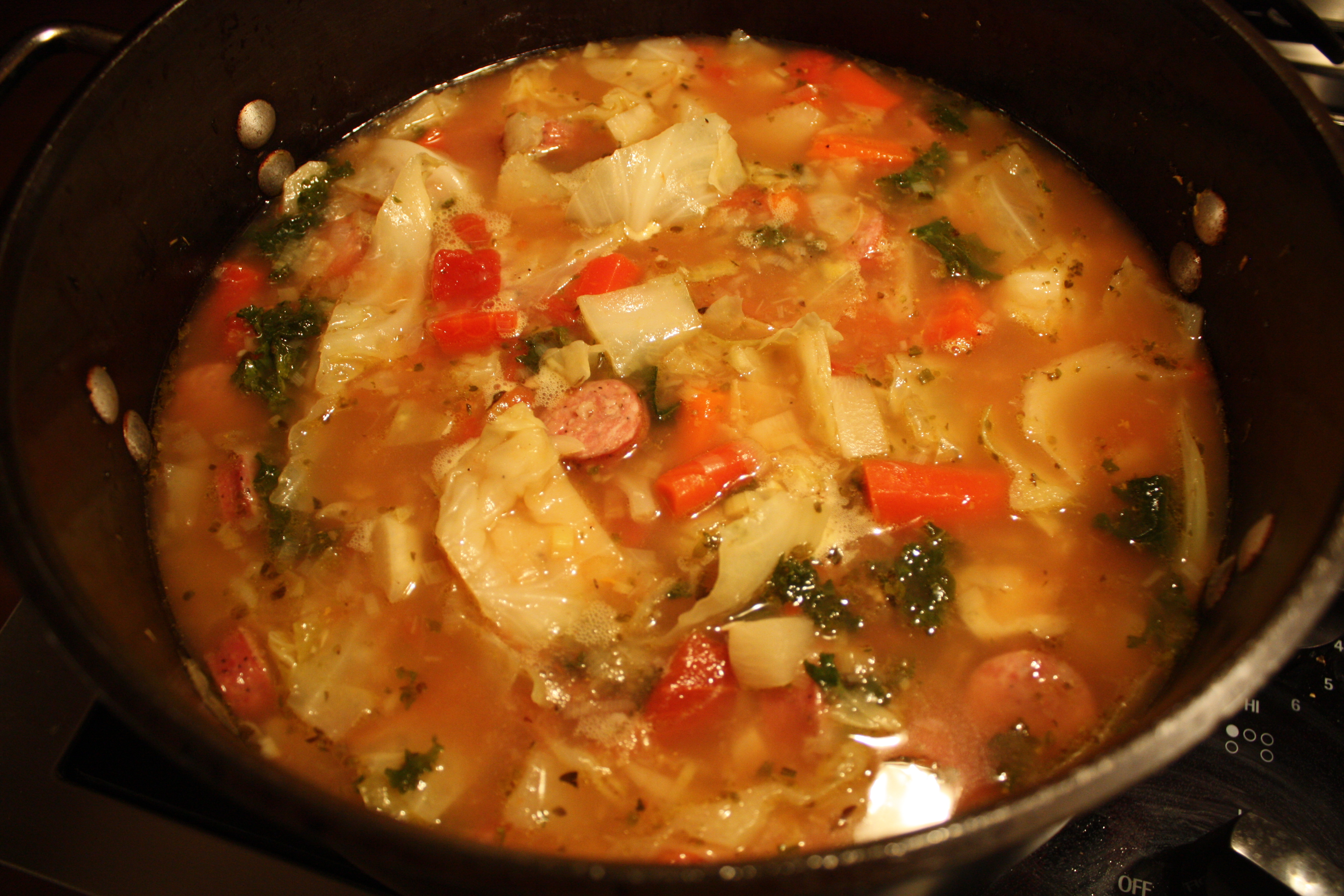
Winter root vegetables, cabbage, kale, leeks and Polish sausages made for a hearty stew which warmed us after fighting snow and ice all day.  Now all we need is to light the fireplace (now that the starling has departed), pour a glass of red, and enjoy what the winter will bring.

Where Wild Birds Roam

searching for a soulmate? . . . .

searching for a soulmate? . . . .

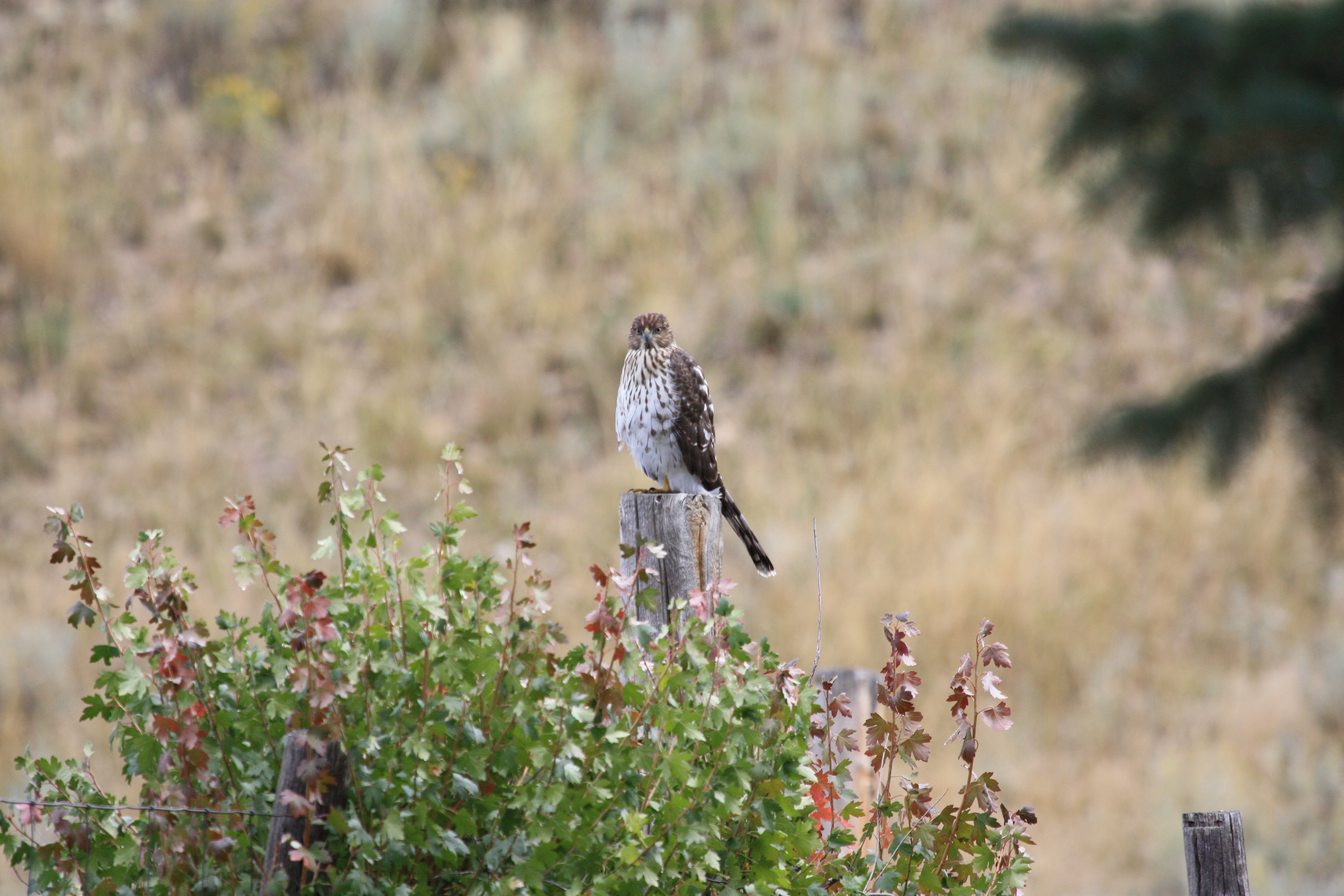
This spectacularly beautiful bird arrived in the garden and settled in on a fence post for a lengthy visit.  Rosie spied it first and when I noticed her staring intently at this strange visitor, I ran for the camera.  This bird, which we have tentatively identified as a prairie falcon, is exactly like one I found a week earlier.

looking at you, kid . . . .

looking at you, kid . . . .

I was relocating a sprinkler on the lawn when I discovered a bird on the ground, partially covered by the lower branches of a spruce tree.  It did not move and had died fairly recently. We gathered it up and after a closer examination, we could find no trace of injury or violence that would have contributed to its death.  It had obviously crawled up under the tree branches for protection and concealment, then died of some complication.

The beautiful markings under the wing span are similar to the chest area, and I regret I did not photograph the dead bird.  We called the local game warden and he came to retrieve it for further testing.  We already suspected that we could not keep the bird’s remains in our possession, and the warden confirmed it.  He thanked us for surrendering a protected raptor and said it would likely be tested for a virus.

My speculation that the bird I photographed was a mate of the poor creature I found in the yard the previous week is as good an explanation as any.  We had never seen this particular species near our home or outbuildings.  It lingered for half an hour and flew off and has not been seen here again.

Tomato Wars

the ripening room . . . .

the ripening room . . . .

Is this a bountiful crop, a mere over-abundance of tomatoes, or a disaster?  Forty pounds of tomatoes have already been processed into marinara sauce, salsa and plain preserved tomatoes in quart jars.  I am running out of storage room, jars, ideas, and patience.

a new batch arrives . . . .

a new batch arrives . . . .

These were picked October 19th and will need to ripen awhile, which means I have to move a load out of the “ripening room” to open up storage space.  Have given sacks of tomatoes away to friends, neighbors, and relatives.  When we pick one with a bite out (slugs, birds, whatever else resides in the garden) we toss them to the little flock of chickens next door. They love them and race to compete for the first bite!  At this rate, we’ll have red eggs.

My first attempt mid-May with three small tomato plants met with disaster.  The temperature dropped to 23 degrees and even though they were under a row cover, with a light bulb to add a little warmth, they froze.  I reasoned the ground had not yet warmed enough to sustain them.  We checked with local nurseries and could not find the plants we desired, so relied on a friend to pick up three plants we found in a Colorado nursery.  Got those in the ground the end of May and decided to go online for six additional plants from Burpee.  They arrived early June and we finished planting the rest of the garden shortly after.   Who knew?  Everything we planted in the garden did very well, but the tomatoes exceeded our expectations.

We were still waiting for the last batch of green tomatoes to ripen when the floor fell out and the temperature dropped to 17 the night of October 25.  I forgot to plug in the light bulb (was this a conscious or unconscious decision?) and most of them were lost to the freezing nighttime temperature.  We cleaned up the garden a couple of days ago except for the carrots, beets, Swiss chard, kale, spinach and lettuce, which are still producing.  It seemed so wasteful to scoop all the frozen tomatoes into the trash, and my granny would be clucking at the disgrace of throwing away food!  Ah well, I’m still re-learning some of the old lessons.

Next year, I think we’ll cut back from 9 plants to just 6.  Who knows what will happen?

Tilly Has a Training Bra!

"now what?" . . . .

“now what?” . . . .

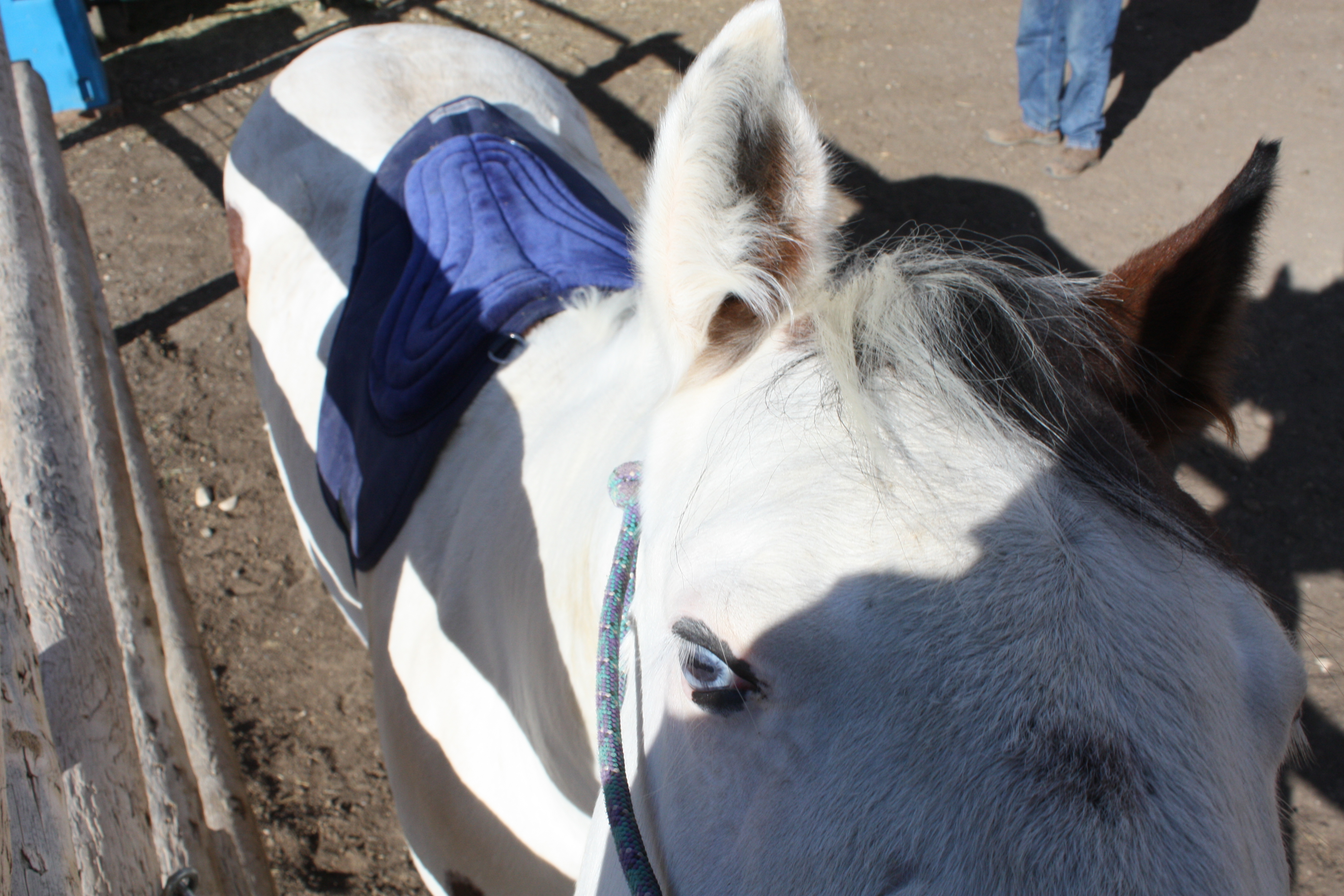
Tilly has a new bareback riding pad cinched up on her back and doesn’t appear to mind!  We introduced it to her last week, let her smell it, chew on it and wool it around on the corral post.  When we placed it on her back for the first time during her daily grooming session, she showed no reaction.  Today we placed it on her back and gradually tightened the cinch around her girth and left her in the corral for the day.  We were expecting some fireworks but she did not appear to notice she had something new attached to her back.  We reasoned that, since she wears a halter and face mask every day (to protect her blue eyes from the sun and flies) that she accepted the riding pad as part of her daily routine.

"am I going out today?" . . . .

“am I going out today?” . . . .

We elected not to start her out on a full saddle, which weighs a great deal more and has stirrups hanging down to frighten and annoy her.  We will lead up gradually to a saddle in the hopes she will adjust to new equipment installments in a calm manner and avoid an all-out rodeo of trying to buck and kick it off.  Hopefully, we can avoid injury to Tilly and the saddle in the process!  Our next venture will be introducing her to a bridle and we have not determined what exact style.  No rush–she is just now a two-year-old and we have lots of time.

This little filly can be stubborn and temperamental, but most of the time, she quickly understands what we want of her and cooperates.  She still hangs out with Abe, our longhorn steer, as well as paying daily visits to the neighboring horses for conversations over the fence.  Her one glaring behavior problem is refusing to allow a farrier to trim her hooves without a wrestling match that goes on for over an hour!  It should take about 10 minutes.  We’ve been through two of those guys and I guess we’ll have to figure out how to do this ourselves.  Our vet suggested a mild sedative might help. What do you say, Tilly?