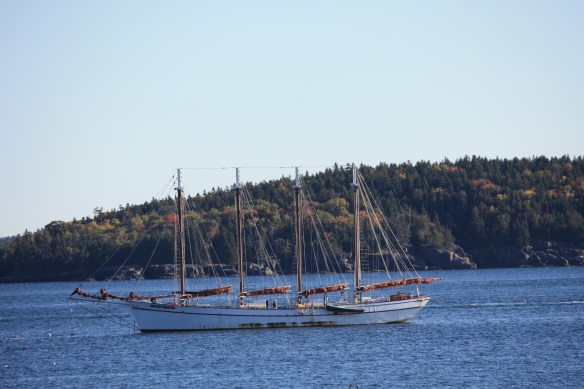
Wyoming’s Historic LX Bar Ranch

IMG_7605.JPG

Gateway to LX Bar . . . .

Cattle rancher and politician John B. Kendrick began construction in 1910 on a set of stone buildings on the west bank of the Powder River on land he purchased from A. J. Collins in 1902.  His goal was to consolidate his other ranch holdings–the K and the OW, which stretched across the Wyoming state line into Montana, encompassing a vast empire of 210,000 acres.  It was a full day’s ride from the OW in Montana to the LX Bar.

IMG_7604.JPG

The cornerstone of the LX Bar . . . .

The LX Bar brand was originally owned by the Stanton-Howard Livestock Company that ran cattle along the Powder River as early as 1878.  The brand passed on to Collins, and then to Kendrick, who set up a spectacular ranch headquarters that stand today as a testament to his ambition.
IMG_7606.JPG

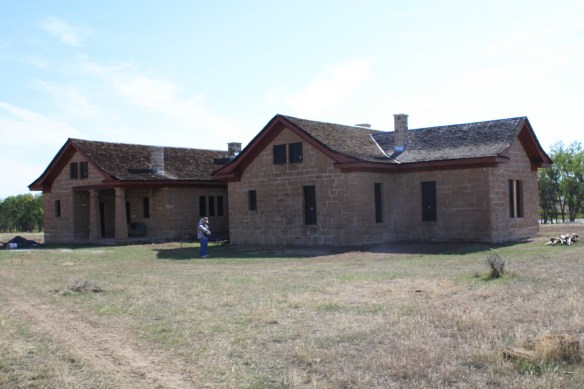
West side entry to ranch house . . . .

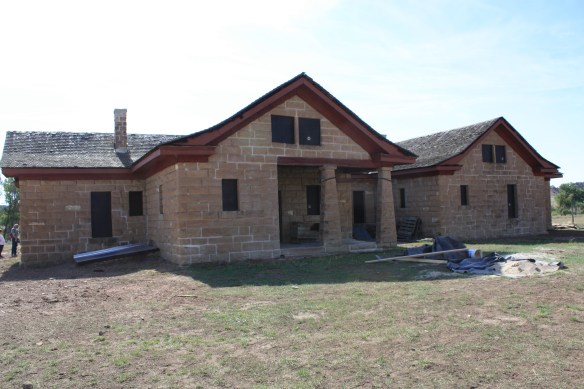
The Powder River can be seen in the background and carves out a wide river bed that ebbs and flows, changing course with the seasons.  A long porch extends along the entire east side of the house, facing the morning sun and the river.   Master stonemason Oscar Husman was hired to build the five- bedroom house, bunkhouse, main barn, processing barn, solar-heated poultry barn, and a service building used for laundry, cooking, ice storage and coal storage.  All were built with eighteen-inch-thick sandstone walls and two-foot-wide foundations.
IMG_7608.JPG

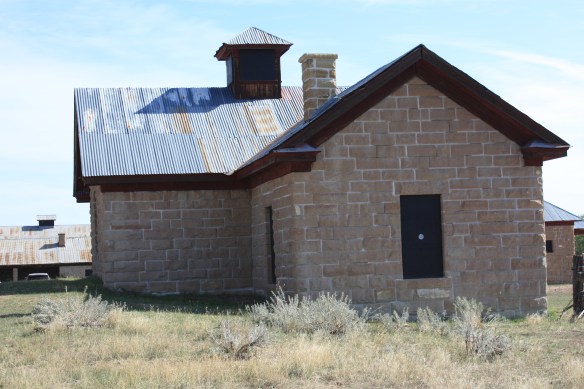
Cook house and service building . . . .

The sandstone outcroppings that rim the hill sides in the area above the river became quarries for the stone cutters, who also included the Byland brothers, the Hedeen brothers, and Richard Salstrom.  During construction, Husman and his family lived at the site.
IMG_7639.JPG

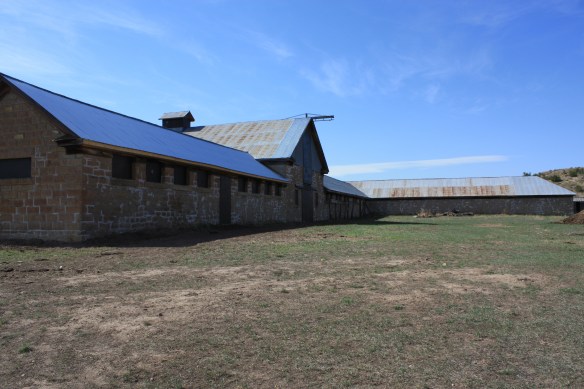
The main barn . . . .

The LX Bar is located in the northern Powder River Basin of northeast Wyoming, just east of the Campbell-Sheridan county line and just south of the Montana border.  Kendrick believed the county road was going to be put in along the west side of the Powder River. The road does begin on the west side and travels by the K Ranch (today’s PeeGee Ranch) and Kendrick Canal before crossing over to the east side of the river near the junction of the river and Clear Creek.  Unfortunately, the rural electric lines were put in along the road and the LX  Bar was never converted to electricity.

img_7644

Processing barn . . . .

Cattle from Texas trail drives were brought through a corral, dipping station and holding pens before being turned loose on the range.
IMG_7648.JPG

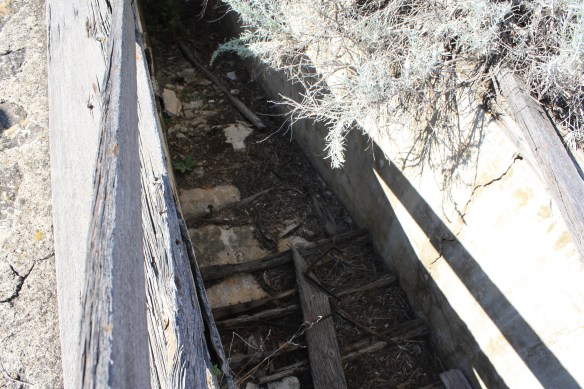
Dipping station . . . .

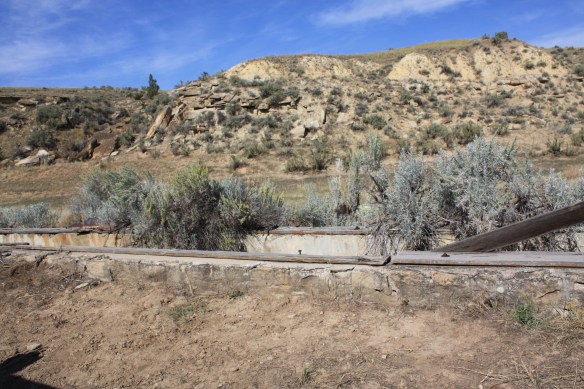
A long concrete chute steps down about 10 feet at the deepest point to immerse the cattle in a potion concocted to kill ticks and other pests.  Cowboys would dunk the cattle’s heads as they came through to be sure they were completely submerged.
IMG_7647.JPG

Exterior of dipping station . . . .

This bovine swimming pool extended about 100 feet in length and it must have been quite a feat and a spectacle to immerse several hundred cattle in this manner.  Where was Temple Grandin when you needed her?
IMG_7641.JPG

Sentinels of the past . . . .

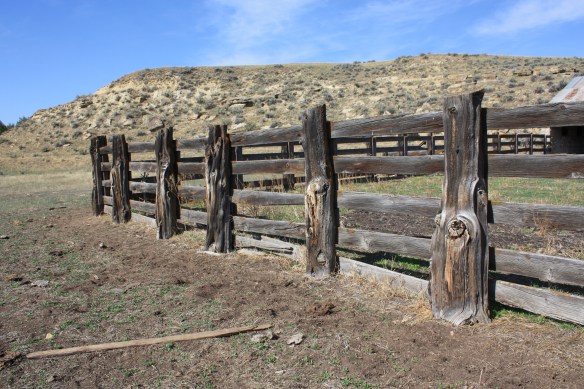
Cedar posts were cut from the nearby pine ridge and are still standing strong in this corral at the processing barn 106 years later.

IMG_7619.JPG

Solar heated poultry barn . . . .

I found this structure to be particularly interesting.  Built into the hillside, it is protected from the Wyoming winds and snow during winter, and remains cool in summer.  The windows face east for maximum sunlight and solar gain.  They are currently boarded up as part of the stabilization effort underway by the Wyoming State Parks and Cultural Resources Department.

IMG_7620.JPG

Chicken roosts . . . .

The interior of the poultry barn was dark and difficult to photograph, but these birds lived in relative splendor compared with most early day chicken houses.

IMG_7623.JPG

Poultry barn . . . .

Funding is not available at this time for a complete restoration of the LX Bar, however since the ranch buildings and 50 acres were acquired this past summer, recent work on the ranch has included mortar replacement, chimney and wall stabilization, roof maintenance, manure removal and the “buttoning up” of various openings.
IMG_7627.JPG

Main barn and corral . . . .

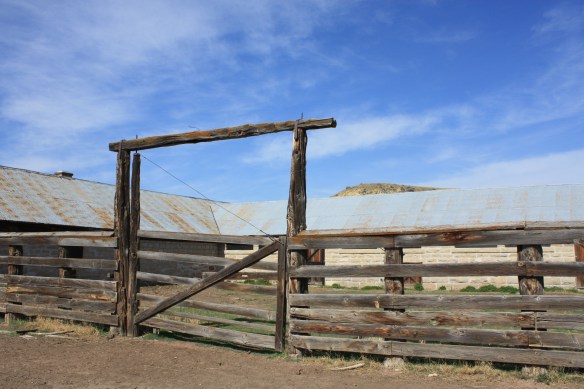
The main barn is immense and encompasses two distinct wings–one running east and west and one running north and south, joined in the center by the horse barn.  The blacksmith shop is in the east end.
IMG_7631.JPG

Horse barn . . . .

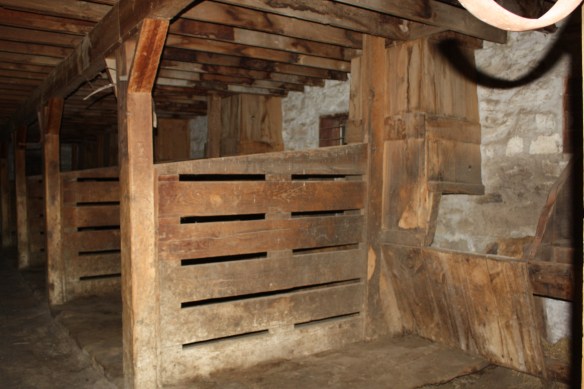
Horses were penned in the corral at the main barn or kept in the stable.  These timbers and wood planks seem as rugged and sturdy as the day they were constructed.
IMG_7632.JPG

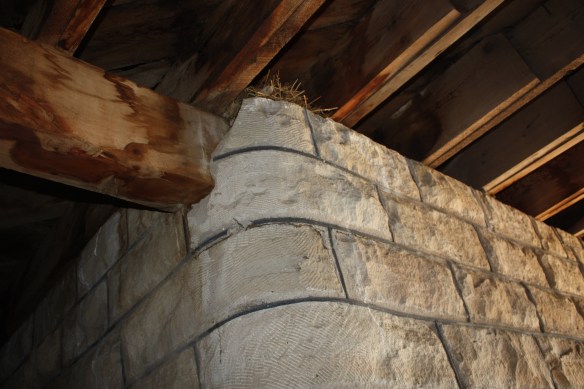
Sandstone detailing . . . .

The rounded edges in the horse barn took some effort and precision.  The stonemasons did a fine job of it.  Makes for a nice perch for the birds.
IMG_7658.JPG

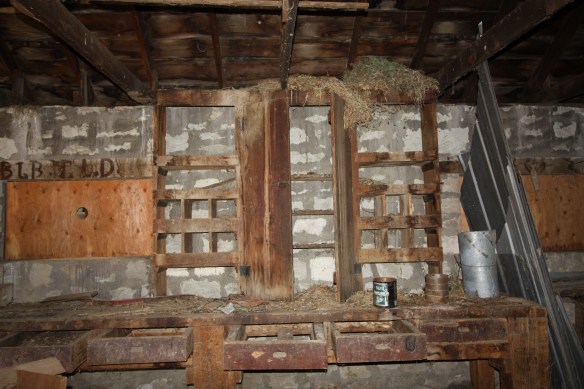
Blacksmith shop . . . .

Some of the new roofing materials seem at odds with the natural surroundings of stone and wood.  All of the buildings had tin roofing which had begun to loosen and blow away. Some replacements pieces had to be added, as well as tightening down all the existing tin roofing to prevent water damage.
IMG_7633.JPG

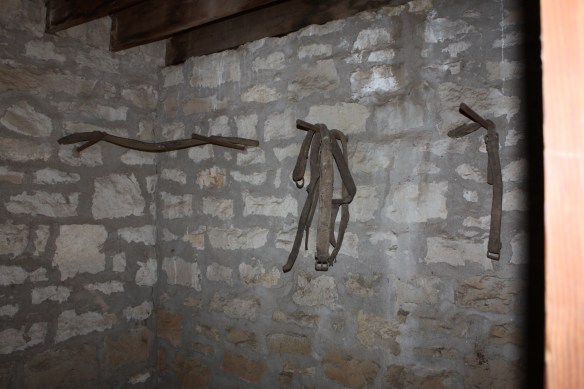
Tack room . . . .

Saddles, bridles, harnesses and a variety of leather appurtenances were stored in two large rooms.
IMG_7609.JPG

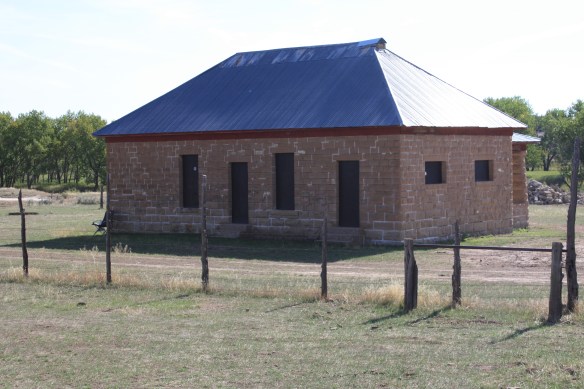
Bunkhouse . . . .

Cowboys had their own quarters.  One old timer recalls that in winter, the frost would be built up on the stone walls inside and they would be forced to move their bunks in to the center of the room around the stove.  Wyoming winters used to be more severe!

IMG_7613.JPG

Cowboy dipping station . . . .

The wash room in the bunkhouse still contains this old ceramic bathtub.  It appears somebody borrowed the plumbing, but since they didn’t have running water, it doesn’t matter.  Water had to be heated on the stove for a Saturday night bath, and likely more than one cowboy made it through one tub of clean water.

IMG_7611.JPG

Bunkhouse facing east . . . .

The handsome stone columns and porches  on the living quarters made for a very refined structure on the prairie.  The design of these structures must be attributed to the master stonemason Oscar Husman.
IMG_7617.JPG

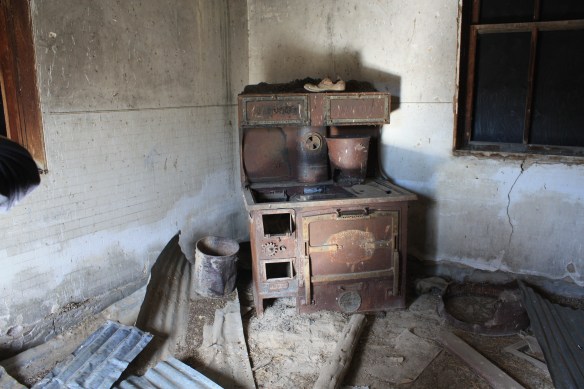
The cook stove . . . .

The primary kitchen that served the ranch was in the multi-purpose building that comprised the laundry and coal and ice storage.  This old stove could tell some stories about the cooks and meals that were created on its burners.  I doubt they had to resort to cooking shoe leather, however, and could not help but wonder how the shoe was placed on the stove??
IMG_7616.JPG

Main ranch house, different perspective . . . .

In 1910, the same year this ranch headquarters was constructed,  John Kendrick was elected to the Wyoming State Senate.  Four years later, he would become governor of Wyoming.  He was re-elected in 1922 and 1928.  He and his wife Eula built their dream home in Sheridan– Trail End– which was donated by the Sheridan County Historical Society to the State of Wyoming for use as a historic house museum.  Nearly 20,000 visitors annually tour the Trail End.
IMG_7618.JPG

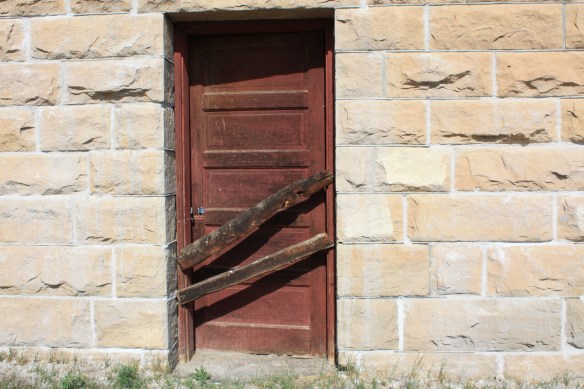
Closed for now . . . .

The Kendrick Cattle Company was in existence until 1988 when family members discontinued operation of the ranch holdings.  In 1992 the ranch became the property of music producer James Guercio, who recently donated the ranch headquarters and some land to the State of Wyoming to be part of the state parks system.  It is the only historical ranch in Wyoming that is now owned by the public.  All the buildings are being stabilized, but the ranch is closed to public access awaiting major renovations and a pedestrian bridge across Powder River. That should be some bridge to stretch across the meandering Powder — a mile wide and an inch deep–too thin to plow, too thick to drink!!

Autumn Glory of Maine

IMG_7766.JPG

Somewhere in Yarmouth . . . .

Mid Coast

An autumn visit to Maine is replete with amazing fall foliage, quaint villages, colonial and Victorian architecture, lighthouses, the Atlantic ocean and seafaring culture.  Reads just like a travel brochure, right?  And let us not forget lobster rolls, lobster steamed, lobster grilled, lobster salad, lobster chowder – did I miss any variations?

IMG_7771.JPG

Lands end . . . .

Our only rainy weather came on our first day driving from Portland to Bailey Island.  Hurricane Matthew pushed the rain up the east coast, but thankfully, cooler air from Canada brought us clear skies, and delightful crisp autumn days going forward.

IMG_7777.JPG

For the sea faring men . . . .

A small park on the point of Bailey Island features this memorial to “all Maine fishermen who have devoted their lives to the sea.”

IMG_7774.JPG

Looking for lunch . . . .

A wide variety of shore birds made for interesting bird watching.  I regretted not having a block of time to spend quietly taking in the scene. Ah well, down the road we go.

IMG_7916.JPG

The Wyoming – the essence . . . .

A rainy day seemed like the perfect time to visit the Maine Maritime Museum complex that extends along the Kennebec River in Bath. The 20-acre historic Percy and Small shipyard became the home of the museum in the 1970’s.    An extensive collection of maritime history is housed in a modern building dedicated in 1989, and the original workshops  and outbuildings for shipbuilding dating back to 1607 are well preserved. More than 5,000 ships have been built in the area, including the Wyoming, the last and largest six-masted schooner built.  As the 100th anniversary of the Wyoming’s launching drew near, the museum dedicated a sculpture on the site where the Wyoming was built in 1909.

IMG_7915.JPG

Calling all landlubbers . . . .

Next, backtracking to Harpswell for a bowl of fish chowder at seaside as the sun went down over Casco Bay.  Spending the night at Cundy’s Harbor in”The Captain’s Watch,” an 1862 landmark home built during the Civil War as the “Union Hotel.”  Recognized by the National Register of Historic Places and the Harpswell Heritage Trust, the eight room original section survives as Maine’s “oldest known coastal hotel structure.”  This bed and breakfast did not disappoint, and the breakfast conversation with the other guests, none of whom were from Maine, was great fun.

IMG_7784.JPG

Come sail away . . . .

DownEast and Acadia

Rockland is home to the Farnsworth Museum and the Wyeth Center, which features paintings by all three generations of the Wyeths.  The artists spent summers in Maine not too far from Rockland, and many of their great works feature the coastline, local residents and wildlife.  We toured the sculpture garden and all the galleries.  It would be one of our last quiet interludes.  The Columbus Day holiday was reputed to be one of the busiest weekends of the year and Freeport, home of L. L. Bean, was so full of people we drove through and headed north to Bar Harbor.

IMG_7790.JPG

The “cottage” district . . . .

We walked the Shorepath, a scenic waterfront trail that follows the edge of Bar Harbor’s cottage district where wealthy “rusticators” kept vacation homes and escaped the summer heat of northeastern cities.  We walked the length and breadth of Bar Harbor, taking in the history, sampling the restaurants and enjoying sumptuous accommodations at the Bass Cottage Inn.

IMG_7792.JPG

Room for the grandkids  . . . .

One lovely cottage after another!
IMG_7794.JPG

And all the relatives . . . .

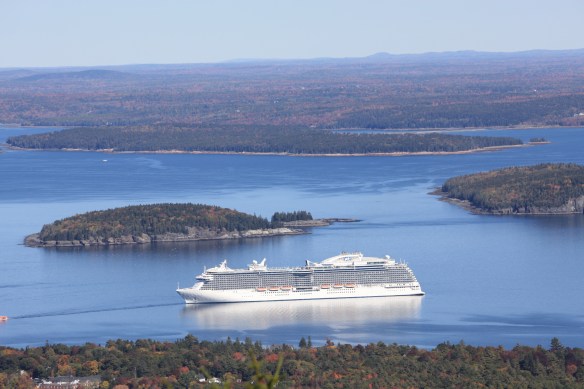
Bar Harbor is a relatively small community that is filled to the brim when cruise ships pull in to allow everyone on shore to shop or tour Acadia National Park nearby.

IMG_7804.JPG

The view from Cadillac Mountain . . . .

Acadia is 47,000 acres of mountain, forest and rock-bound shore that became a summer retreat in the 1800’s for the wealthiest Americans including the Rockefellers, Morgans, Fords, Vanderbilts, Carnegies and Astors.  Around 1900 early summer residents joined forces to create a preserve called Sieur de Monts National Monument; it then became Lafayette National Park and in 1929 it was named Acadia National Park.  Much of the funding for the land purchases came from philanthropist John D. Rockefeller Jr.

IMG_7801.JPG

Mount Desert Island . . . .

At 1,532 feet, Cadillac Mountain is the highest point within 50 miles of the sea from Maine to Rio de Janeiro.  Standing atop the mountain at dawn you can be the first U.S. citizen to see a new day.  The first visitors  arrived about 6,000 years ago and the Wabanaki Indians named this place “Pemetic” or “sloping land.”  We made a visit to the Abbe Museum which is dedicated to the Wabanaki history, culture and archeology in the area.

IMG_7807.JPG

What a bridge!

After two days of touring Acadia, and dodging lots of people in the process, we were ready for the road.  Heading south once more, we traveled the backroads and byways.

IMG_7809.JPG

Lovely day for a walk! . . . .

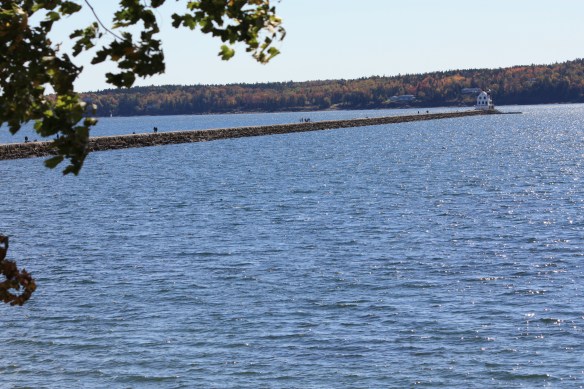
The jetty near Rockland looked like a nice walk.  It doesn’t look too far to reach the lighthouse and we decided it would be refreshing to get out of the car for awhile.

IMG_7812.JPG

Step in a crack and . . . .

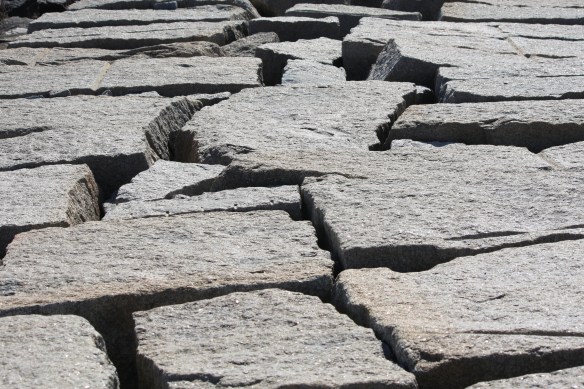
Huge blocks of granite piled up in the sea create a fairly level walking surface.  Or so it seemed.  Just a few feet short of a mile, the jetty was a vigorous workout and took longer than we expected.  We made it all the way to the lighthouse and back and it felt good to be back in the car!

IMG_7820.JPG

“What, no snacks?” . . . .

This character seemed very disappointed that we had no treats to share with him and gave us an indignant stare as we walked by

IMG_7821.JPG

Coastal Maine Botanic Gardens . . . .

The Mid Coast

Yet another side trip to Boothbay Harbor to visit the Maine Botanic Gardens turned out to be a bonus.  We had no reservation for the night and were somewhat apprehensive that we could face a “sold out” situation wherever we headed.  But we resolved to visit the gardens and take our chances.  We were so glad we did.

IMG_7822.JPG

Just grass . . . .

IMG_7824.JPG

Just water . . . .

IMG_7831.JPG

Just a pinecone . . . .

IMG_7834.JPG

Just a waterfall . . . .

IMG_7844.JPG

Just this and that . . . .


IMG_7825.JPG

Just an evergreen arch . . . .

IMG_7828.JPG

Just a butterfly . . . .

IMG_7845.JPG

Just a milkweed . . . .

IMG_7847.JPG

Just a scarecrow . . . .

IMG_7851.JPG

Just a lot of pumpkins . . . .

IMG_7852.JPG

Just a fountain . . . .

IMG_7853.JPG

Just for fun . . . .

Boothbay turned out to be yet another lovely surprise.  We did not expect to find much of a town and were somewhat anxious as we had no reservation for the night and expected we would have to push on further south at the end of the day.  But lo – yet another wonderful harbor and colonial village waiting to be explored!  We drove around trying to sort out what our next step would be and after negotiating a dizzying array of one-way streets up and down hills, pulled up in front of my kind of place.

IMG_7854.JPG

A swing in a tree . . . .

Home for the night in the most charming bed and breakfast.  I didn’t try out the swing but I wanted to.  The innkeeper recommendation for an Italian restaurant sounded great–perhaps it was time for a break from eating lobster!  We ended up with cioppino, or fish stew which contained shrimp, scallops, clams, mussels, squid and I don’t know whatever else.  It was a great meal.

.

IMG_7867.JPG

Oh look, another lighthouse! . . . .

Another innkeeper suggestion was taking a short island drive around Ocean Point before returning to our route south.  It was a great idea.  We next made our way back to Free Port and this time, had to stop in at L. L. Bean for a little shopping.  The success of this Maine retailer has spread throughout town and we noted outlet stores for about every major brand name.  We left our money with L. L. Bean.

IMG_7873.JPG

Ghost of a residential mansion . . . .

South Portland

Fort Williams Park on Cape Elizabeth was just what we needed for an ocean view.  This former mansion was converted to officers’ quarters as the military developed a fort along the coast. There are many ruins worth exploring, but the ocean was what we came to see.

IMG_7877.JPG

Pounding surf . . . .

The tide was out, but the waves crashed into the rocky coast, sending spray and foam up into the air.  We sat on a bench and just listened to the waves.  We don’t hear such things in Wyoming.

IMG_7882.JPG

No place for a swim . . . .

IMG_7886.JPG

The fort has an interesting history . . . .

IMG_7905.JPG

No, another lighthouse! . . . .

One of the best known lighthouses in Maine and America–the Portland Head Light.  We stopped at the visitor center to try to pick up a brochure on the history of the area but they were totally out.  The elderly gentleman who worked the center said they had record crowds over the weekend and ran out of all their printed material.

IMG_7908.JPG

Resort for the summer people . . . .

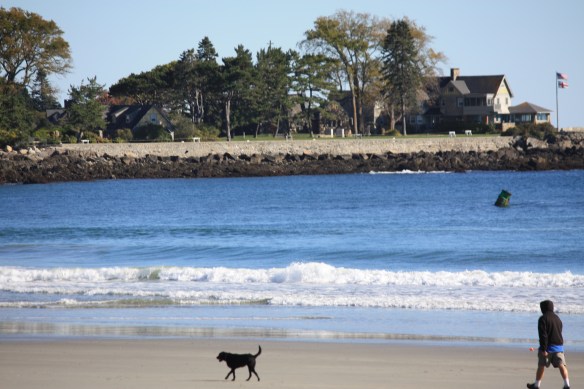
We left Cape Elizabeth and headed south to Kennebunk Port, summer retreat of the rich and famous.  The shore is lined with stately homes and a long stretch of very nice beach which people were enjoying for a walk but the temperatures were a bit cool for bathing.

IMG_7909.JPG

Nice rollers for surfing . . . .

We watched the surfers try their luck at riding the waves.  They wore body suits to keep warm, but it was a crisp day with a stiff breeze.  Brrrr!  Nice way to spend the summer, though.

IMG_7911.JPG

Dogs like it here too . . . .

Back to Portland to explore the Old Port district.  Cobblestone streets, revitalized warehouses with exposed brick and beams, and more restaurants and shops than you can sample on one short visit.  And of course, breakfast the next day would find us at Holy Donuts, famed for their potato donuts (my grandmother called them spudnuts and hers were famous too!).

Upon returning home, the first thing I shopped for was a doughnut cutter.  I had made my grandmother’s recipe for spudnuts before but had to use a biscuit cutter which left them smaller than a traditional donut.  So now, I’m ready to bake a batch and see if I can match the Holy Donuts of Maine.  All I have to do is go to “Wecipes.”

Barn Again

IMG_7704.JPG

Strike a match? . . . .

This 100+ year-old barn has been hanging on even though it obviously has not received any tender loving care in a very long time.  About a dozen years ago I removed the old doors from the front and stored them for safe keeping, making myself a promise I would be back to restore the barn of my childhood memories.  Two years ago, we pulled up a trailer and emptied out all the “trash and treasures” that had been dumped inside for the last thirty years.  It was a daunting task and we didn’t get it all, but enough to make a significant dent.  I spent a summer when I was about 13 years old painting the barns, and this north wall still bears faded red paint.  And today we pulled off the sagging end that we will rebuild.  Ahem.

IMG_7706.JPG

oops . . . .

We tossed a rope and chain over the end in an attempt to remove the east end which had been pirated for lumber and left hanging in the wind.  We thought the 1 x 6 boards on the roof would snap like twigs, but what a mistake that was.  Everything BUT the roof boards snapped.  Ah well, no harm done, really.  We decided to move the end wall that came down over to a new foundation and start over rebuilding to meet the existing section.

IMG_7711.JPG

The work begins . . . .

With a crow bar, I began prying off the boards from the wreckage to be used again.  The condition of the lumber is surprisingly good and I love the aged patina.  We will use all that we can in rebuilding the structure.

IMG_7759.JPG

Preservation lumber pile . . . .

By the end of the day I had deconstructed every board, including rafters, support posts and wall boards.  I stacked it all in the order that I removed it.  And headed for a hot soak in the old bathtub–I ached in every place in my body.  Meanwhile, Michael has been all day digging post holes and pounding posts for a paddock we are building for Tillie.  Move over to make room in the tub!

IMG_7763.JPG

“Hey, an historic find! . . . .

I had previously stacked a pile of foundation stones near the barn that I dug up from the foundation of an old log cabin that was eventually moved to the Gatchell Museum in Buffalo.  I figured I would need a few good stones to shore up the foundation when and if I ever got started on a restoration, and as I dug out the rotted floor boards and began removing old floor joists my shovel struck something very hard.  A few of the stones originally placed under the barn were still there, sunk down in the dirt and out of view.

IMG_7757.JPG

Volunteers needed! . . . .

We knew we would need to add structural support and strengthen the walls.  Working on the structure was making us a little nervous.  Half of the old building seemed sound and stood as sturdy as could be expected, but the end we pulled off was left hanging a bit precariously.  The decision was made to scrounge for structural supports in an ancient pile of leftover lumber nearby.  We found a telephone pole in good condition, cut off two 10′ lengths and began drilling holes for corner posts which we would fill with concrete.  We unearthed one more pole and are searching for a fourth to complete the corner posts of the new/old structure.  An antique oak walking beam Dad purchased in a load of oil field surplus many years ago still seems pretty sound and is long enough for a header front and back.  We will purchase new pressure treated 2 x 6 boards to lay across the foundation stones and build up from there.

016.JPG

Never too late . . . .

This photo will serve as a reminder of what we started with.  Restoration will take some time, but I cannot wait until we can do the “after” photo.  As I look at this, I am reminded of what was.  And I am reminded of what a wreck our old chicken house was when we began to restore it.  The room on the west end (left) of the barn was the tack room where saddles, bridles and horse paraphernalia were kept.  The double doors in the middle opened to the barrels of rolled oats and animal feed.  The right hand section, sagging precariously, contained two horse stalls with built-in feed bunks. Lumber removed here many years ago left things in pretty bad shape.  A large corral and loading chute, long since removed, was attached on the right.

Why save an ancient wreck of a barn, with all the challenges, grit and grime?  Because it holds so many memories.  Because it is a good deal cheaper to salvage than build new. Because it speaks to the past and is part of our family heritage in this place for nearly 70 years. And because in the end it is worth it.


October Morn

IMG_7742.JPG

Sunrise in the treetops . . . .

Autumn in Wyoming is rarely gentle.  But this year is different, with warm days, cool nights, and no frost to wreak havoc in our vegetable garden and flower beds.  Even the trees are in on the act, gradually turning on their beautiful colors and holding the leaves longer.  So accustomed are we to early autumn snow and freezing temperatures  that we are awakening each day in wonder at the beauty of this season.  On this first day of October, I left the house early with my camera determined to try to capture all the lush colors that still linger in the garden and in the tree tops.  What a trip!

IMG_7715.JPG

Volunteering among the rocks . . . .

A recent 2 1/2 inch rain has the grass and flowers bursting with color.  These violas grew up in a crevice along the sidewalk and greet us each day as we walk to the gate.  There is no stopping them!

IMG_7717.JPG

“We’re just getting started!” . . . .

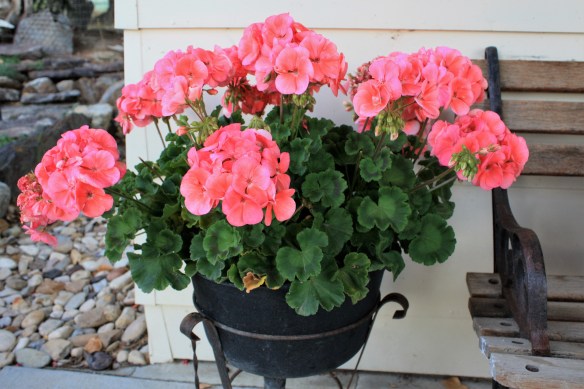
A pot of geraniums have been so beautiful all summer I decided I would bring them indoors when the weather gets cold.  But for now, they are enjoying our extended summer.

IMG_7722.JPG

Autumn favorites . . . .

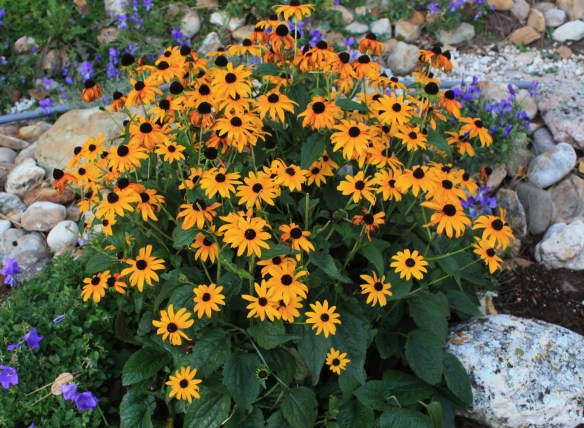
Black-eyed Susans along the dry creek bed spend the summer looking fairly drab, and then in autumn burst forth with brilliant color which lasts for weeks.

IMG_7720.JPG

Pink petunias interspersed  with fallen leaves . . . .

The petunias usually get ropey and sparse after blooming all spring and summer, but not this pot of pink beauties.  We open our bedroom door to the morning sunshine and look directly out at these lush flowers.  Planted in a blue ceramic pot adorned with pink flowers, they make a lovely statement.

IMG_7725.JPG

“Here I am, all alone!” . . . .

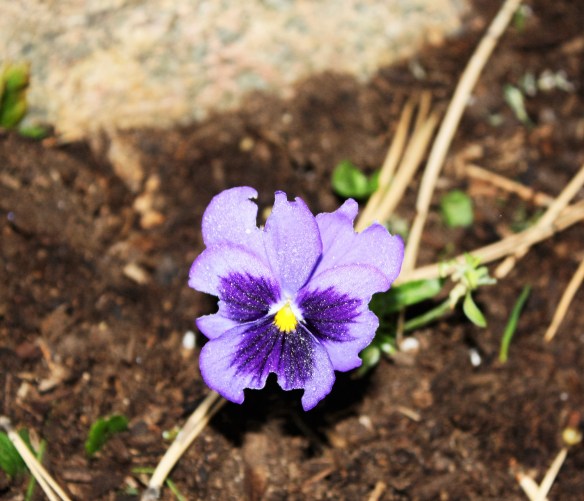
This perky little pansy somehow found its way to a nearby bed about 10 feet from a planter on the porch that was filled with blue pansies all summer.  A faint dusting of pollen graces the petals.

IMG_7730.JPG

Wedding bouquet . . . .

We were married in September and most of our flower arrangements consisted of bushel baskets filled with purple asters.  They bloom along the mountain roads in the autumn as well as in our garden and serve as a lovely reminder of our anniversary.

IMG_7734.JPG

Subtle beauty . . . .

Not all of the garden arrangements are bright with color.  This old iron pot looks fine with purple fountain grass and sweet potato vine.  The subtle hues blend well with the stones surrounding them.

IMG_7748.JPG

Golden canopy . . . .

Plains cottonwoods are as beautiful to me in autumn as any other tree.  Living beneath them along an old dry creek bed is heaven on earth. However, I won’t bother to mention all the leaves we will soon be raking for days on end, the annual dead fall of branches and twigs, the cotton that spews forth in spring, and the sticky buds that can ruin a paint job on your car.  Well, even a rose has thorns!

IMG_7732.JPG

More late bloomers . . . .

I think these quiet contrasting colors and textures are beautiful together.

IMG_7738.JPG

Once more  . . . .

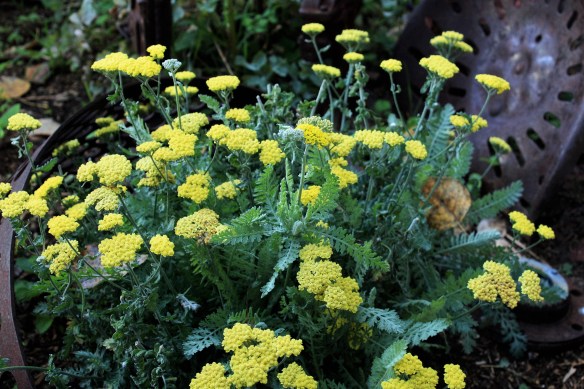
These golden yarrow were beautiful in the spring and summer.  I cut them back once the flowers had faded and they got busy and started blooming again!

IMG_7728.JPG

Humble little rose moss . . . .

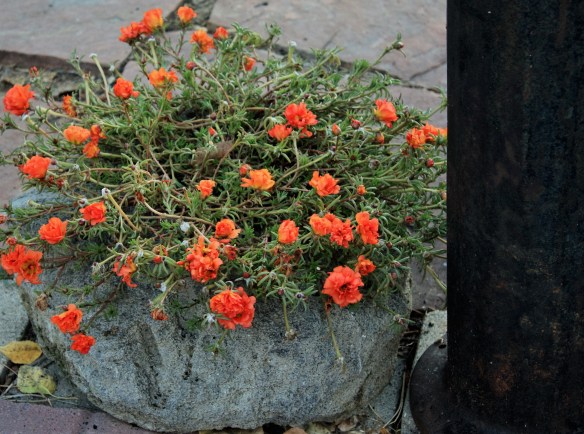
Or is it moss rose?  I can never remember.  But what a favorite it is.

IMG_7733.JPG

My new favorite . . . .

Orange carpet flower thrives in a raised berm and the hummingbirds love it!  It survives in a hot, dry berm where many other perennials have failed and I am so grateful.

IMG_7737.JPG

Dinner gong and geranium . . . .

Nine hanging pots of geranium vines adorn the length of our front porch.  And they are still beautiful on the first day of October!

IMG_7756.JPG

Asters of another color . . . .

Pretty white asters just began blooming and will last until the snow flies.

IMG_7746.JPG

Morning companion . . . .

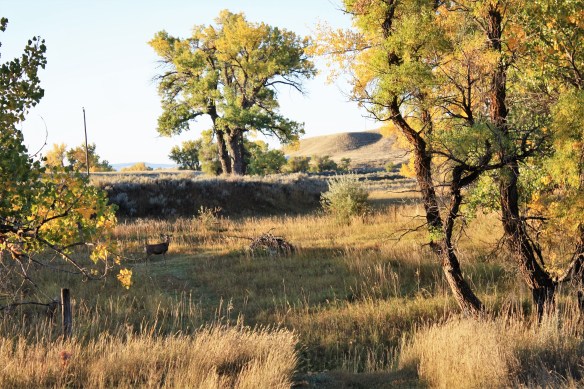
This doe deer seems to be enjoying the morning as much as I am.  On this first day of October, I have discovered so much to marvel at  and feel I am truly blessed to live here.  In less than an hour my journey through the flowers and fall foliage has left me in awe of the natural bounty of this place.

Busted!

IMG_7537.JPG

“This isn’t much for hay!” . . . .

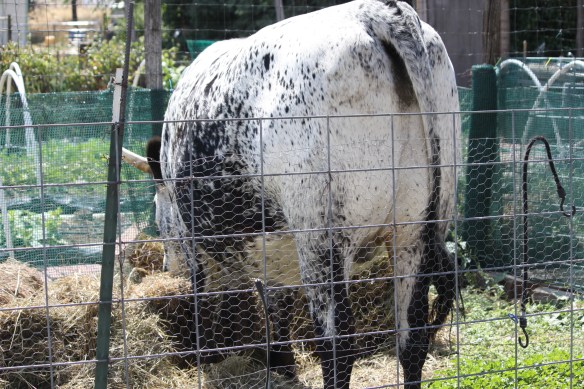
Abe, a.k.a Feed Lot, is caught in the goose pen, terrorizing them and tearing up three old bales of hay (and I mean OLD)!  He jumped over the fence day before yesterday and we had to open the gate to let him out, with a proper scolding, of course. Can you picture a 2000 pound steer jumping over a four-foot stock panel?  Yesterday, he pushed his weight against the stock panel that serves as the gate, and the rubber straps that held it in place gave way.  More mess, more hay scattered around.  The hay bales were placed in the pen to block the wind and snow in winter and to provide a little shade in summer.  They have become permanent fixtures, until now.

IMG_7539.JPG

“Aw, I’m not hurting anything!” . . . .

Caught, he knows he isn’t supposed to be there.  Why is he in there?  The hay, as described, is ancient and unappetizing, even to an overweight steer.  He has to jump the fence or force his way through the gate–even though he has acres of good grass to eat–for a few bites of dried out, lousy hay.  So why does he go there?  Because he can.

IMG_7541.JPG

Out of here, now!   “I’m going already” . . . .

Aha!   Abe has an accomplice.  Today,  after pushing through the gate, Tilly followed him into the goose pen to join in the fun.  She wasn’t interested in the hay, obviously deciding it didn’t meet her high standards, but she hangs out with Abe and was curious to see what all the excitement was about.

IMG_7544.JPG

“She helped me!” . . . .

After this pair of bandidos struck, we determined something serious would have to be done.  The goose pen is in shambles and they will have to take up temporary quarters elsewhere for the night.  Since Abe is the perpetrator in all this wrong-doing, he is going to feel the sting of the sling shot once again and he knows full well it is punishment for something he shouldn’t do.  His tough old hide has bounced off more than one steel pellet.  They don’t injure him, but they sting like hell.  As for Tilly, well . . . . . . . . . . .she appears to be looking for mercy.

IMG_7548.JPG

“Can I plead the 5th?” . . . .

I took pity on her (surprise!) and fed her a carrot if she promised never to follow Feed Lot into the goose pen again.  Yeh, right.  Today we begin to clean up the mess and re-build a safe enclosure for the geese to spend their nights.  But first, we have to deal with Abe’s standard calling card.

IMG_7542.JPG

Abe never leaves his trail unmarked!   Ewwww . . . .

Life on the funny farm.

And Then There Were Two

IMG_7514.JPG

“Our last two babies” . . . .

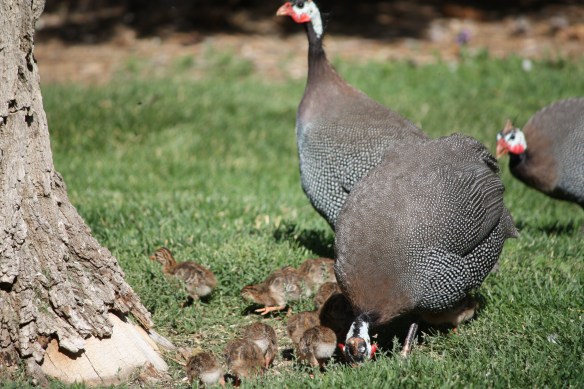
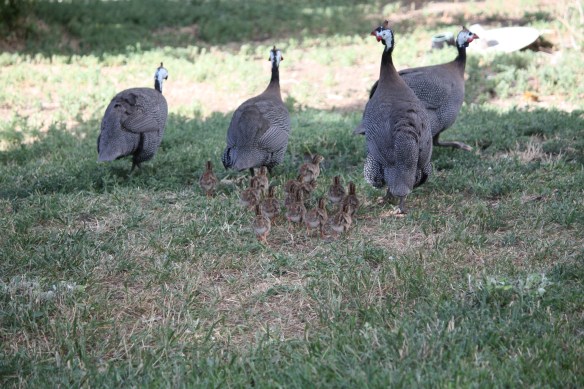
Two guinea moms who have been tag team partners in building a nest, laying their eggs, and now hovering over their newly hatched keets, have had a long slog.  They arrived in the yard one evening three weeks ago with what can only be described as “a mess o’keets!”  A brown mass of twenty-some tiny guineas, barely bigger than bumblebees, was flowing through the “forest” of grass near the garden shed.  All were striving valiantly to keep up with the two guinea moms leading the parade, their little stick legs pumping hard and heads bobbing just above the overgrown grass which had not been cut in a week.

IMG_7449.JPG

“Hey, where is everybody?” . . . .

Our consternation at the sheer volume of babies was heightened by the knowledge we had no control over the situation.  Previous attempts to capture the keets and raise them in the brooder house have met with mixed results.  The guinea hens wanted desperately to escape the confines of the brooder house and had to be turned loose, sans babies. We raised healthy birds, but their knowledge for survival and ability to assimilate with the older guineas was inhibited.  Not to mention, trying to catch the little devils is about as easy as trying to catch a baby pronghorn–they are born to run!  Vivid memories of thrashing around on the ground with a fishing net or plastic tub to capture and get my hands on the little critters overtook my impulse to “save” them once again.

IMG_7495.JPG

“Dinner time” . . . .

We created watering stations in a couple of locations where the group entered and exited the yard each day, and left a feeder with chick starter granules thinking the little ones would soon starve without something to eat.  We observed they seemed to be eating what the adults ate– insects, spilled seed from the bird feeders, and smaller pieces of scratch grains that we throw to the adult birds.  Each day we attempted to get an accurate count and it appeared the group was experiencing some attrition.  Each evening the guinea moms would depart for the sagebrush and tall grass outside the boundaries of the yard, taking the little ones with them for the night.  They seemed to vary the destination, but we never knew for certain where they spent the night.  The rest of the adult guineas roost in a grove of spruce trees inside the yard where they are relatively safe.

IMG_7490.JPG

“Better keep up!” . . . .

The morning this photograph was taken was somewhat depressing.  Rosie, our dog had barked incessantly through the night, and several times the guineas roosting in the spruce grove erupted in frantic chatter.  I went out with a flashlight but could not detect what was causing the ruckus.  Rosie didn’t offer up any useful information, so I went back to bed. Next morning the baby guinea population had been reduced by half.  We could do nothing but wring our hands and worry each evening when the little troop traveled into the brush. Predators of all kinds awaited them and have decimated the keets to just two remaining.

IMG_7531.JPG

“It’s time to fly” . . . .

Last evening we were enjoying a fire outdoors on the patio and noticed the guineas were behaving differently.  They were circling a giant spruce where they roost in the winter months as it affords more protection from the snow and cold.  The two remaining keets were attempting to jump onto the low hanging branches of the tree.  Round and round they went, leaping and falling and trying again.  They now have just enough wing feathers to give them loft and tiny as they are, they finally succeeded in reaching a low branch that allowed them to ascend the tree to higher elevation.

IMG_7534.JPG

” I think I could use a bigger branch!” . . . .

As we watched in amazement, we wondered what prompted the decision to change their routine.  Had the keets somehow demonstrated their ability to climb a tree?  Did the guinea hens know they were ready?  Were they desperate to save the last two keets from harm?  The group collectively seemed to know it was time and moved en masse to the giant spruce, circling patiently as the little ones tried their luck at roosting for the first time.

IMG_7532.JPG

Tucked in for the night . . . .

There was no chatter from the giant spruce tree last night.  I worried that the little keets would fall out of the tree and tried to imagine how their tiny feet could grasp a branch all night and stay aloft.  At dawn, I heard them down on the lawn and went to the window to see if I could find the little ones.  They were grazing in the grass with the rest, hopping and strutting along as they embraced a new day.  Their trials and tribulations are not yet over and as the flock departs for the day, they will have to cover the same ground that stretches for over a mile of sagebrush prairie and tall grasses in the creek bottom, catching grasshoppers and whatever else they can find for a meal on the move.  Hopefully they will all return this evening to roost safely for the night.

Ted

IMG_7198.JPG

Got lumps? . . . .

Disguised in a bumpy exterior, Ted tries to hide from notice and blend in with the rocks surrounding his favorite water hole.  His ubiquitous presence in the flower beds, rock gardens and even on the front porch became so common we took him for granted and had lengthy conversations with him as we watered, weeded and wandered around the yard.

IMG_7152 (2).JPG

“These pine cones are prickly!” . . . .

A bed of pine cones resting between two huge Ponderosa pine trees seems an unlikely spot for Ted, but he is full of surprises.  I never know when I will rest my hand on the ground while pulling weeds and he will suddenly hop into the air near my finger tips, startling me and eliciting a loud yell of surprise.

IMG_7354.JPG

“Hey, that water is cold!”

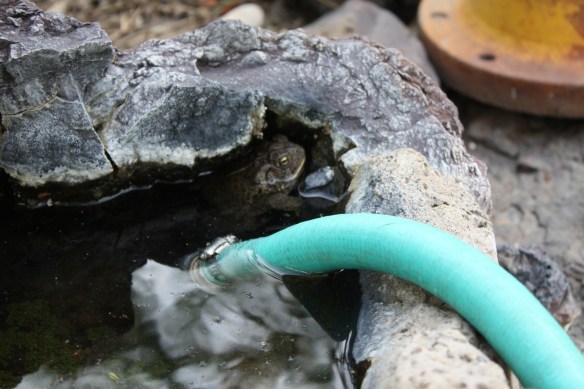
Ted loves a bath in the old rock, but he likes his water a bit more temperate.  Not realizing he was lurking in the corner, I filled the rock with cold, fresh water.  The look he gave me says a lot.

IMG_7398.JPG

“Ah, morning rays to warm me up!” . . . .

Ted appears to have gained some weight – he looks much larger splayed out on the rocks in the early morning sun.  We decided he is just expanding to catch more sunlight.  I don’t know what the reaction will be if he suddenly decides to hatch a bunch of little Teds.  A trove of toads?

IMG_7205.JPG

“Don’t make waves!” . . . .

I shall miss my Ted talks when he leaves us for the annual hibernation.  A guy with this much personality leaves a void, you know?

Fawning

IMG_7330.JPG

Nitchka and babes . . . .

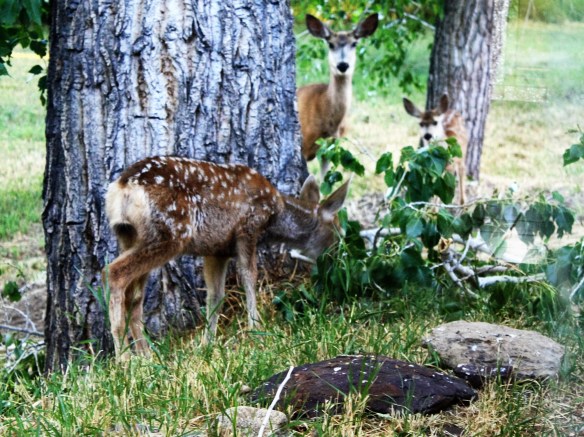
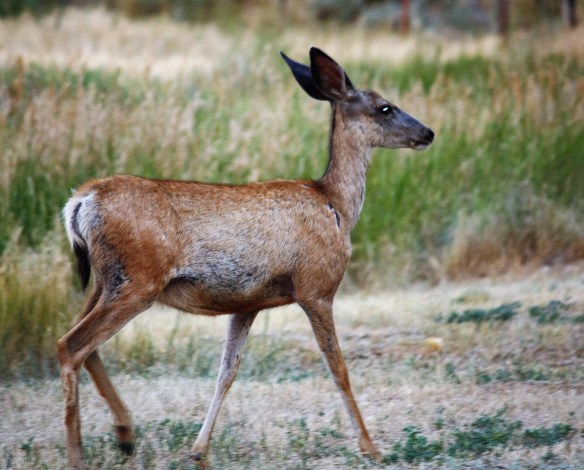
The past two weeks have been filled with newborn mule deer fawns.  They come past the yard on the way to the pond in the evening for a drink, or they hang out back by the goose pen to grab a sip of water out of a tub we keep filled for the geese.  This doe has a notch in her ear from an injury of some kind, and we named her “Nitchka.”  She is very gentle, and before the fawns were old enough to accompany her,  she stood along the fence nibbling and watching us with her great dark eyes.

IMG_7348.JPG

“Now this is quite tasty!” . . . .

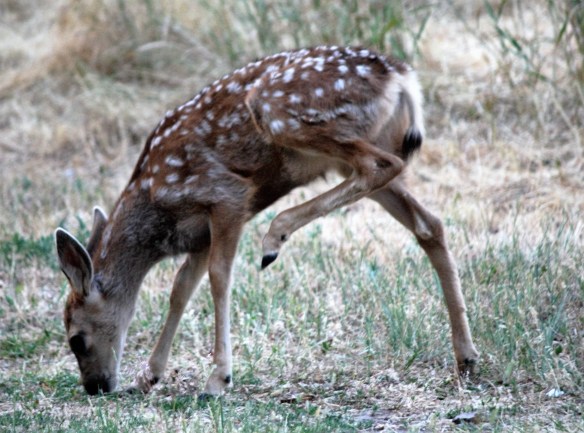
This fawn was photographed out the bay window in our living room.  A fierce wind storm the night before blew down some branches out of the cottonwood trees overhead, which make for browsing.

IMG_7343.JPG

“What do I see?” . . . .

I did not expect to capture all three in one shot–deer move along fairly quickly and the fawns are rarely close together or close to Mom.

IMG_7372.JPG

A doe and fawn on the way to the pond . . .

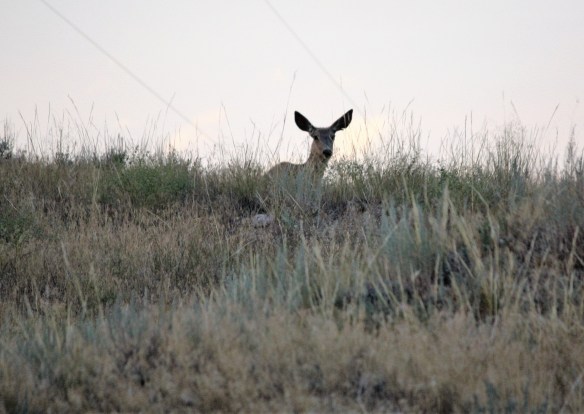
Evening is a good time to watch the deer as they march to water.  Also, early in the morning they nose among the lilac and chokecherry trees for leaves and twigs.  This doe has only one fawn.

IMG_7377.JPG

Snack time along the way . . . .

IMG_7380.JPG

Got to scratch my tummy! . . . .

IMG_7383.JPG

“I’m not supposed to talk to strangers!” . . . .

IMG_7386.JPG

Nitchka keeps an eye on her twins . . . .

IMG_7388.JPG

An added scene as the sun goes down in the west . . . .

Walk In The Wild

IMG_7233.JPG

“What’s for breakfast?” . . . .

July 4, 2016 Red Feather — Our day began with a visit from a Blue Heron across the road on Sam’s Pond.  Calmly surveying the options for a tasty morsel, this grand creature stood quietly while I hung over the porch railing to grab a few shots.  Many of the weekend visitors had already departed for home, leaving Red Feather on this Monday morning quiet and returning to some sense of normalcy.

IMG_7243.JPG

“Might as well try another perch” . . . .

Big bird takes a graceful leap for a better vantage point.  By now my breakfast is growing cold, but it doesn’t matter.  Already this day seems special, and as we embark on our daily walks I will record whatever we find out there in “the wild.”

IMG_7244.JPG

“A good stretch feels good after a long standing” . . . .

Doesn’t seem to be much action on the pond this morning and after peering intently into the water, our visitor needs a good “seventh inning stretch.”

IMG_7237.JPG

“I think I can see a large bird in the water” . . . .

One last image captures the reflection of “Big Bird” and the Aspen trees nearby.  It will be hard to find another image so magical on our walk, but the day holds much promise.

IMG_7250.JPG

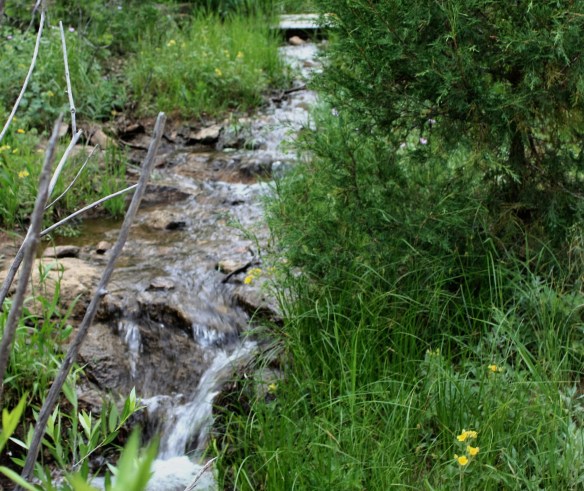
A tangle of sagebrush and flowers . . . .

Wild flowers are at their peak right now, and it is a challenge to decide which clusters to include.

IMG_7255.JPG

Indian Paint Brush  in a meadow of sage . . . .

I located some seeds once, but didn’t realize they only grow with sage.  My plantings didn’t survive.

IMG_7253.JPG

Dozens of different yellow flower varieties . . . .

Should have packed my wild flower guide so I could identify these.  Ah well, next time!

IMG_7254.JPG

Sunflower . . . .

There were brilliant clusters of sunflowers along the road and in the meadows.

IMG_7258.JPG

I will call these Lemon Drops . . . .

Perhaps a study of the predominant colors of wild flowers will reveal that “yellow” wins.  Bright and cheerful, the yellow varieties stand out in the crowd.

IMG_7262.JPG

Blue is special . . . .

My personal favorites are the blues.

IMG_7259.JPG

White is nice . . . .

After searching for more of these to see if they had “bloomed” I found them all to look alike.  They are “in bloom.”

IMG_7264.JPG

White with happy faces . . . .

Didn’t want to disturb the insect perched on board, as it may be a pollinator.  Looked like a very small wasp or bee-like creature.

IMG_7294.JPG

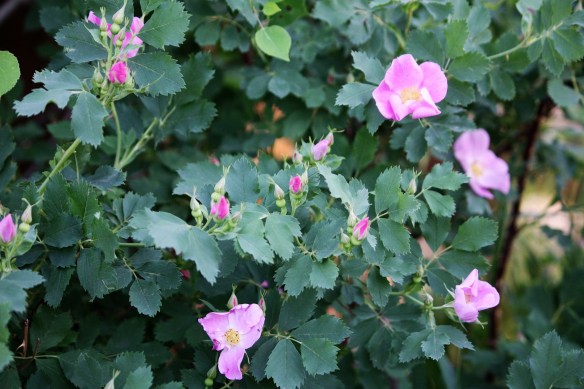
Wild roses blooming everywhere . . . .

These little pink roses are ubiquitous and the hips will be food for the bears.

IMG_7298.JPG

Oh Columbine! . . . .

Nothing is prettier than the Columbine, Colorado’s state flower.  I grow them in my garden at home, but they don’t seem as vibrant as these found in the wild.

IMG_7303.JPG

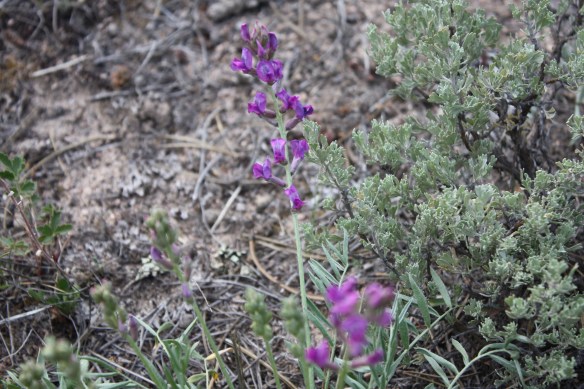
Blue treasure . . . .

A camera fails to capture the true blue of these extraordinary flowers, but we keep trying.

IMG_7276.JPG

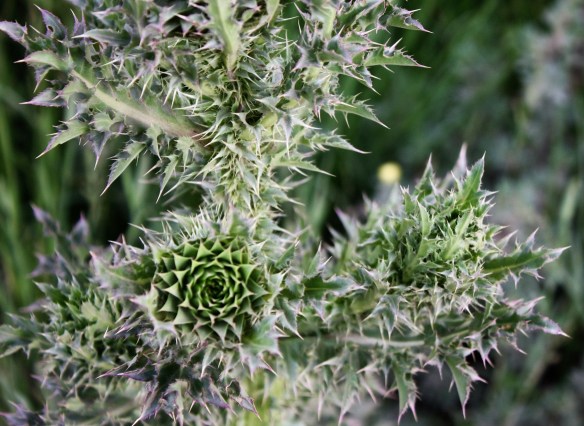
A prickly discovery . . . .

Not to be left out, a thistle is also nature’s creation.  Pesky, invasive and labeled a “weed,” it gets no respect.  But it is an interesting specimen!

IMG_7257.JPG

A little lavender . . . .

IMG_7260.JPG

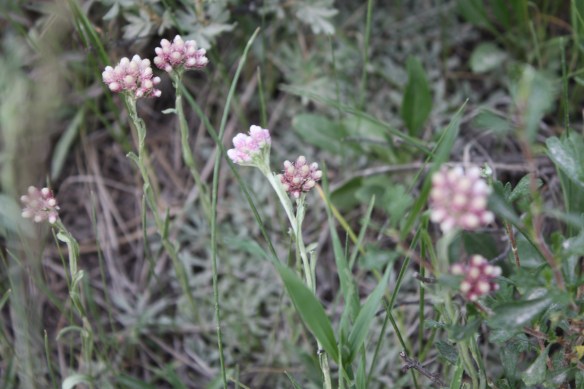
A little pink . . . .

IMG_7300.JPG

A little green . . . .

IMG_7309.JPG

A little water . . . .

IMG_7290

A lot of ducks . . . .

Eight babies seems like a tremendous challenge, but this mother calmly leads the way and her ducklings stay in formation.

IMG_7313.JPG

Three Sisters . . . .

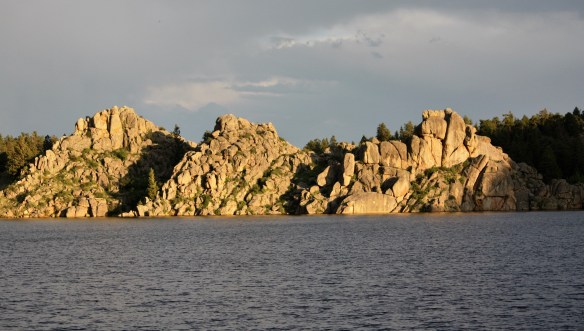
This iconic rock formation juts into Hiawatha Lake and catches the evening sun as it is going down.

IMG_7268.JPG

“Shhhhhh!  Enter quietly” . . . .

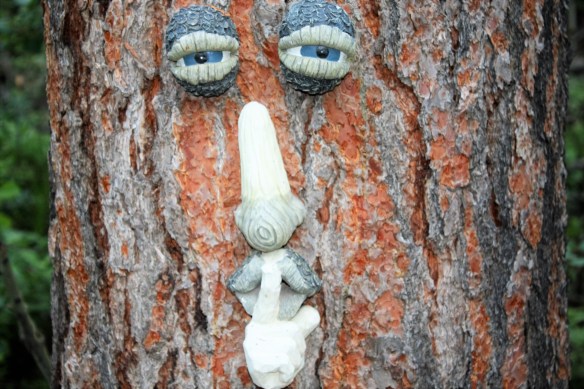
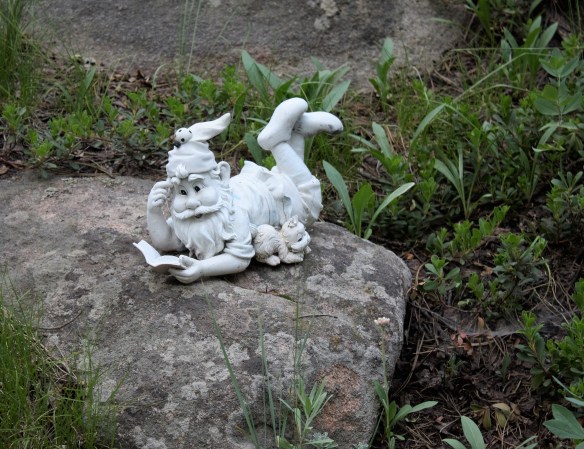
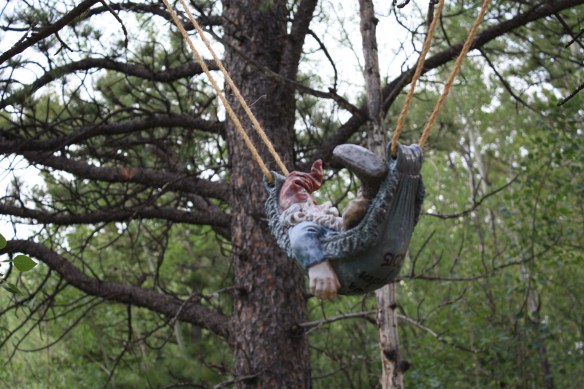
It wouldn’t be a walk without a trip down Elf Lane.  This gentle reminder invokes a special respect to avoid disturbing all the gnomes, elves and other little creatures sprinkled through the rocks and along the creek.

IMG_7267.JPG

Literary elf . . . .

IMG_7272.JPG

Loafing elf . . . .

IMG_7273.JPG

Elves galore . . . .

IMG_7270

The babble of a brook . . . .

IMG_7231.JPG

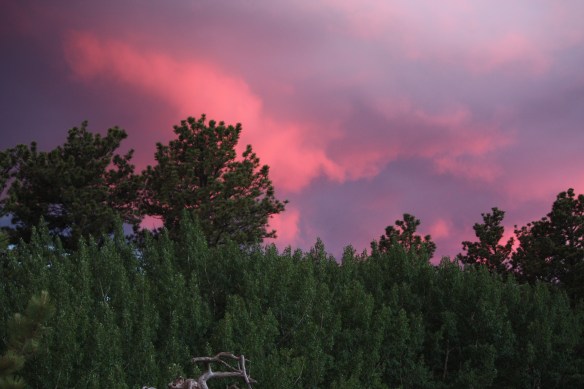
Sundown . . . .

Returning to the cabin, the evening sky put on a show of its own.  One spectacular day.


New Hoots

IMG_7228.JPG

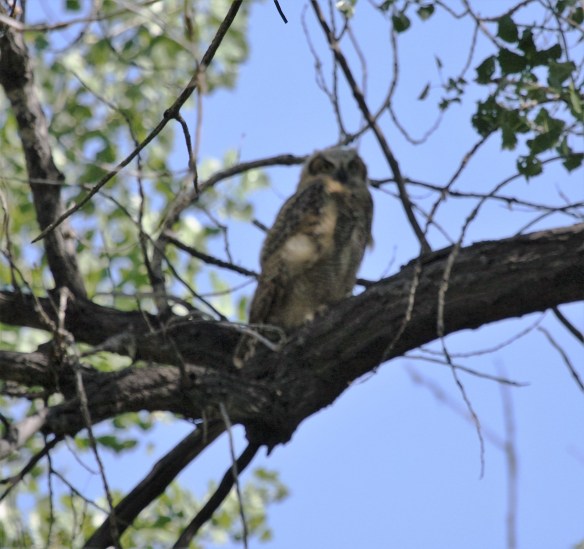
New kid on the block . . . .

Our great horned owls return each year to nest in a hole in an ancient cottonwood tree.  It brings us such enjoyment to observe them and watch their progress.  This young one is still learning to fly with confidence.  It stayed put on an old branch as we walked nearby. The other young sibling and the male owl flew off as we approached.

IMG_7224.JPG

“I don’t hang around – look at me now!” . . . .

This owl baby flew to a higher perch to observe us.  We have watched it at dusk doing “touch and go’s” from the tree top to the hill side and back, ostensibly to improve his flight and landing skills, but to hunt for voles, mice and rabbits.

IMG_7222.JPG

“I’ve got my eye on you!” . . . .

I could feel a pair of eyes on me, and when I finally sighted the female owl overhead, I was very careful not to do anything to alarm her.  She can be fierce and has a wide wingspan that when she swoops down on you is completely intimidating.  Her claws are her great weapon and are not something I care to tangle with.

IMG_7217.JPG

Taking a lesson from pop . . . .

I hope they aren’t surveying the neighbor’s chickens pens.  They have been known to try for a chicken.  We can recall as children our grandmother discovering an owl in the old chicken house and she grabbed a broom and gave it such a fierce whack it did not recover. I am relieved not to have lost any chickens to our owl family, and pleased that there are lots and lots of rabbits this years to feed a family of four.