Too Many Guineas

"Hello, world. Where's Mom?" . . . .

“Hello, world. Where’s Mom?” . . . .

We had a very prolific year with our guinea flock.  And the hens did it all on their own, with no assistance from us.  This group were lucky to be hatched inside one of the nesting boxes in the old chicken house.  Two other batches were hatched “in the wild” hidden down in the creek bottom.  We discovered a swarm of babies barely a day old running through the grass.  Two Guinea moms had done the tag-team duty of sharing a nest and were they successful!  We counted 16 tiny little fluff balls darting around and our attempts to catch them and bring them in to “safety” to be raised in the rabbit cage proved elusive.  We did finally manage to gather up 14 of the keets from three separate batches and share them with a nearby ranch family who wanted to raise them.

"one, two, three--where is everyone else?" . . . .

“one, two, three–where is everyone else?” . . . .

From the moment they hatch, guinea babies are on the move and can dart through the grass like greased lightning.  The hens go about their daily routine, traveling through the fields, the barnyard, up into the hills and beyond. The little ones are expected to keep up. They are so tiny they are largely invisible, moving along in a brown tide barely stirring the blades of grass.  We watched from a distance, certain they would be gobbled up by predators. We noted how they were accepted into the entire flock and how they all traveled in a tight-knit group.  When we introduced keets we raised separately from the flock the previous summer, the adults pecked at them and did not immediately accept them.

These baby guineas thrived in spite of our failed attempts to bring them in to safety.  As they grew to become indistinguishable from the adults, it became apparent we had a problem. Too many guineas!  With winter coming, we planned to move them into a smaller abode which would accommodate about a dozen total.  We inquired whether the family who had previously taken the babies would like to have some adult birds.  When they agreed, we were suddenly faced with two questions:  1) How would we catch them?  and 2) What would we do with them once we caught them?

glorious guineas . . . .

glorious guineas . . . .

I remembered helping my grandmother catch chickens that she planned to butcher.  It was simply a matter of going with flashlights into the chicken house, selecting the birds she wanted, grabbing their legs and putting them in a gunny sack.  I helped her with the butchering a couple of times, and quickly decided this was not my cup of tea.  I had to hold their legs, lay them over a chopping block and she cut off their heads. I watched in horror as they spun around in a crazy dance, spurting blood, without their heads.  But I digress. Catching the guineas would be easy–we would simply go into the chicken house– after dusk– with flashlights– grab some off the roost– put them in a wire cage we borrowed from neighbor Tom– and call the people who agreed to take them off our hands.

Guineas are another matter.  They do not allow you to come into their house, after dark, with flashlights, and grab them off their roosts!  They fly.  Everywhere.  Bouncing off the ceiling, the walls, the windows, off us!  Running into corners, under the roosts, under the nesting boxes, everywhere out of reach, faster than we could move. Stirring up dust so thick you could not distinguish the birds flying at you, near you, away from you, behind you or over you.  A tornado of dust whipped up by whirling dervishes, so dense you could not breathe!  Gasping and choking, we were able to capture eight birds and place them in a jail of sorts to be taken away.

As we waited for the new owners to arrive, we went to wash up.  The whole episode left me sad, and tears streaked the dirt on my face.  I felt we had broken a trust with these wild creatures we invited to make a home with us.  I remembered how excited we were the day we picked up a box of baby guineas at the post office, and the trials and tribulations we went through to raise them successfully.  We were too successful!  The whole episode was traumatic for us, knowing as we did that we had put the guinea fowl through a terribly frightening experience. Our only comfort was the knowledge that our guineas were going to a good home. It is our hope we gave away all our roosters!

Old Man Winter Has Arrived

bird buffet . . . .

bird buffet . . . .

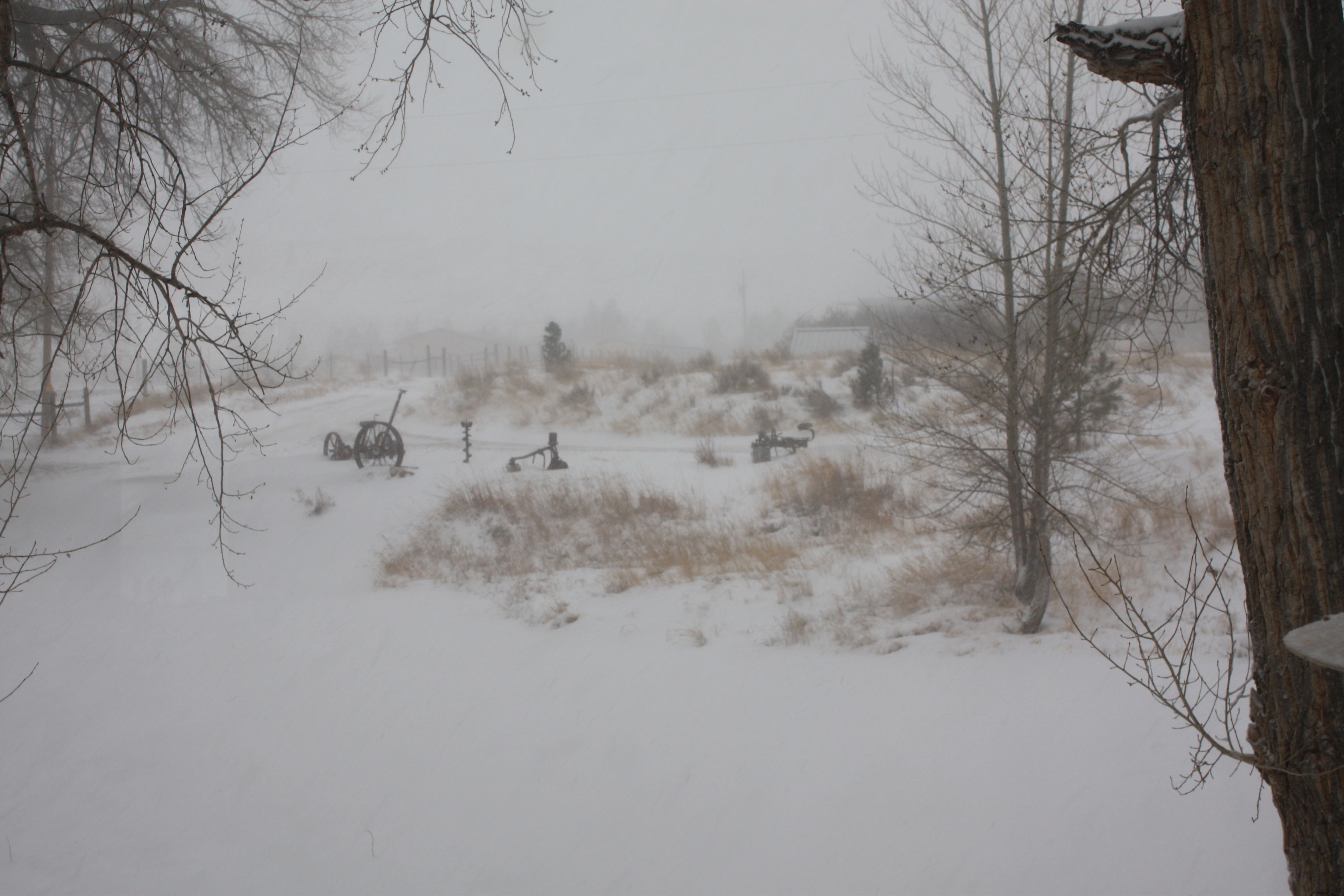
The weather forecasters weren’t joking when they warned of a “polar vortex” arriving in the northern Rocky Mountains.  After 48 hours of howling winds and blowing snow, we were left with some 3-ft. drifts and plenty of misery all around.  We observed Veterans Day digging out and dressing in every item of apparel we could layer on to take care of animals and daily chores.  The high temperature for the day was 5 degrees above, but that felt like a heat wave compared to the low last night of -27 degrees.

working for a meal . . . .

working for a meal . . . .

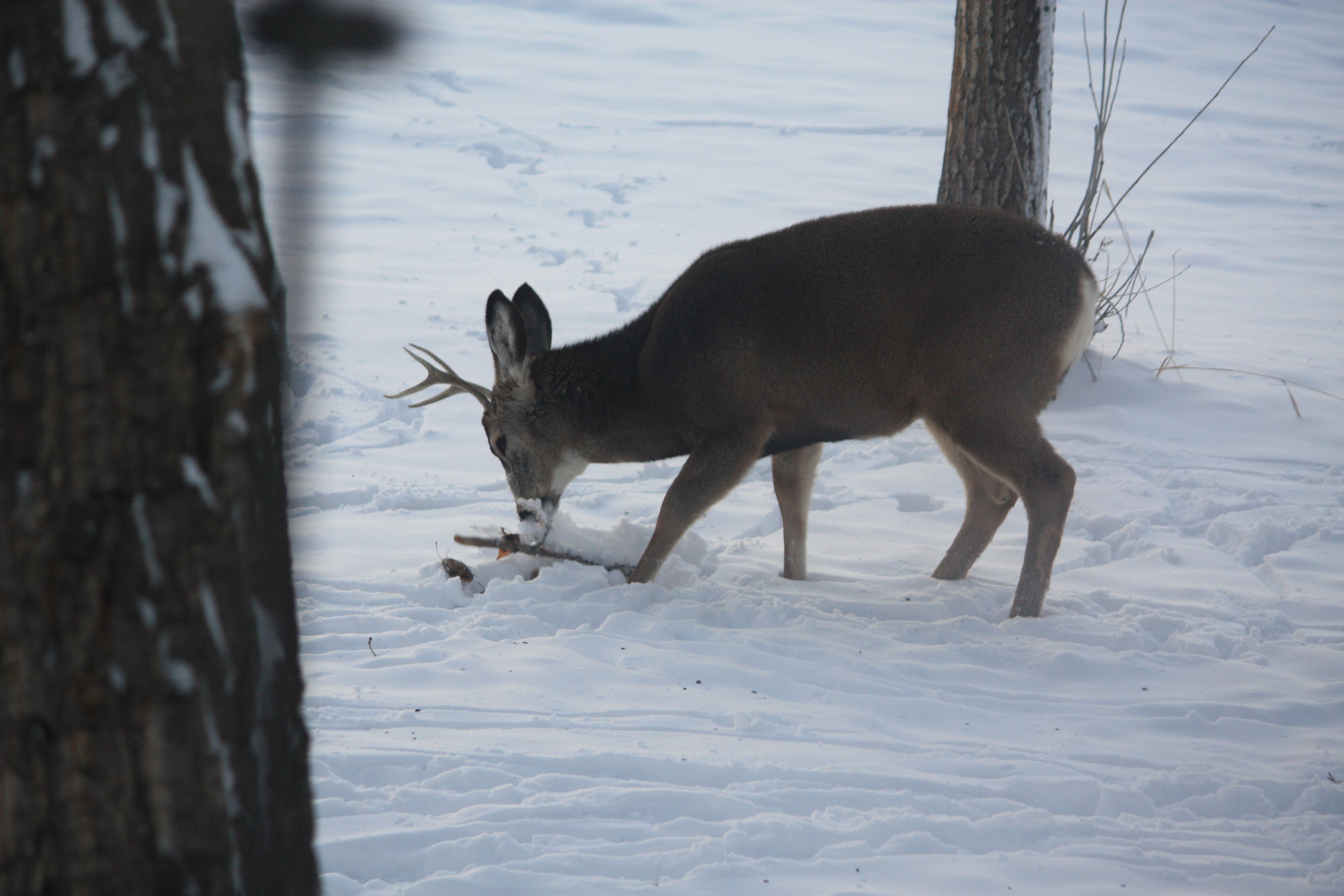
This young buck mule deer was outside the window yesterday working on a pile of leaves and twigs I raked up and have not had a chance to burn.  Foraging for enough food to keep warm is a challenge, and although I know we are not allowed to feed them, it makes you wish you could toss out a bale of hay to help them out.

the color of cold . . . .

the color of cold . . . .

We had some wet snow Sept. 10 and regular frost since then, but it has been a lovely extended autumn until we got slapped alongside the head with this storm.  The carrots didn’t get dug and I am hopeful I can still save them.  They are blanketed with a foot of snow but the temperatures are predicted to be even colder tonight.  The rest of the garden is probably finished.  Goodbye to my tasty spinach, kale, chard and lettuce crop.  Finished canning as many tomatoes as I could stand and donated the overripe remains to the chickens and the pigs next door.

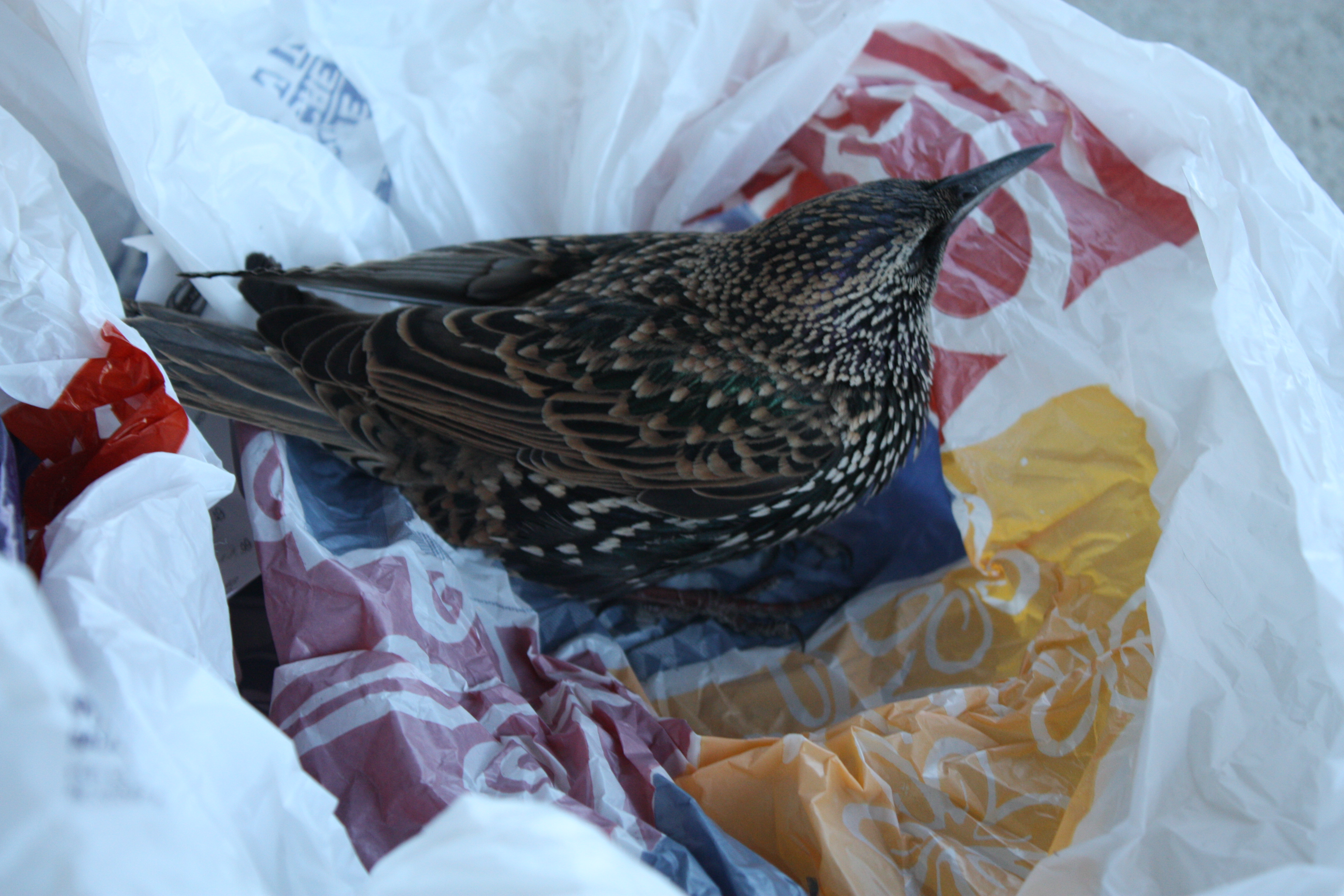
a startled starling . . . .

a startled starling . . . .

We were taking a late afternoon break with the news when we heard a strange rustling sound.  We thought it might be snow sliding off the roof, but a quick look outside revealed no disturbance in the snow drifts surrounding the house.  A quick trip to the basement turned up nothing unusual. A little later Bleu and Rosie approached the glass doors on the fireplace with great interest and Bleu jumped up on the hearth to get a closer look.  A very angry, frightened starling was glaring at us as if to say “what the heck happened?”  Was he seeking a little warmth atop the chimney and accidentally fell down into the fireplace?

"next you'll want my autograph!" . . . .

“next you’ll want my autograph!” . . . .

The evening fire was laid and a few bad jokes flew around about what the poor bird would do if we lit it.  Baaaaad jokes.  To the rescue with a large plastic bag, I reasoned I could catch the bird if I opened the doors very carefully.  The starling crouched behind the logs until the coast was clear and swooped out so fast I had no chance.  He bounced off the ceiling, into the bay window, and made a crazy pattern of flying amok in all directions trying to find an exit.  On to the kitchen, he bounced into the kitchen window so hard he fell into the sink and I had him!

you know it's going to be a bad day when . . . .

you know it’s going to be a bad day when . . . .

I took my plastic bag outside, confident that I had a bird inside, and opened it to release him.  Stunned, he just sat with his beak slightly opened and panting as if he had run a marathon.  I stepped back inside to grab a coat, and decided I should have left him in a more protected spot to keep him from freezing before he was able to collect his wits. When I returned, he was gone.  He will have some tall tales to tell about his misadventures, but he likely won’t try to keep warm in a chimney anytime soon.

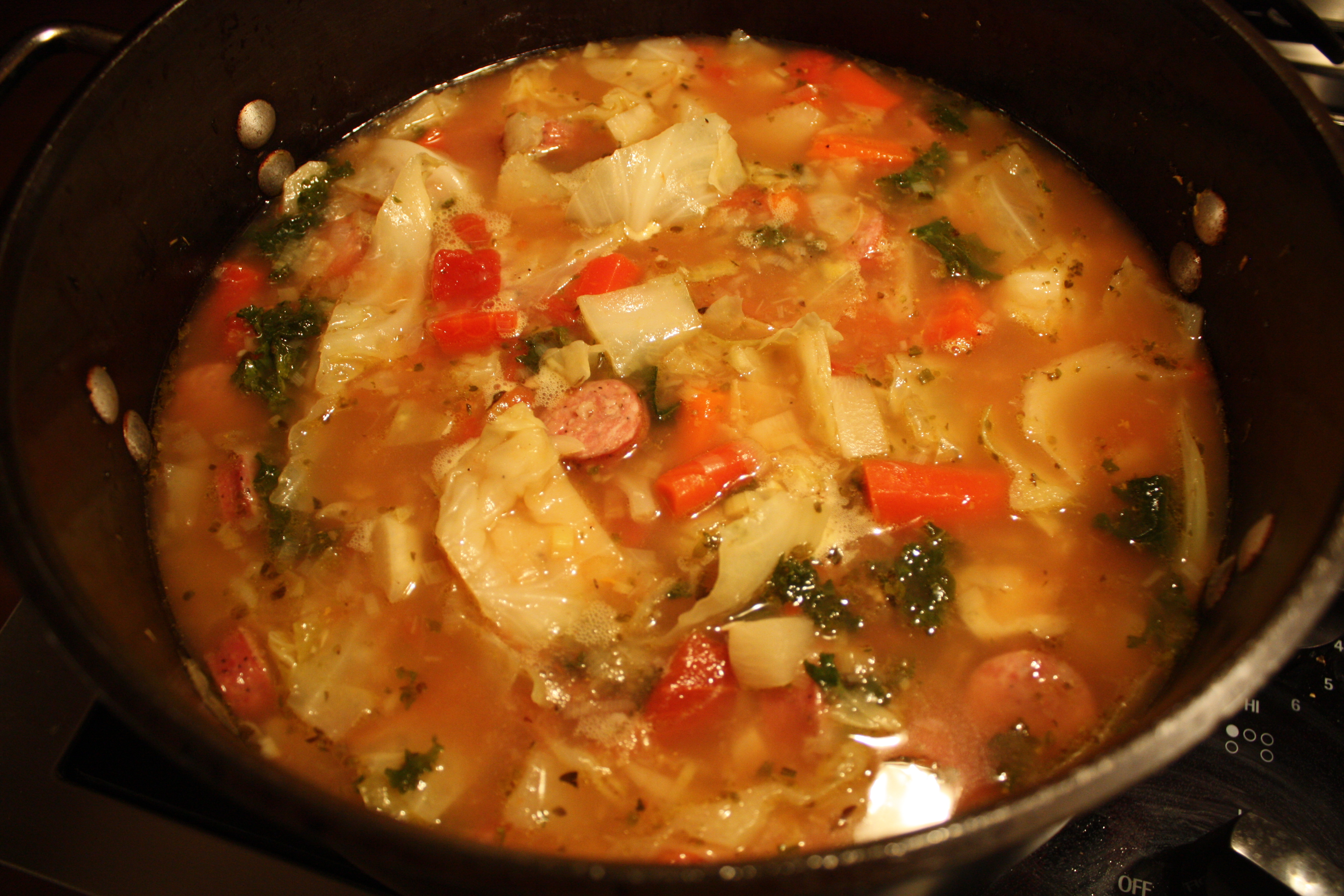
stew on the menu . . . .

stew on the menu . . . .

Winter root vegetables, cabbage, kale, leeks and Polish sausages made for a hearty stew which warmed us after fighting snow and ice all day.  Now all we need is to light the fireplace (now that the starling has departed), pour a glass of red, and enjoy what the winter will bring.

Where Wild Birds Roam

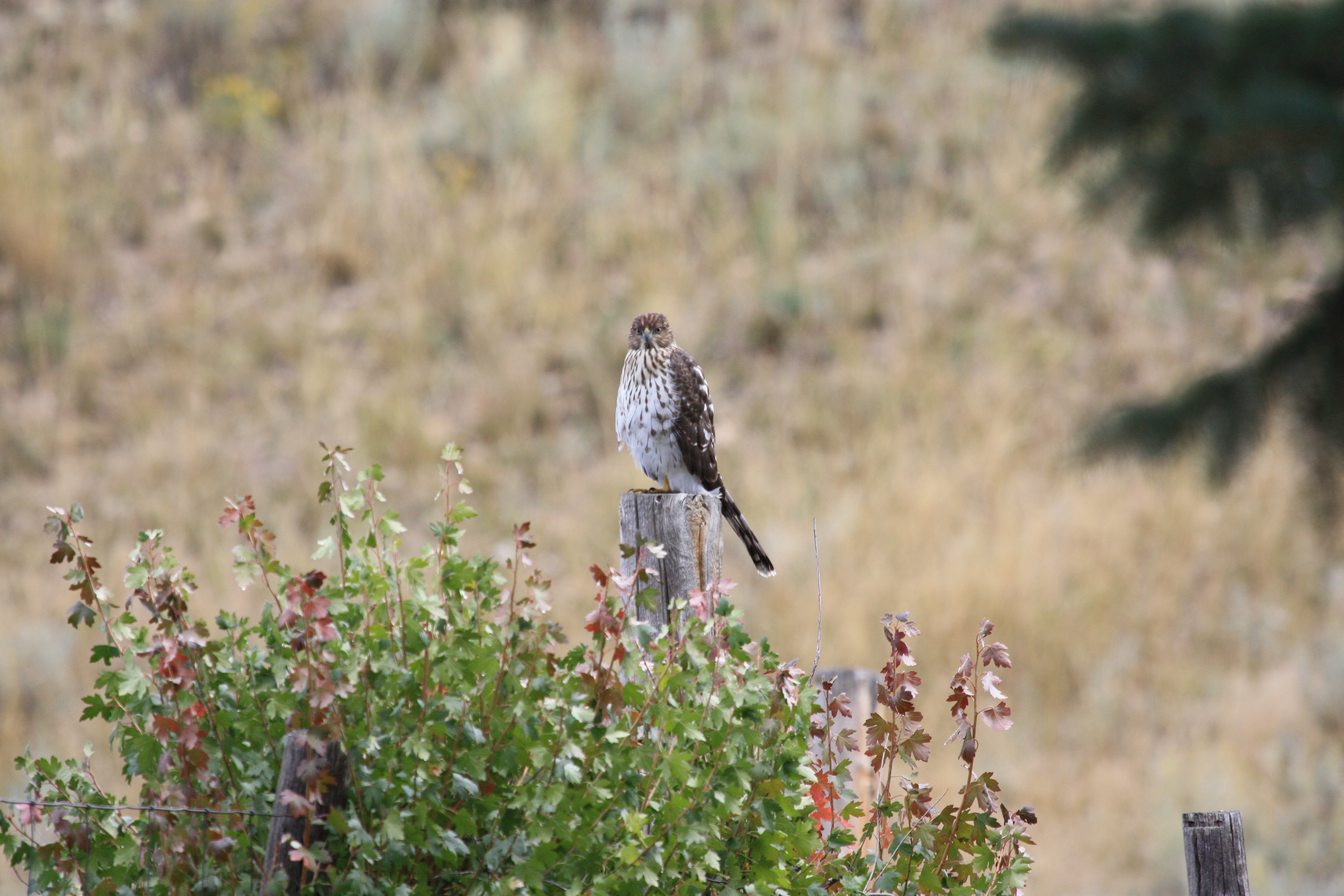
searching for a soulmate? . . . .

searching for a soulmate? . . . .

This spectacularly beautiful bird arrived in the garden and settled in on a fence post for a lengthy visit.  Rosie spied it first and when I noticed her staring intently at this strange visitor, I ran for the camera.  This bird, which we have tentatively identified as a prairie falcon, is exactly like one I found a week earlier.

looking at you, kid . . . .

looking at you, kid . . . .

I was relocating a sprinkler on the lawn when I discovered a bird on the ground, partially covered by the lower branches of a spruce tree.  It did not move and had died fairly recently. We gathered it up and after a closer examination, we could find no trace of injury or violence that would have contributed to its death.  It had obviously crawled up under the tree branches for protection and concealment, then died of some complication.

The beautiful markings under the wing span are similar to the chest area, and I regret I did not photograph the dead bird.  We called the local game warden and he came to retrieve it for further testing.  We already suspected that we could not keep the bird’s remains in our possession, and the warden confirmed it.  He thanked us for surrendering a protected raptor and said it would likely be tested for a virus.

My speculation that the bird I photographed was a mate of the poor creature I found in the yard the previous week is as good an explanation as any.  We had never seen this particular species near our home or outbuildings.  It lingered for half an hour and flew off and has not been seen here again.

Tilly Has a Training Bra!

"now what?" . . . .

“now what?” . . . .

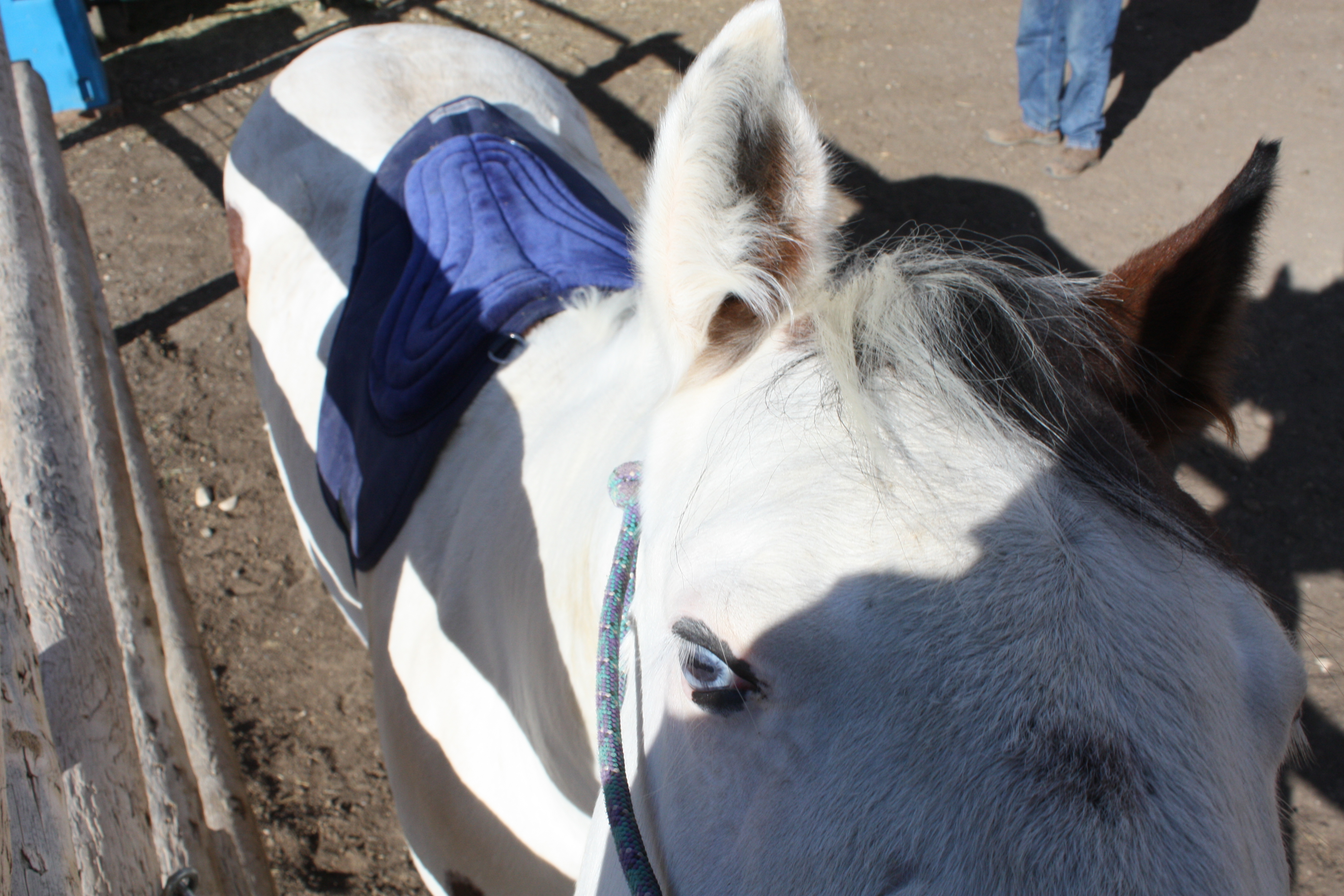
Tilly has a new bareback riding pad cinched up on her back and doesn’t appear to mind!  We introduced it to her last week, let her smell it, chew on it and wool it around on the corral post.  When we placed it on her back for the first time during her daily grooming session, she showed no reaction.  Today we placed it on her back and gradually tightened the cinch around her girth and left her in the corral for the day.  We were expecting some fireworks but she did not appear to notice she had something new attached to her back.  We reasoned that, since she wears a halter and face mask every day (to protect her blue eyes from the sun and flies) that she accepted the riding pad as part of her daily routine.

"am I going out today?" . . . .

“am I going out today?” . . . .

We elected not to start her out on a full saddle, which weighs a great deal more and has stirrups hanging down to frighten and annoy her.  We will lead up gradually to a saddle in the hopes she will adjust to new equipment installments in a calm manner and avoid an all-out rodeo of trying to buck and kick it off.  Hopefully, we can avoid injury to Tilly and the saddle in the process!  Our next venture will be introducing her to a bridle and we have not determined what exact style.  No rush–she is just now a two-year-old and we have lots of time.

This little filly can be stubborn and temperamental, but most of the time, she quickly understands what we want of her and cooperates.  She still hangs out with Abe, our longhorn steer, as well as paying daily visits to the neighboring horses for conversations over the fence.  Her one glaring behavior problem is refusing to allow a farrier to trim her hooves without a wrestling match that goes on for over an hour!  It should take about 10 minutes.  We’ve been through two of those guys and I guess we’ll have to figure out how to do this ourselves.  Our vet suggested a mild sedative might help. What do you say, Tilly?


A Journey With Great Horned Owls – Chapter II

"Hey, it's nice out here!" . . . .

“Hey, it’s nice out here!” . . . .

After observing a second baby owl in the opening of the tree where they have been nesting, we grew very excited when we finally spotted the young one in an adjoining tree. The first leg of a long journey had begun, and so far it was safe and sound high up off the ground.  A sibling did not fare so well and we had to stand by and wring our hands over its demise.  We were prepared to intervene for the sake of saving this little baby.

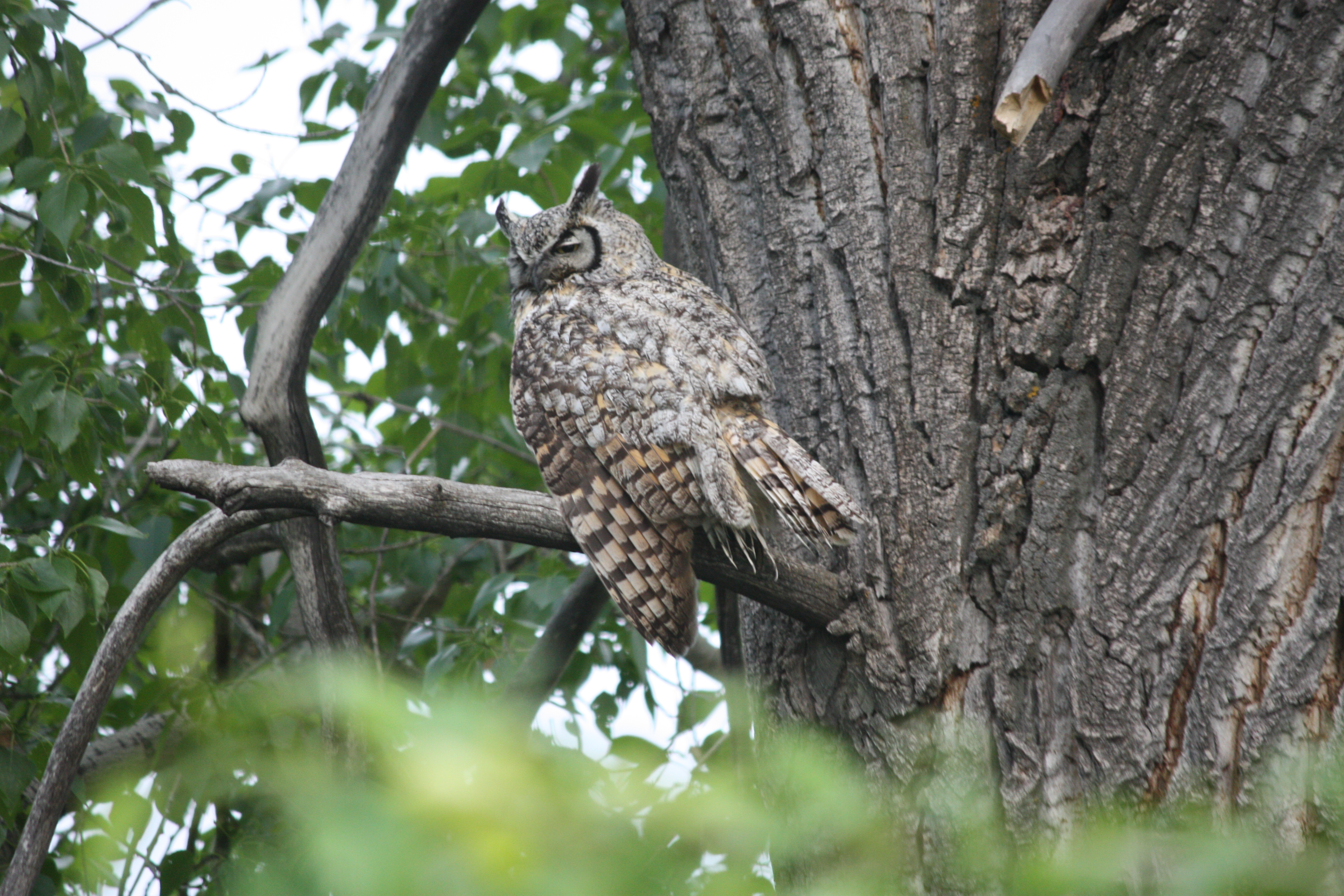
A proud parent keeps a watchful eye . . . .

A proud parent keeps a watchful eye . . . .

Over the next several days we watched for the little owl, siting him in several locations clustered around the nesting tree.  We worried when the winds blew and rains came, wondering if it held on through the turbulence.  Each time we spotted the little owl, it had moved a greater distance in a progression of moves that would strengthen its ability to hop and fly a bit.

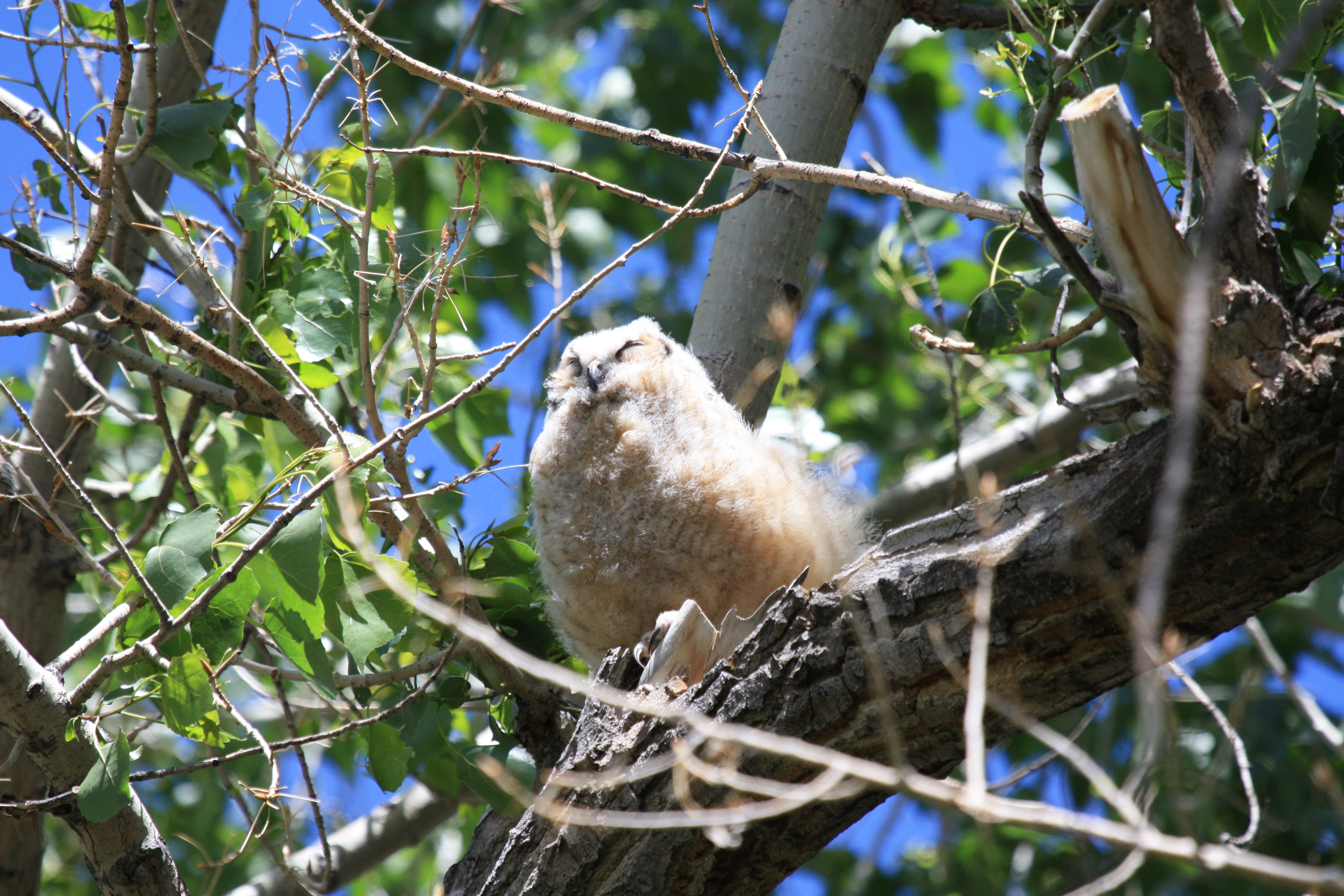
Little bundle of feathers . . . .

Little bundle of feathers . . . .

Owls have beautiful camouflage that makes it hard to pick them out against the tree bark and branches.  The white fluff on parts of the baby owl’s body aided us in locating it snuggled into its roosting place.

"Time to take a little trip" . . . .

“Time to take a little trip” . . . .

The adult owl appears to be urging the little one to a new location.  Perched out on a broken off limb, the view north is of more trees off in the distance.  We saw the little owl the next day perched high in a silver leaf poplar tree looking eastward to a tall hill.  Ideally, the next maneuver would be touch-and-go flight patterns from the tree to the hill, which we have observed previously with baby owls.  Soon after we heard no more owl conversations and assume they have moved on to a new location.  It is our hope they will return in January and start the cycle of nesting and raising their young nearby again.

A Journey With Great Horned Owls – Chapter 1

"I've got my eye on you!" . . . .

“I’ve got my eye on you!” . . . .

This grand fellow was peering through the living room window at me one morning as I was having a cup of coffee.  Bleu, the in-house cat, was sitting on my lap and we both felt someone or something was staring at us.  The owl was turned toward us with his great eyes penetrating the space between us, however by the time I returned with the camera he had turned away in boredom and begun his grooming.

"A little scratch feels so good!" . . . .

“A little scratch feels so good!” . . . .

Stroking his feathers, poking and prying over his body, he became quite the contortionist as he stretched his head to reach areas of interest.  After some time, a loud clatter of black birds distracted him.

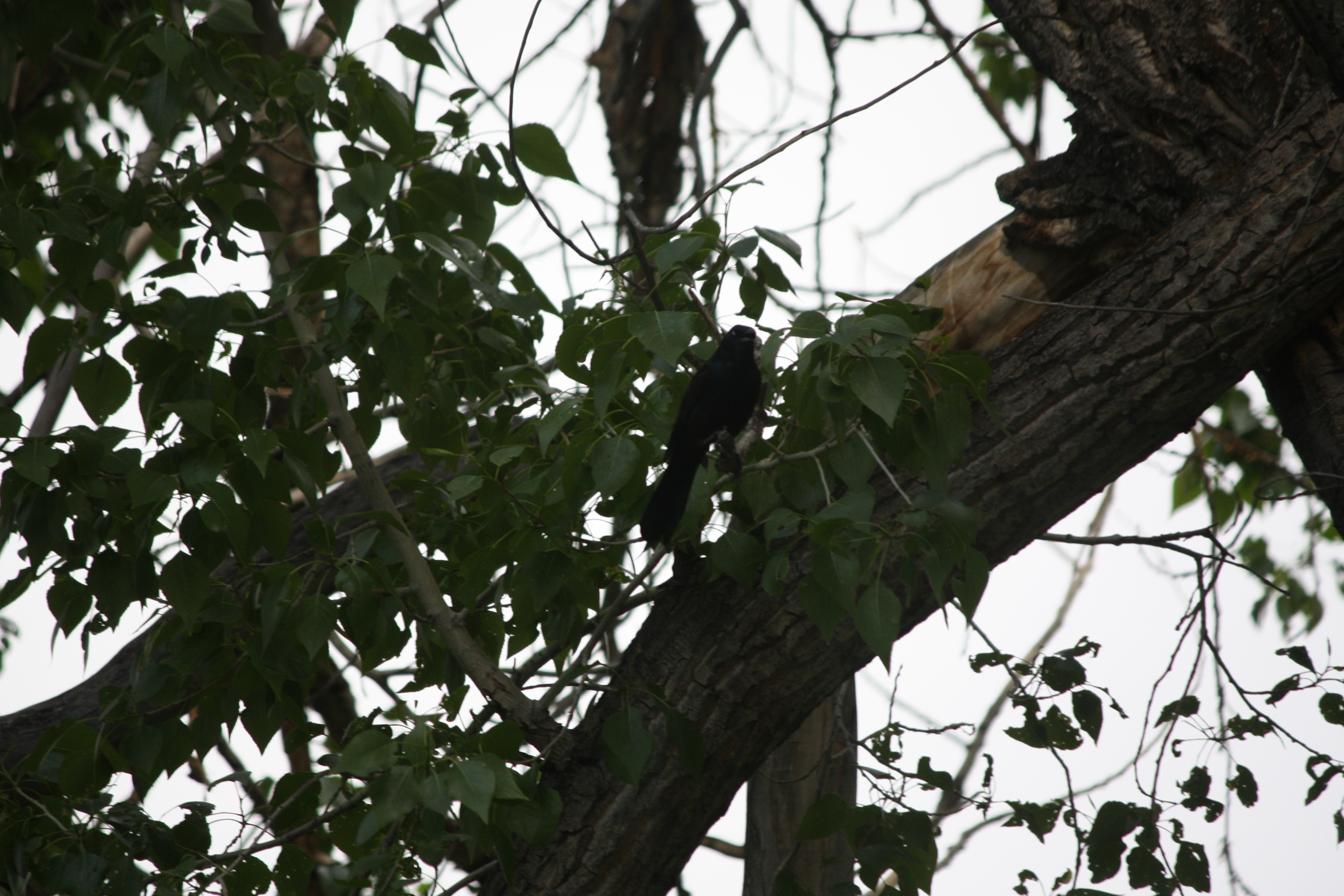
Black bird bomber prepares to launch . . . .

Black bird bomber prepares to launch . . . .

For the next half hour, a series of blackbird sorties to dislodge the owl created quite a stir in the canopy as they tried to protect a nearby nest.  The owl seems unperturbed.

"Ha!  You can't get me!" . . . .

“Ha! You can’t get me!” . . . .

The lengthy vigil of this adult owl, whom we have judged to be the male of a mating pair, was surprising so close to the house.  We sighted an owl in a hole in an ancient cottonwood tree just north of the house most of the winter, and have listened to the lovely calls of two owls throughout the night during early spring.  The possibility of a nest we could observe was of great interest but we have had no luck locating it.  The hole in the tree did not appear deep enough to house a nest, but was a great shelter in a storm for the owls we frequently see perched inside it.

A beautiful baby on the ground . . . .

A beautiful baby on the ground . . . .

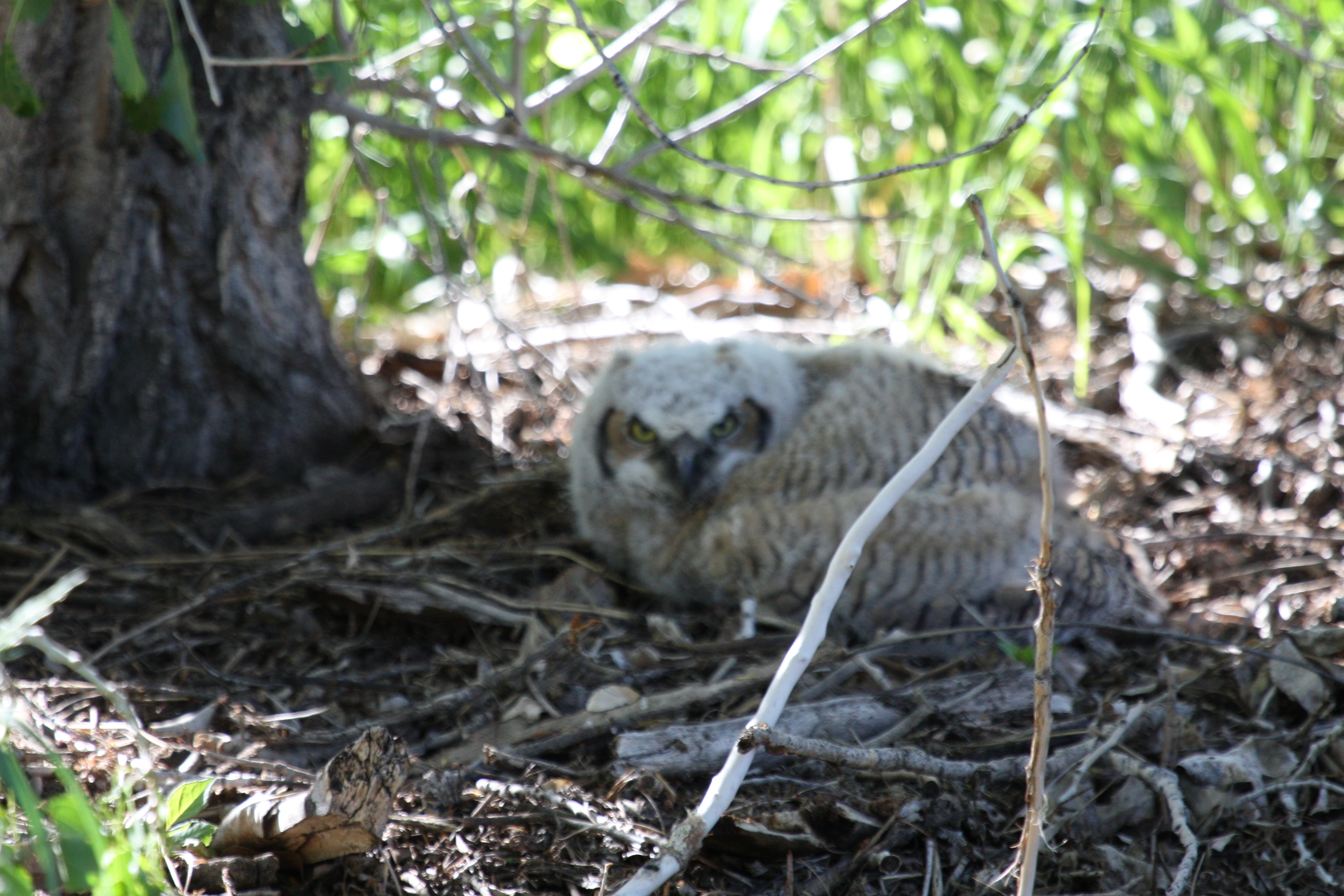
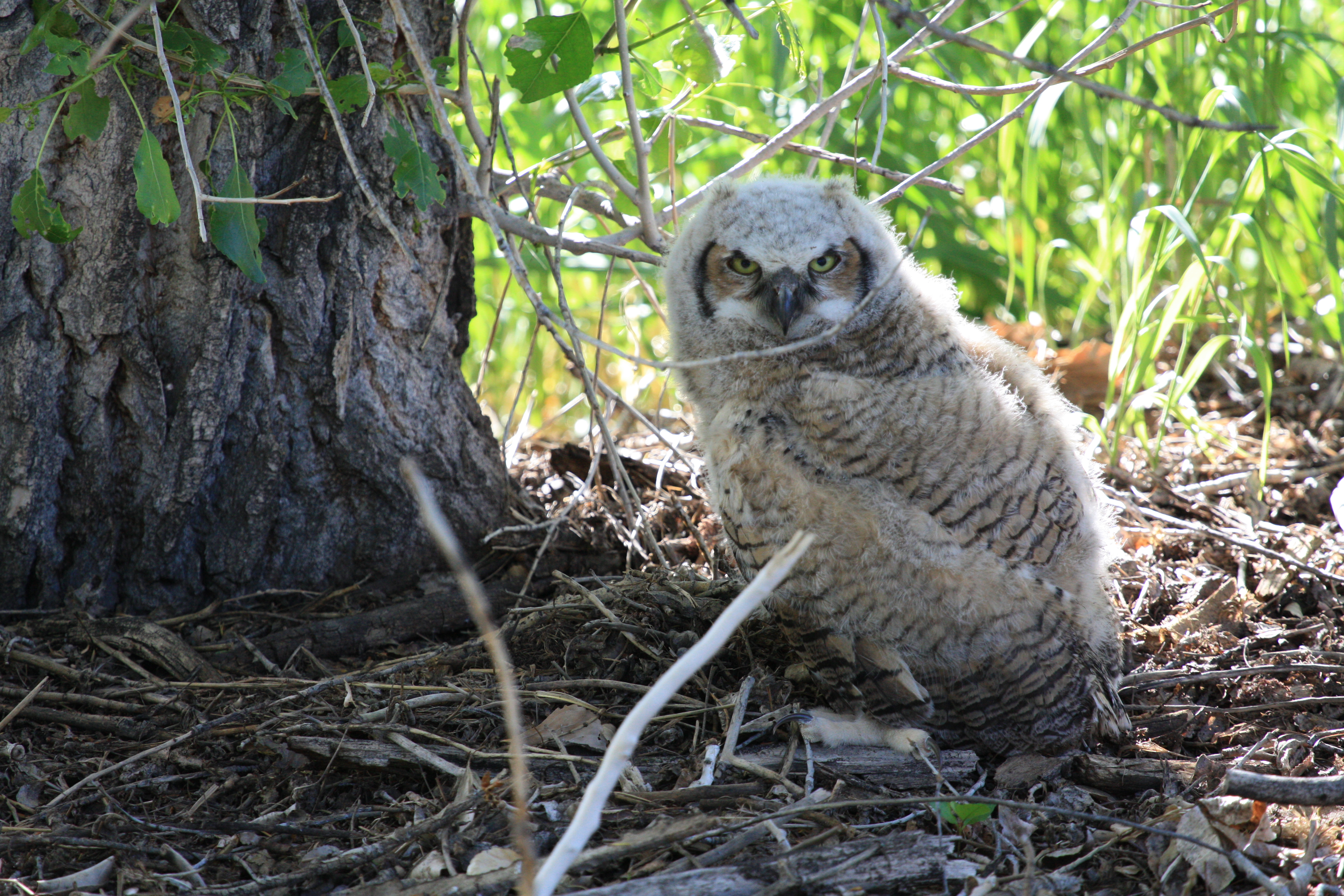
Awakened in the night by the distinctive cry of a baby owl, we began to search the tree tops the next day, certain that the fledglings were likely hopping from the nest into the branches of surrounding trees.  When we discovered this little baby on the ground not far from the old cottonwood with the hole, we surmised the nest was there all along.  And the adult male who perched up in a nearby tree was keeping his eye on baby below.  But something was amiss.

"I'm a little cold and hungry" . . . .

“I’m a little cold and hungry” . . . .

The next morning the baby owl was in the same spot near the base of a large tree.  We listened to his chirping for a second night and it seemed unusual that the tiny creature had not been rescued by the adult owls.  They were hovering in the branches overhead and obviously knew their fledgling was on the ground in harm’s way.

still here, still waiting . . . .

still here, still waiting . . . .

Morning of the third day, the little owl had hopped upon a stump and sat hunched into its feathers.  From past experience observing owls who have nested in our area, I felt this little owl should have been rescued by its parents and for some reason it hadn’t happened. We tried to stay clear of the area, stopped mowing and working nearby and kept a close eye on Rosie, our dog, so that the little owl would not be disturbed.  Worries that a fox or other predator would find it kept me awake at night.  And then the nightly chirping ceased. We could no longer see the little owl on the fourth day and assumed he had finally been able to move into the trees where he could continue his flying lessons.  We were greatly relieved, as the only alternative was to try to rescue the baby owl ourselves and hope we could deliver it to a raptor rescue center experienced in raising young owls.  We were saddened when we discovered the body of the baby owl lying just behind the stump where I had last photographed him.  An injury to its wing must have occurred when it fell or was blown out of the nest and the adult owls gave up on their baby.  It seemed a tragic waste of a splendid creature.

Spring Is For The Birds

"what's for breakfast?" . . . .

“what’s for breakfast?” . . . .

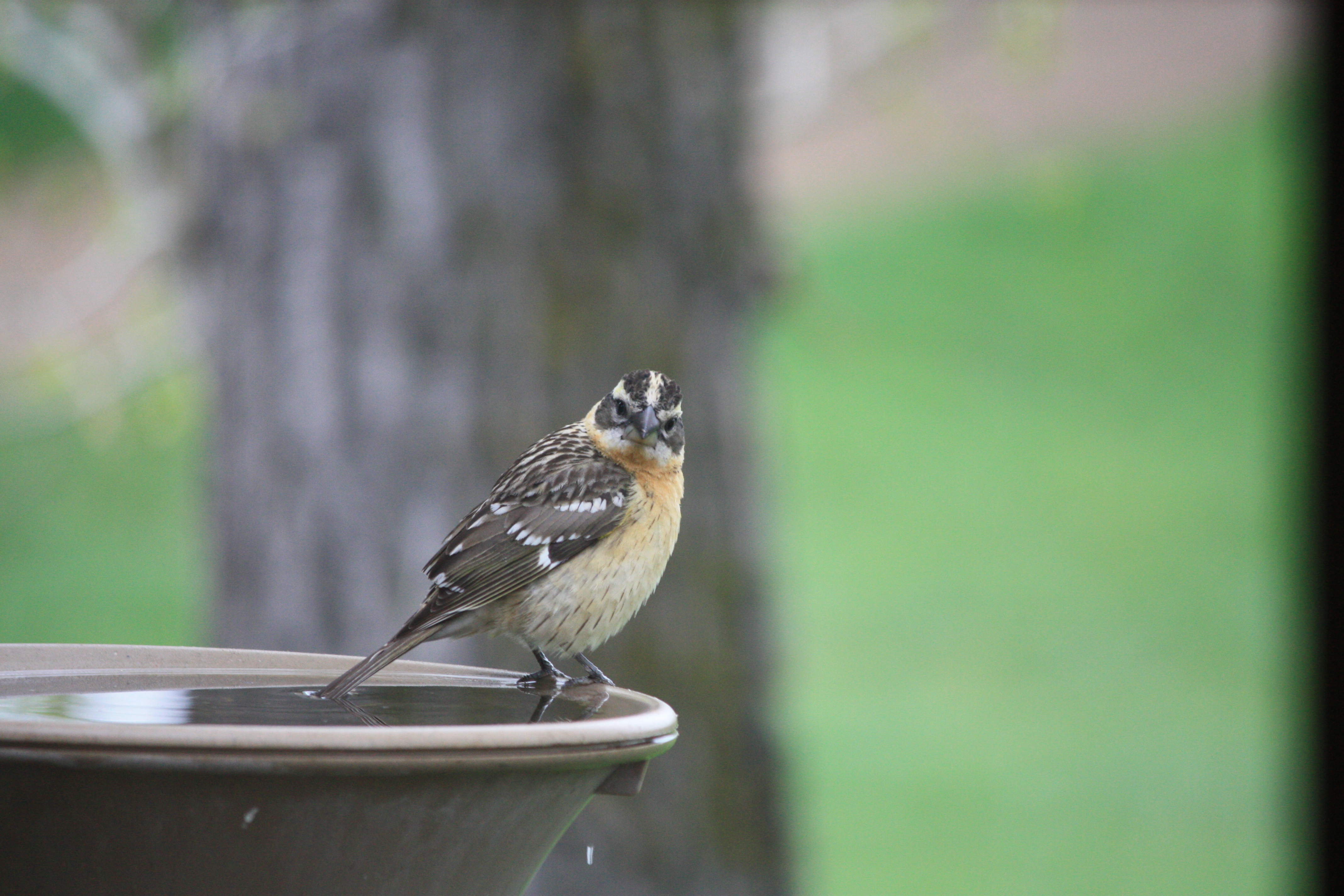
The activity at the bird feeders has been entertaining, with lots of colorful characters turning up for a meal, a drink of water, a bath or just to meet and greet.  This very handsome grosbeak is surveying the possibilities.

"Guess I'll get comfy and watch the action" . . . .

“Guess I’ll get comfy and watch the action” . . . .

The grosbeak makes a colorful splash in the evergreen bough where he decided to tend to his grooming and observe the competition.

"Well girls, I'm here in flying colors!" . . . .

“Well girls, I’m here in flying colors!” . . . .

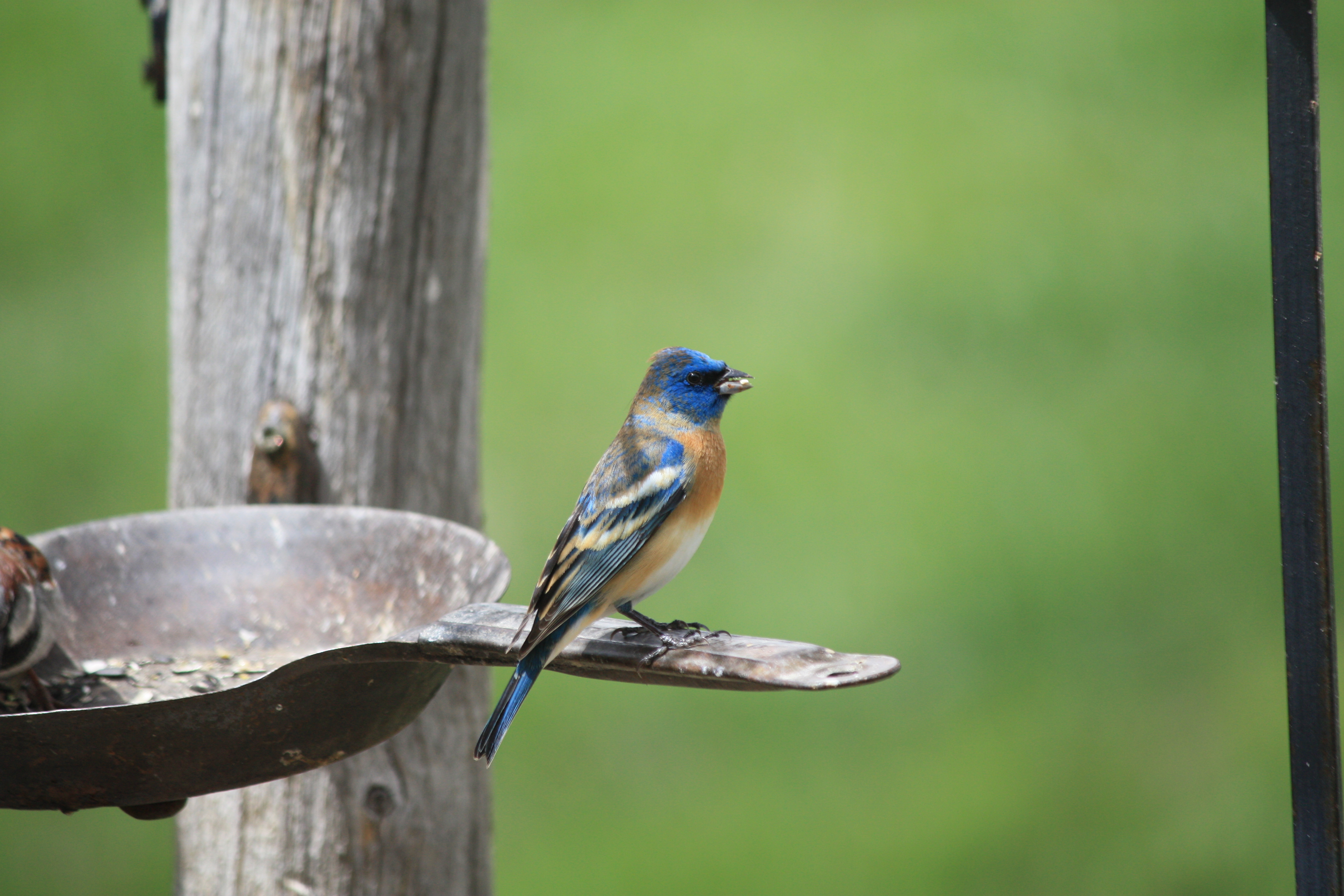
Who’s this show off strutting his stuff on the skillet?  Greedy guy is getting away with the best of breakfast and will get lots of attention with those flashy colors.  Lazuli buntings are just passing through and will break your heart with their beauty.

"What does a guy have to do to get service?" . . . .

“What does a guy have to do to get service?” . . . .

The direct gaze and imperious pose says this sparrow is not to be taken lightly.  He has arrived for a drink and a bath, and isn’t going to let any flashy-colored passers-by take over.

on the pond . . . .

on the pond . . . .

A pair of Canadian geese drop in for a float on the pond as they travel north for the summer.  They take flight when they see us walking, so a sneak peak through the sagebrush is the best approach.  A more powerful lens would help also.

a flock of finches . . . .

a flock of finches . . . .

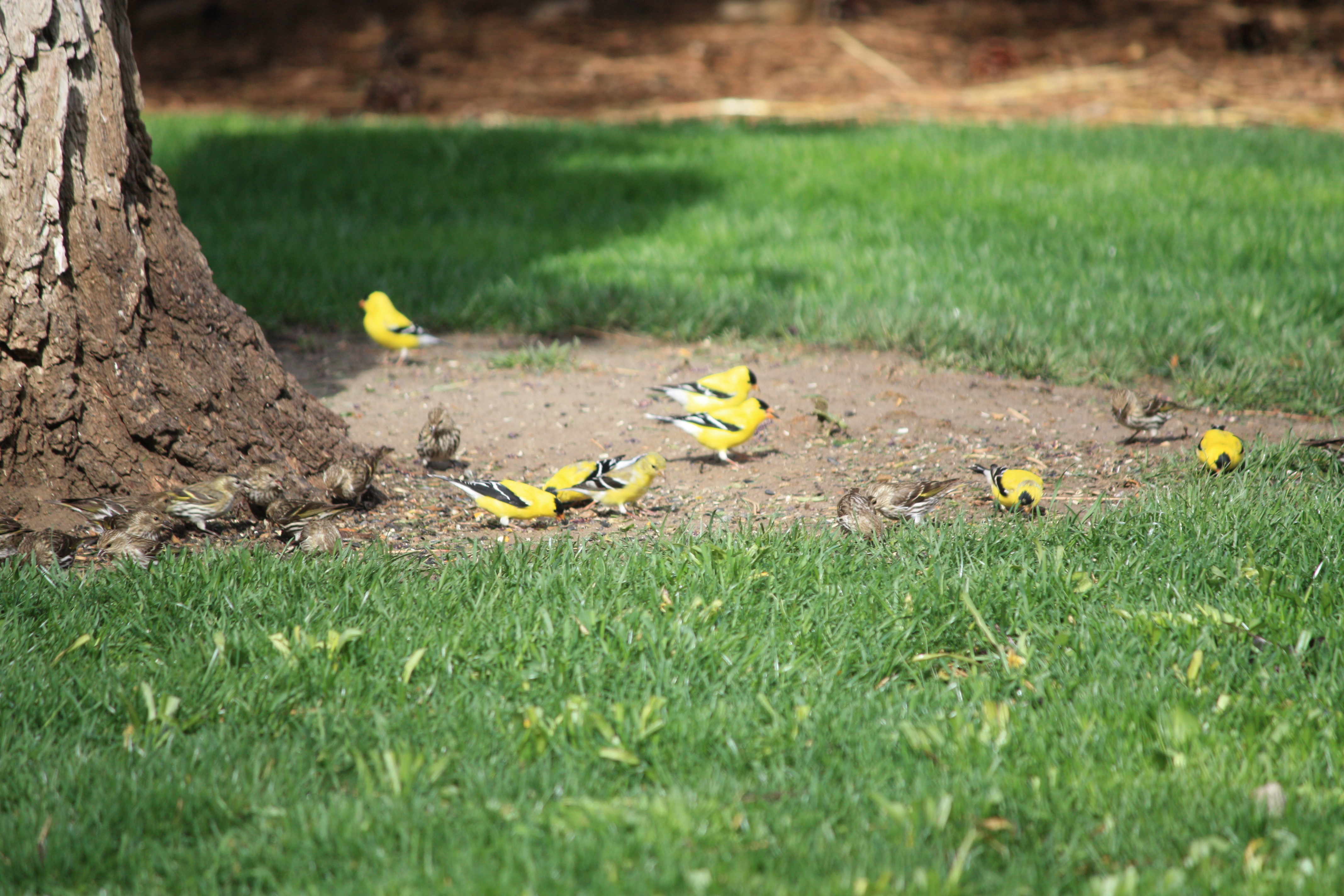
These American goldfinch arrive each spring and never fail to delight with their bright yellow color and sweet song.  They cluster around the feeder and water fountain and fill the tree tops with their chirping and chattering.  How wonderful to have birds in our lives!


Long Horn Baby is a Dandy!

there's a new guy in town . . . .

there’s a new guy in town . . . .

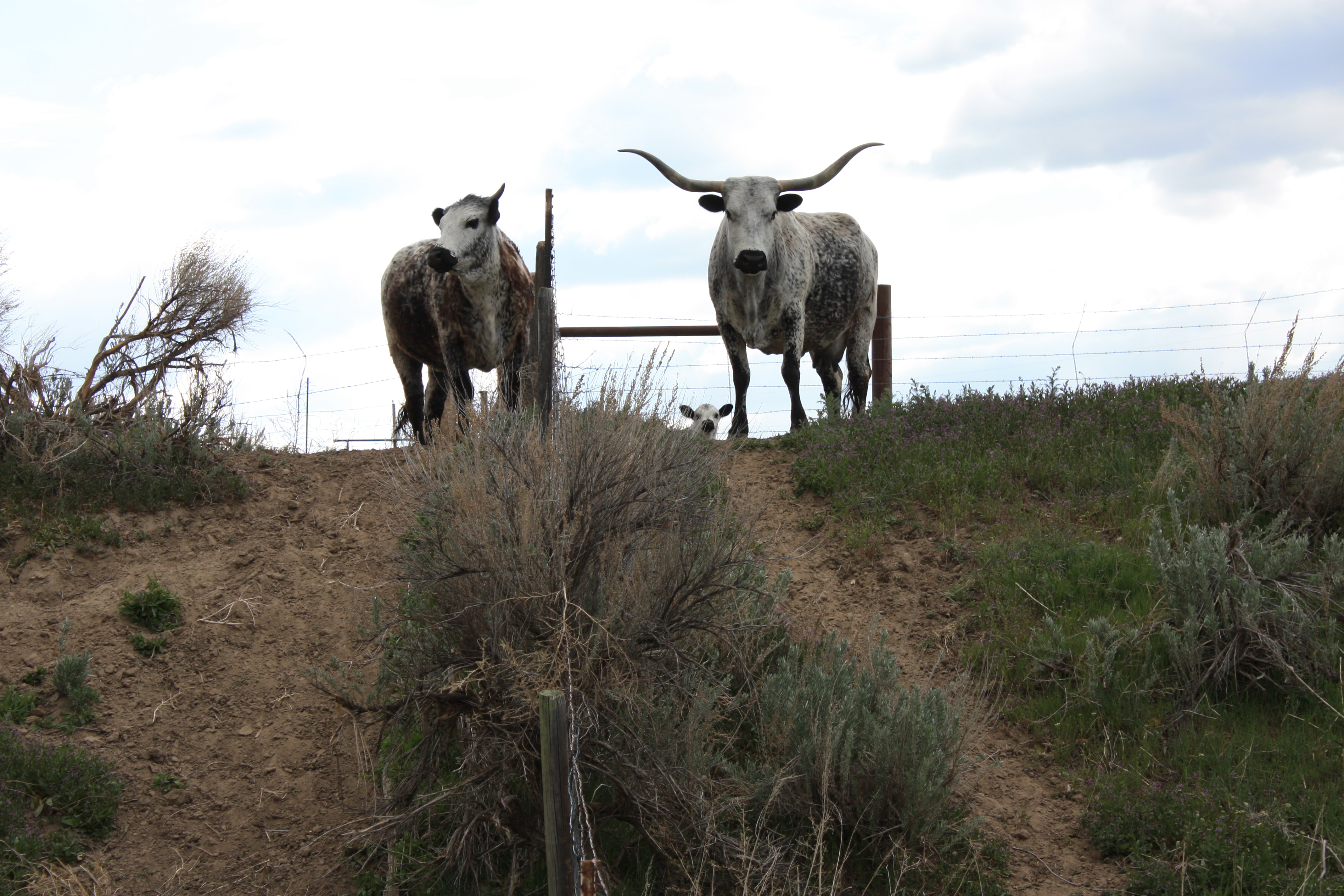
A new life has been added in the neighborhood which created lots of excitement.  Feed Lot a.k.a. Abe has a new baby brother, and he has become so solicitous and engaged in the little newcomer that he has been seriously neglecting to pay attention to Tilly.  He guards the fence line jealously if we approach to photograph the little guy, running from the barn yard if he sees any activity around the baby calf.  Mother and calf live on the other side of the fence, which is a good thing.

Avuncular Abe guards his babe . . . .

Avuncular Abe guards his babe . . . .

Looking back at Abe’s baby pictures, this little bull calf looks almost exactly like him.  Sired by black Angus bulls, they took their genetics from their Long Horn mom and she is so proud of her progeny!